By mid-afternoon, a Florida pool can be dealing with blazing sun, a quick thunderstorm, sunscreen, grass clippings and a full afternoon of swimmers. That is why Florida summer pool care is less about reacting to cloudy water and more about staying ahead of the conditions that change it fast. A pool that looked perfect on Monday can develop algae pressure or lose its chemical balance by the weekend if small changes go unnoticed.
For homeowners, the goal is simple: water that is clear, comfortable and safe whenever the family is ready to use it. Getting there takes consistent cleaning, measured water testing and equipment that is working as it should.
Why Florida summer pool care needs more attention
Summer heat speeds up nearly everything that affects a pool. Sunlight uses up sanitizer more quickly, warm water makes algae more likely to take hold, and heavy use adds oils, lotions and debris to the water. Afternoon rain can dilute chemical levels and introduce contaminants from surrounding landscaping and patios.
That does not mean every pool needs the same chemical adjustment after every storm. The right response depends on pool size, sanitizer system, bather load, rainfall, circulation and the results of a current water test. Guessing, or repeatedly adding products without testing, can create a second problem while trying to solve the first.
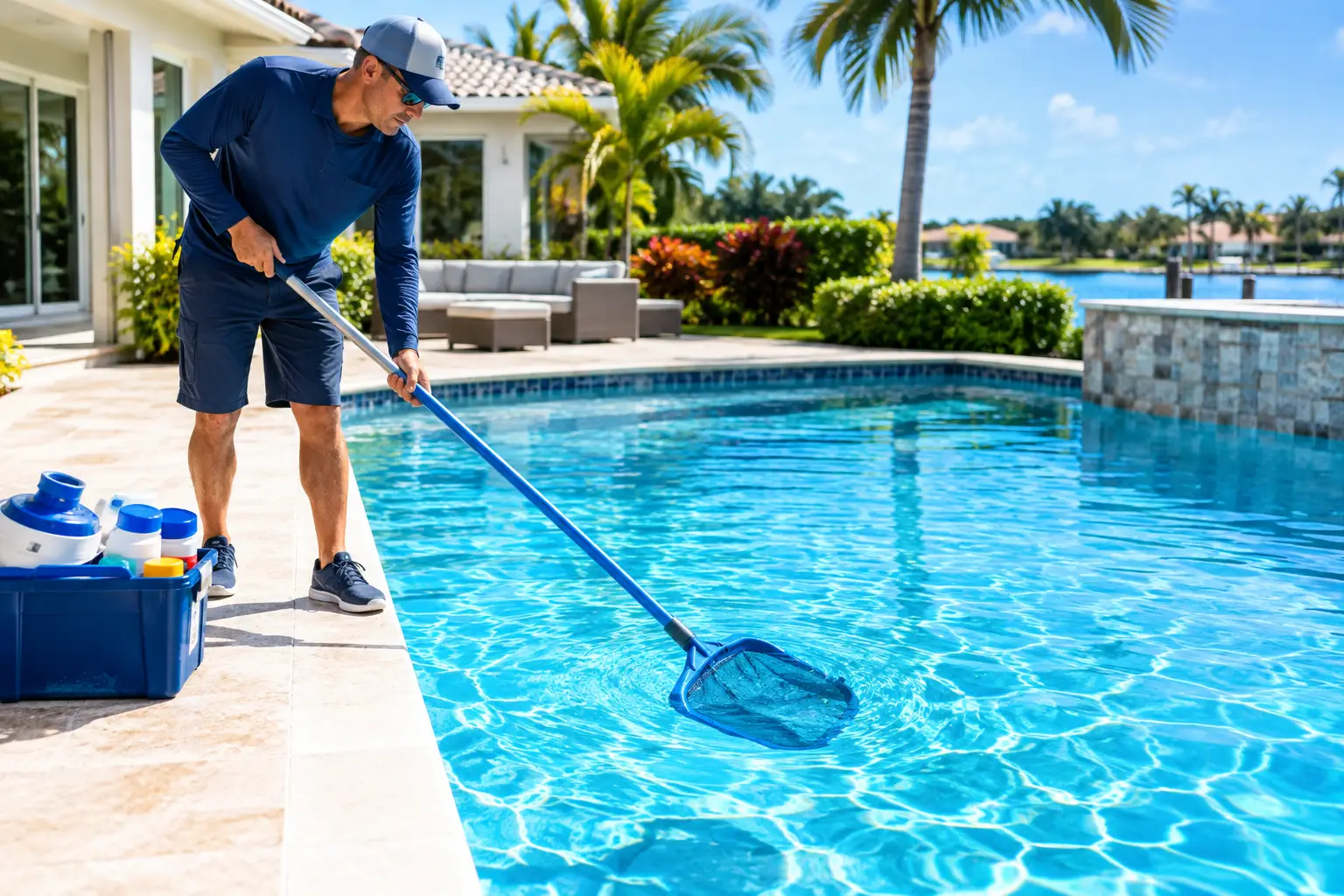
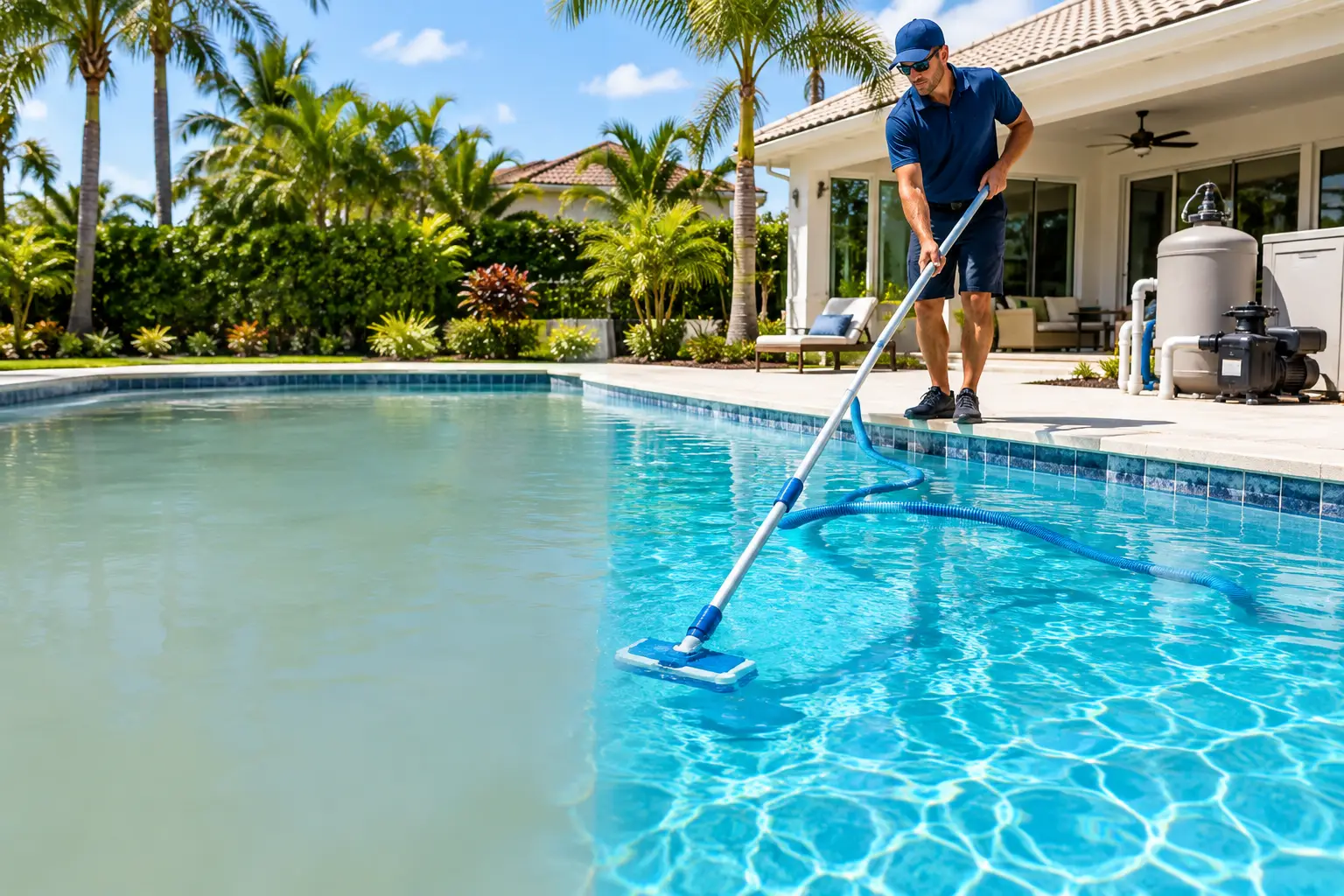
A dependable weekly service routine gives these changing conditions a regular checkpoint. Skimming and brushing remove the material that can feed algae or stain surfaces. Vacuuming when needed keeps settled debris from lingering. Water testing reveals what the eye cannot see, while a routine visual equipment inspection can catch warning signs before a small issue becomes a no-swim weekend.
Keep circulation working during the hottest months
A pool pump is the heart of the circulation system. It moves water through the filter and helps distribute sanitizer evenly, which matters even more when temperatures rise. Still water, weak flow or a clogged filter can leave certain areas of the pool more vulnerable to algae and poor water quality.
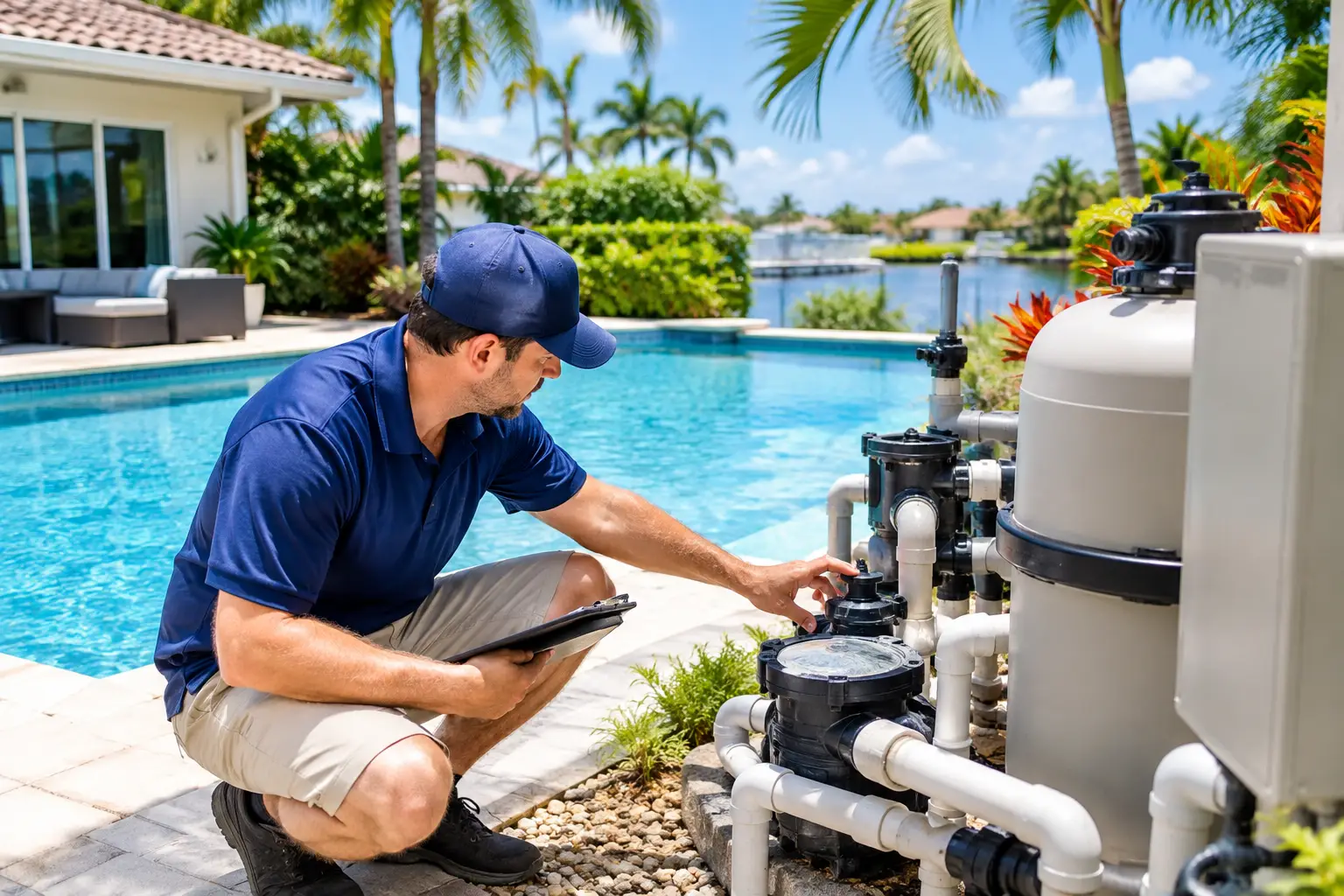
Homeowners may notice a change in return-jet pressure, an unusual pump sound, air in the pump basket, a persistent equipment leak or debris collecting in areas that normally stay clean. These are useful clues, not problems to ignore until the water turns green. A trained pool professional can evaluate whether the issue is related to the pump, filter, valves, plumbing, timer settings or another part of the system.
Running equipment longer is not always the answer. A pool with a variable-speed pump, for example, may benefit from a schedule tailored to its equipment, pool use and water conditions. The trade-off is that energy savings and strong circulation need to be balanced thoughtfully. Equipment upgrades and automation can make that easier, but they should solve a real operating need rather than add complexity for its own sake.
Check the filter before it becomes a water problem
A filter does not have to look visibly dirty to affect circulation. As it captures fine debris, its resistance increases and flow can drop. Florida summer storms, pollen, landscaping debris and frequent swimming can all increase the workload.
Filter cleaning schedules vary by filter type and by the pool's actual condition. Cleaning too late can restrict flow. Cleaning certain filters more often than necessary can also be counterproductive. Regular service records and pressure or flow observations help determine when attention is genuinely needed.
Rain, swimmers and sunscreen change the chemistry
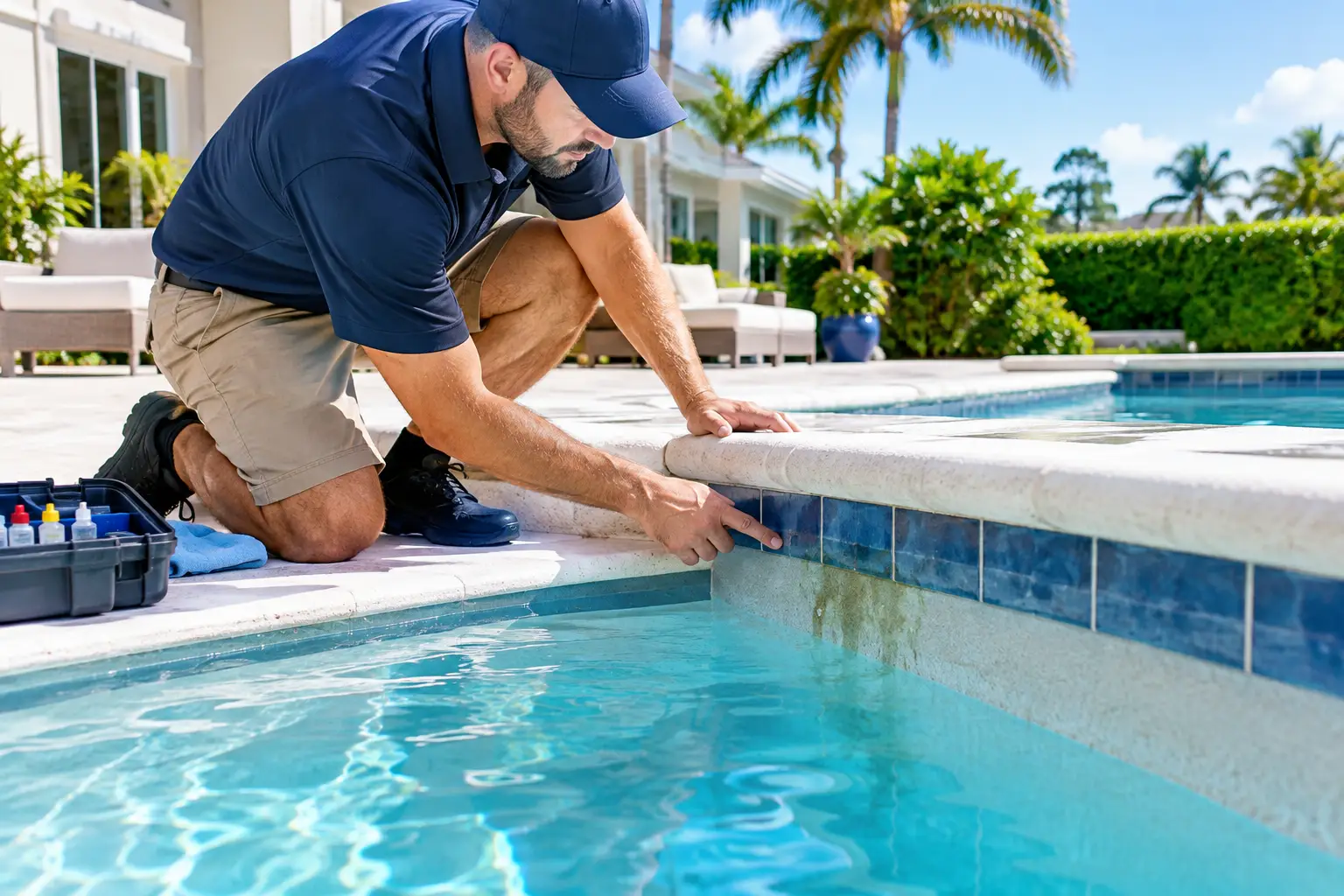
Clear water is not automatically balanced water. A pool can look inviting while sanitizer is too low, pH has drifted or other water-balance factors are moving outside their appropriate range. Those changes can affect swimmer comfort, surface protection and how effectively the sanitizer performs.
Rain is especially misunderstood. A brief shower may have little impact on a large pool, while a long, heavy downpour can significantly alter the water balance. It can also wash organic matter into the pool, increasing sanitizer demand. The best next step is testing, not assuming that rainwater is harmless or that every storm requires the same treatment.
Busy weekends can have a similar effect. More swimmers mean more sunscreen, body oils and organic load in the water. Encourage swimmers to rinse off before entering when practical, keep food and drinks away from the pool, and remove toys after use so debris does not collect beneath them. These modest habits reduce the amount of work your water has to do.
Saltwater pools need the same attention to water balance as traditionally chlorinated pools. A salt system generates sanitizer, but it is not a set-it-and-forget-it solution. Cell condition, output settings, circulation, water temperature and overall chemistry all affect performance. If water begins to look dull or algae starts appearing, the answer may not be simply turning the output higher.
Stop algae before it gets established
Algae rarely announces itself all at once. It may begin as a slightly slippery step, a faint green tint near a return, a dusty-looking patch that brushes away, or a spot that returns soon after cleaning. In summer, those early clues deserve prompt attention because warm water and sunlight can accelerate growth.
Brushing is one of the most valuable preventive tasks in pool care. It disrupts buildup on walls, steps, tile lines and other areas where circulation may be less direct. Combined with proper sanitizer levels and filtration, it makes it much harder for algae to get comfortable.
If a pool has already turned green, it needs a structured recovery rather than a cosmetic quick fix. The water should be tested, debris removed, surfaces brushed and the chemistry corrected based on what the pool actually needs. Filtration and circulation may also need close attention throughout the recovery process. Green-to-clean work can take time, particularly when algae is established or equipment performance is limited, but careful recovery protects the pool better than indiscriminate chemical additions.
Protect equipment from summer strain
Pool equipment works hard during Florida's hottest season. Pumps, heaters, heat pumps, automation controls and salt systems all benefit from regular observation. Leaves around equipment pads, blocked airflow, dripping fittings, error messages and unusual cycling patterns are worth addressing early.
Do not attempt electrical repairs or open equipment components yourself. Pool equipment combines water, electricity and pressurised plumbing, so diagnosis and repair are best handled by a qualified pool professional. Homeowners can help by keeping the equipment area reasonably clear, reporting changes promptly and making sure service access is available.
Summer is also when comfort upgrades become more noticeable. A heater or heat pump can extend enjoyable swim time in cooler periods, while pool cooling solutions can make overheated water more refreshing during the peak of the season. Automation can simplify schedules and give homeowners better visibility into equipment operation. Whether an upgrade makes sense depends on how the pool is used, the existing equipment and the homeowner's priorities.
A practical weekly routine for Florida pools
Between professional visits, a quick visual check can prevent surprises. Look at the water clarity, remove large floating debris and listen for unfamiliar equipment sounds. If the water changes color, becomes cloudy, feels unusually slippery or develops a strong chemical odour, report it rather than trying to correct it by trial and error.
For homeowners in Wellington, Westlake, Royal Palm Beach, Loxahatchee and The Acreage, summer weather can turn from sunny to stormy in a single afternoon. A reliable service partner should account for that reality with consistent water testing, careful cleaning and clear documentation of completed work. Service notifications and photographic reports are not just nice extras. They give you a useful record of what was checked, what was done and whether an emerging concern needs follow-up.
Turtle Pool Care approaches weekly service with that kind of accountability: careful hands-on maintenance supported by detailed digital reporting. The result is a pool that stays turtly clean without making homeowners responsible for decoding every change in water chemistry or equipment behaviour.
A summer pool should be the easiest part of a busy Florida weekend. With regular attention to circulation, chemistry, debris and early warning signs, it can remain a comfortable place to cool off long after the afternoon storm has passed.