Fresh plaster is not simply a finished surface waiting for its first swim. During its first month, it is still curing, releasing dust and reacting to the water around it. A professional 28-day pool start-up gives that surface the careful attention it needs, so your beautiful new pool does not begin its life with stains, scale, roughness or permanent mottling.
For homeowners in Palm Beach County, this early care matters even more. Warm weather, heavy rain, intense sun and frequent pool use can shift water chemistry quickly. The good news is that a proper start-up program keeps the process straightforward, documented and utterly clean from day one.
Why a 28-day pool start-up matters
New plaster, pebble and other cement-based interior finishes need time to harden evenly under water. In the first few weeks, the surface naturally releases calcium hydroxide, which can raise pH and alkalinity. If those changes are not managed, the water can become scale-forming. Calcium deposits may leave the finish feeling rough, looking blotchy or developing a dull white haze.
At the same time, new plaster can produce fine plaster dust. This dust settles on steps, benches, floors and in corners. Left in place, it can harden onto the surface and make a new finish look older than it should.
A 28-day start-up is not just about adding chemicals. It is a controlled process of circulation, brushing, testing and adjustment. The goal is to let the finish cure naturally while keeping the water safe, balanced and clear.
The exact plan depends on the interior finish, water source, weather and your pool equipment. A traditional white plaster finish, for example, may require a different brushing approach from a polished aggregate or pebble surface. Your pool builder’s finish-specific guidance should always be respected, but consistent professional oversight is what turns those instructions into dependable daily care.
What happens during the first 28 days
Days 1 to 7: circulation, brushing and close chemistry control
The first week sets the tone for the entire curing period. Once the pool is filled, the water level should not be allowed to drop below the skimmer opening. Stopping and restarting the fill can leave a visible ring or line on a fresh finish. It is also wise to keep swimmers, pets, toys and automatic cleaners out until the surface and water are ready.
Circulation is usually run continuously at this stage, subject to the builder’s recommendations and the equipment installed. Continuous movement helps distribute start-up chemicals, captures debris and prevents plaster dust from settling for long periods.
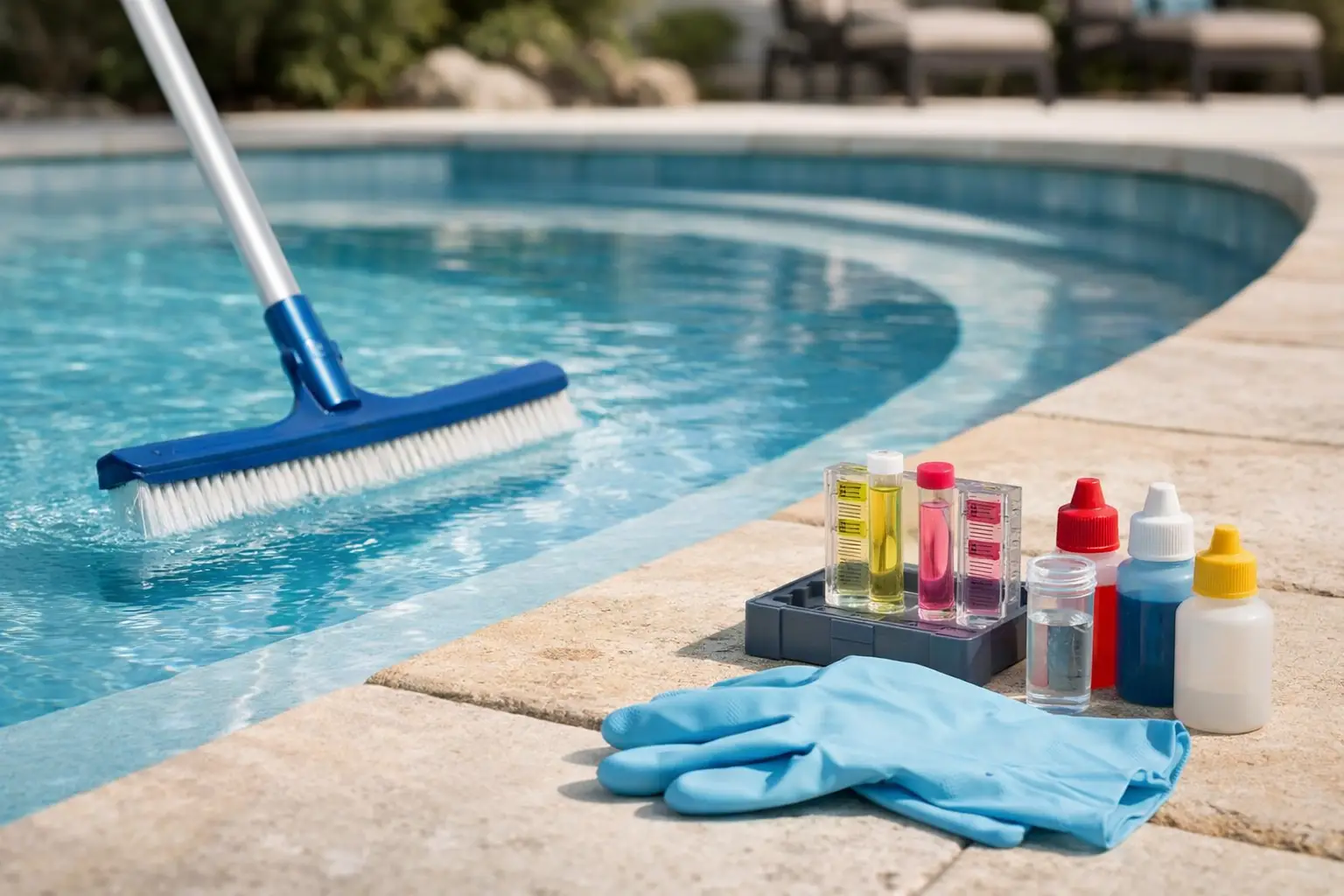
Brushing is essential. The walls, floor, steps, tanning ledges and tight areas around fittings need thorough brushing, often twice daily in the earliest days. This lifts plaster dust into suspension so the filtration system can remove it and helps the finish cure with a more uniform appearance. Brushing is hands-on work, but it is one of the best protections for a significant investment.
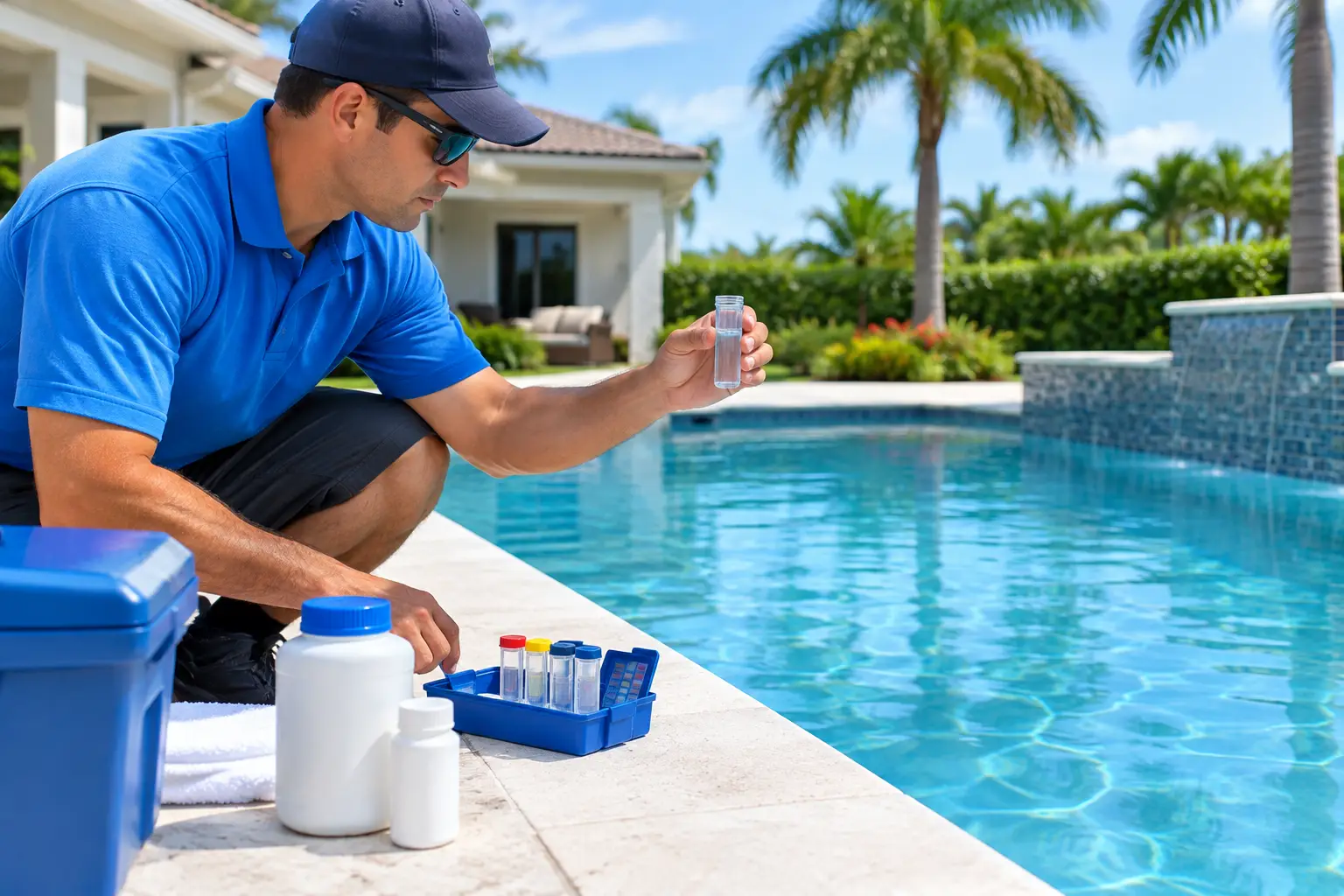
Water testing also needs to be frequent. pH can rise quickly as plaster cures, so it is carefully brought back into range using measured adjustments rather than aggressive corrections. Total alkalinity, calcium hardness, chlorine and stabiliser are monitored as the water develops. The aim is balanced water, not a rushed attempt to force numbers into a final long-term target overnight.
Days 8 to 14: maintain balance and prevent deposits
By the second week, brushing remains a priority, although the required frequency may reduce depending on the finish and the pool builder’s instructions. The filter is checked and cleaned as needed because plaster dust can load it up quickly. Good circulation is only useful when the filter can properly capture what the brush is lifting from the surface.
This is also the period when shortcuts can cause avoidable problems. High pH and calcium levels can create scale, particularly on waterline tile, spillways and heaters. Allowing chlorine to fall too low, on the other hand, makes a fresh pool vulnerable to algae. Florida rain can dilute chemicals, add contaminants and alter water balance in a single afternoon, which is why a once-a-week glance at a test strip is not enough for a new surface.
A careful technician adjusts the water in small, purposeful steps. That protects the curing finish and avoids large chemical swings that can make the pool harder to stabilise.
Days 15 to 28: establish normal operating habits
During the final half of the start-up period, the finish continues to harden and the water chemistry begins to settle into its long-term maintenance pattern. Brushing may become less frequent, but it should not be abandoned too early. Any remaining dust, debris or early signs of scale deserve attention before they become harder to remove.
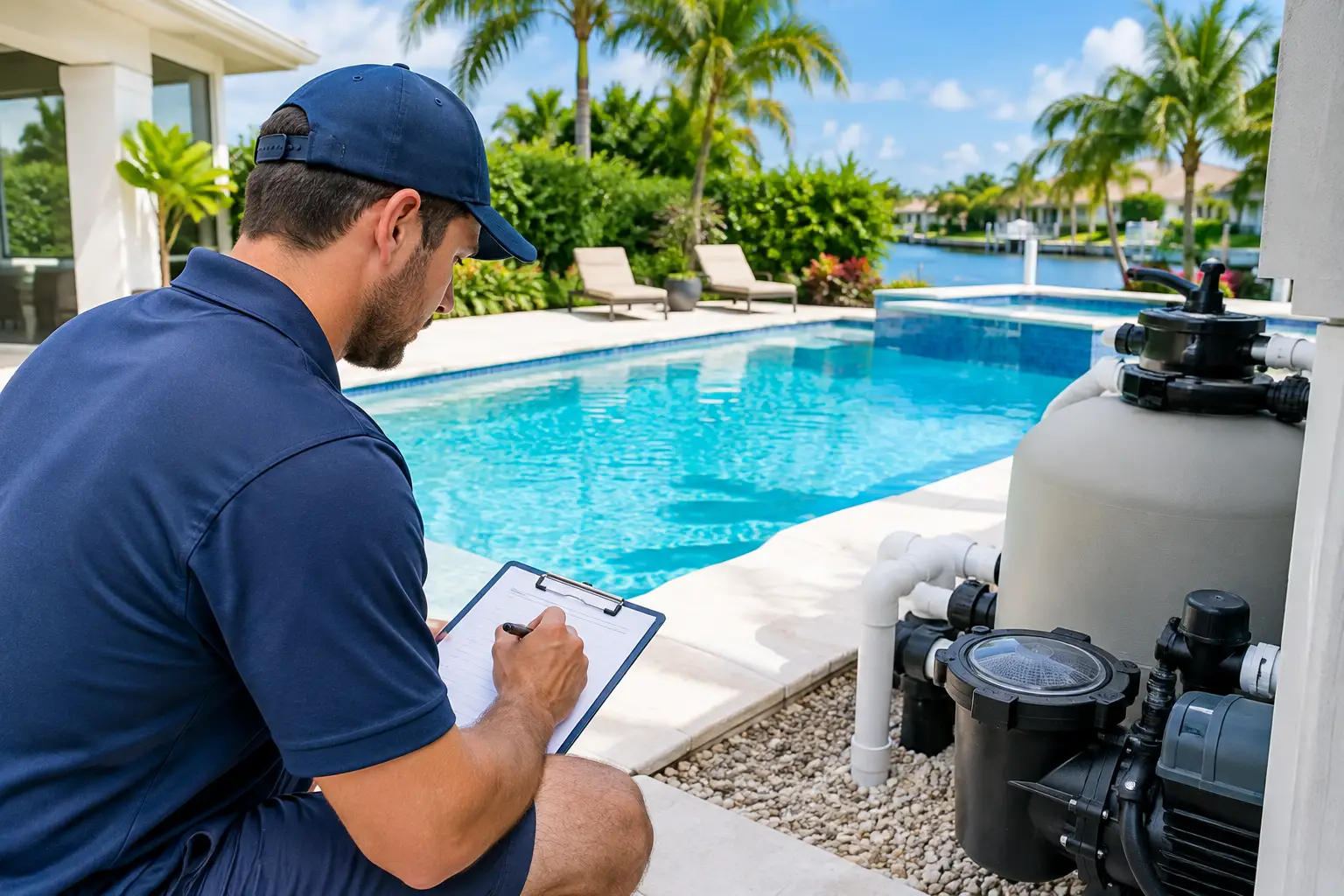
The pool’s operating equipment is reviewed as part of this transition. Pump run times, filter pressure, skimmer performance and automation schedules should all support clean, even circulation. If your pool has a heater, salt system, water features or automatic controls, the timing for bringing each feature online should follow the builder’s and manufacturer’s guidance.
At the end of the 28 days, the pool should be ready to move into a regular service routine. That does not mean chemistry will never change - every pool needs continued testing and adjustment - but it means the plaster has had the protected beginning it deserves.
What homeowners should avoid during a new pool start-up
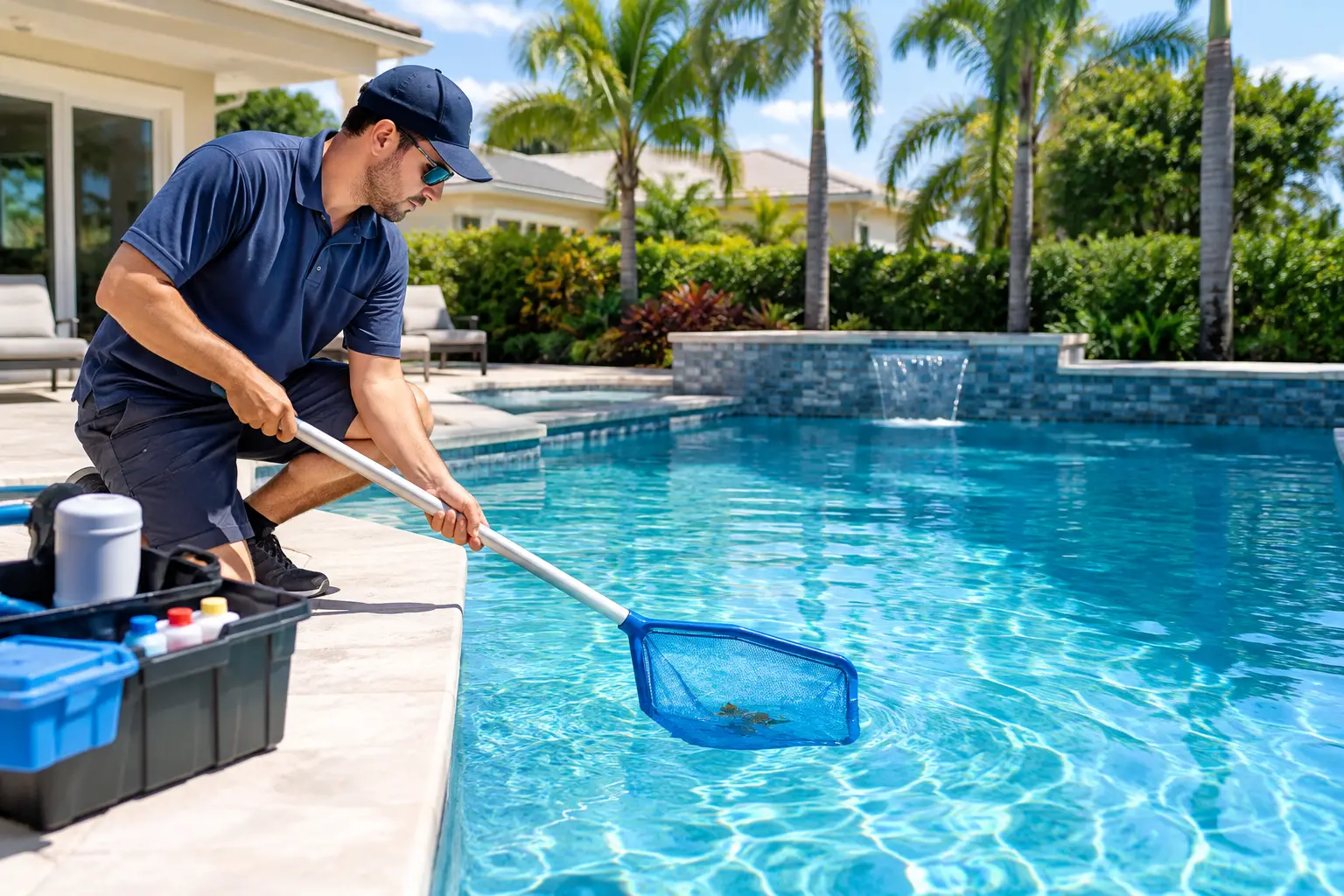
A fresh pool is exciting, and it is understandable to want to enjoy it immediately. Still, a little patience can prevent costly cosmetic issues. Avoid allowing leaves, metal objects, fertiliser, lawn clippings or construction debris to sit in the water. Organic material can stain, while metals and other contaminants may leave marks that are difficult to lift from new plaster.
Do not use an automatic pool cleaner unless the builder says it is safe for your particular surface and stage of cure. Wheels, tracks and hoses can mark or rub a soft finish. For the same reason, avoid dragging furniture, vacuums or heavy equipment across steps and ledges.
Salt chlorination is another area where timing matters. Many builders ask owners to wait before introducing salt to a newly plastered pool. The same caution may apply to heaters and certain water features. There is no one-size-fits-all switch-on date, so following the finish manufacturer’s and builder’s requirements is the sensible route.
Finally, do not try to fix cloudy water or a high pH reading by adding a large dose of chemicals without testing. Fresh plaster water changes quickly, and overcorrection can be just as problematic as neglect. Precise chemistry protects both the finish and the people swimming in it.
Professional care brings clarity during the curing period
A 28-day program is particularly valuable because it replaces guesswork with a clear schedule. A trained pool professional can brush the surface properly, test the water consistently, clean the filter when required and spot developing issues before they become permanent.
For busy families, it also means you are not trying to interpret chemical readings between work, school runs and weekend plans. You receive the reassurance that someone is watching the details: whether pH is climbing, whether plaster dust is building up or whether circulation needs attention after a storm.
Turtle Pool Care provides structured start-up support for new builds and resurfaced pools, with detailed service reporting and photographic proof of work. That transparency is especially helpful when you want to see that the new surface is being treated with the same care you put into choosing it.
Give your new finish the patient start it deserves
The first month of a pool’s life is brief, but it has a lasting effect on how the finish looks and feels. Keep the water moving, keep the surface brushed, make chemistry adjustments carefully and follow the guidance for your specific plaster or aggregate finish. A well-managed start-up lets you spend the years ahead enjoying a pool that looks clean, feels smooth and stays ready for family time.