A pool can look perfectly clear on Monday and begin showing a faint green tint by the weekend. When that happens, phosphates often get blamed first. They can contribute to algae problems, but they are not the whole story. Knowing how to treat pool phosphates starts with understanding what the test result means, what your sanitizer is doing, and whether algae is already present.
For most residential pools, phosphate treatment is a targeted maintenance step, not an emergency fix. The goal is to reduce an algae food source while keeping filtration, circulation, sanitizer, and water balance working together. That is how you get water that stays clear, safe, and turtly clean.
What phosphates are and why they matter
Phosphates are compounds containing phosphorus. They enter pool water through ordinary sources: lawn fertilizer, leaves and pollen, rain, dust, swimmer residue, certain scale treatments, and sometimes source water. In western Palm Beach County, windblown debris, frequent rain, and lush landscaping can make phosphate buildup more common than homeowners expect.
Phosphates do not turn pool water green by themselves. Algae also needs favourable conditions, especially inadequate sanitizer, poor circulation, or neglected brushing and filtration. Think of phosphates as food in the pantry. If algae gets the chance to grow, a plentiful food supply can make that growth harder to control.
That distinction matters. Adding phosphate remover to a pool with low chlorine and visible algae may lower the phosphate reading, but it will not replace algae treatment. The sanitizer still has to do the work of killing active growth.
Test before you treat pool phosphates
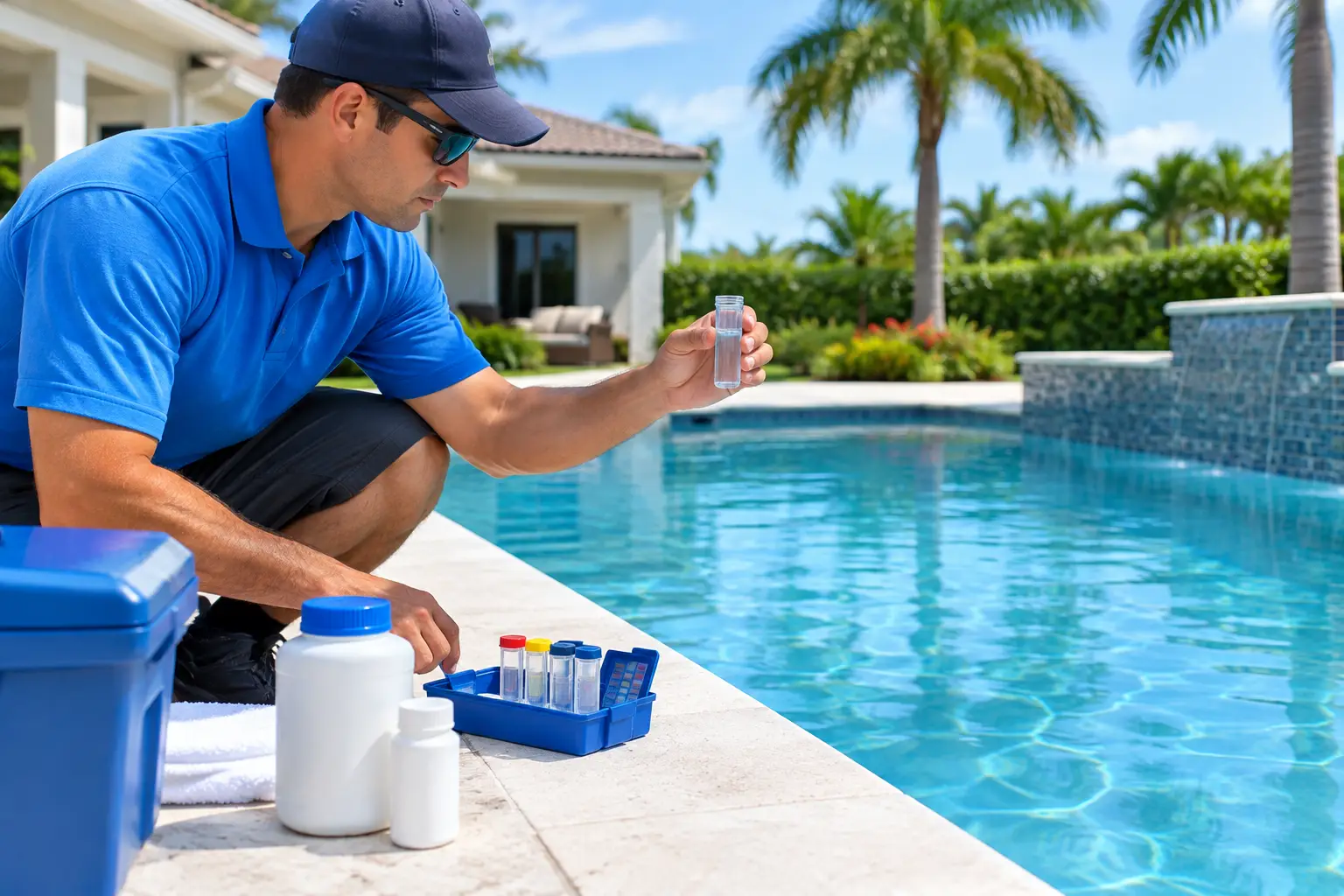
A phosphate reading is useful only when viewed alongside the rest of the water chemistry. Before adding a phosphate remover, test or confirm free chlorine, pH, total alkalinity, stabilizer, calcium hardness, and phosphate level. If the water is cloudy, green, or showing early algae on walls and steps, inspect the filter and circulation as well.
There is no single phosphate number that demands immediate action in every pool. A pool with a higher reading can remain clear when chlorine is maintained properly and the system is circulating well. On the other hand, a pool that repeatedly develops algae may benefit from phosphate reduction even if the reading is not extreme.
Treating based only on a number can waste product and create temporary cloudiness. A practical approach is to look for a pattern: recurring algae, heavy debris load, persistent phosphate readings after cleaning, or a recent event such as fertilizer overspray or a large amount of organic material entering the water.
Do not confuse phosphates with the algae problem
If algae is visible, address it first as an active water-quality issue. Brush affected surfaces, remove leaves and debris, confirm the pump is operating and circulating properly, and maintain the appropriate sanitizer level based on your pool's test results. The filter may need additional cleaning or backwashing during recovery, depending on the filter type and its pressure or flow condition.
Once the algae is under control, phosphate treatment can help reduce the conditions that support another outbreak. This sequence is usually more effective than treating phosphates alone and hoping the water clears.
How to treat pool phosphates safely
Use a quality phosphate remover that is labelled for swimming pools, and follow that product's dose directions for your measured phosphate level and pool volume. More product is not automatically better. Overdosing can make the water cloudy, put extra load on the filter, and complicate an otherwise simple correction.
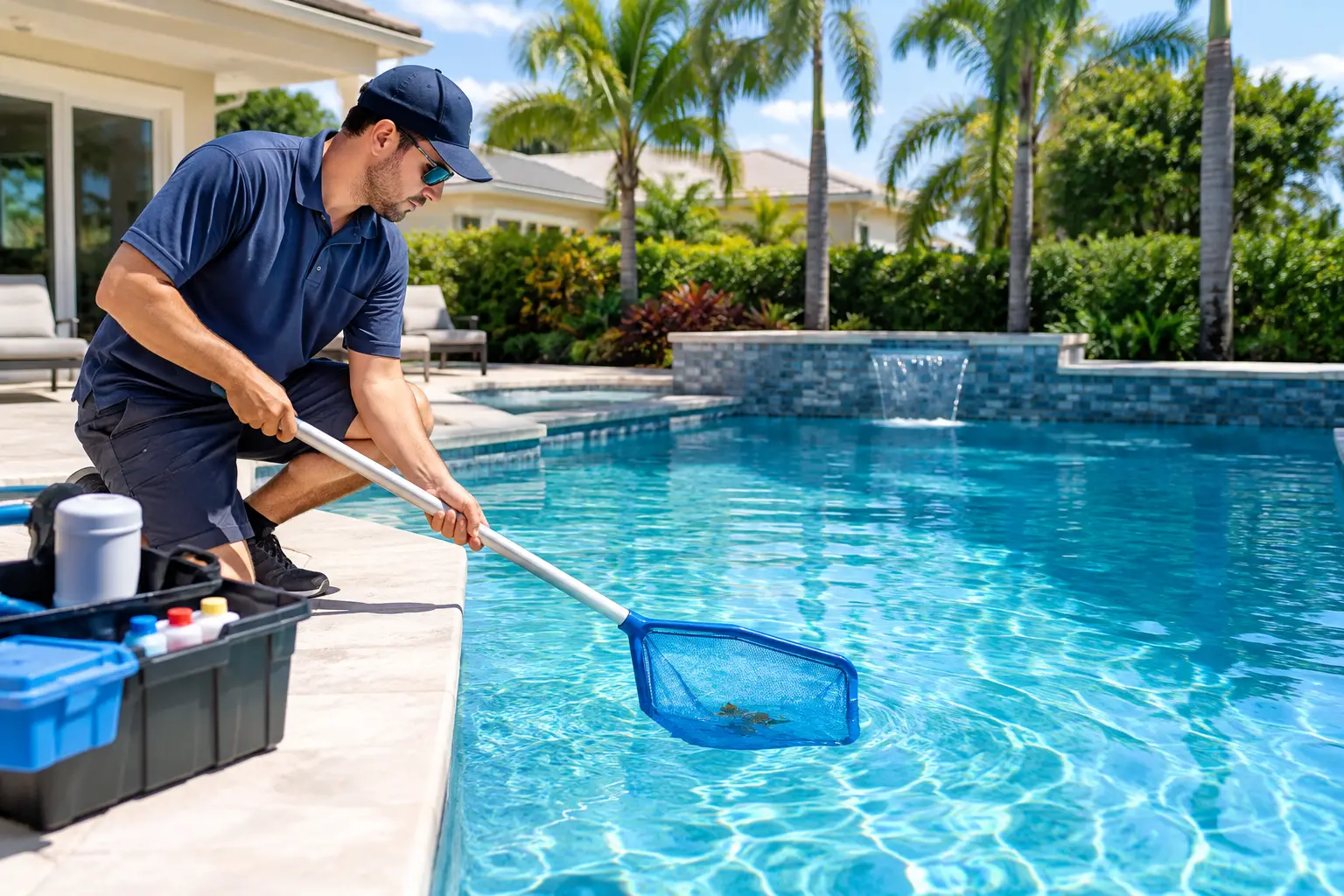
Before adding any treatment, remove as much debris as possible. Skim leaves, empty baskets, and brush areas where dirt or algae may be clinging to the surface. Organic debris is a continuing phosphate source, so lowering phosphates without cleaning the pool can become a frustrating cycle.
With the circulation system running, add the product slowly according to its label instructions. Avoid pouring chemicals into a skimmer unless the label specifically directs you to do so. Do not mix pool chemicals together, and never combine products in the same container. Store each product sealed, dry, and away from children and pets.
After treatment, let the pump run long enough to circulate and filter the water thoroughly. Some phosphate removers create fine particles as they bind to phosphates. A brief milky or hazy appearance can occur, particularly with a larger treatment. That is often a sign that the filter has work to do, not a reason to add more chemicals immediately.
Check filter pressure, flow, and water clarity over the next day or two. Clean or backwash the filter only when appropriate for its type and operating condition. A cartridge filter, for example, needs a proper rinse and inspection rather than a backwash. If cloudiness persists or circulation seems weak, the issue may be filtration or equipment related rather than phosphate level alone.
Retest after the water has circulated
Do not expect every phosphate treatment to produce a perfect test result within minutes. Allow the water to circulate, filter, and settle according to the product directions before retesting. If the level remains elevated, consider whether the initial reading was very high, whether new contaminants are entering the pool, or whether the filter needs attention.
Large reductions are sometimes better handled in stages. This is especially true when a pool has heavy organic debris, a neglected filter, or a history of algae. Gradual, measured treatment protects water clarity and helps avoid unnecessary chemical use.
Keep phosphates from building back up
The best phosphate treatment plan includes prevention. Weekly skimming, brushing, vacuuming as needed, and basket cleaning remove the material that eventually breaks down in the water. Brushing is easy to overlook, but it helps disrupt early algae growth in corners, behind ladders, on steps, and along the tile line.
Watch what enters the pool after storms or yard work. Fertilizer and landscaping products should be kept well away from the water, and grass clippings should never be blown toward the pool. If you use a leaf net after a windy day, empty it promptly rather than allowing debris to decay in the water.
Consistent sanitizer is still the strongest algae defence. A phosphate remover supports that effort, but it does not take over the job. The right chlorine level depends on your pool's stabilizer level, bather load, weather, and other test results. Saltwater pools need the same attention to sanitizer production, circulation, and balance as traditionally chlorinated pools.
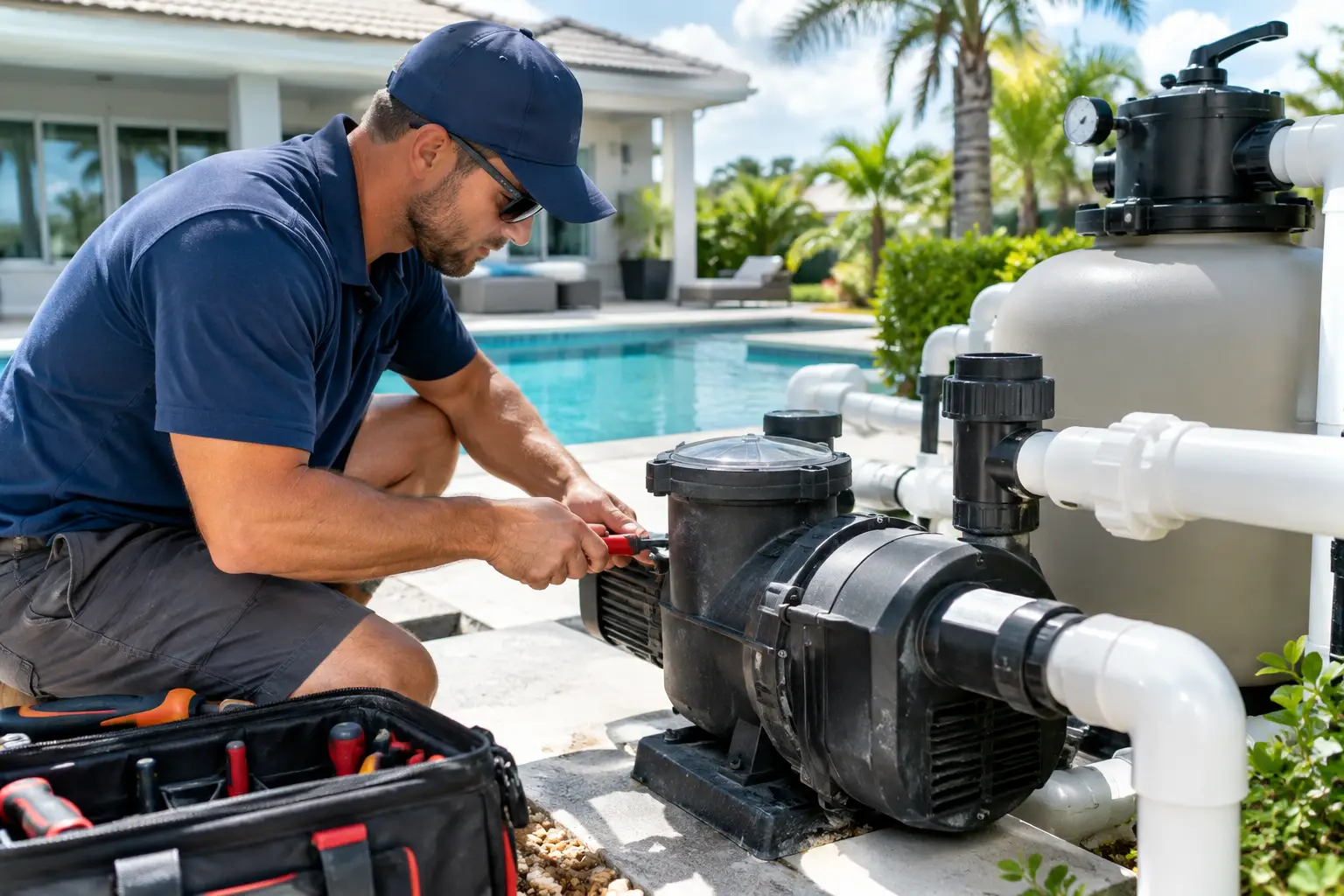
Good circulation also matters. A variable-speed pump may run at different speeds throughout the day, but it still needs enough daily run time and flow to filter the water effectively. Dead spots, dirty filters, clogged skimmer baskets, and weak return flow can allow algae to gain a foothold even when the chemistry looks close to normal.
When a professional assessment makes sense
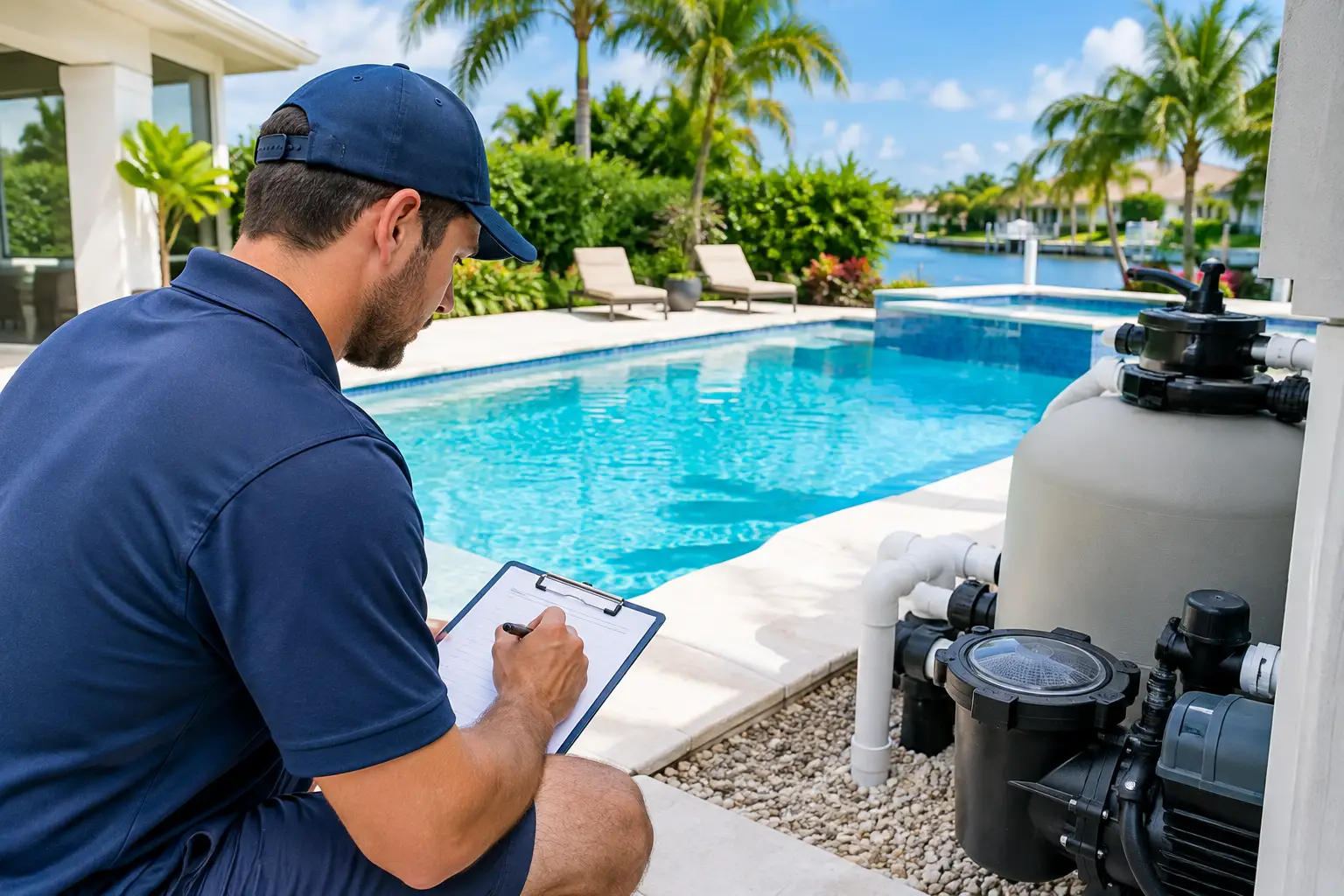
Call for help when the same algae problem returns despite regular treatment, the water stays cloudy after phosphate remover and filtration, or the pump and filter do not seem to be moving water properly. Repeated phosphate issues can point to a bigger pattern involving equipment performance, filter condition, circulation design, chemical balance, or a steady contamination source.
A dependable weekly service program helps catch these patterns early. At Turtle Pool Care, each visit includes water testing, chemical balancing, cleaning, and a routine visual equipment check, with digital service reporting and photos so homeowners can see what was done. That ongoing record makes it easier to spot changes before a clear pool becomes a green-to-clean recovery.
Pool phosphates are manageable when they are treated as one part of the chemistry picture, not the villain behind every water problem. Keep debris out, maintain sanitizer, respect your filter, and use phosphate remover when testing and pool conditions support it. A few careful steps now can protect many more easy, clear afternoons in the water.