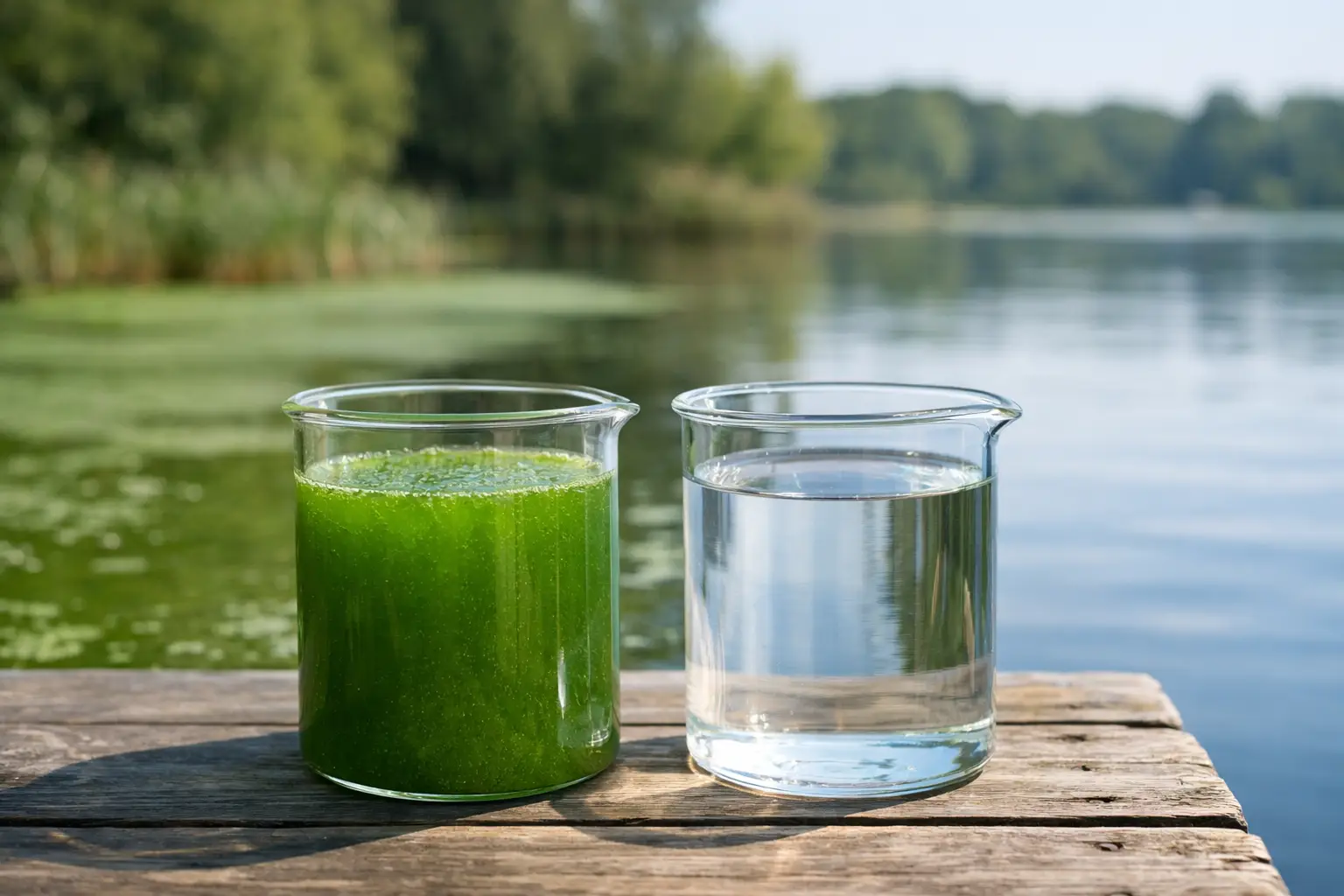
A pool can turn green far more quickly than most homeowners expect. One week of heavy rain, a tired pump, missed brushing or a chemical imbalance can give algae the opening it needs. This algae recovery example shows why getting water clear again is not simply a matter of adding chlorine and hoping for the best.
For a family pool, recovery needs to address the whole system: the water chemistry, circulation, filter condition and the algae clinging to walls, steps and fittings. Done properly, the result is more than clear-looking water. It is a safe, balanced pool that is ready to stay truly clean.
An algae recovery example: diagnosis before treatment
Consider a typical pool recovery call after a wet Florida week. The water is opaque green, the shallow-end floor is barely visible and there is a slippery film along the steps. The homeowner has already added a few bags of shock, but the pool has not improved. In some cases, it may look worse because dead algae and fine debris are now suspended throughout the water.
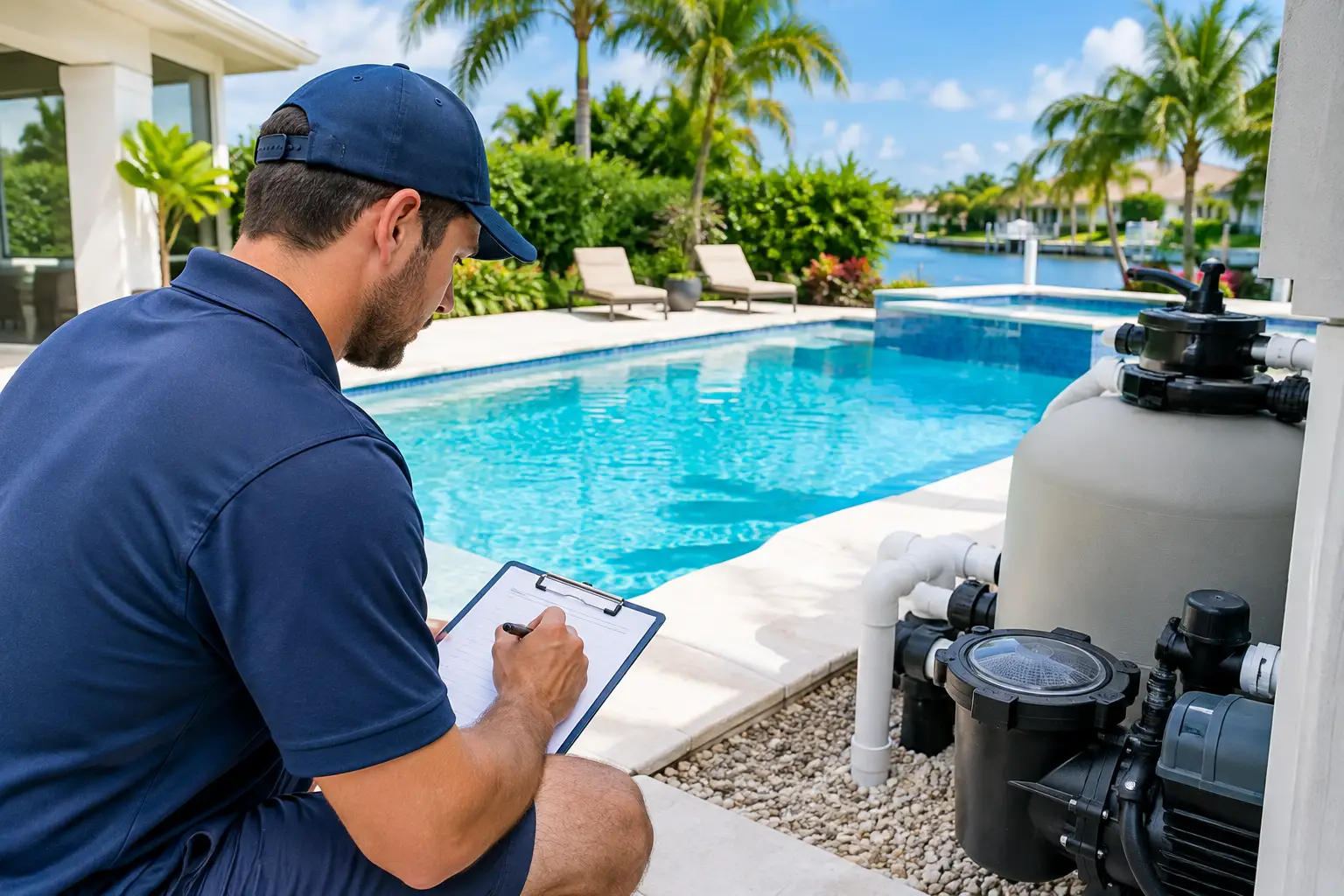
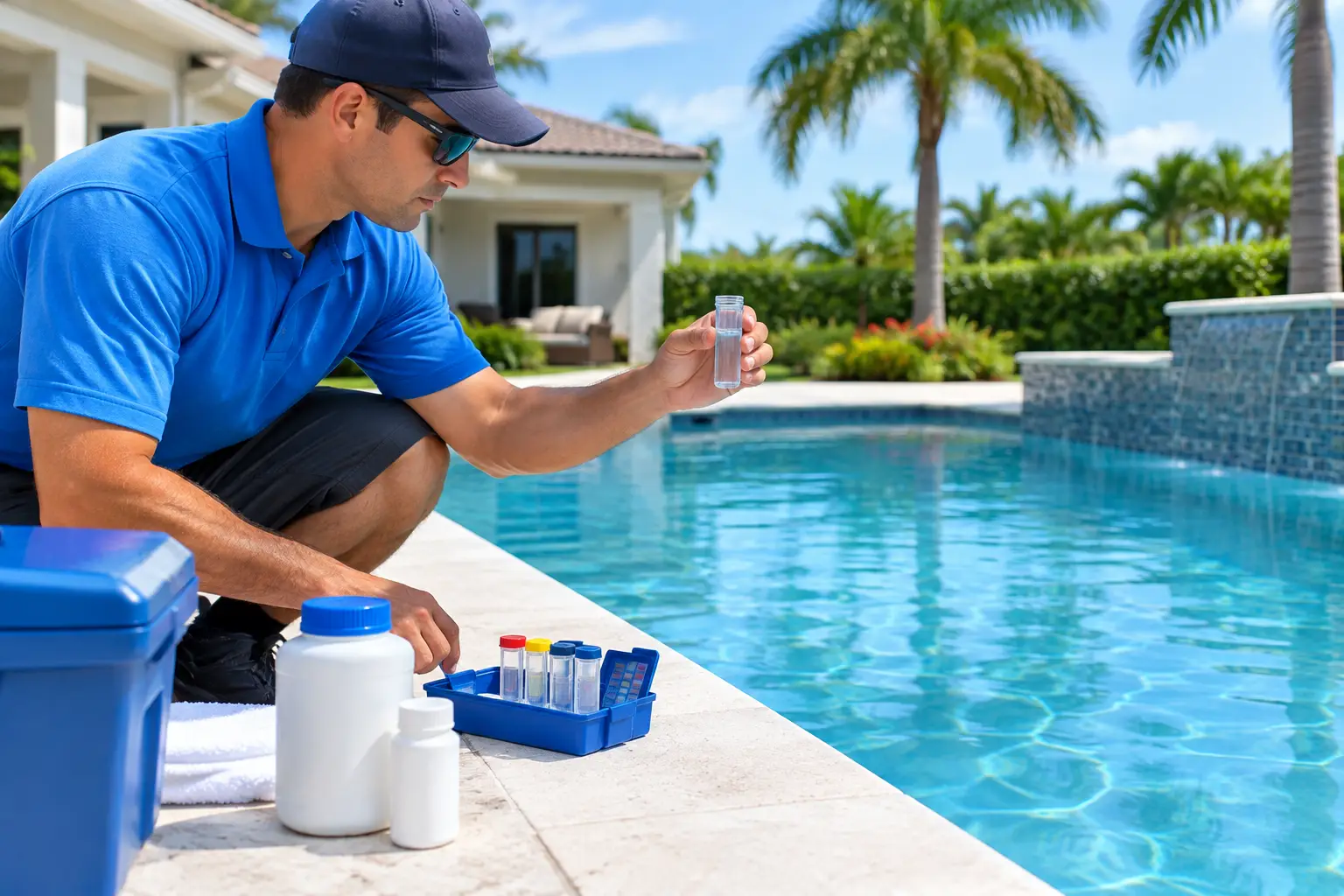
The first job is not to add more products. It is to test the chemistry and inspect the equipment. A technician checks free chlorine, pH, total alkalinity, stabiliser level, calcium hardness and, where appropriate, phosphates. They also confirm that the pump is moving water properly, the skimmer is drawing well and the filter pressure is within a sensible range.
In this example, the pH is high, chlorine is reading close to zero and the filter is overdue for cleaning. High pH makes chlorine less effective, while a loaded cartridge or sand filter cannot capture the volume of dead algae produced during treatment. Those two issues explain why the earlier shock treatment did not produce a clear pool.
The pool does not need a shortcut. It needs a controlled recovery plan.
Why green water needs a full recovery plan
Algae is a living contaminant, not just a color in the water. It consumes chlorine, spreads across pool surfaces and can shelter in corners, behind ladders, around returns and inside poorly circulated areas. When it dies, it becomes fine particulate matter that still has to be filtered or vacuumed out.
That is why a pool can look bright blue after an initial treatment yet turn cloudy the next day. The algae may be dead, but the recovery is unfinished. Equally, a pool can appear clear while its chlorine level is too low to keep it sanitary.
Different shades can point to different conditions. Light green water commonly indicates early algae growth. Darker green water often means a more established bloom, while mustard-colored algae may cling stubbornly to shaded surfaces. Black algae is especially persistent because it roots into plaster pores and generally requires focused brushing and repeat treatment. The exact approach depends on the pool surface, chemistry readings and equipment condition.
Step 1: Balance the water so sanitizer can work
In our example, the pH is brought into the proper treatment range before chlorine is raised. This matters because chlorine works much more effectively when the water is correctly balanced. Total alkalinity is considered too, since it helps keep pH from swinging wildly during recovery.
The stabiliser level also deserves attention. Too little stabiliser allows Florida sunshine to burn through chlorine quickly. Too much can make chlorine less active and make a recovery take longer. There is no single chemical dose that suits every green pool, which is why testing should lead the treatment rather than guesswork.
Once the water is ready, chlorine is raised to the level needed to kill the algae present. The level must then be checked and maintained, not applied once and forgotten. A heavy algae bloom creates a high chlorine demand, especially in the first stage of treatment.
Step 2: Brush every surface and remove debris
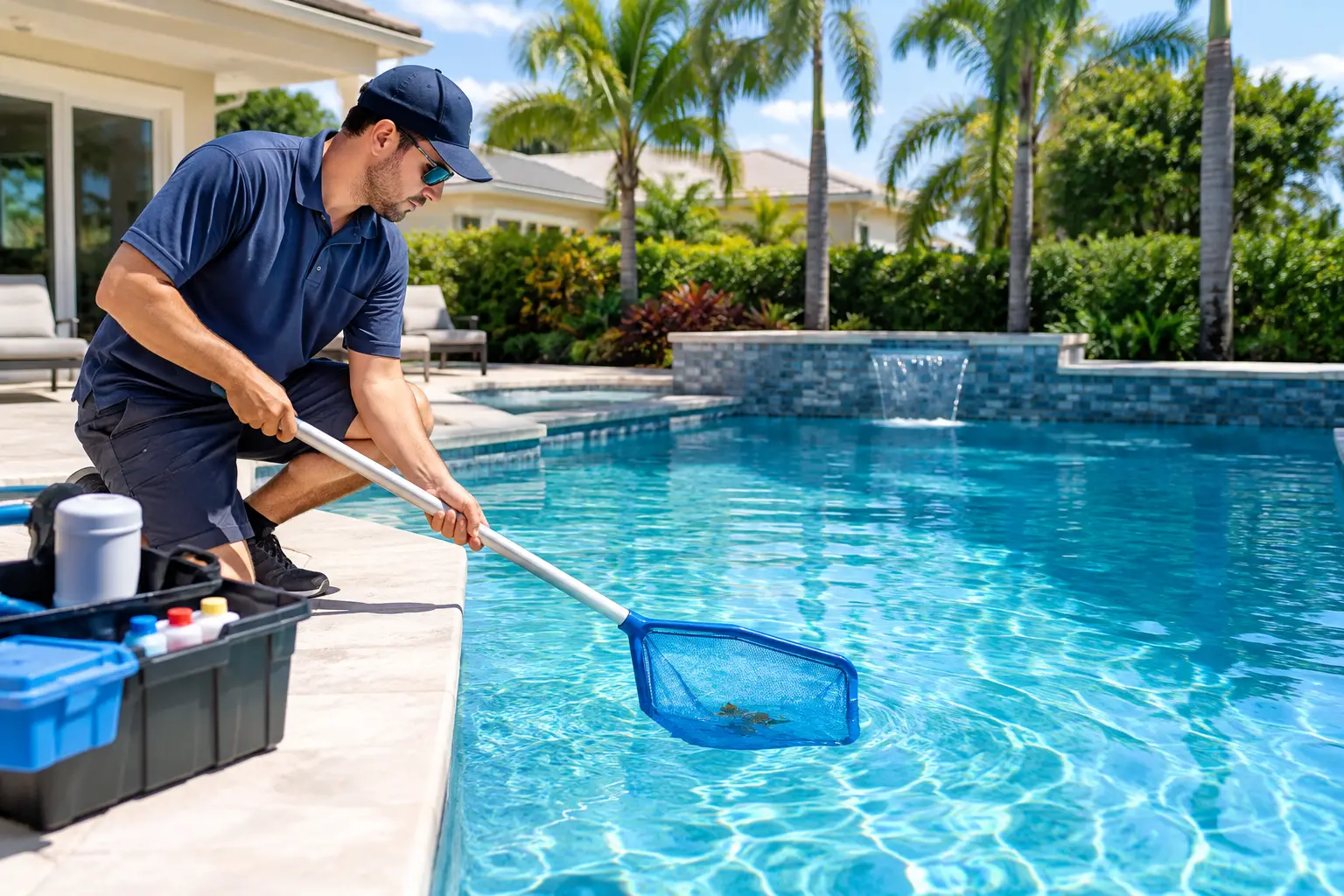
Chemistry kills algae, but brushing exposes it. Walls, floors, steps, tile lines, skimmer throats and tight corners all need attention. Brushing breaks up the protective layer on algae and puts it into circulation, where the sanitizer and filter can deal with it.
Large debris is removed first because leaves, seed pods and organic material consume chlorine. In Palm Beach County, storms can deposit enough debris to overwhelm a skimmer basket and restrict water flow. The pool may need vacuuming to waste where equipment allows it, particularly if a thick layer of settled algae covers the floor.
This is also where care matters. Aggressive brushing is not appropriate for every pool finish, and vacuuming to waste can lower the water level quickly. A good recovery balances thorough cleaning with protection for the pool surface and equipment.
Step 3: Keep circulation and filtration working hard
As the chlorine does its work, the water in this algae recovery example often changes from green to a dull blue-grey or cloudy blue. That is progress, not failure. The algae is being killed, but the filter now has to remove the tiny particles left behind.
The pump should run long enough to keep the water circulating throughout the recovery period. Filter pressure needs monitoring because captured debris restricts flow. Cartridge filters may require cleaning, while sand or DE filters may need backwashing or servicing according to their condition and manufacturer guidance.
Skipping this step is one of the main reasons a pool stays cloudy after an algae treatment. Clear water relies on filtration just as much as it relies on chemistry. If the pump is struggling, a valve is set incorrectly or the filter is damaged, those equipment issues should be corrected rather than masked with extra chemicals.
Step 4: Verify that the pool is actually recovered
A recovered pool has more than a pleasant color. The floor should be clearly visible, surfaces should feel clean rather than slippery, circulation should be normal and the filter should be operating effectively. Most importantly, the chemistry must be retested and adjusted for safe swimming.
The team continues brushing and removing any remaining settled debris until the water is clear. Chlorine is then allowed to return to its normal maintenance range while pH, alkalinity and stabiliser are fine-tuned. Depending on how severe the bloom was, the process can take a day or several days. Equipment capacity, weather, debris load and the starting water balance all affect the timeline.
This final verification prevents the common mistake of reopening a pool too early. If chlorine is still at a treatment level, if the water is not fully clear or if algae remains on surfaces, it is not ready for swimmers.
How to prevent the next algae bloom
Most algae problems start small. A reliable weekly service routine catches the warning signs before water turns green: weakening chlorine, rising pH, reduced circulation, dirty baskets, early wall growth or a filter that needs attention. Regular brushing and vacuuming also remove the organic material algae feeds on.
Homeowners can help between visits by keeping the water level near the middle of the skimmer opening, emptying baskets when needed and reporting unusual pump sounds, leaks or poor return flow. After heavy rain or a party with a busy pool, testing and a little extra attention may be needed. It depends on the bather load, weather and pool equipment, but waiting until the water changes color usually means a bigger job.
For pools in Wellington, Royal Palm Beach, The Acreage and nearby communities, year-round heat makes consistent chemistry especially valuable. Turtle Pool Care combines green-to-clean treatments with documented weekly maintenance, so homeowners can see what was checked, cleaned and balanced after each visit.
A green pool is fixable, but it should be treated as a signal from the whole pool system. Address it promptly, give the filter time to do its job and keep the chemistry on track afterwards. That is how a recovery becomes lasting peace of mind rather than another green surprise next week.