A quick Florida shower may barely register in a properly maintained pool. A long, hard downpour that sends leaves, mulch and patio runoff into the water is a different story. Can rain affect pool chemistry? Yes, particularly when it is heavy, prolonged or followed by high winds. The good news is that most rain-related issues are manageable when you know what to check and act before cloudy water or algae takes hold.
How rain can affect pool chemistry
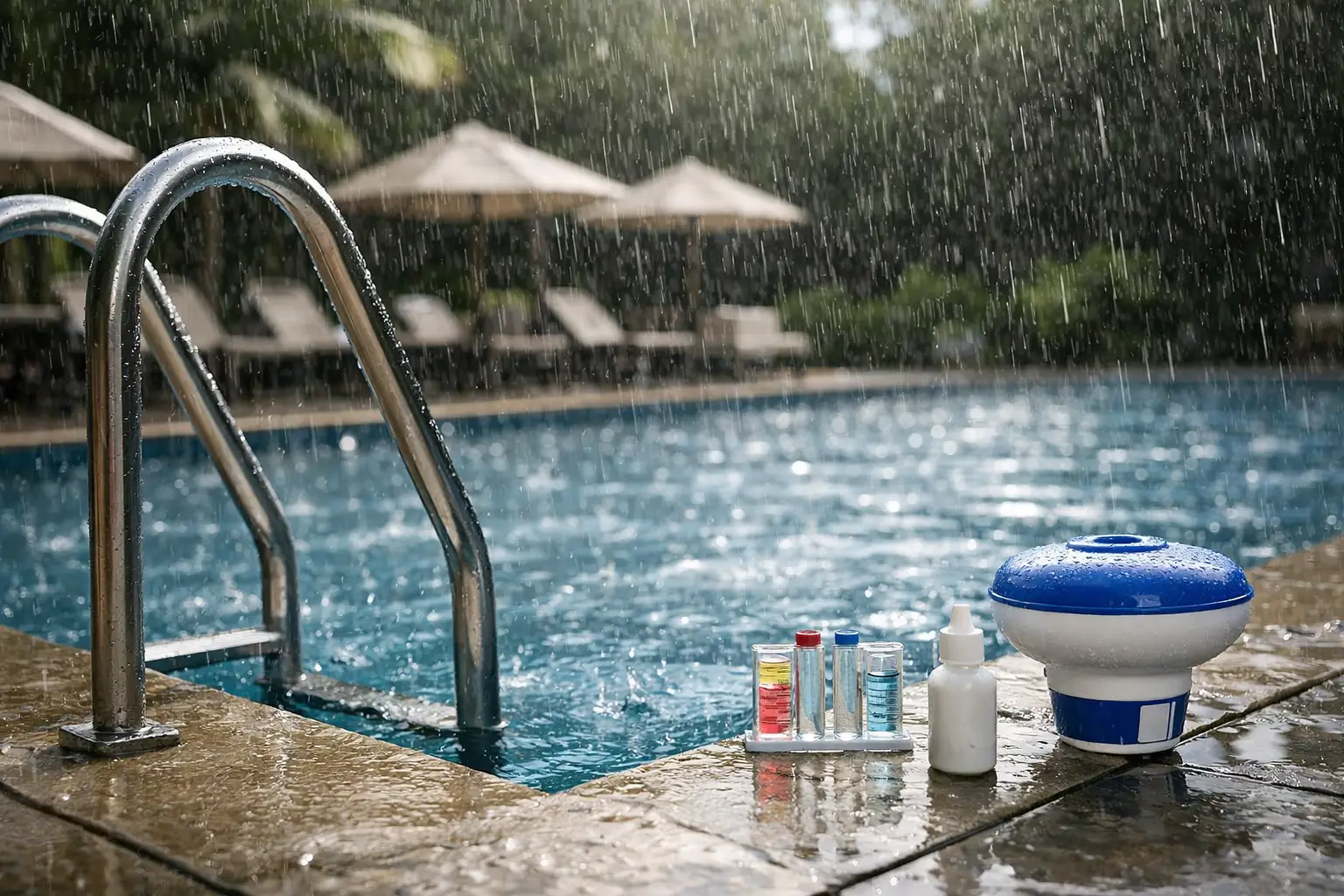
Rainwater itself is usually not the villain people expect it to be. It is often slightly acidic, but one brief shower rarely changes the chemistry of a full-sized residential pool enough to cause a problem. What matters more is the amount of rain, what it carries into the pool, and how balanced the water was beforehand.
A substantial downpour adds fresh water and dilutes the chemicals already in the pool. That can lower chlorine, calcium hardness, stabiliser and alkalinity readings. If free chlorine drops too low, the pool has less protection against bacteria and algae, especially in Palm Beach County’s warm conditions.
Rain also tends to arrive with wind. Leaves, pollen, grass clippings, soil, insects and airborne debris can land in the water. Organic material consumes chlorine as it breaks down, which means a pool can lose sanitation faster than expected even if the rainwater itself has had only a modest effect.
The biggest concern is runoff. Water flowing from a lawn, roof, deck or landscaped area can introduce fertiliser, soil, phosphates and other contaminants. A pool that overflows can also lose treated water while being topped up with untreated water. That combination can shift chemical balance more noticeably than rain falling directly into the pool.
Which readings are most likely to change?
After heavy rain, free chlorine is usually the first number worth checking. Chlorine may be diluted and used up by debris at the same time. A reading that was suitable before the storm can become inadequate within a day, leaving an opening for early algae growth.
pH and total alkalinity can move as well. Because rain is commonly mildly acidic, repeated heavy rainfall may lower these readings. However, results vary. Runoff, fresh fill water, nearby construction dust and the pool’s existing chemistry can push values in different directions, so guessing is never as reliable as testing.
Cyanuric acid, often called stabiliser or conditioner, can also become diluted after significant overflow or repeated topping up. In Florida sunshine, a correct stabiliser level helps chlorine hold up against ultraviolet light. Too little can make chlorine disappear quickly; too much can make chlorine less effective. This is one reason a simple chlorine-only adjustment is not always the complete answer.
Calcium hardness changes more gradually, but dilution over time matters, particularly for plaster pools. New or recently resurfaced pools need especially careful monitoring because chemistry supports the plaster curing process. During a structured start-up period, changes in pH, alkalinity and calcium should be addressed with the pool’s surface and age in mind, not treated as a standard post-rain adjustment.
When rain means you should test the water
You do not need to test after every passing shower. If the pool is clear, the water level is normal and no visible debris has entered, your normal service schedule may be all that is needed.
Test sooner after a storm that has caused overflow, left a layer of debris, turned the water dull, or brought visible runoff into the pool. It is also sensible to check after several rainy days in a row, even if no single event seemed dramatic. Small dilution and chlorine demand can add up.
Look beyond the test kit, too. Cloudiness, a slippery feel on steps or walls, a green tint, foam, strong chloramine odour, or a sudden increase in insects are all signs the pool may need attention. A strong chemical smell does not mean there is plenty of chlorine. It can indicate that chlorine has combined with contaminants and needs to be restored properly.
What to do after a heavy downpour
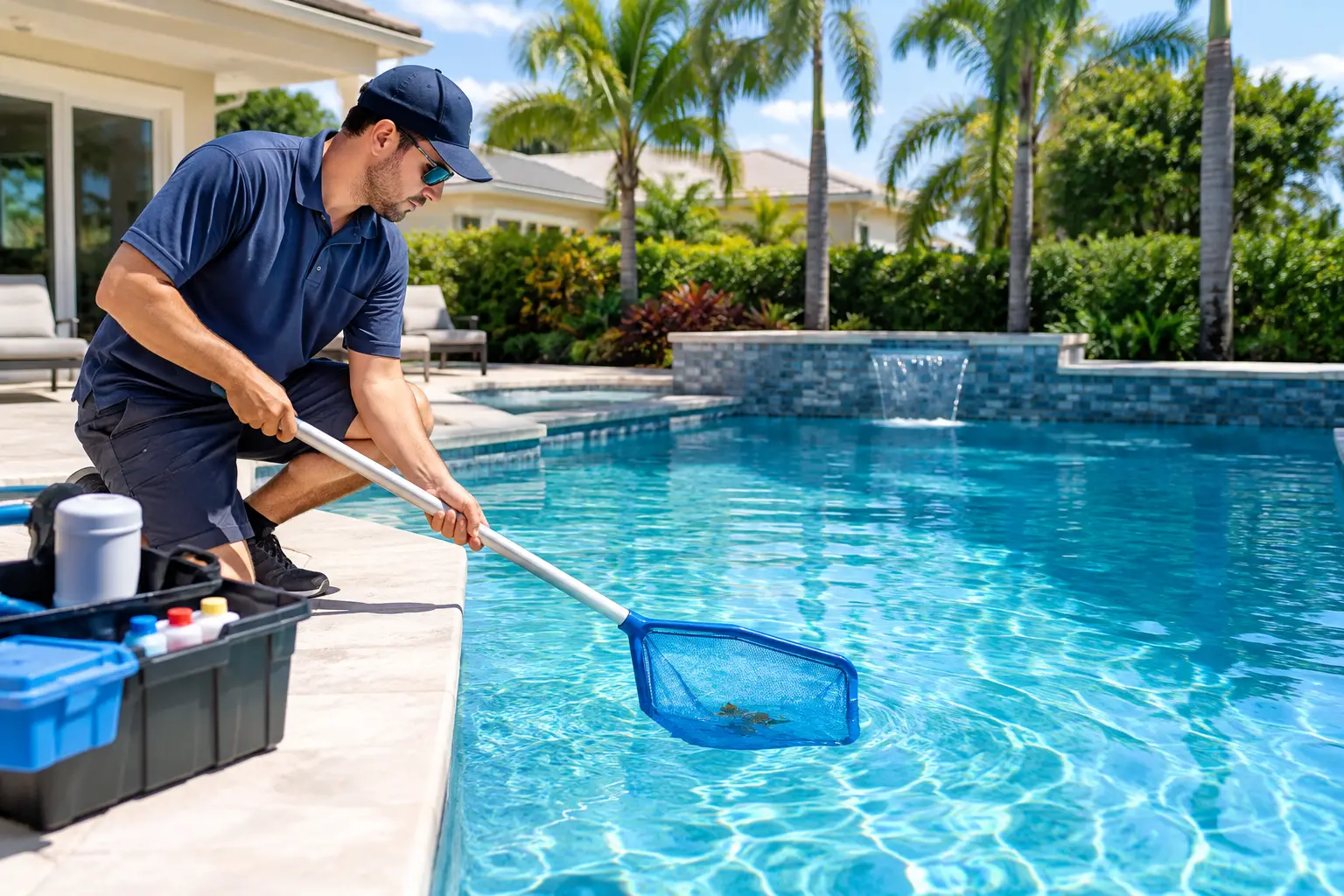
Start by removing what the storm left behind. Empty the skimmer and pump baskets, skim leaves and larger debris from the surface, and vacuum settled dirt if needed. Organic debris should not sit in the water while it consumes sanitizer and stains surfaces.
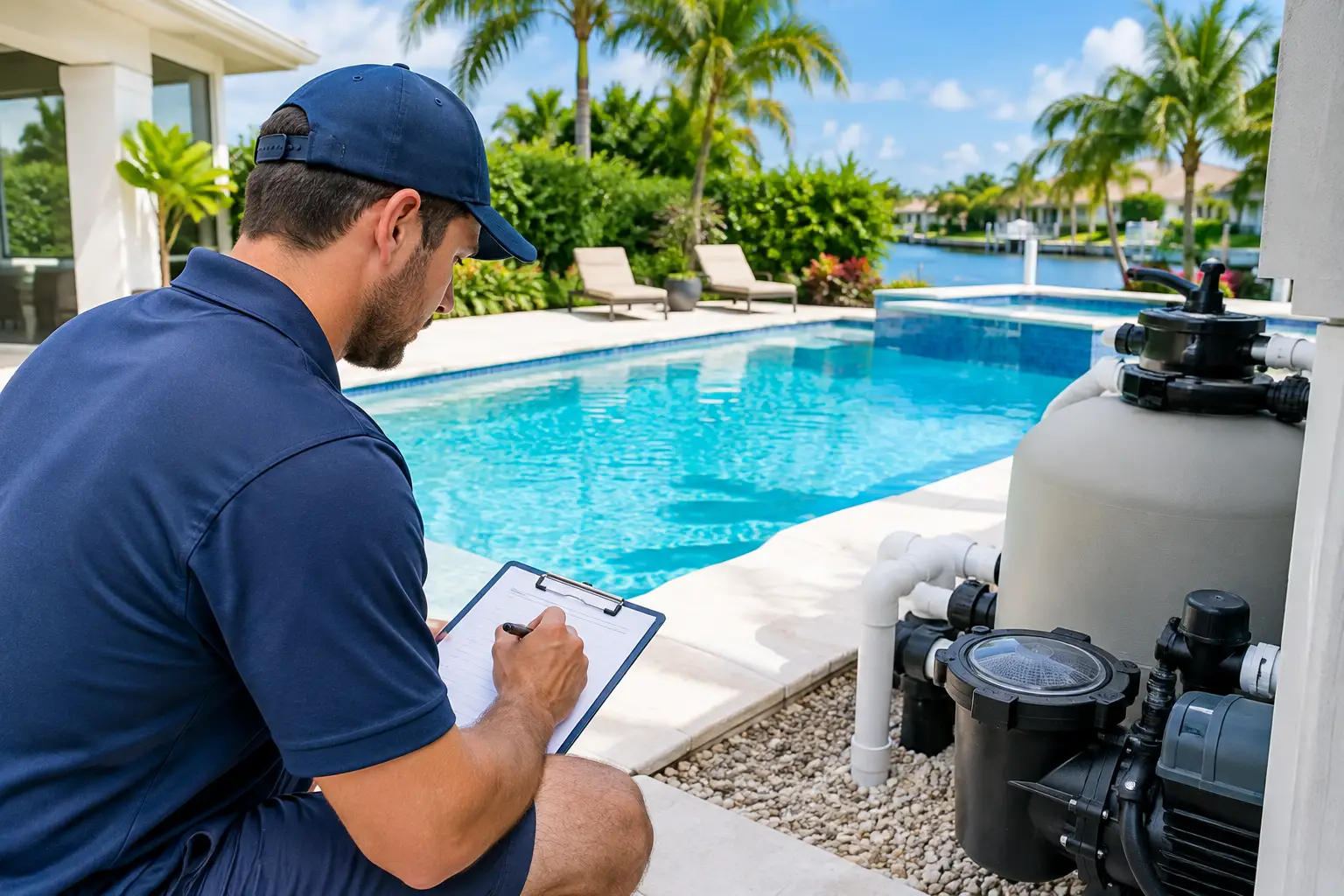
Next, make sure the circulation system is operating normally. Check that the water level is not too high for the skimmer to work effectively and that the pump is moving water as expected. If the pool has overflowed, allow the level to return to its normal operating range before making major chemical decisions. Never drain water below a safe level or attempt electrical equipment repairs yourself after storm damage.
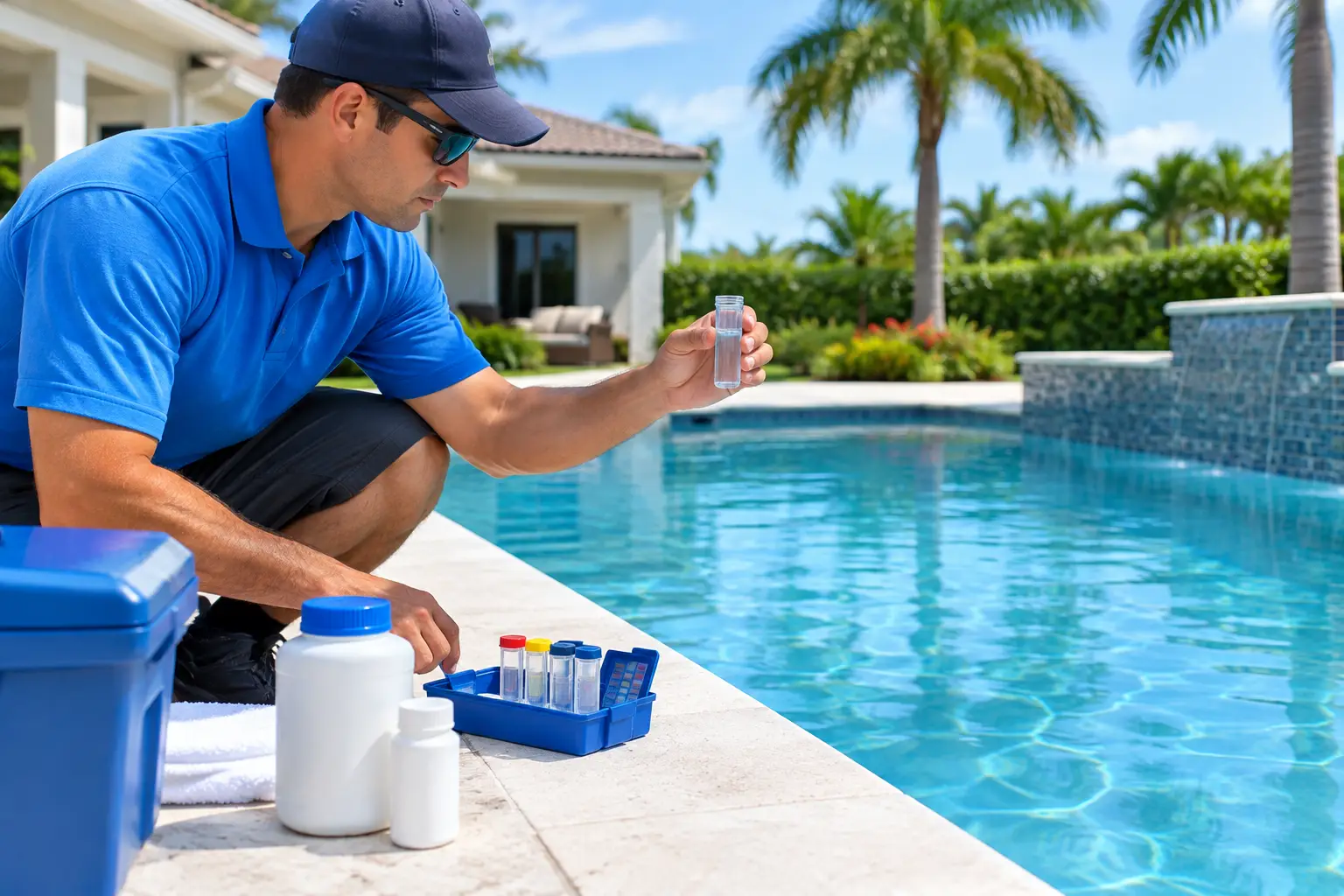
Then test the water with a reliable kit or professional analysis. At minimum, check free chlorine, pH and total alkalinity. After a major overflow or an extended period of rainfall, check stabiliser and calcium hardness as well. Adjustments should be measured, not rushed. Adding several chemicals at once without knowing the actual readings can create a new imbalance.
Finally, run circulation long enough to distribute any treatment fully. If the water is cloudy or has a high debris load, filtration may need extra time and the filter may need cleaning. Sand, cartridge and DE filters each have different maintenance needs, so follow the manufacturer’s guidance rather than cleaning a filter more often than necessary.
Can rain affect pool chemistry enough to cause algae?
It can, but rain does not automatically create algae. Algae needs an opportunity: low effective chlorine, warm water, poor circulation, insufficient filtration or a build-up of nutrients and debris. Heavy rain can contribute to several of those conditions at once.
This is why clear water before a storm is valuable. A well-balanced pool with a healthy chlorine level has a buffer. It is more likely to come through a downpour with only a basket emptying and a routine test. A pool already hovering at the low end of its chlorine range can turn cloudy quickly after rain, especially during hot, humid weather.
If you see a faint green cast or persistent cloudiness, do not wait for it to become a full green-pool problem. Early treatment is usually simpler, less disruptive and gentler on equipment than a large-scale recovery. Brushing walls and steps, restoring sanitation, improving filtration and addressing the underlying chemistry can stop a small issue becoming a bigger one.
Avoid the common post-rain overcorrection
The temptation after a storm is to add extra chlorine, algaecide, clarifier and pH chemicals all at once. That approach can waste products and make the water harder to balance. For example, adding chlorine without accounting for pH or stabiliser may provide only a short-lived improvement. Adding algaecide to a pool with no algae may add little value at all.
Avoid using the pool if stormwater has carried obvious contamination into it, if the water is cloudy enough that you cannot clearly see the main drain, or if equipment has been affected by lightning, flooding or electrical damage. Safety comes before getting the pool open quickly.
It also helps to keep an eye on the area around the pool. Trim vegetation that drops heavily into the water, redirect obvious landscape runoff where possible, and keep loose mulch away from the coping. These small property-care measures reduce the contaminants that rain can carry into the pool.
For homeowners who would rather not spend the morning after every storm testing, dosing and checking equipment, consistent weekly care provides useful protection. Turtle Pool Care combines water testing, precise balancing, cleaning and equipment checks with visit reports, so you can see how the pool was cared for and enjoy a turtly clean swim when the weather clears.
The practical rule is simple: respect heavy rain, but do not panic over it. Clear debris promptly, verify circulation, test after meaningful storms and correct only what the readings show. That steady response keeps your water safe, balanced and ready for the next sunny afternoon.