A pool can look crystal clear on Monday and start showing early algae by the weekend when Florida heat, rain and heavy use push the water out of balance. That is why chlorine versus salt pool care is not really a choice between a treated pool and an untreated one. Both systems rely on chlorine to sanitise the water. The real differences are how that chlorine is supplied, what equipment is involved and how closely the chemistry needs to be watched.
For homeowners who want a safe, swim-ready pool without making chemistry a weekly project, the best option is usually the one that suits the pool, equipment and household routine - not simply the one with the most appealing label.
Chlorine Versus Salt Pool Care: The Key Difference
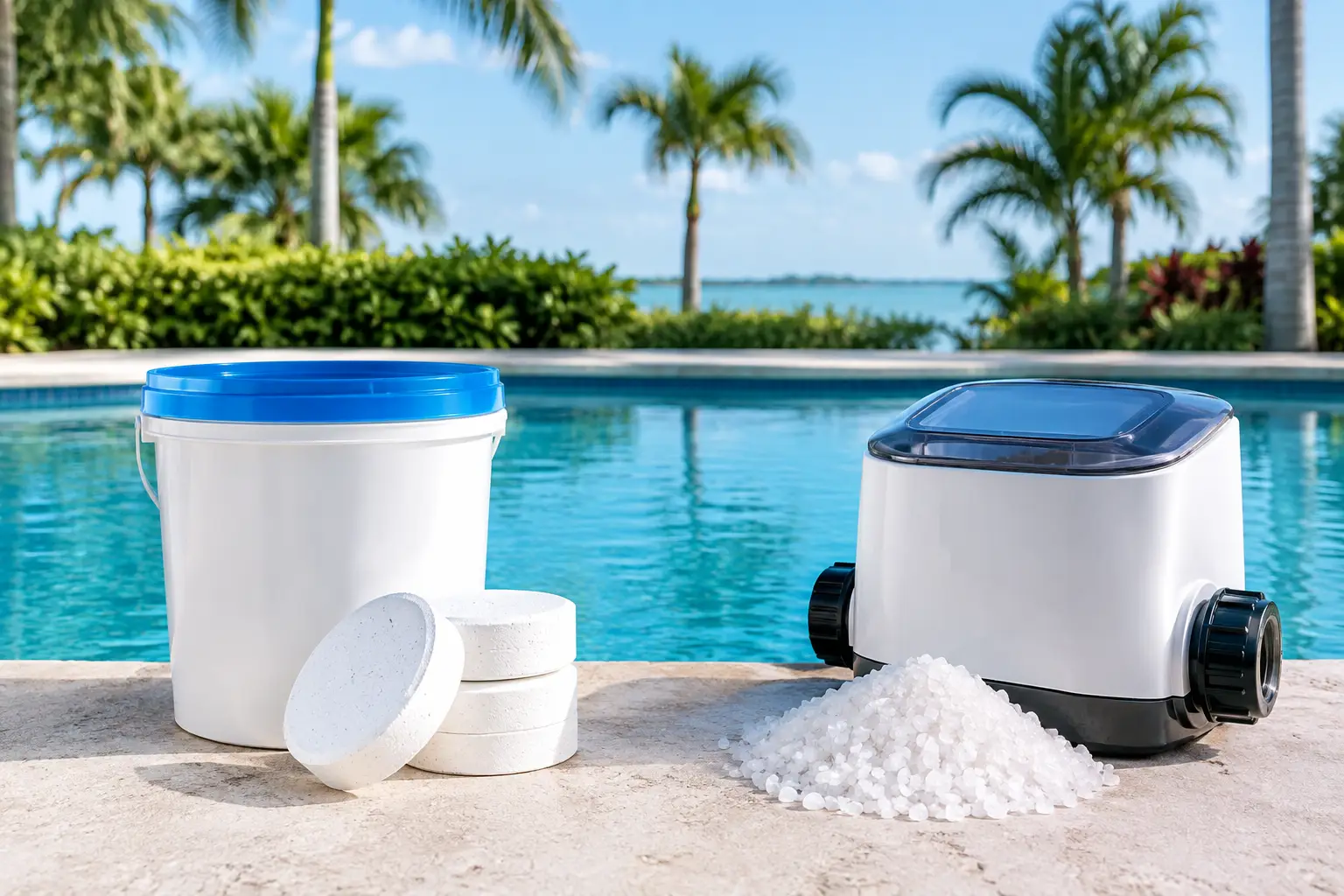
A traditional chlorine pool receives sanitizer directly. This may be liquid chlorine, tablets or, in some cases, granular chlorine. The chlorine level is tested and adjusted as needed to kill bacteria, control algae and oxidise swimmer waste. It is a straightforward system with fewer specialist components.
A salt pool uses a salt chlorine generator, often called a salt cell. A small amount of dissolved salt passes through the cell, where electricity converts it into chlorine. The chlorine still does the sanitising. After it works, much of it returns to salt and repeats the cycle, although water loss, splash-out and backwashing mean salt must occasionally be topped up.
This distinction matters because a salt pool is not chlorine-free. It is a chlorine pool with a different delivery method. Thinking of it this way helps set realistic expectations when comparing comfort, running costs and maintenance.
How Each System Feels in the Water
Many families prefer the feel of a properly managed salt pool. The water can feel softer, and the steady chlorine production often avoids the sharper peaks that can occur after manually adding a larger chlorine dose. That does not mean salt water should taste like the ocean. Pool salt levels are far lower than seawater.
Comfort, however, comes down to balanced water more than the system alone. High chlorine, incorrect pH, excessive stabiliser or poor circulation can cause eye and skin irritation in either type of pool. A traditional chlorine pool with precise weekly testing can feel excellent. A salt pool with neglected chemistry can feel uncomfortable and become cloudy just as quickly.
For homes in Wellington, Royal Palm Beach or The Acreage, rainstorms and warm water add another layer. Rain dilutes chemicals and introduces debris, while high temperatures increase chlorine demand. Neither system can be set and forgotten through a Florida summer.
Weekly Care Still Matters
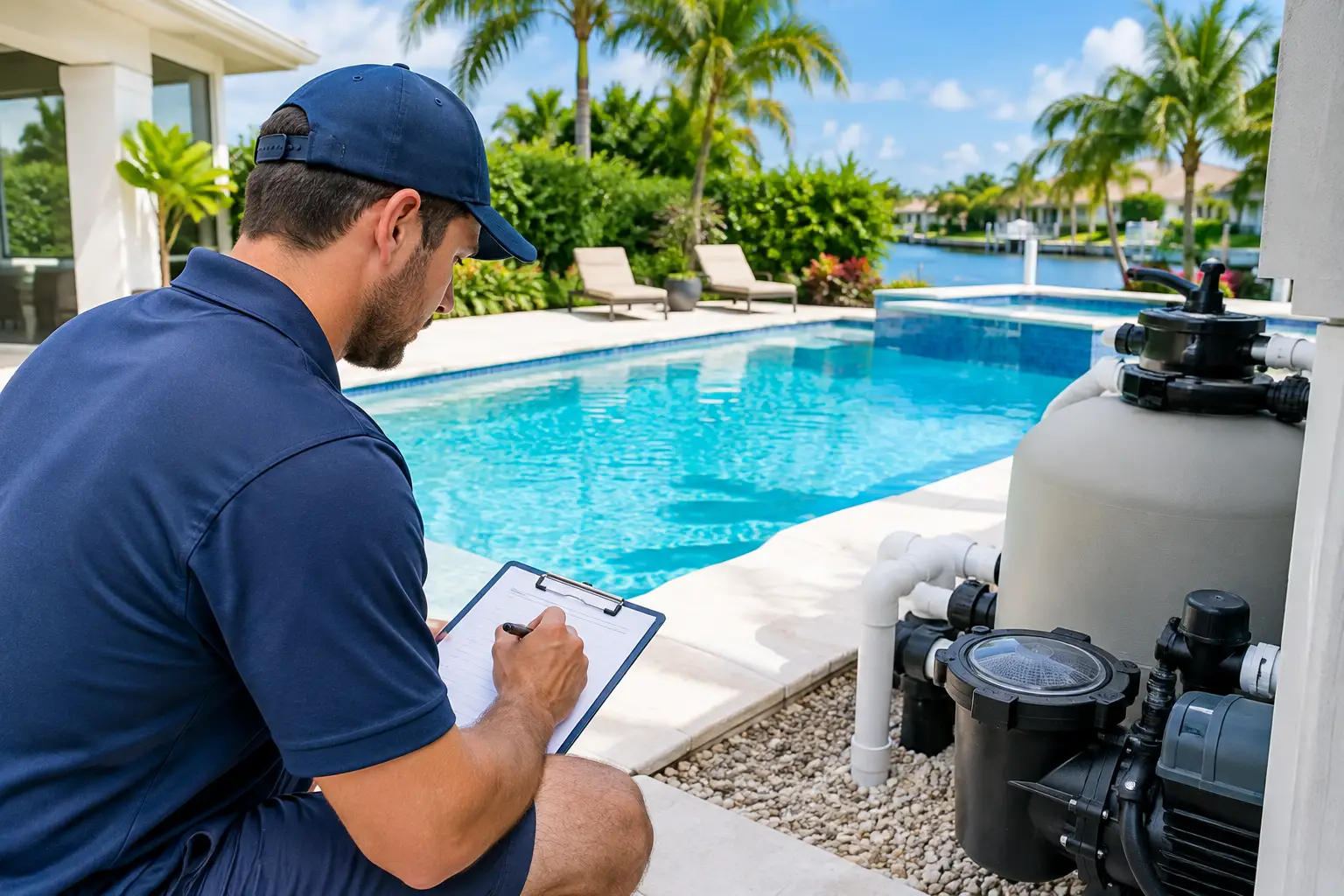
Salt systems reduce the frequency of manually adding chlorine, but they do not remove the need for regular service. Leaves, pollen, insects and sunscreen still enter the water. Filters still need attention. Pumps must run long enough to circulate treated water, and algae can still take hold in low-flow areas or after a storm.
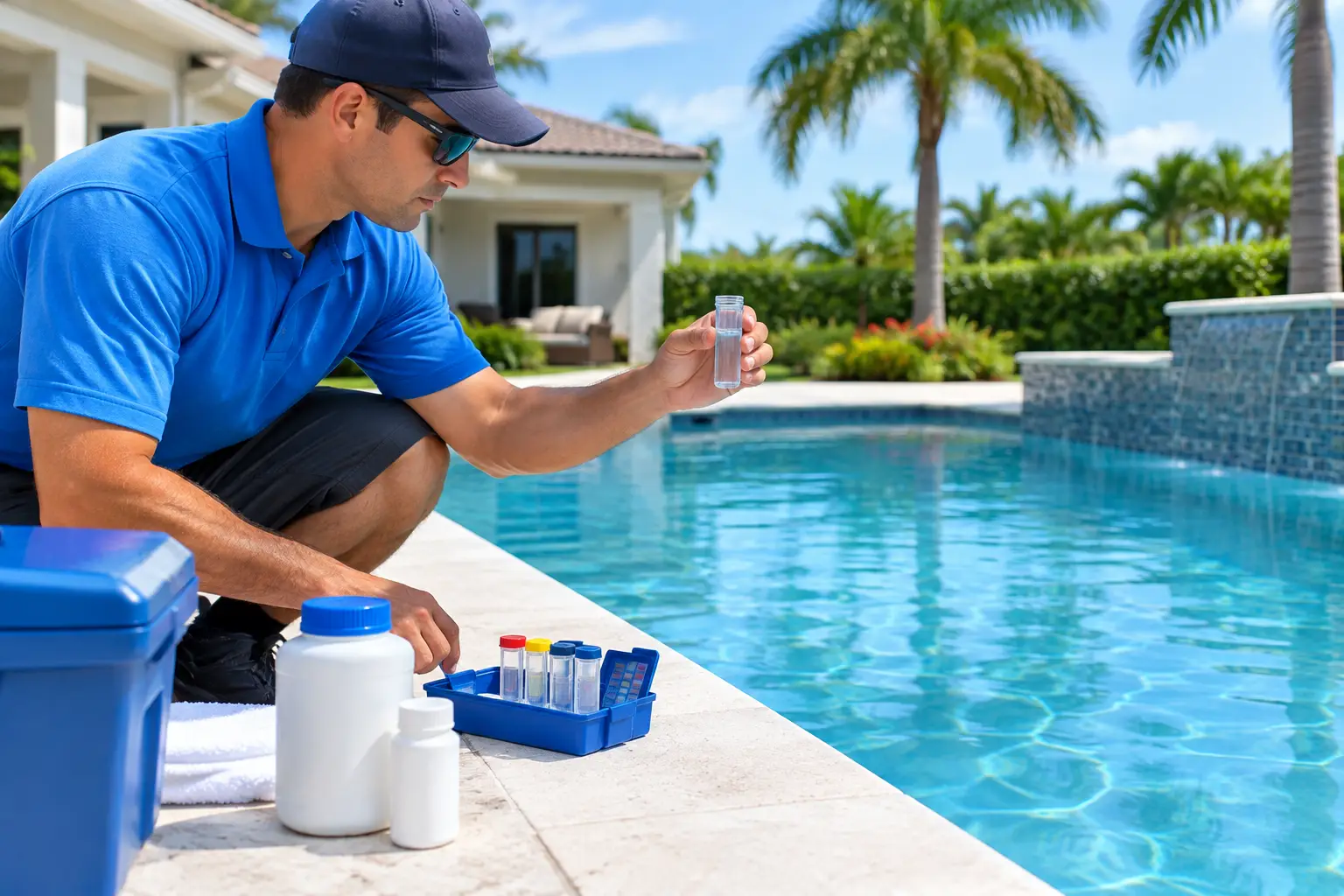
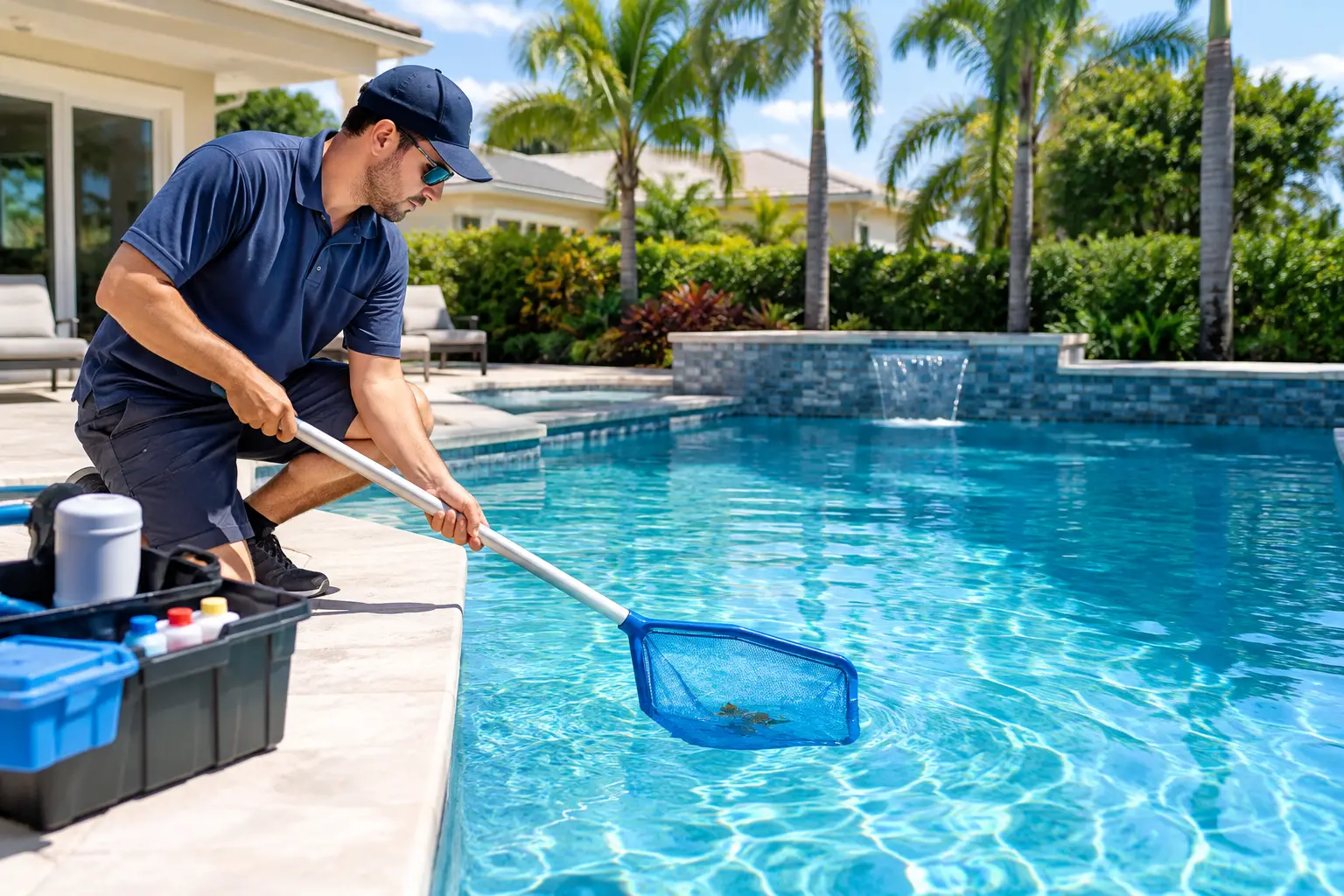
With a conventional chlorine pool, weekly service commonly includes skimming, vacuuming, brushing, emptying baskets, checking the filter and testing chlorine, pH, alkalinity and stabiliser. The technician adjusts chemical levels based on the pool's actual demand, rather than relying on a fixed schedule.
Salt pool care includes those same jobs, plus inspection of the salt cell and salt level. The cell may need cleaning when calcium scale builds up on its plates. It should not be acid-cleaned casually or too often, since unnecessary cleaning can shorten its service life. The generator output also needs to match the season, bather load and water temperature. A setting that works in a mild week may not keep up after several hot, busy weekends.
Water Balance Protects More Than Swimmers
pH, total alkalinity, calcium hardness and stabiliser all affect the way chlorine performs. They also affect the pool surface and equipment. Water that is too aggressive can etch plaster, corrode metal fittings and damage heaters. Water that is scale-forming can leave deposits on tile, clog heaters and coat a salt cell until chlorine production drops.
This is particularly relevant for new plaster and resurfaced pools. During the curing period, water chemistry changes quickly and needs structured attention. A salt system is often not switched on immediately after a new surface is filled, because early salt exposure can complicate the start-up process. The pool builder's requirements and the surface manufacturer's guidance should lead the decision.
Cost: Upfront, Ongoing and Unexpected
A traditional chlorine pool generally costs less to install or maintain at the equipment level. There is no salt cell or control unit to buy, and a failed chlorinator is not part of the equation. The trade-off is regular purchases of chlorine and closer manual dosing if the pool is not professionally serviced.
A salt pool has a higher upfront cost because of the generator and installation. Over time, it can reduce the amount of packaged chlorine needed, but the cell has a limited lifespan and will eventually require replacement. Electricity use, cell replacement, salt additions and potential repairs all belong in the long-term calculation.
The right financial comparison depends on pool size, local water conditions, equipment age and how consistently the pool is maintained. A salt system installed on a failing pump, undersized filter or poorly circulating pool will not solve the underlying problem. In some cases, a pump repair, better filtration or improved automation brings more value than changing sanitising systems.
Equipment Considerations Before Converting to Salt
A salt conversion can be a sensible upgrade, especially for homeowners who prefer steadier sanitizer production and softer-feeling water. Before converting, the pool equipment should be assessed as a whole. The pump needs adequate flow, the plumbing must be sound and the electrical installation should be completed correctly and safely.
Salt water can also accelerate corrosion when water balance is poor or when unsuitable metal components are present. Rails, light niches, heaters and nearby fixtures deserve a careful check. This is not a reason to avoid salt altogether. It is a reason to install and maintain the system properly.
Automation can make either approach easier. Timed pump schedules, remote equipment monitoring and programmed chlorinator output help keep a pool consistent, but automation cannot replace testing. A sensor or timer does not see a pile of wet leaves after a storm, a blocked skimmer basket or the early signs of algae on a shaded wall.
Which Pool Care Approach Suits Your Home?
Choose conventional chlorine care if you prefer lower equipment costs, have a simple setup or want direct control over each chemical adjustment. It is also a practical option for pools that are used seasonally, provided chlorine is monitored consistently whenever the pool is open.
Consider salt pool care if you value continuous chlorine generation, prefer the water feel and are comfortable investing in a quality generator and eventual cell replacement. It can be especially convenient for a pool used frequently by family and guests, as long as routine cleaning and balance checks remain part of the plan.
Neither approach is automatically better for every household. A small screened pool with light use has different demands from a large pool hosting children, pets and weekend gatherings. Shaded yards, mature landscaping, hard fill water and older equipment all influence the maintenance picture.
The most dependable path is regular, documented care that responds to what the pool needs that week. Whether chlorine is poured in or generated from salt, clean circulation, accurate testing and timely adjustments are what keep the water safe and turtly clean. When the chemistry is handled with care, your pool is ready for the spontaneous swim, the family barbecue and the quiet evening float without a second thought.