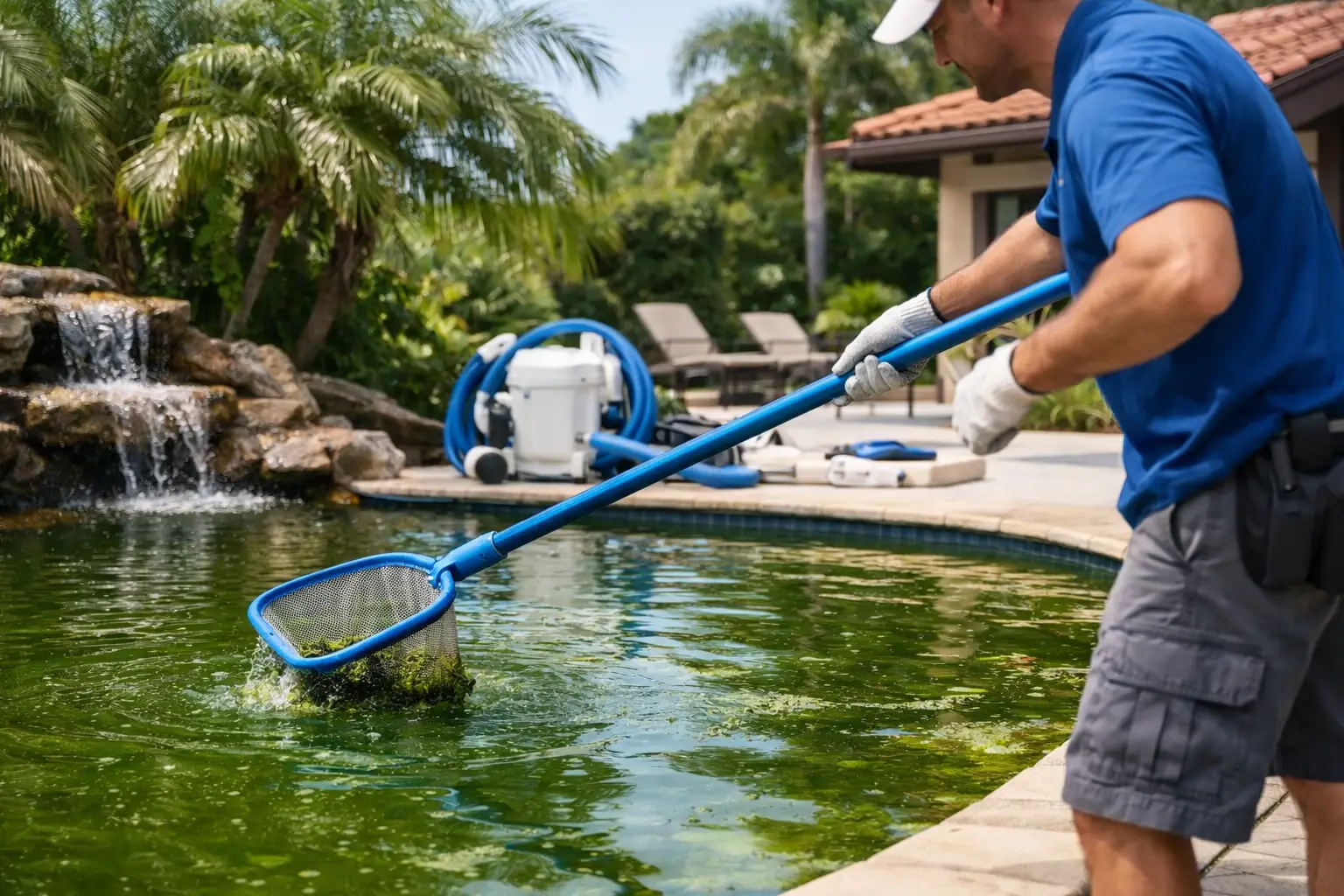
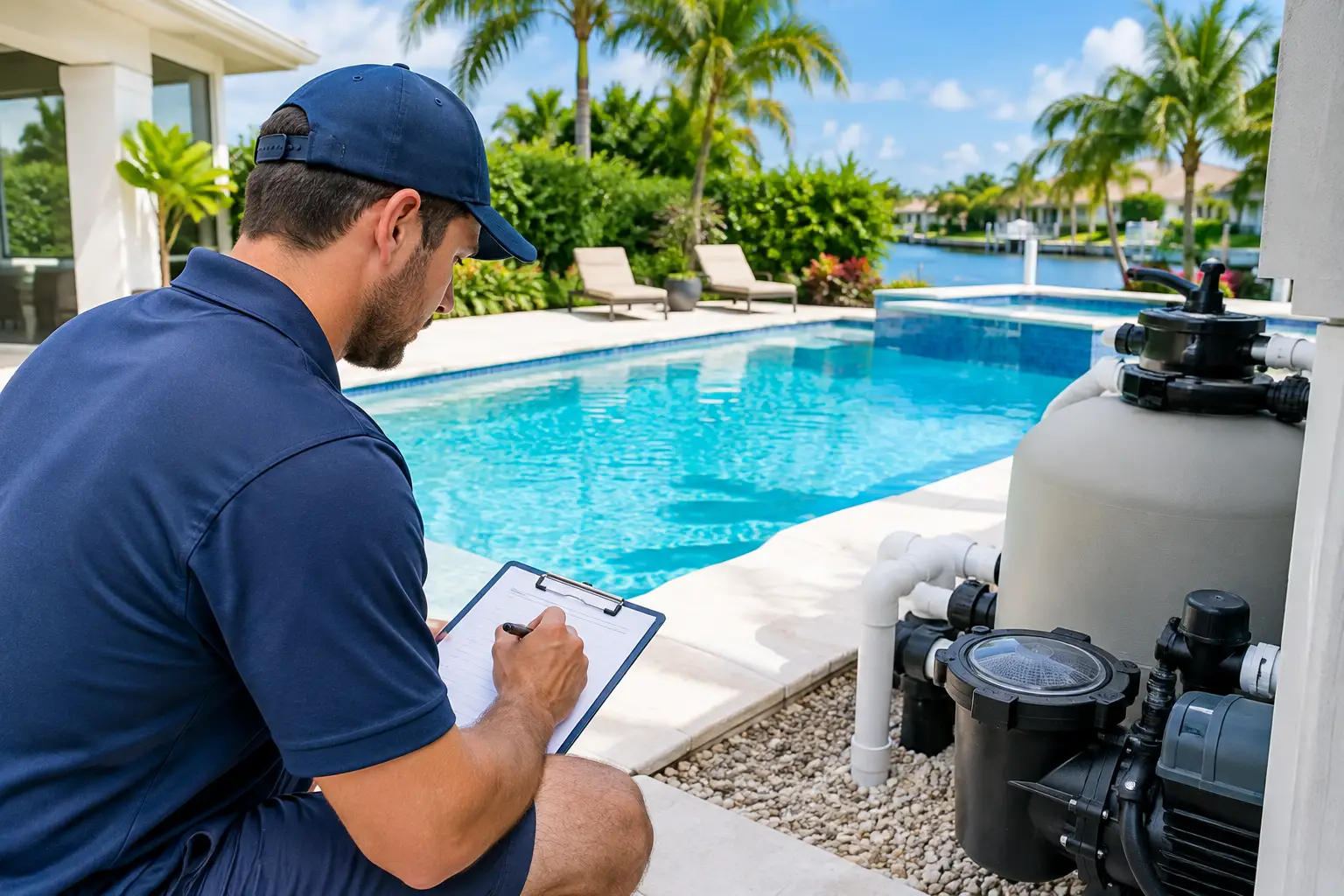
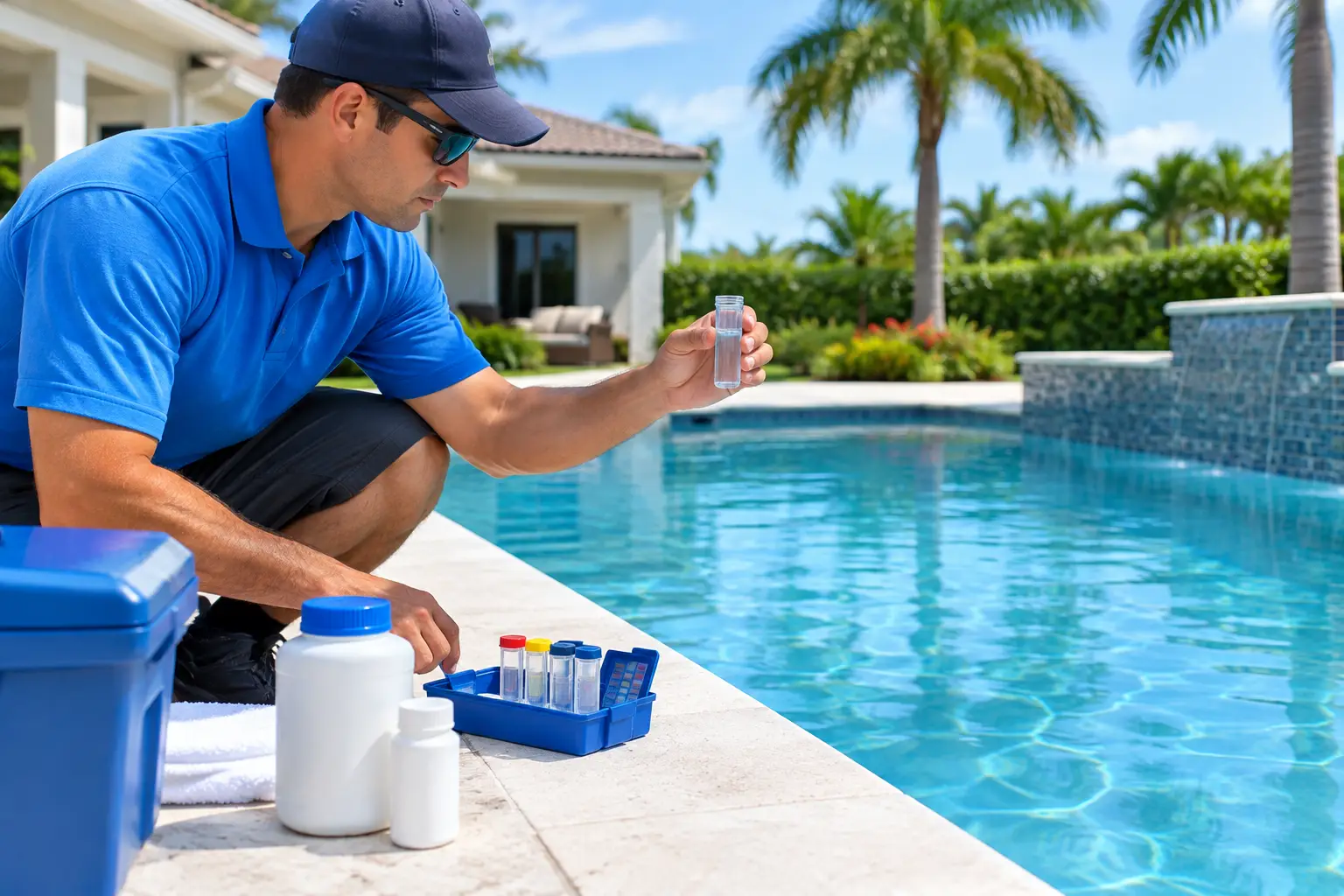
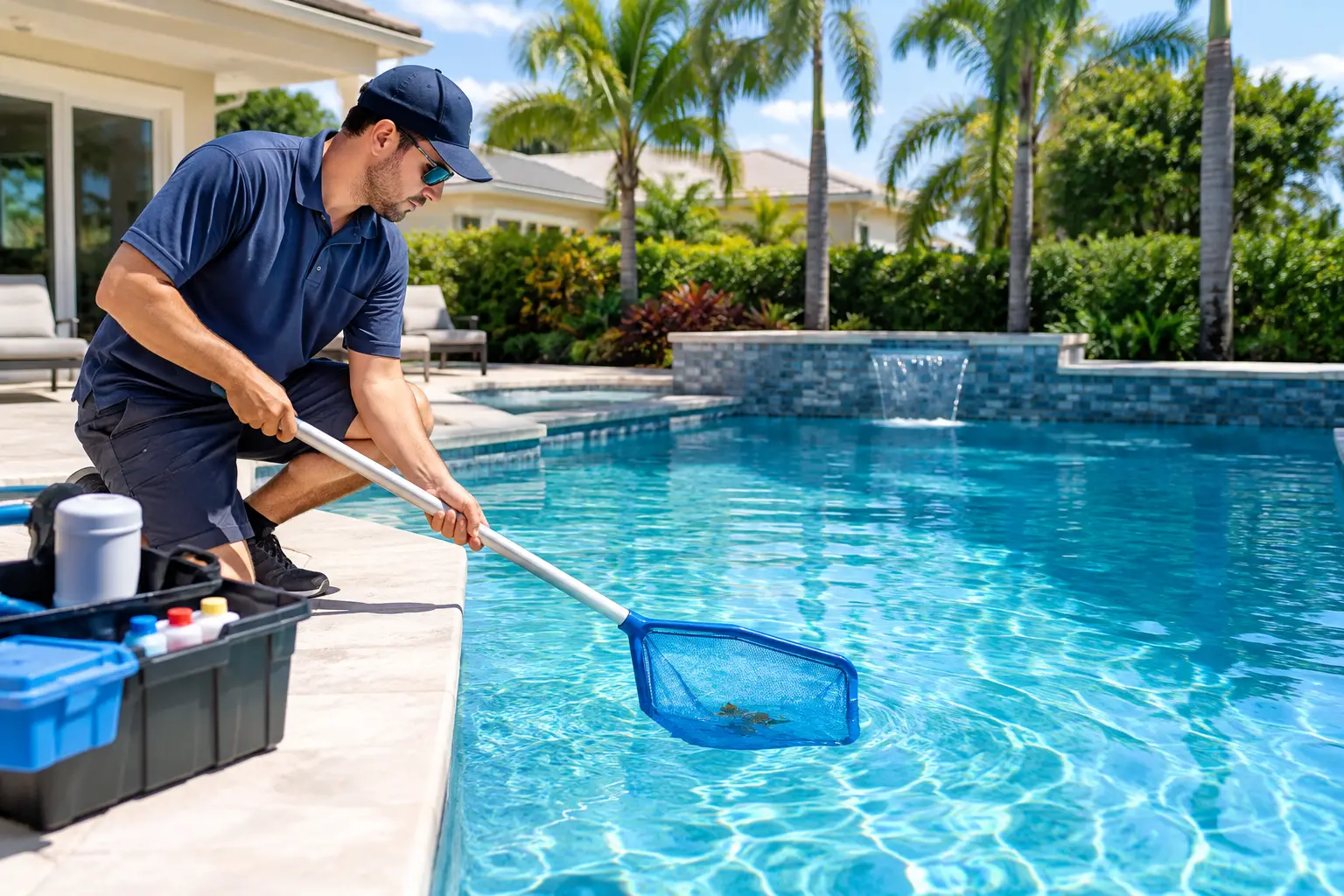
A pool can turn green surprisingly quickly in Palm Beach County. A heavy afternoon storm, a missed service visit, a tired pump or a small chemistry issue can give algae the opening it needs. A professional green pool cleanup service does more than improve the color of the water. It identifies why the algae took hold, treats the water properly and helps protect the equipment that keeps your pool safe for family swimming.
For homeowners, the goal is not simply a pool that looks better for a day or two. It is clear, balanced, dependable water that stays turtly clean through Florida's heat, rain and year-round pool season.
Why a Pool Turns Green
Green water is usually caused by algae growth, but the reason behind that growth can vary. Algae spores are always around, carried into the pool by wind, rain, swimmers and garden debris. They become a visible problem when sanitizer levels fall too low, circulation is poor or water chemistry is out of balance.
A filter that needs cleaning, a pump that is not running long enough or a blocked skimmer basket can reduce circulation. Rainwater can dilute chemicals and introduce phosphates and debris. Hot weather speeds up algae growth, especially when chlorine is depleted. A pool that has been unused for a few weeks can also develop green water even if it looked fine at the last visit.
The shade and color of the water offer clues, but they are not a diagnosis on their own. Light green water may be an early algae bloom. Dark green water often points to a more established issue. Cloudy green water can mean dead algae, fine debris or filtration problems are still present after treatment. Yellow-green or mustard-colored growth may require a different approach from ordinary green algae.
That is why adding a random amount of chlorine is rarely the most reliable answer. It may temporarily change the appearance while leaving the conditions that caused the problem untouched.
What a Green Pool Cleanup Service Should Include
A proper recovery starts with an assessment of the pool, not a one-size-fits-all chemical dose. The technician should inspect the water, the filter system, circulation and visible algae on the walls, floor and steps. Water testing helps establish the starting point for chlorine, pH, alkalinity, stabiliser and other chemistry factors that affect treatment.
The pool is then cleared of leaves and larger debris before brushing begins. Brushing matters because algae forms a protective layer on surfaces, particularly in corners, behind ladders, around steps and along the waterline. Vacuuming removes settled material so it is not left to feed another bloom.
Treatment is carefully matched to the pool's condition. The water may need a strong sanitising treatment, pH adjustment and, where appropriate, an algaecide or clarifying product. Chemistry needs to be managed in the correct order. For example, chlorine does not work as efficiently when pH is too high, and an overloaded filter can struggle to remove the debris created as algae dies.
Filtration is the other half of the job. Depending on the equipment and the amount of algae, the filter may need cleaning, backwashing or a closer inspection. The pump may need longer run time while the pool recovers. If circulation is weak because of a failing pump, a blocked line or a worn component, no amount of chemical treatment will provide a lasting result.
At Turtle Pool Care, the focus is on documented, hands-on recovery rather than a quick cosmetic fix. Clear service reporting and photographic proof help homeowners see what has been completed and what the pool needs next.
Clearing Water Takes Time
A green-to-clean treatment is not always a same-day transformation. A lightly green pool with working equipment may look dramatically better within 24 to 48 hours. Heavier algae growth, cloudy water, poor filtration or neglected chemistry can take several visits and continued filtration to clear fully.
This is a sensible trade-off to understand. Rushing with excessive chemicals can damage surfaces, create uncomfortable water or place unnecessary strain on equipment. The right treatment restores the water methodically while keeping the pool's finish, plumbing and equipment in mind.
Why DIY Green Pool Treatments Often Fall Short
Many homeowners understandably start with products from a pool shop. For a very early algae issue, that may be enough when the pump, filter and basic water balance are all in good condition. The difficulty is that test strips and visual checks do not always reveal the whole picture.
Overcorrecting is common. Adding several chemicals at once can make it difficult to know what changed, and some products can work against each other when used incorrectly. A high chlorine reading does not guarantee algae is defeated if pH, stabiliser or circulation is working against it.
There is also the practical side. Green-pool recovery can involve repeated brushing, vacuuming, filter maintenance, testing and monitoring. If debris is left on the floor or a filter is not cleared as algae dies, the water can remain dull and cloudy. For busy families, a professional service removes the guesswork and the repeated trips outside to check whether the water is improving.
Signs It Is Time to Call for Help
A green pool deserves prompt attention when the water is too cloudy to see the main drain, when algae returns shortly after treatment or when the pump and filter do not seem to be moving water properly. Visible staining, a strong chemical smell or foamy water are also reasons to have the pool assessed rather than adding more products.
Do not swim in a pool with active algae or unclear water. Algae itself can make surfaces slippery, while poor sanitation can allow other unwanted contaminants to remain in the water. Children and guests should wait until the pool is clear, properly sanitised and balanced.
If the pool has been neglected for an extended period, equipment should be checked early in the process. A recovery service may reveal a filter issue, a failing pump seal, an air leak or a timer problem that was easy to miss when the pool was already cloudy. Addressing those faults gives the treatment a much better chance of holding.
Keeping a Recovered Pool Clear
Once the water is back to normal, consistent weekly care is the best defence against another algae bloom. Regular skimming, vacuuming, brushing, water testing and precise chemical balancing stop small changes from becoming a green-pool emergency.
Homeowners can help between visits by emptying skimmer and pump baskets when needed, keeping the water level appropriate and reporting changes quickly. If the water begins to lose clarity, if the pump sounds different or if there is more debris than usual after a storm, early action is easier and less costly than a full recovery.
It also helps to match pump run time to the season, bather load and equipment setup. There is no single schedule that suits every pool. A screened pool with limited use may have different needs from an open pool used by children every weekend. Heat, rain, landscaping and the type of filter all affect the plan.
A Clear Pool Should Feel Easy to Own
Your pool should be ready for an after-school swim, a quiet weekend float or last-minute guests without a chemistry project waiting in the garden. When green water appears, the best next step is a careful assessment, proper treatment and a maintenance routine built around your specific pool. With the right attention, clear water and peace of mind can return sooner than you might expect.