A pool can lose water for perfectly normal reasons in Florida. Heat, sun, wind, splashing, and an active afternoon of swimming all add up. But when the waterline keeps dropping and the autofill seems to run more than usual, it is worth paying attention. Knowing how to identify pool leaks early can protect your equipment, water chemistry, deck area, and peace of mind.
A small leak rarely stays convenient. As water escapes, it can affect the soil around the pool, make it harder to maintain a safe and perfectly balanced water level, and leave equipment running under conditions it was not designed for. The good news is that a few careful observations can help you separate ordinary evaporation from a problem that needs professional leak detection.
Start With the Water Loss Pattern
Before assuming the pool is leaking, look at how much water is being lost and when it happens. Evaporation changes with the weather. A hot, breezy week can lower the water level more quickly than a calm, humid one. Swimmers, cannonballs, backwashing, and cleaning a cartridge filter can also account for water leaving the pool.
What raises concern is a steady, noticeable loss that continues regardless of weather or pool use. If you are adding water several times a week, or if the waterline falls below the skimmer opening in only a few days, treat it as a warning sign rather than a routine chore.
Also note whether the loss seems faster while the pump is running. Water that drops more quickly during circulation may point to a plumbing, return-line, filter, pump, heater, or valve issue. If it drops at about the same rate with the system on and off, the leak may be in the pool shell, skimmer, light niche, fittings, or pool surface. This is not a final diagnosis, but it gives a technician useful direction.
How to Identify Pool Leaks With a Bucket Test
The bucket test is one of the simplest ways to compare pool water loss with normal evaporation. It does not locate a leak, but it can confirm that the pool is losing more water than it should.
Choose a calm day when rain is not expected. Fill a clean bucket with pool water and place it on a pool step, keeping the water inside the bucket at roughly the same level as the surrounding pool water. Mark the waterline inside the bucket and the waterline on the outside of the bucket. Turn off any autofill system for the test period, and avoid swimming or adding water while the test is underway.
After 24 hours, compare the two marks. If the pool water outside the bucket has dropped substantially more than the water inside it, a leak is likely. For a clearer result, repeat the test with the pump running for one 24-hour period and off for another. Record the results, along with the weather and whether the equipment was operating.
Do not let the water level fall below the skimmer. A pump can be damaged if it runs without a proper water supply, and low water can pull air into the system. If the level is approaching the skimmer opening, stop the test and add water.
Check the Equipment Pad First
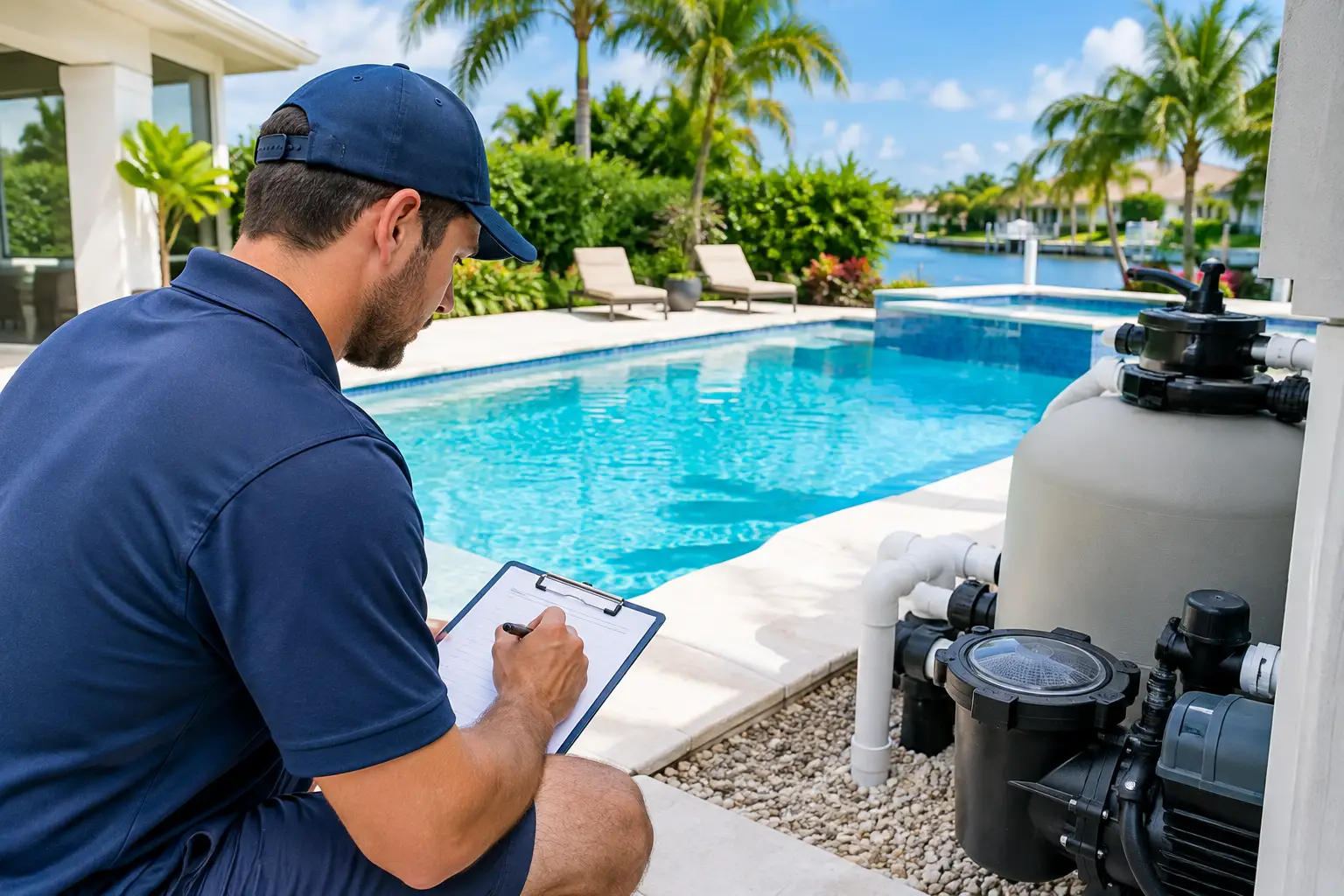
Many pool leaks are easier to spot at the equipment pad than in the pool itself. With the pump running, look for active drips, puddles, damp soil, or mineral buildup around the pump, filter, heater, valves, and visible plumbing connections. A slow leak can leave a chalky white residue or staining even when there is no obvious puddle.
Pay close attention to the pump seal area and unions. A pump that is drawing air may show bubbles under the pump lid, weak return flow, or frequent loss of prime. A dripping valve or connection may seem minor, but it can waste water and create larger problems over time.
Turn your attention to the filter pressure as well. An unexplained pressure change, air in the filter tank, or water appearing where it should not can be valuable clues. Avoid taking apart pressurized equipment or attempting electrical repairs yourself. Equipment diagnosis is safest when the system can be inspected, tested, and repaired correctly.
Look Closely at the Pool and Surrounding Deck
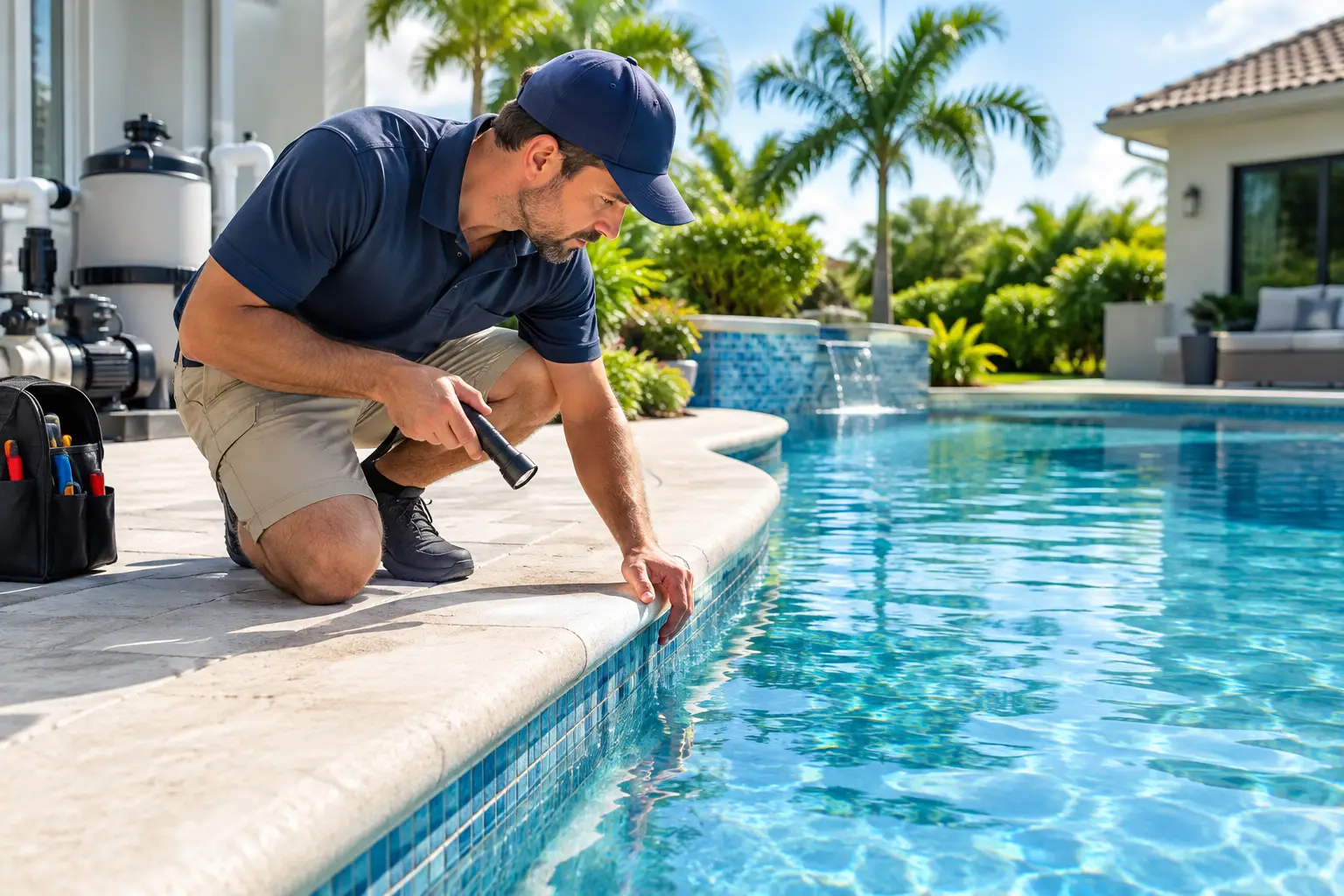
Walk slowly around the pool with the water calm and clear. Check the skimmer throat, return fittings, pool light, steps, drains, tile line, and any visible cracks in the interior finish. A crack does not always mean there is an active leak, and not every leak is visible, but changes around these areas are worth documenting.
For pools with a vinyl liner, look for tears, separated seams, wrinkles that were not there before, or areas where the liner has pulled away from fittings. For plaster or resurfaced pools, watch for cracks, hollow-sounding areas, loose tile, or stains that seem to spread from one spot. A leak near a skimmer or fitting may leave a distinct track of discoloration.
The deck and landscaping can offer clues too. Soft or sinking pavers, unusually wet soil, algae growth in one persistently damp area, or a low spot near the pool may indicate water moving underground. These signs can also have other causes, especially after heavy rain, so they should be investigated rather than treated as proof.
Use Dye Carefully for Small Visible Suspects
If you have identified a specific suspect area, such as a small crack or a gap around a fitting, a dye test may help. With the pump off and the water as still as possible, release a small amount of pool-safe test dye near the area without touching the surface. If the dye is pulled toward a crack or opening, that movement can suggest water is escaping there.
This test works best for accessible, visible areas. It is less useful when water is moving, visibility is poor, or the possible leak is in buried plumbing. Do not use random household dyes or products that may stain the finish or affect water chemistry. If you are not certain what you are seeing, take a photo and leave the next step to a pool professional.
Pay Attention to Chemistry Changes
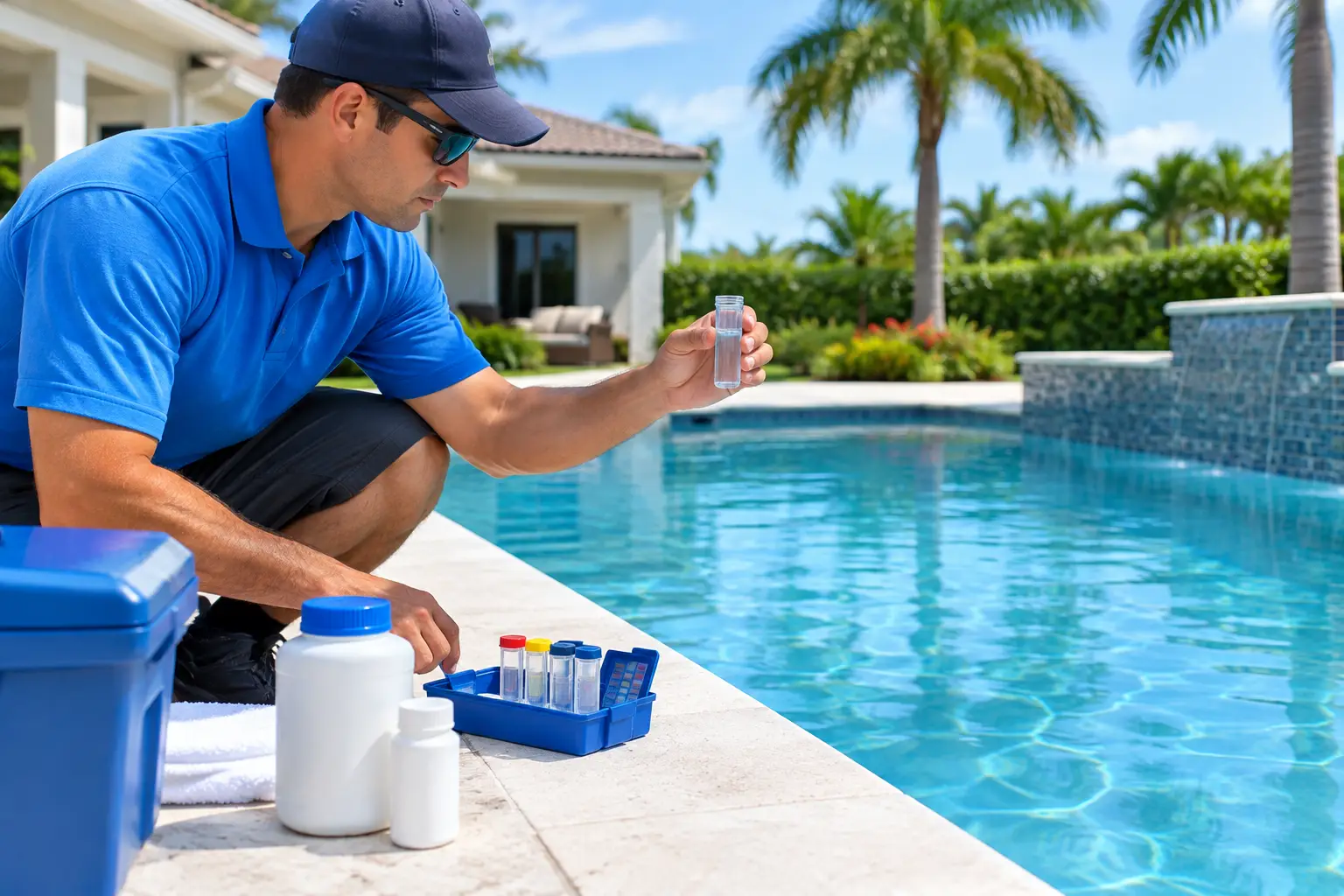
A leak does more than lower the waterline. It can make pool chemistry harder to manage because treated water is leaving and fresh fill water is replacing it. You may notice that sanitizer levels, pH, alkalinity, or salt readings need more frequent correction than usual.
Chemistry changes alone do not prove a leak. Heavy rain, high bather load, sunlight, and a recent water addition can all affect test results. Still, when persistent water loss and stubborn chemistry occur together, they deserve attention. Detailed service records are especially helpful here because they show whether the pattern is new or ongoing.
When It Is Time for Professional Leak Detection
Call for professional help when the bucket test suggests a leak, the water loss is rapid, or you see wet areas near equipment or the pool structure. It is also wise to schedule an inspection if the pool needs frequent refilling, the pump loses prime, the deck is shifting, or water loss began after a repair, renovation, or major storm.
Professional leak detection may involve a systematic visual inspection, pressure testing of plumbing lines, testing around fittings and penetrations, and equipment evaluation. The right method depends on the pool type and the clues already present. A careful diagnosis matters because repairing the wrong suspected area can waste time and money while the actual leak continues.
For homeowners in Wellington, Westlake, Royal Palm Beach, Loxahatchee, The Acreage, Avenir, Greenacres, and The Club at Ibis, a dependable weekly service visit can also catch early warning signs before they become an urgent repair. Turtle Pool Care documents service work and observations so you have a clearer record of what your pool is doing from week to week.
A pool should feel like the easy part of your home, not another mystery to monitor. If the waterline is telling you something, take a few notes, protect the equipment, and address it while the repair is still manageable. That is one of the simplest ways to keep your pool turtly clean and ready for the next swim.