That rough white line at your pool’s waterline is not just making the finish look tired. Calcium scale can trap dirt, dull tile, affect fittings and, when left to build up, become much harder to remove without damaging the surface beneath it. Knowing how to remove pool calcium starts with identifying the deposit correctly, then choosing a method that suits your tile, plaster or equipment.
In Palm Beach County, warm water, evaporation and high pH can create ideal conditions for scaling. A little preventative chemistry work is far easier, and usually far less expensive, than trying to strip years of mineral build-up from a pool.
What pool calcium looks like
Pool calcium deposits usually appear at the waterline because water repeatedly evaporates there and leaves dissolved minerals behind. The result may be a chalky white film, a crusty grey-white band, or hard nodules around returns, lights and spillways.
There are two common forms. Calcium carbonate is generally white, chalky and more responsive to cleaning. Calcium silicate is often harder, denser and slightly grey or off-white. It tends to form when water chemistry has been unbalanced for a long time, and it may need professional treatment.
Do not assume every pale mark is calcium. Sun-faded tile, grout haze, paint residue and some forms of staining can look similar. A simple spot test can help: with gloves and eye protection on, apply a small amount of diluted white vinegar to an inconspicuous area. Gentle fizzing suggests calcium carbonate. No reaction may mean calcium silicate or another type of mark.
How to remove pool calcium from tile
Start with the least aggressive method that can reasonably do the job. This protects the tile glaze, grout, coping and plaster line, especially on older pools or recently resurfaced finishes.
Lower the water level first
Turn off the pump and lower the water a few inches below the scale line. This gives you access to the deposit without continually splashing cleaning product into the pool. Avoid draining a pool fully unless a qualified pool professional has assessed the situation. In Florida, groundwater pressure can create serious risks for an empty pool shell.
Work in manageable sections, ideally when the tile is cool and out of direct afternoon sun. Heat can dry a cleaner too quickly and make it more difficult to control.
Use a nylon brush and calcium-safe cleaner
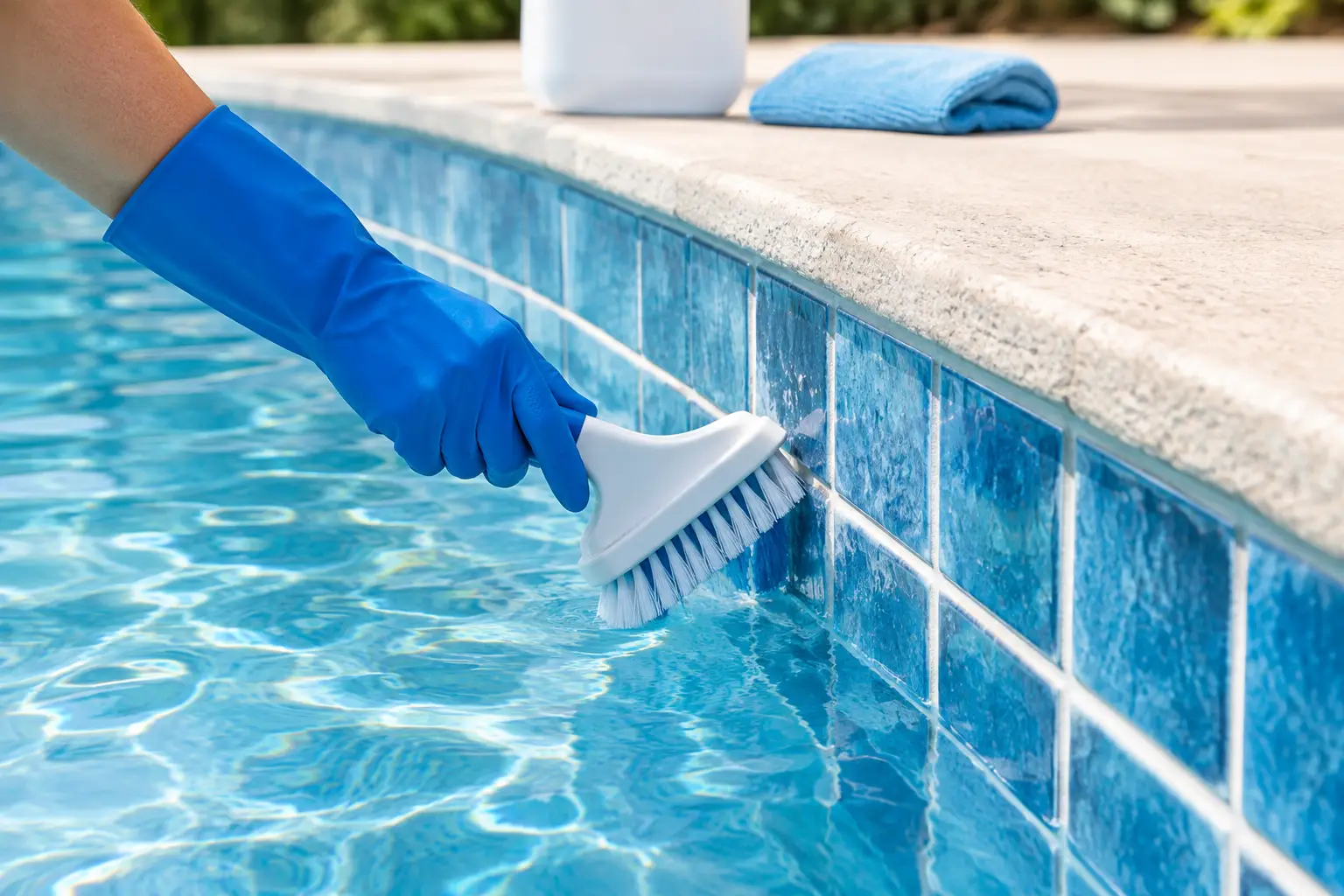
For light scale, wet the area and apply a pool tile cleaner designed for calcium deposits, following its label exactly. Allow the recommended contact time, then scrub gently with a nylon pool brush or non-abrasive pad. Rinse the section thoroughly before moving on.
A pumice stone made specifically for pool tile can help on hard, glazed ceramic tile, but only when the tile is wet and only with light pressure. Keep it away from vinyl liners, fibreglass, painted surfaces, natural stone and most glass tile. An ordinary abrasive pad, wire brush or metal scraper can leave permanent scratches that collect even more dirt later.
Vinegar can loosen a small amount of light calcium carbonate, but it is not a practical answer for heavy scale. It is also acidic, so keep it away from sensitive stone and do not rely on it as a substitute for correcting the water balance that caused the problem.
Treat stubborn scale carefully
Hard deposits often need a purpose-made descaling product or professional bead blasting. Bead blasting uses a fine media stream to remove scale with controlled pressure. Done correctly, it can restore tile without the harsh abrasion associated with sand blasting. Done incorrectly, it can damage tile glaze, grout, seals and nearby finishes.
Avoid pouring muriatic acid directly onto tile or plaster. Acid can remove calcium, but it does not distinguish between unwanted scale and the calcium-based surface beneath it. It can etch plaster, weaken grout, create hazardous fumes and push pool chemistry sharply out of range. Mixing acid with chlorine or any other chemical is dangerous and must never be attempted.
Calcium on plaster, pebble and pool equipment
Scale on plaster or pebble finishes needs more caution than scale on tile. Aggressive scrubbing can expose aggregate, create uneven color or leave a visibly rough patch. If the finish feels rough across large areas, or the scale has formed soon after a resurfacing, the issue is likely tied to water balance rather than a simple waterline deposit.
For new plaster, the first 28 days are particularly important. Fresh plaster releases calcium as it cures, and the water needs regular testing, brushing and measured adjustments. Poor start-up chemistry can lead to early scaling that becomes part of the surface rather than sitting on top of it.
Calcium can also form on salt cells, heater components, returns and inside plumbing. A scaled salt cell may trigger low-salt warnings or reduce chlorine production even when the salt level is correct. Do not scrape the cell plates with a screwdriver or metal tool. Follow the manufacturer’s cleaning instructions, and only use an approved cell-cleaning solution when inspection shows scale is actually present. Repeated acid washing shortens cell life.
Correct the water balance before scale returns
Removing visible calcium is only half the work. If the water remains scale-forming, the white line will return quickly. The main contributors are high pH, high total alkalinity, high calcium hardness, warm water and evaporation.
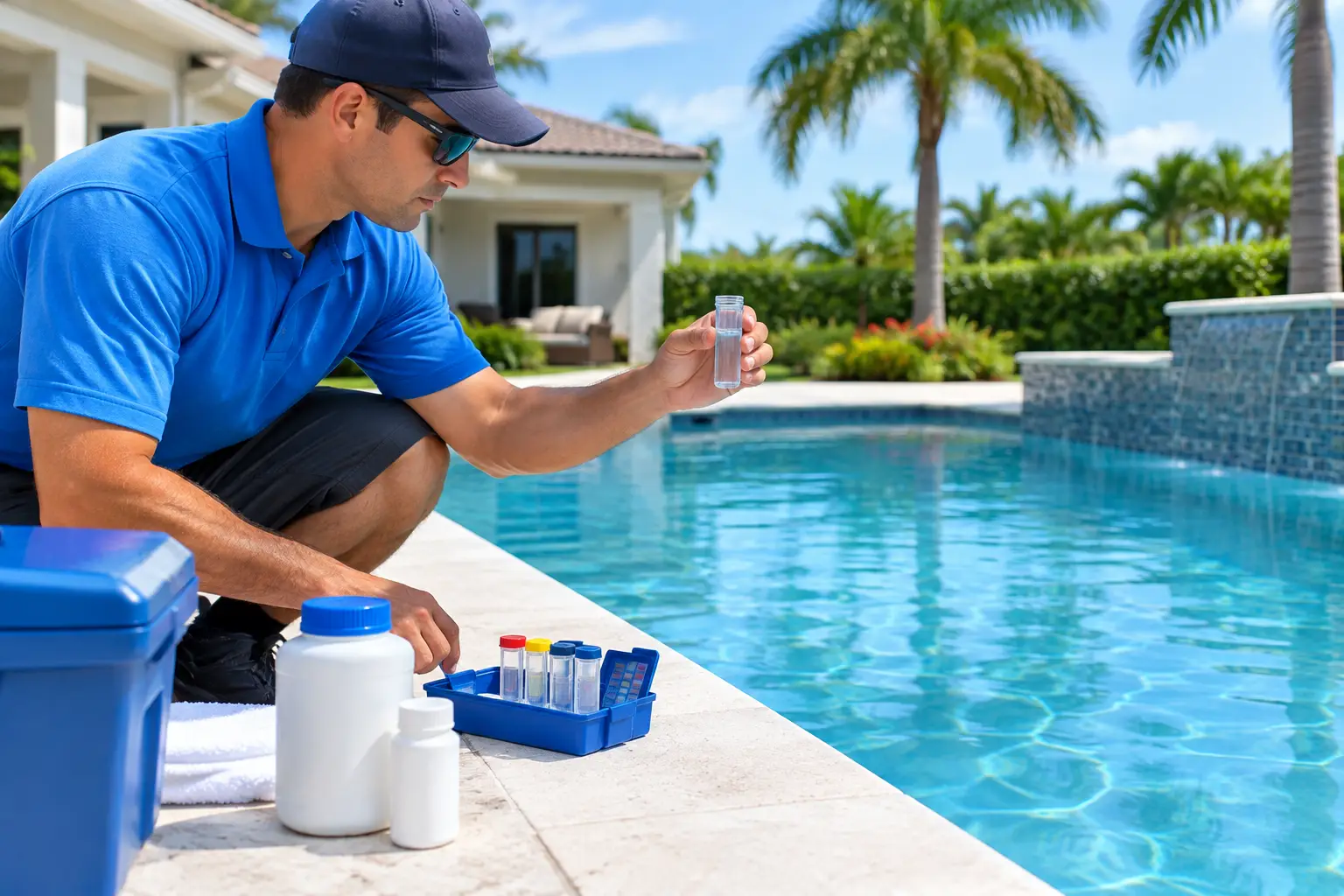
A balanced pool is not about chasing one perfect number. It is about how the numbers work together. In a typical residential pool, pH is commonly maintained around 7.2 to 7.8, while the right alkalinity and calcium hardness range depends on whether you have plaster, pebble, vinyl or fibreglass. Your pool professional may also use the calcium saturation index, or CSI, to judge whether water is likely to deposit calcium or pull it from the pool surface.
If calcium hardness is already very high, adding more calcium is not the answer. The solution may involve careful dilution with fresh water, but this depends on local water quality, current chemistry and the type of finish. Adding large amounts of water without testing can create a new imbalance.
Keep an eye on evaporation too. In a hot Florida summer, topping up a pool repeatedly concentrates the minerals left behind. Test water after substantial refills, heavy rain, periods of unusually high heat and any chemical treatment.
When to call a pool professional
A homeowner can usually manage light waterline scale with the right cleaner, a nylon brush and patience. Bring in experienced help when the deposit covers large areas, feels like cement, has spread across plaster, or has appeared on expensive glass tile or natural stone. It is also sensible to call for help if scaling keeps returning despite regular cleaning.
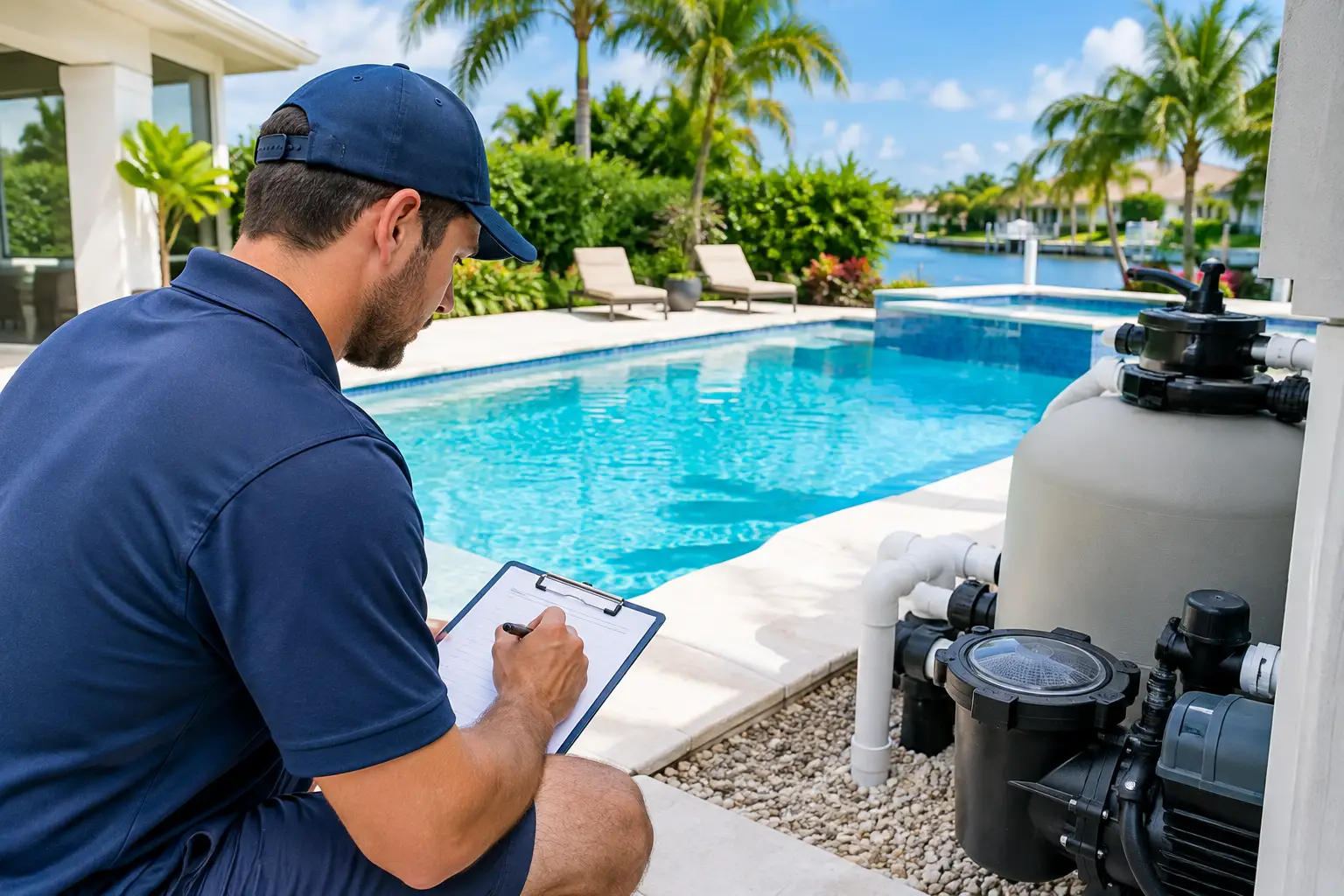
A proper service visit should look beyond the visible line. Water should be tested, the finish inspected and equipment checked for scaling. That fuller picture is what prevents the same issue from resurfacing a few weeks later. Turtle Pool Care can help homeowners pinpoint the chemistry behind recurring scale and keep the pool safe, balanced and turtly clean.
Keep the waterline easier to clean
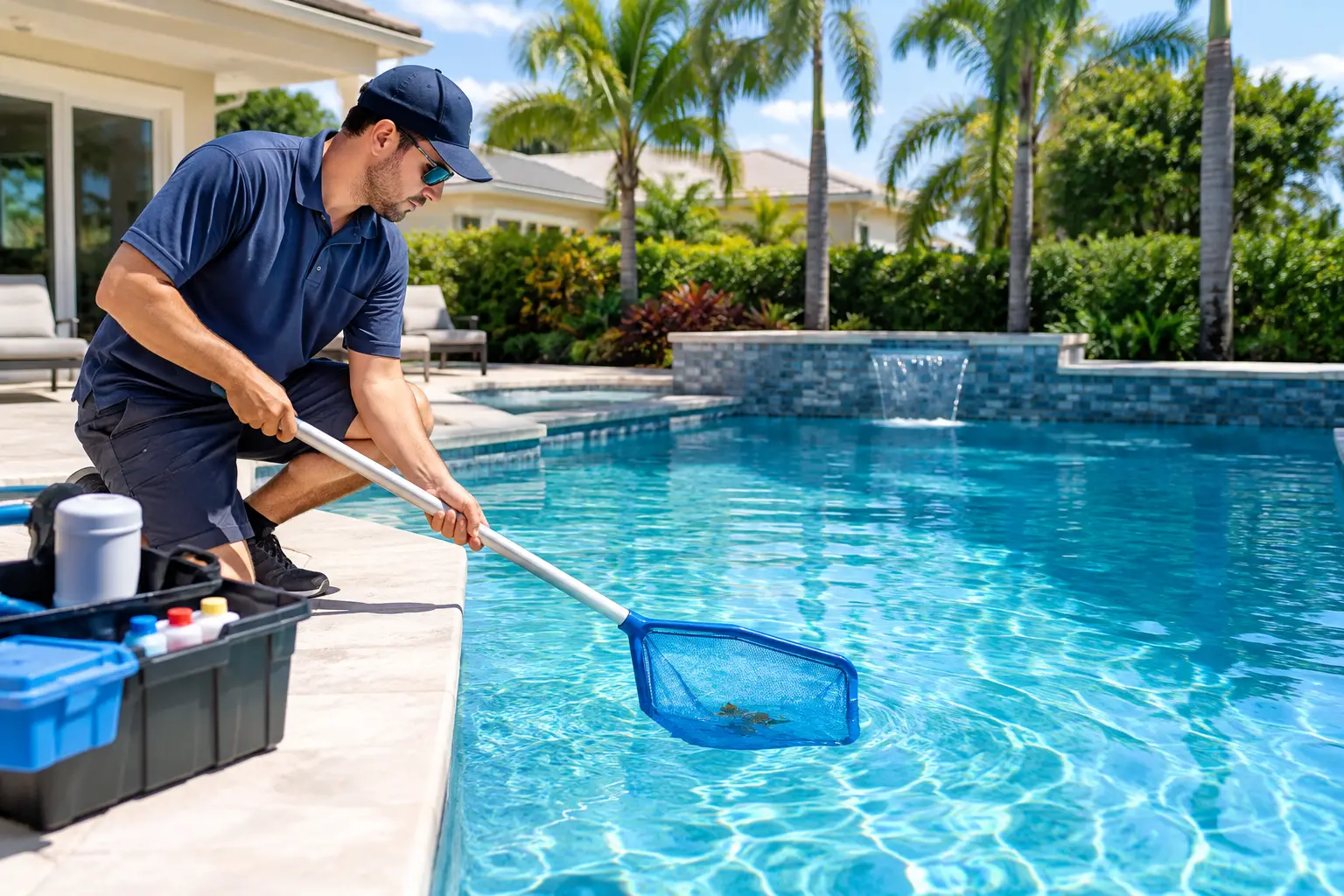
Wipe the waterline during regular cleaning before the residue hardens. Maintain consistent circulation, clean filters as needed and test chemistry routinely rather than waiting until water looks cloudy or feels rough. These small habits protect the parts of a pool that are costly to repair: tile, plaster, heaters, salt systems and finishes.
A clean pool should feel smooth, look inviting and be ready when the family wants to use it. If calcium has reached the point where cleaning feels like a battle, pause before reaching for stronger chemicals. A careful diagnosis and a measured treatment will protect your pool far better than brute force.