A pool can look crystal clear on Tuesday and still be headed toward trouble by the weekend. In Florida’s heat, rain, and heavy bather use, water chemistry changes quickly. That is why the choice between manual testing versus test strips matters more than many homeowners realize. Both can help you keep an eye on your water, but they do not offer the same level of detail, consistency, or confidence.
For a quick check before an afternoon swim, test strips can be useful. For weekly pool care, problem-solving, and chemical adjustments, a manual liquid test kit usually provides a clearer picture of what your water actually needs. The right choice depends on what you are testing for, how comfortable you are reading results, and whether the pool has a history of algae, scaling, staining, or chemistry swings.
Manual Testing Versus Test Strips: The Main Difference
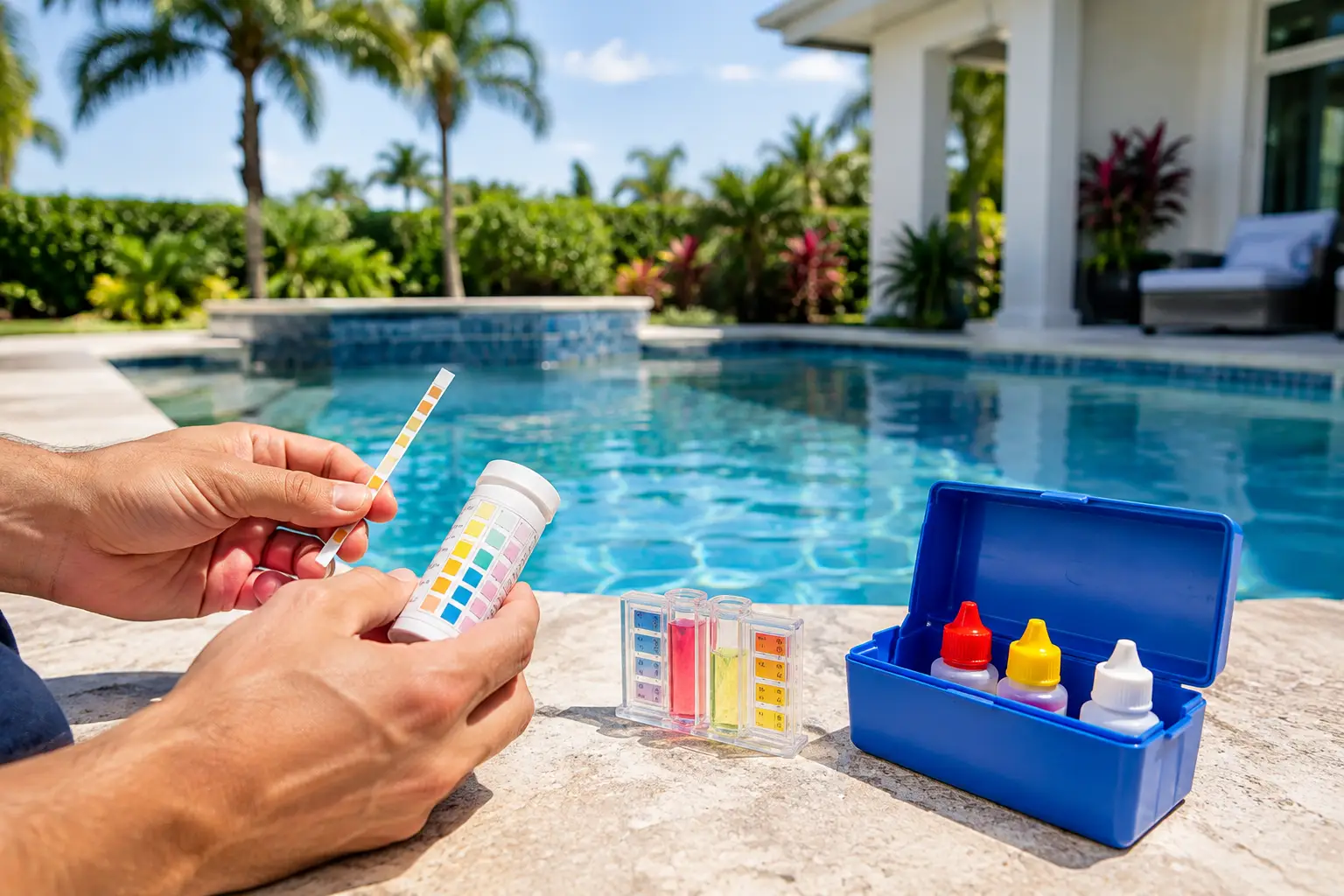
Test strips use small color pads that react when dipped into pool water. After waiting for the instructed amount of time, you compare those pads with a color chart on the container. They are fast, portable, and simple enough for most pool owners to use without much preparation.
Manual testing generally means a liquid reagent kit. You collect a water sample, add a specified number of drops, and compare the resulting color or count drops during a titration test. It takes a little longer, but it can provide more precise results, especially for chlorine, pH, total alkalinity, calcium hardness, and cyanuric acid.
Neither method replaces attentive pool care. A reading is only useful when it is taken correctly and followed by the right adjustment. Still, the difference in precision can be meaningful when you are trying to prevent a small chemistry issue from turning into cloudy water, irritation, equipment wear, or algae growth.
Why Test Strips Are Popular
There is a good reason strips are common in pool-owner supply cabinets. They are convenient. A homeowner can dip a strip, wait briefly, and get a broad snapshot of several readings at once. If the pool is stable and you simply want to confirm that the sanitizer is present and the pH is roughly in range, that speed is helpful.
Strips are also less intimidating for new pool owners. There are no bottles to measure or drop counts to track. Used properly, they can flag obvious changes, such as low chlorine after a storm or a pH result that has moved noticeably out of range.
The trade-off is that strips rely on visual color matching. Sunlight, shadows, fading eyesight, and subtle differences between shades can all affect the result you read. A color pad that appears to fall between two chart blocks leaves room for interpretation - and pool chemistry does not always respond well to guesswork.
Storage matters, too. Humidity and heat can affect strips, particularly when the container is left open or stored outside near the equipment pad. In Wellington, Royal Palm Beach, Loxahatchee, and nearby communities, a hot, damp garage can shorten the useful life of testing supplies. Always use dry hands, close the container promptly, and check the expiration date.
Where Test Strips Can Fall Short
A strip can tell you that something is off without telling you precisely how far off it is. That may be enough for a casual check, but it is less helpful when deciding how to correct water safely and efficiently.
For example, chlorine readings on strips can be difficult to interpret when levels are very low, very high, or affected by a recent treatment. Cyanuric acid, often called stabilizer or conditioner, can also be challenging to read accurately with a strip. That matters in sunny Florida because stabilizer helps protect chlorine from sunlight, yet too much can reduce chlorine’s effectiveness and make algae prevention harder.
Strips may also make it harder to spot slow-moving balance issues. Calcium hardness, total alkalinity, and pH work together. When one moves too far, water can become more likely to scale surfaces and equipment or become aggressive toward finishes and metal components. A vague result may not be enough to guide a careful correction.
This does not mean every strip result is wrong. It means strips are best treated as a screening tool, not the final word when the pool is behaving differently, looks cloudy, has recurring algae, or needs a deliberate chemical adjustment.
When Manual Testing Is the Better Choice
Liquid testing requires more steps, but those steps create more useful information. A proper kit allows you to test a clean water sample and observe a clearer endpoint. In titration testing, for instance, you add reagent drop by drop until the sample changes color. The number of drops corresponds to a measurable result.
That level of detail is particularly valuable for free chlorine and combined chlorine. Free chlorine is the active sanitizer working in the water. Combined chlorine can indicate that the sanitizer has reacted with contaminants and may not be working as effectively as it should. A pool can have “some chlorine” on a strip while still needing closer attention.
Manual testing is also preferable during several common situations: after heavy rain, following a pool party, during a green-to-clean recovery, when opening a newly completed pool, or when a resurfaced pool is going through its structured startup period. In each case, chemistry can shift rapidly, and precise readings help prevent overcorrection.
A good manual kit does require fresh reagents, a clean sample container, and careful timing. Reagents can degrade with age or poor storage just as strips can. Follow the kit instructions exactly, avoid touching dropper tips, and do not rely on outdated bottles. If you are uncertain about a result, retest rather than adding chemicals based on one questionable reading.
Accuracy Depends on the Person Using the Test
The most accurate test method can still produce poor information when the sample is collected incorrectly. Water should generally be taken from elbow depth, away from return jets and skimmers, rather than skimmed from the surface. Surface water may not represent the chemistry throughout the pool.
Timing is equally important. Testing immediately after adding a chemical, during a rainstorm, or while the pump has not had sufficient circulation can produce misleading results. Let the water circulate as directed for the product and equipment setup before judging the adjustment.
It is also wise to test at a consistent time when you are tracking a recurring issue. A late-afternoon reading after a bright, hot day can look different from an early-morning reading, especially for chlorine. Consistency makes trends easier to see.
For homeowners using strips, the best practice is to treat the color chart carefully. Do not shake off excess water unless the directions say to do so, do not wait longer than the stated reading window, and compare the colors in good natural light. If a result looks borderline or surprising, confirm it with a liquid kit or professional water test before making a major correction.
A Practical Approach for Home Pool Owners
Many homeowners do not need to choose only one method. Test strips can be a handy between-service check, particularly before a busy weekend or after a significant rain event. A manual kit is the better tool when you need dependable numbers to guide treatment decisions.
If your pool is professionally maintained each week, home testing should support that routine rather than create unnecessary chemical changes. Adding products because a strip color looks slightly different can create a cycle of over-adjustment. One day’s pH reading, for example, rarely tells the entire story without considering total alkalinity, sanitizer level, circulation, weather, and recent use.
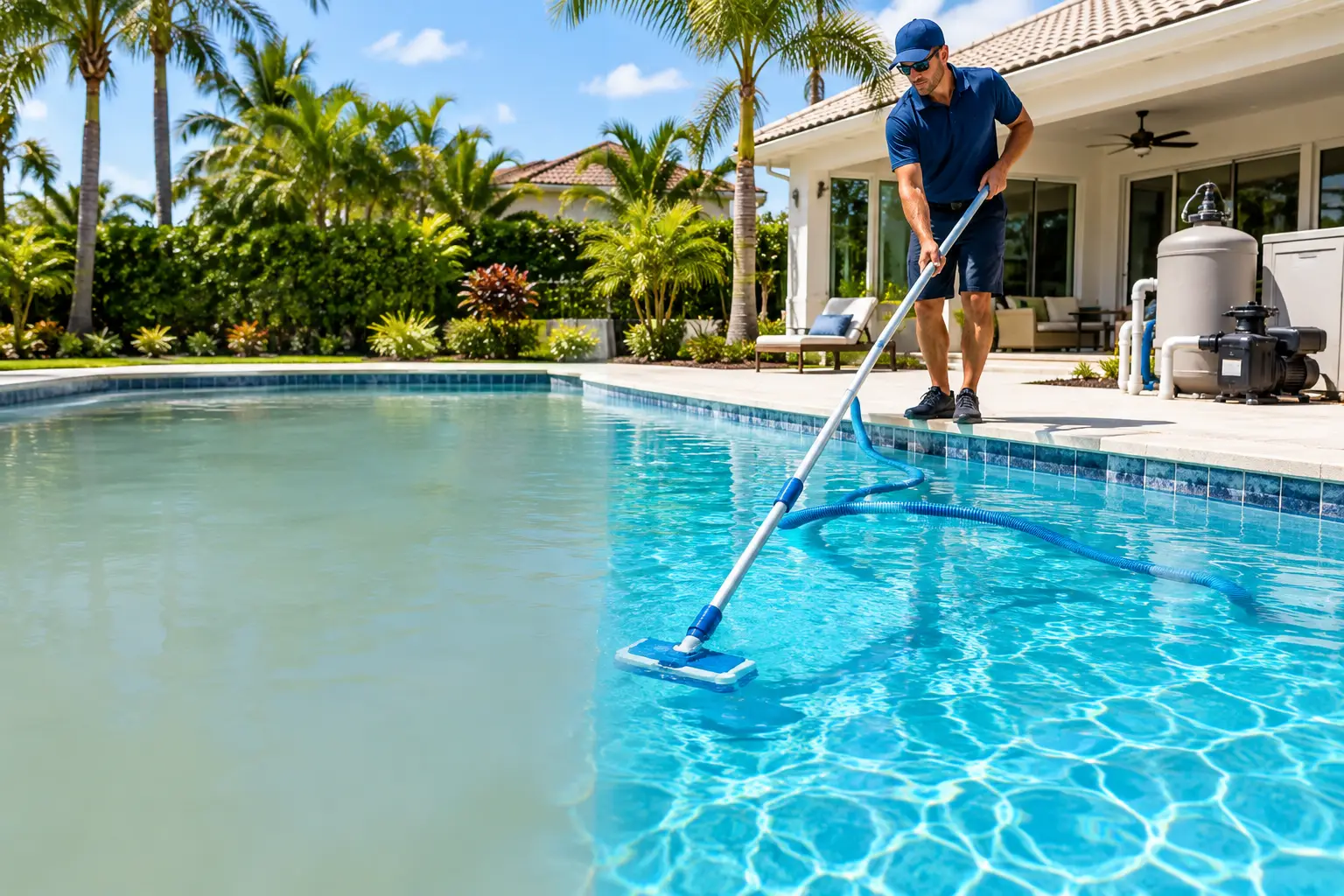
This is where detailed service reporting adds real peace of mind. A weekly visit should include more than an attractive waterline and an empty skimmer basket. It should account for water testing, chemical balancing, cleaning, and a routine visual inspection of the equipment that keeps everything moving. Turtle Pool Care documents completed visits so homeowners can see the care behind a turtly clean pool.
When to Ask for Professional Help
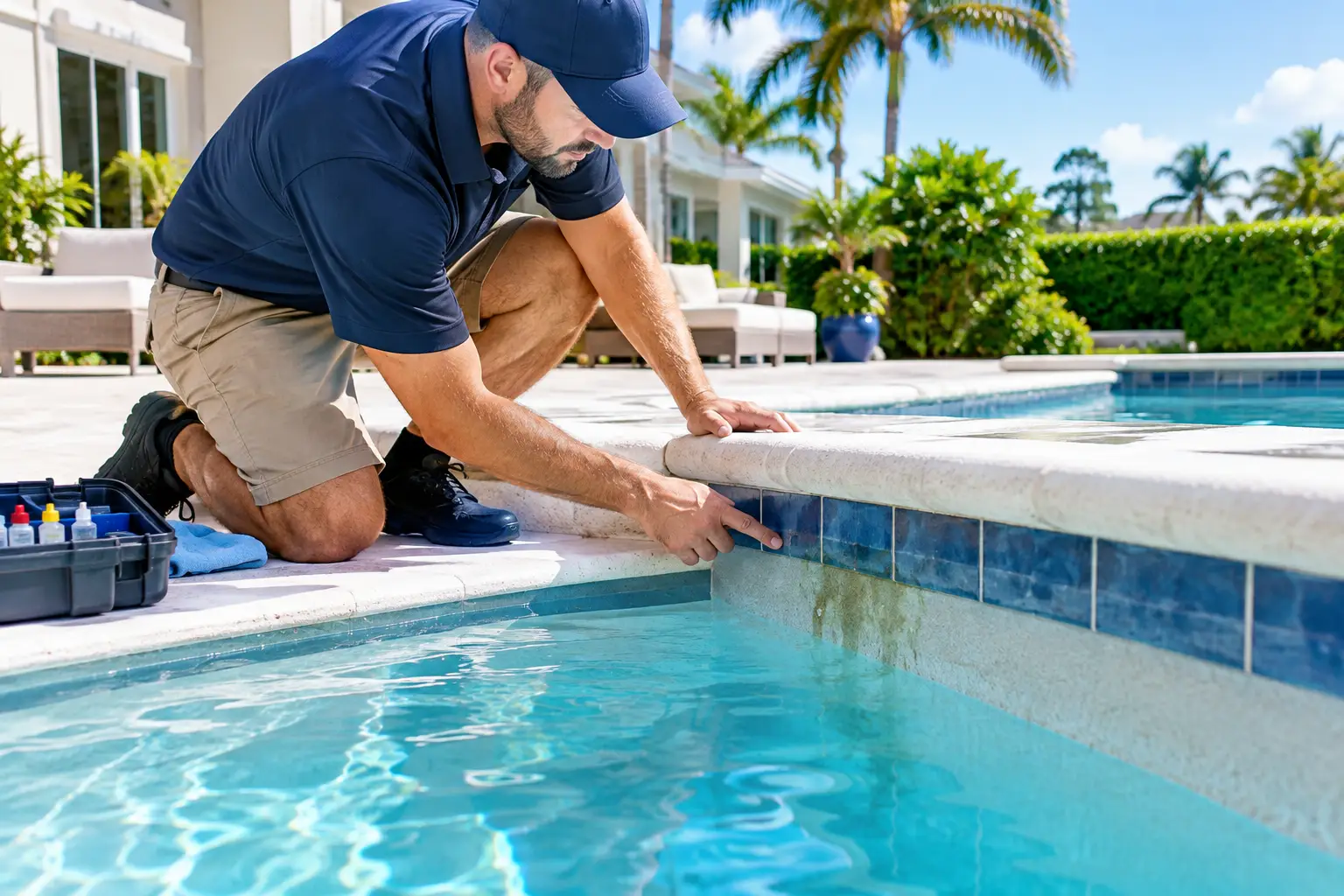
A test result is a useful starting point, but certain signs call for a closer look. Persistent cloudiness, recurring green spots, strong chemical odor, visible scale, staining, unusually rapid chlorine loss, or water that will not hold a normal balance can point to an issue beyond a simple weekly adjustment.
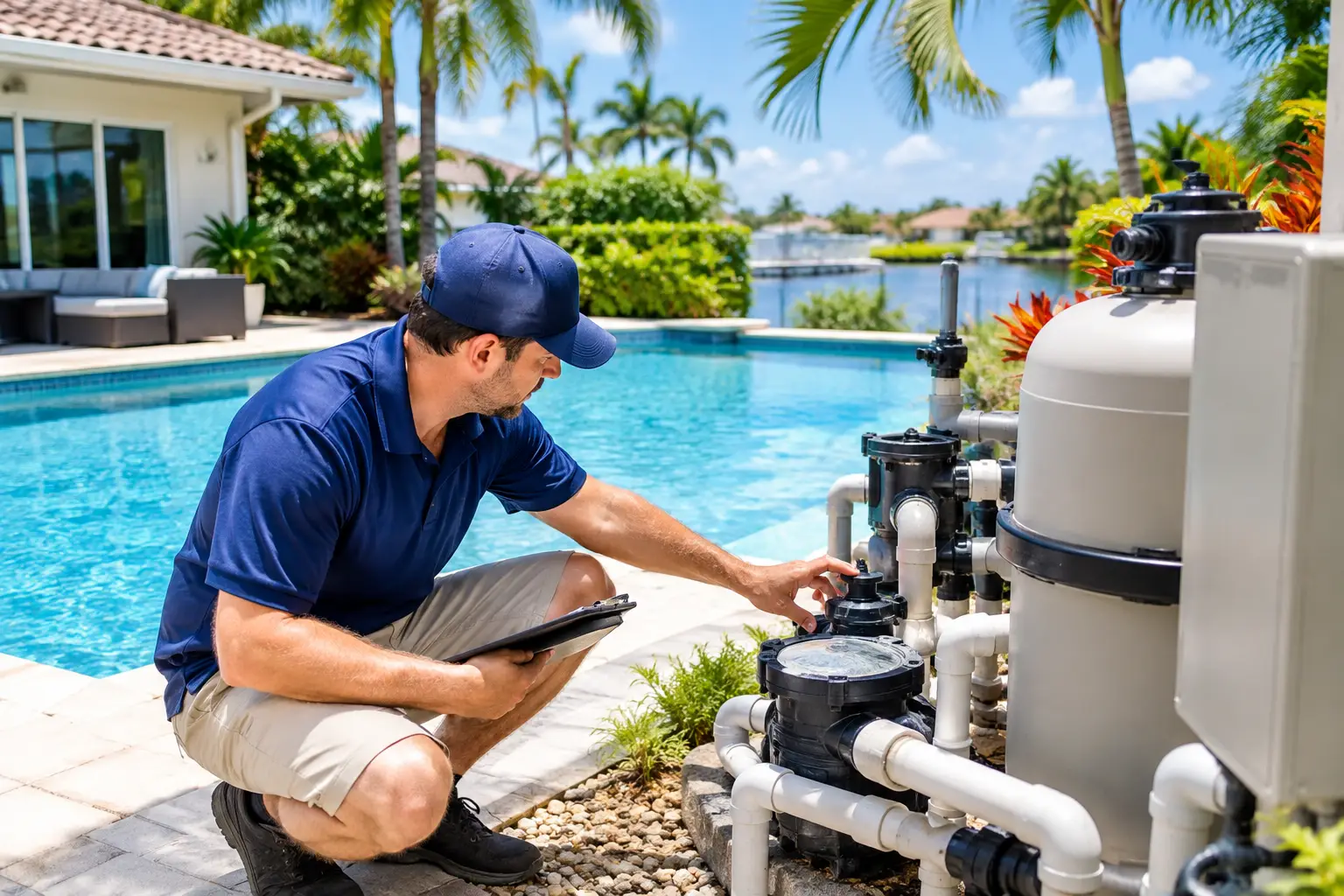
Equipment problems can play a part as well. Poor circulation, a weak pump, a clogged filter, or a heater and automation issue may affect how evenly water is treated. Chemistry and equipment work together, so correcting one without checking the other can leave the real cause unresolved.
Homeowners should never mix chemicals, improvise measurements, or attempt electrical equipment repairs. Use products only according to their labels and seek qualified pool help when the water condition or equipment behavior is unclear.
The best testing method is the one that gives you information you can trust and act on responsibly. Keep strips for fast awareness, use manual testing when accuracy matters, and do not let a small uncertainty sit long enough to become a bigger pool problem. A few careful checks can keep your water safe, balanced, and ready for the next family swim.