A pool should feel like the easiest part of your Florida home: a quick cool-down after school, a relaxed weekend swim, or a place to gather when friends visit. Yet the first few weeks of ownership can bring a surprising number of questions. This new pool owner guide covers the routines that protect your water, equipment and peace of mind, without turning pool care into a second job.
Florida pools work hard. Strong sun, warm water, frequent rain and year-round use all affect water chemistry and can give algae an opening faster than many new owners expect. The good news is that consistent attention prevents most expensive or frustrating problems.
New Pool Owner Guide: Start With the Water
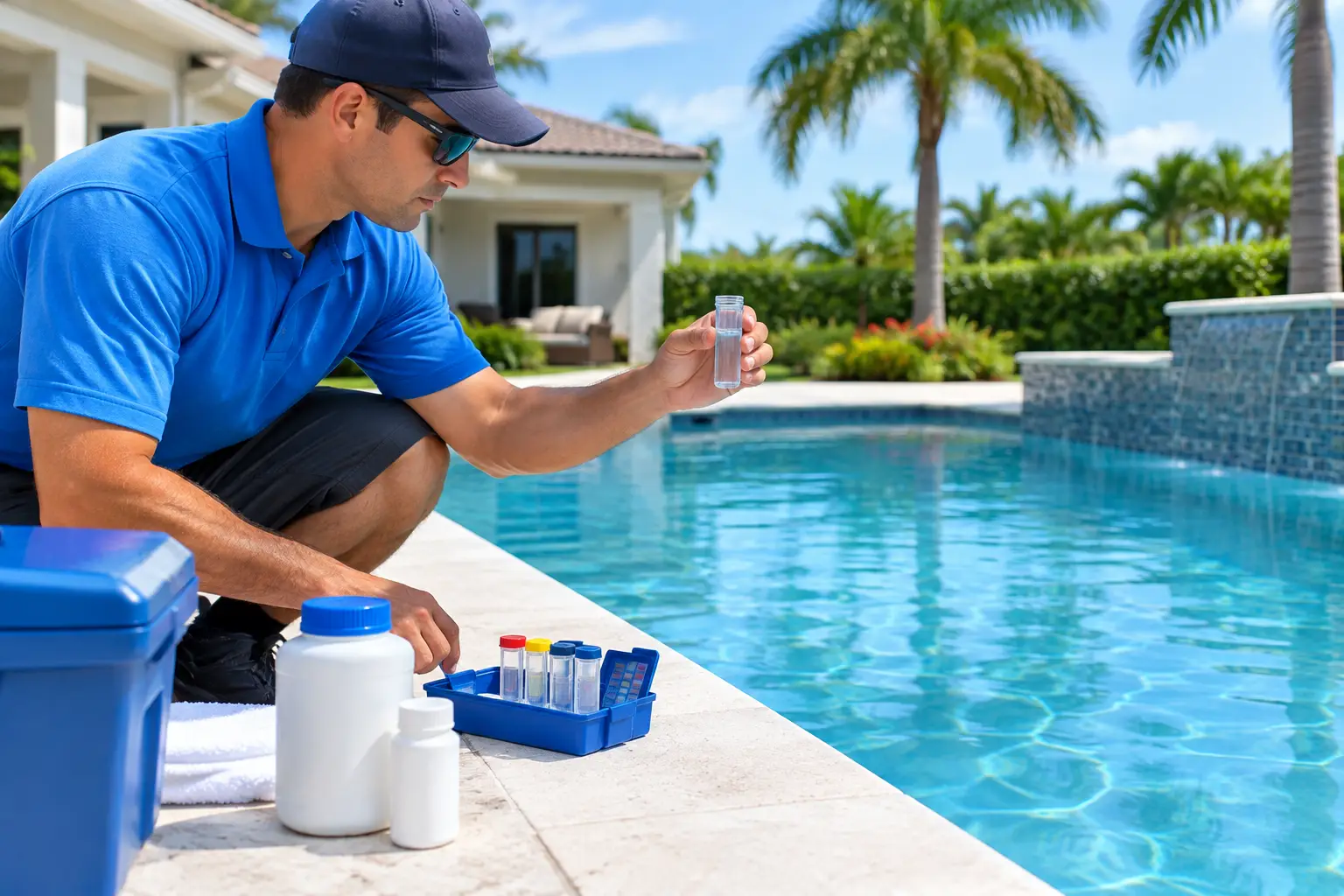
Clear water is not always balanced water. A pool can look inviting while its sanitizer level is too low, its pH is drifting, or its calcium balance is creating a risk for plaster, tile and equipment. Regular testing is how you catch those changes before swimmers, surfaces or machinery pay the price.
Your water needs an effective sanitizer level to control bacteria and algae. Chlorine is the most common choice, while saltwater pools use a salt cell to produce chlorine. A salt pool is not chemical-free, and it is not maintenance-free. It still needs testing, balancing and occasional adjustment, especially after a heavy rainstorm, a busy pool party or a spell of very hot weather.
pH matters because it affects swimmer comfort, sanitizer performance and the condition of pool finishes. If pH runs too high, water may become cloudy and scale can form on surfaces or inside equipment. If it falls too low, the water can become corrosive and uncomfortable. Total alkalinity helps keep pH from swinging too quickly, while calcium hardness needs to suit your pool’s finish and fill water.
For most homeowners, testing at least once a week is the practical minimum. Test more often when the pool is heavily used, after major rainfall or if the water changes appearance. Record readings rather than relying on memory. Patterns, such as pH repeatedly rising or chlorine dropping after rain, give you useful clues about what your pool needs.
Avoid adding several products at once simply because a test result looks unfamiliar. Chemicals solve different problems, and overcorrecting can create another imbalance. Follow product instructions carefully, add one treatment at a time where possible, and allow the pump to circulate the water before retesting.
Circulation Does More Than You Can See
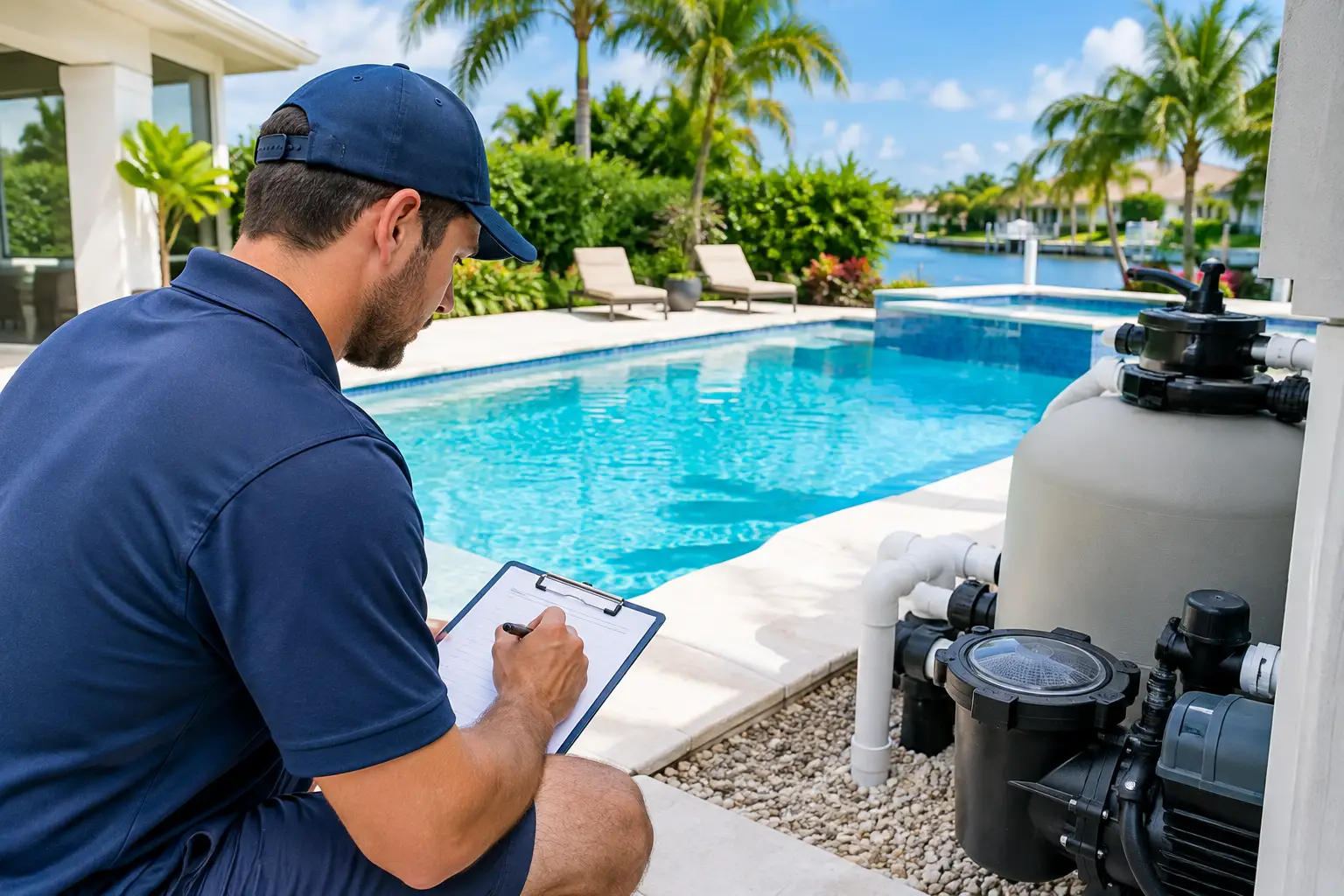
Your pump and filter are the quiet workhorses of the pool. They move water through the filtration system, distribute chemicals and help prevent debris from settling into corners. When circulation is poor, algae tends to find the dead spots first.
The ideal daily run time depends on your pool size, pump type, plumbing layout, bather load and the season. Many Florida pools need several hours of circulation each day, often longer during the hottest months. A variable-speed pump can run at a lower speed for longer periods, which may improve circulation while using less energy than a single-speed pump. The right setting is specific to the pool, so it is worth having a professional assess it rather than copying a neighbor’s schedule.
Get familiar with what normal operation sounds and looks like. The return jets should create visible movement on the surface. The pump basket should not be packed with leaves, and the pressure gauge should not suddenly read far above its usual level. A pressure increase often means the filter needs attention, although the exact cleaning method depends on whether you have a cartridge, sand or DE filter.
Do not wait for weak flow to become a breakdown. Air bubbles in the pump lid, a persistent leak, a loud motor, reduced returns or water collecting beneath equipment all deserve prompt attention. Small repairs are usually simpler than replacing a failed pump or dealing with damage caused by a leak.
Keep Skimming and Brushing on the Calendar
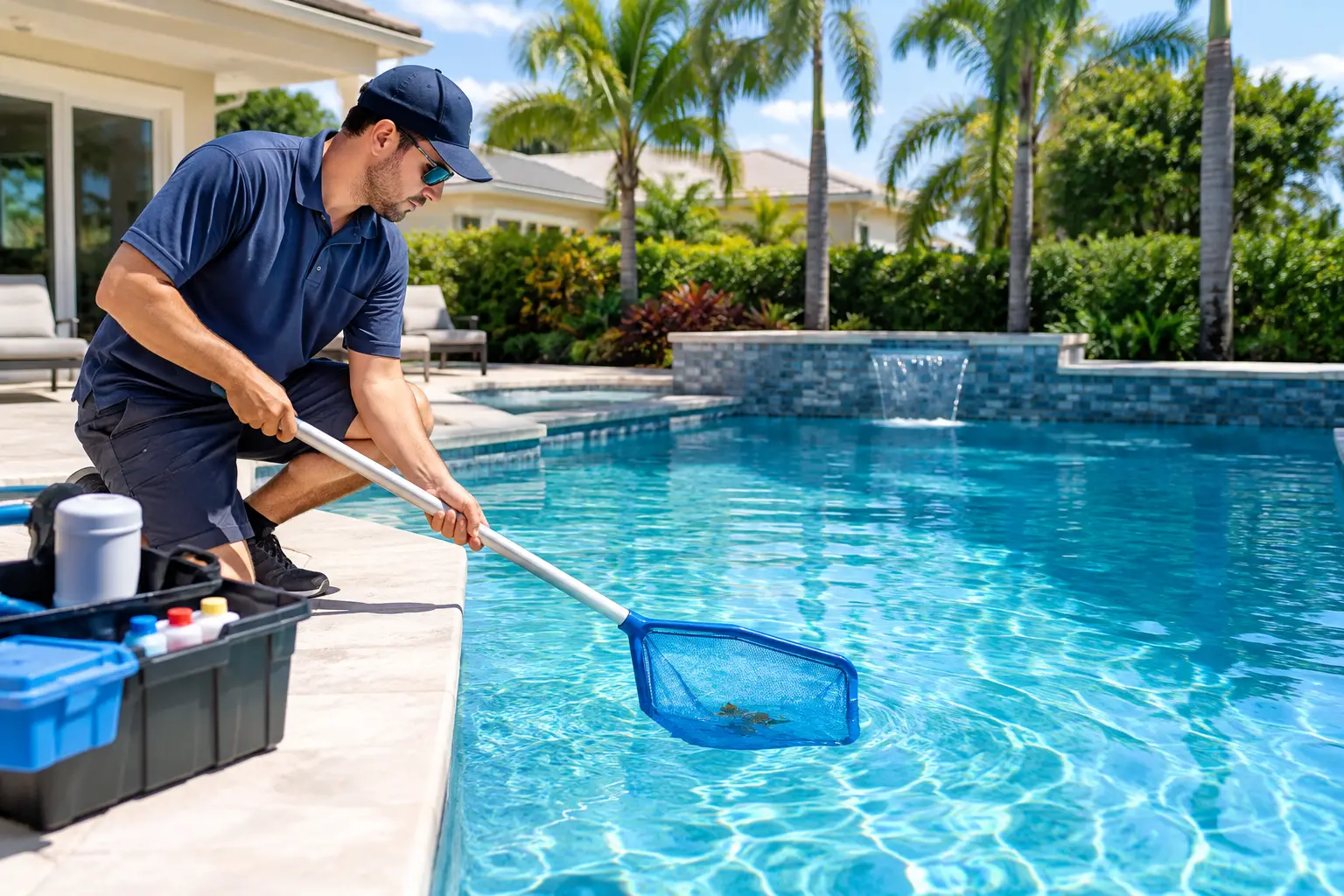
Leaves, pollen, insects and lawn debris are more than cosmetic. Organic material uses up sanitizer as it breaks down, can stain surfaces and gives algae extra fuel. Empty skimmer and pump baskets regularly, particularly after windy days or storms. Never open the pump lid until the pump is off.
Skimming removes floating debris, but brushing handles what circulation misses. Brush walls, steps, ladders, benches and tight corners weekly. Pay special attention to shaded areas and spots behind ladders, where algae can establish itself before it becomes obvious. Vacuuming removes settled debris that brushing and skimming do not collect.
A weekly service visit generally combines these jobs with water testing, chemical balancing and an equipment check. For busy households, that rhythm is often what keeps a pool consistently turtly clean rather than merely presentable on the day before guests arrive.
Know What Rain, Heat and Swimmers Change
Florida rain can dilute chemicals and carry contaminants into the water. It may also alter pH and alkalinity. After a strong storm, remove debris, check the water level and test the chemistry before assuming the pool is fine because it still looks blue.
Heat and direct sunlight consume chlorine more quickly. More swimmers introduce sunscreen, body oils and organic contaminants, all of which increase demand on the sanitizer. A quiet pool during a mild week needs different attention from one that has hosted children, guests and a weekend barbecue.
If the water turns dull, hazy or green, resist the temptation to keep adding random products. Start by testing the water, checking circulation and inspecting the filter. Green water may require a structured recovery treatment, especially if algae has taken hold. The correct approach depends on the severity of the problem, the condition of the filter and the pool’s chemistry. Fast action generally saves water, chemicals and effort.
Protect the Pool Finish and Waterline
The waterline is where oils, sunscreen and airborne debris often collect. Wipe it gently with a pool-safe cleaner before build-up hardens. Do not use household cleaners, abrasive pads or acidic products unless they are specifically intended for your finish. The wrong product can damage tile, vinyl, stone or plaster.
Watch for new stains, rough patches, loose tile, peeling coatings or changes in the surface texture. These are not always emergencies, but they are useful early warnings. Taking a photo when you first notice a change makes it easier to track whether it is growing.
Water level also deserves a quick look. It should normally sit around the middle of the skimmer opening, though your pool’s setup may vary. Too low and the pump can pull in air; too high and skimming becomes less effective. If you are repeatedly adding water, investigate for a possible leak rather than treating it as normal evaporation.
If Your Pool Is New or Newly Resurfaced
A freshly built or resurfaced pool needs more careful attention than an established one. New plaster cures over time, and water chemistry during the first month can influence its appearance, durability and smoothness for years. This is not the time to rely on a casual once-a-week glance.
A proper 28-day start-up program usually involves frequent testing, measured chemical adjustments, regular brushing and close monitoring of the finish. Brushing helps remove plaster dust and supports an even cure. The exact process depends on the surface material, builder guidance and water conditions, so follow the start-up plan provided for your pool rather than using generic advice from an online forum.
It is also sensible to delay assumptions about your permanent maintenance routine. A pool’s chemistry and equipment needs during start-up are different from normal operation. Once the surface is established, you can settle into a predictable weekly care schedule.
Build a Simple Safety Habit
Pool safety is part equipment care, part household routine. Keep rescue equipment accessible, secure gates and barriers, and make sure every adult in the home understands basic pool rules. Children should be actively supervised near water, even when they are confident swimmers.
Check that drain covers are secure and in good condition. Never allow anyone to play near suction outlets, and do not use the pool if a drain cover is missing or damaged. Lighting, handrails, steps and deck surfaces also deserve attention because they shape how safely people enter and leave the water, particularly after dark.
Automation can make safety and upkeep easier by controlling pump schedules and lighting from a central system. It is useful, but it does not replace visual checks. A timer cannot see a blocked skimmer, a developing leak or a cloudy pool.
The most valuable habit for a new owner is simple consistency. Notice the normal look, sound and feel of your pool, then act when something changes. With steady cleaning, correctly balanced water and timely equipment care, your pool remains ready for the ordinary Tuesday swims as well as the memorable family gatherings.