A pool can look clear on Monday and show a faint green tint by Friday. In South Florida, warm water, strong sun, afternoon rain and heavy pool use create ideal conditions for algae to take hold quickly. Effective pool algae prevention is less about adding a single product and more about keeping the whole pool system working as it should: balanced water, dependable circulation, regular cleaning and prompt attention to small changes.
For homeowners, the goal is simple: a safe, perfectly balanced pool that is ready whenever the family wants to swim. The good news is that most algae outbreaks are preventable when routine care is consistent.
Why algae develops so quickly in Florida pools
Algae is a microscopic plant organism that can enter a pool through wind, rain, swimmers, garden debris and even contaminated equipment. Its presence alone is not unusual. The problem begins when conditions allow it to multiply faster than sanitizer can control it.
Florida pools face several challenges at once. High temperatures speed up algae growth and cause chlorine to dissipate more quickly. Intense sunlight breaks down unstabilised chlorine. Summer storms dilute pool chemicals, introduce organic debris and can throw water balance off within a single afternoon. A busy weekend of swimming also increases the demand on the sanitizer.
Poor circulation gives algae another advantage. Water that is not moving well can develop quiet areas around steps, benches, corners, ladders and behind fittings. These are often the first places to feel slippery or show green, yellow or black spotting.
A pool does not have to look neglected for algae to be forming. Early warning signs include cloudy water, a dull appearance, a slippery wall or floor, more debris than usual, or chlorine readings that fall unexpectedly quickly. Acting at this stage is far easier and less expensive than recovering a fully green pool.
Pool algae prevention starts with dependable water chemistry
Chlorine is the main line of defence, but chlorine only works properly when the rest of the water chemistry supports it. This is why adding tablets without testing the water can create a false sense of security.
Free chlorine should be maintained at a level appropriate for the pool's stabiliser reading, pool type and bather load. In practical terms, the right chlorine level is not a fixed number for every pool. Cyanuric acid, often called stabiliser, helps protect chlorine from the sun, but too much can make chlorine less effective. Too little can leave it burning off rapidly in Florida sunshine.
pH matters as well. When pH rises too high, chlorine becomes less efficient and scale may begin to form on surfaces or equipment. When it falls too low, water can become uncomfortable for swimmers and harder on pool finishes and metal components. Total alkalinity helps pH remain steady, while calcium hardness needs attention to protect plaster, tile and equipment.
This balance is particularly important after heavy rain, a pool party, landscaping work or a long stretch of hot weather. Those are the moments when a pool can move from clear to vulnerable. Testing on a reliable schedule, then making precise adjustments rather than broad guesses, keeps sanitizer working where it matters.
Do not rely on appearance alone
Clear water is encouraging, but it is not a complete chemistry report. Chlorine can be low before a pool turns green, and early algae can be present before it is visible. Regular testing identifies problems while they are still manageable.
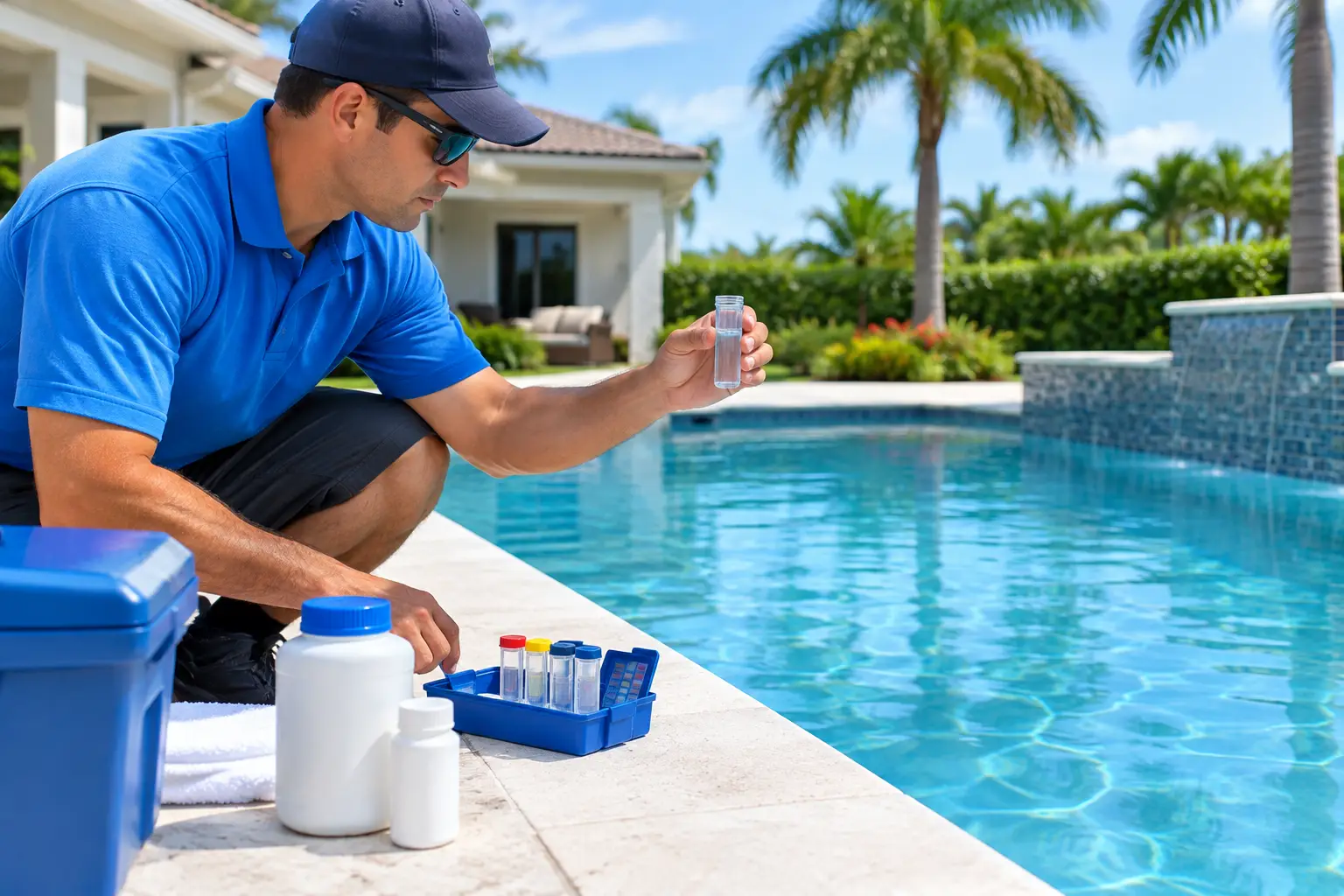
Home test kits can be useful between service visits, especially after severe weather. However, a professional test and a trained eye are valuable when readings are inconsistent, water keeps drifting out of range or the pool has a recurring algae problem. A repeated issue usually points to an underlying cause, such as poor circulation, an ageing filter, inadequate sanitizer delivery or a chemistry imbalance that has not been fully corrected.
Keep water moving and filtering properly
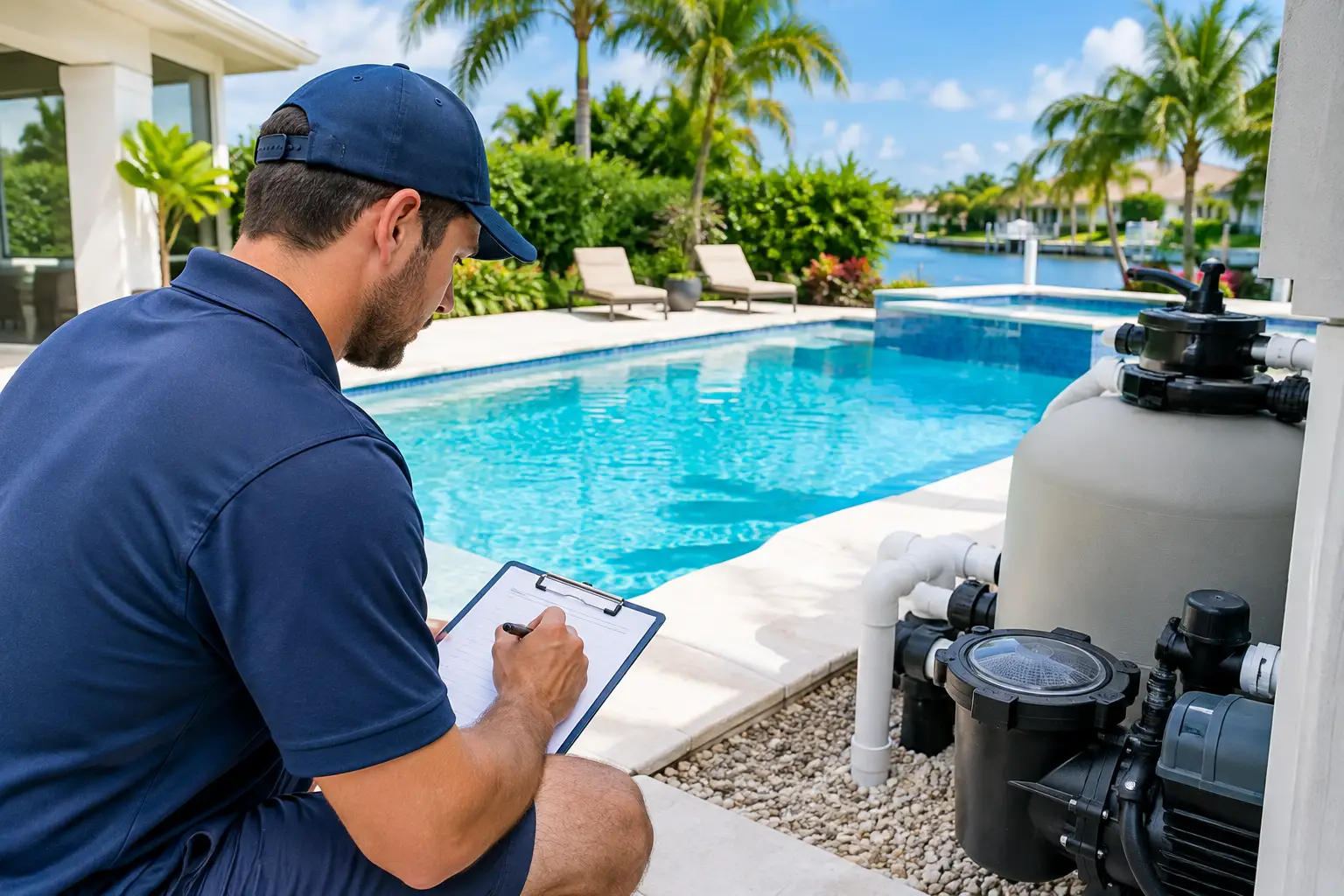
A healthy pool is not only chemically clean. It must also circulate and filter the entire body of water effectively. The pump pulls water through the skimmer and main drain, passes it through the filter and returns treated water to the pool. If any part of that process is underperforming, algae has more opportunity to settle and grow.
Run time depends on the size of the pool, pump type, plumbing layout, weather and bather load. In Florida's hottest months, many pools need longer daily circulation than they do during cooler periods. Variable-speed pumps can offer efficient, extended operation, but they still need to be programmed at a speed that provides proper circulation and skimming.
Check that return jets are aimed to create a gentle circular movement across the surface and down into the pool, rather than simply disturbing one small area. Watch for weak flow, air bubbles at the returns, a pump basket that repeatedly fills with debris, or a pressure gauge that suggests the filter needs cleaning. These signs are easy to overlook, yet they can be central to preventing algae.
Filter maintenance depends on the system. Cartridge filters need periodic rinsing and deeper cleaning, sand filters may need backwashing when pressure rises, and DE filters require their own maintenance routine. Cleaning too rarely reduces filtration. Cleaning too aggressively or too often can also be counterproductive with some filter types, so it pays to follow the equipment's requirements rather than using a one-size-fits-all schedule.
Brush, skim and vacuum before debris becomes fuel
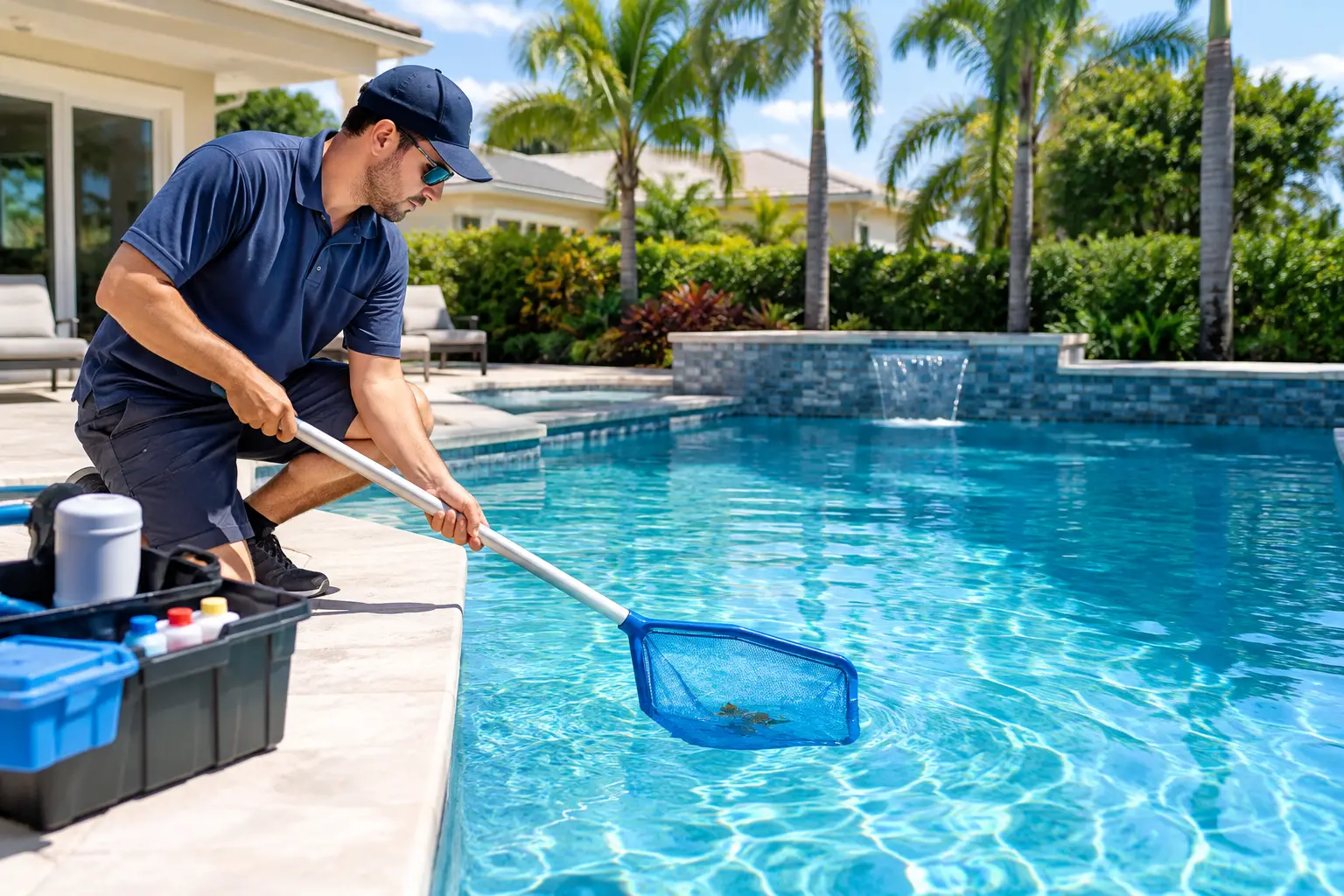
Leaves, pollen, grass clippings, insects and sunscreen residue all add organic material to the water. As that material breaks down, it increases chlorine demand and creates a more welcoming environment for algae. Skimming the surface is helpful, but debris that settles on the floor or wedges into steps and corners needs to be removed as well.
Brushing is one of the most overlooked parts of routine pool care. It disrupts the thin film where algae can attach to plaster, tile and fittings, allowing sanitizer to reach those areas. Pay extra attention to steps, waterline tile, behind ladders, around drains and shaded sections of the pool. Even pools with an automatic cleaner benefit from regular brushing because cleaners do not reach every surface equally.
Vacuuming removes fine debris that has escaped the skimmer basket. A robotic or suction cleaner can reduce the weekly workload, but it is not a replacement for checking the pool by hand. If the cleaner is missing areas, moving slowly or losing suction, it may need adjustment or repair before algae turns its weaknesses into a larger problem.
Treat weather and pool use as chemistry events
After a thunderstorm, it is tempting to wait until the next scheduled clean. That may be fine after light rain in a stable pool, but a major storm can significantly dilute chemicals and fill baskets with leaves. Check the water level, empty baskets if needed and test the water soon afterwards. If the pool is cloudy, has visible debris or has lost chlorine, address it promptly.
The same applies after a gathering. More swimmers mean more sunscreen, body oils and organic matter, all of which consume chlorine. If the pool has had a particularly busy day, a quick test and an appropriate sanitizer adjustment can prevent the water from slipping behind.
Newly resurfaced pools need even closer attention. During the first 28 days, plaster is curing and water chemistry must be managed carefully to protect the finish. Brushing, gradual balancing and correct calcium and pH management are not optional extras during this period. They establish the conditions for a durable, attractive pool surface and reduce future trouble spots where algae may cling.
When prevention is no longer enough
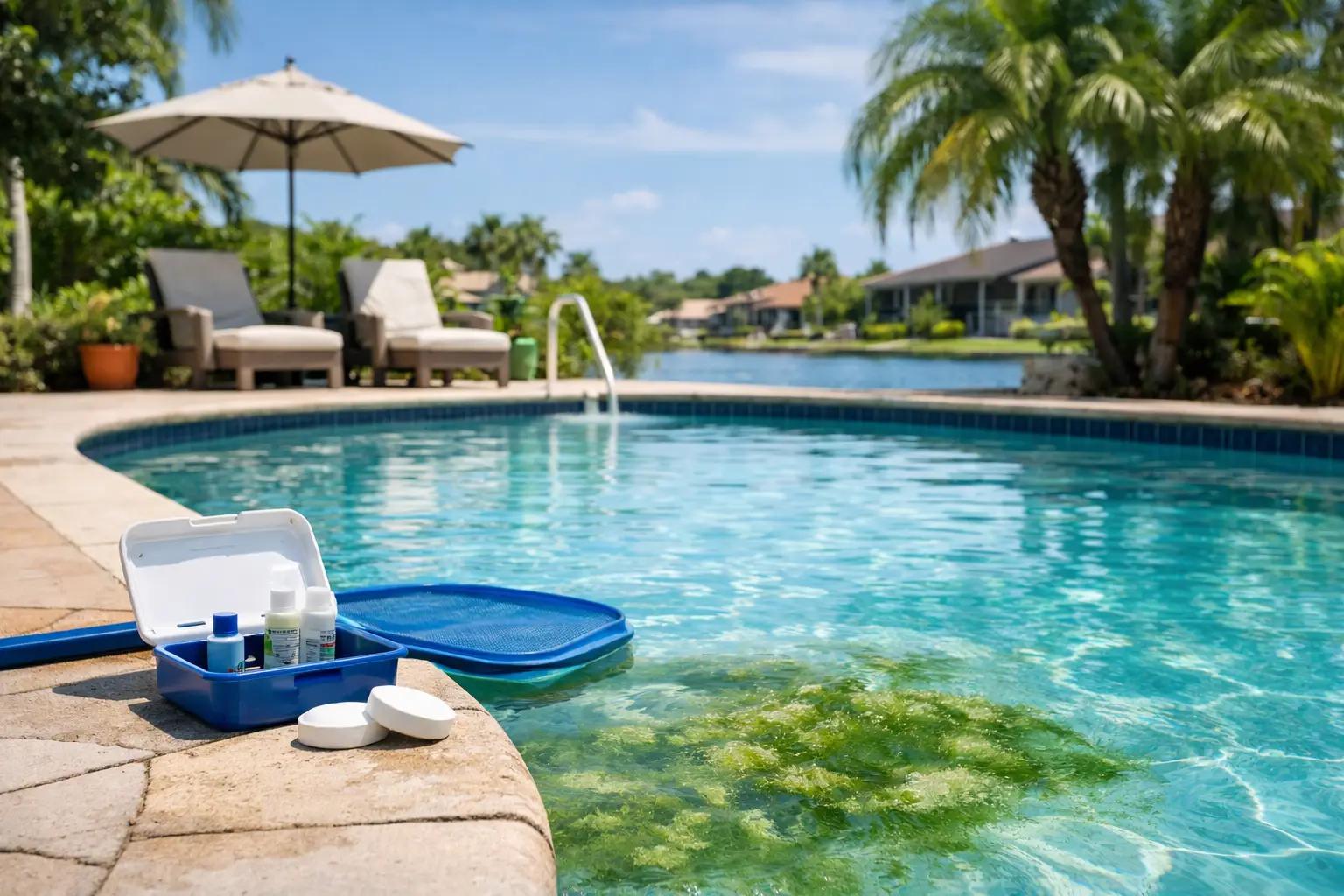
If you can see green water, mustard-colored dust that returns after brushing, or dark spots that seem embedded in the surface, the pool may need a more targeted recovery approach. Simply adding extra chlorine without correcting circulation, brushing thoroughly or balancing pH can leave algae partly alive and ready to return.
A proper green-to-clean treatment usually involves testing the full water balance, removing debris, brushing all surfaces, restoring effective sanitizer levels, running the filtration system and cleaning the filter as it captures dead algae. The process may take more than one visit, especially if the pool is heavily affected. It is worth doing correctly rather than repeatedly spending money on quick fixes that do not resolve the cause.
For Palm Beach County homeowners, a reliable weekly service provides the consistency that algae prevention needs. Turtle Pool Care combines water testing, precise chemical balancing, brushing, vacuuming, skimming and routine equipment checks, with clear post-service reporting so you know what has been done. That regular attention helps catch a weak pump, rising filter pressure or changing chemical demand before your weekend pool plans turn into a recovery job.
A turtly clean pool is not the result of luck or a last-minute chemical dose. Give your water steady care, pay attention after rain and heavy use, and deal with small changes promptly. Your pool will be far more likely to stay clear, comfortable and ready for the people who enjoy it most.