A pool should not need a last-minute equipment-room visit just because guests are arriving after work. With pool automation installation, homeowners can control daily circulation, lighting, heating and water features from a central panel or mobile app, while giving the equipment a more consistent operating routine.
For busy families across Palm Beach County, that convenience is valuable. The bigger benefit, however, is control. A properly planned automation system can help your pool run at sensible times, respond to changing weather and reduce the chance that a pump, heater or light is left running when it should not be.
What pool automation installation actually does
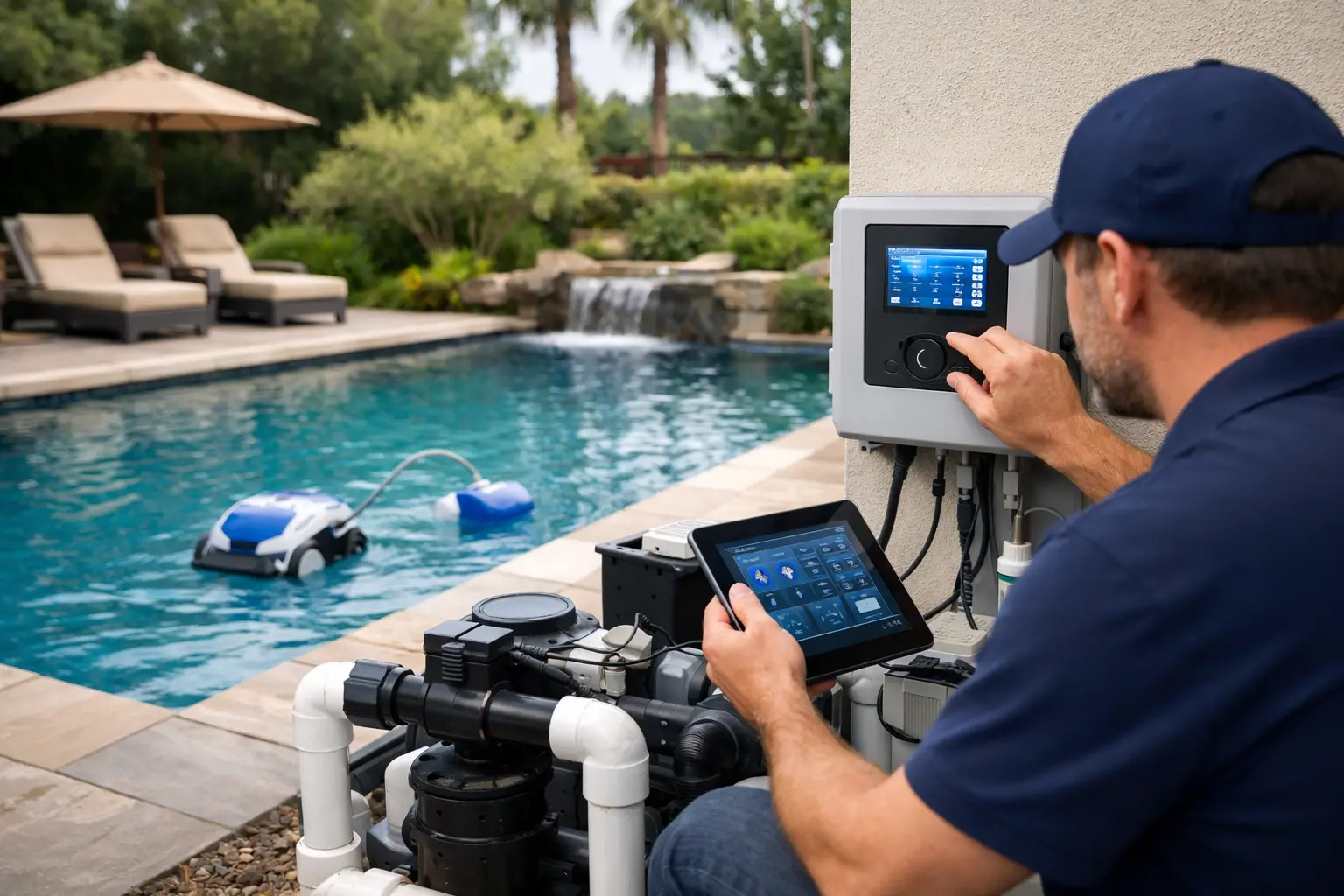
Pool automation replaces separate mechanical timers and manual switches with a connected control system. Depending on the equipment installed, the system can schedule the pump, control pool and spa modes, operate lights, manage a heater or heat pump, and activate water features.
Most systems include a control panel near the existing equipment, relays that switch individual devices on and off, and a user interface such as a wall controller or app. If the pool has valves that need to move between pool and spa circulation, the installation may also include motorised valve actuators.
The right system does not have to control every possible feature. A straightforward installation may simply automate a variable-speed pump and lighting. A more comprehensive set-up may coordinate heating, a spa, a salt chlorinator, waterfalls, bubblers and landscape lighting. The sensible choice depends on how the pool is used and whether the existing equipment is ready to communicate with the new controller.
Why schedules matter more than remote control
App control gets most of the attention, and it is certainly handy. Being able to turn on pool lights before arriving home or warm a spa in advance makes outdoor time easier to enjoy. Yet the day-to-day value usually comes from reliable scheduling.
Florida pools need consistent circulation to distribute sanitizer, filter debris and support balanced water. A programmable schedule helps the pump run during the hours that suit the pool, rather than relying on someone remembering to adjust an old timer after a power cut or seasonal change.
Automation can also support better equipment habits. Variable-speed pumps can operate at lower speeds for longer periods, then increase speed when a cleaner, feature or heater needs stronger flow. This may reduce energy use compared with running a single-speed pump at full power, but the actual saving depends on pump size, plumbing, filtration needs and the chosen schedule.
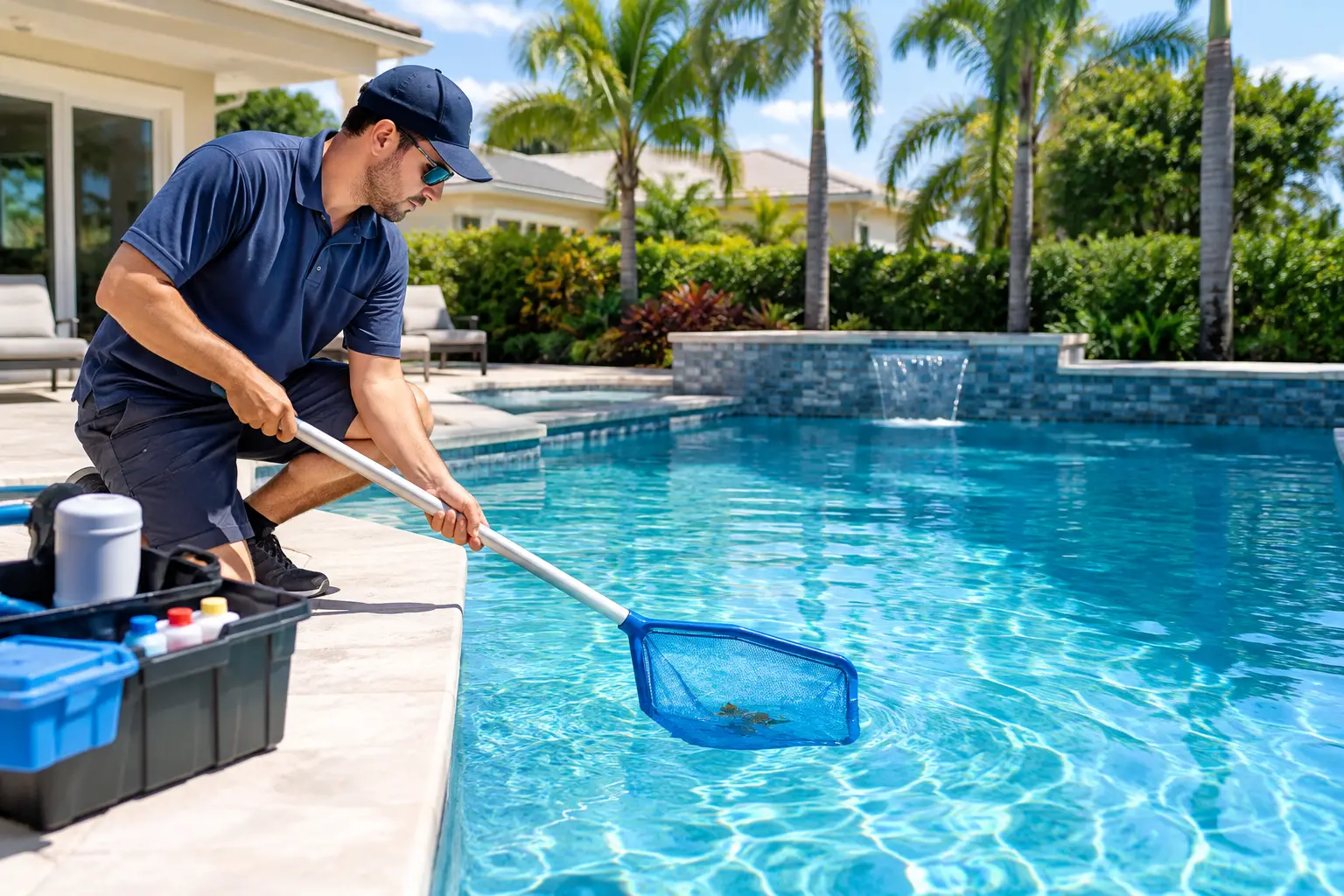
Automation is not a replacement for weekly service or water testing. It cannot brush tile, remove leaves from a skimmer basket or correct chemistry on its own. Think of it as a reliable operating system that helps the physical equipment do its job consistently.
Planning a pool automation installation
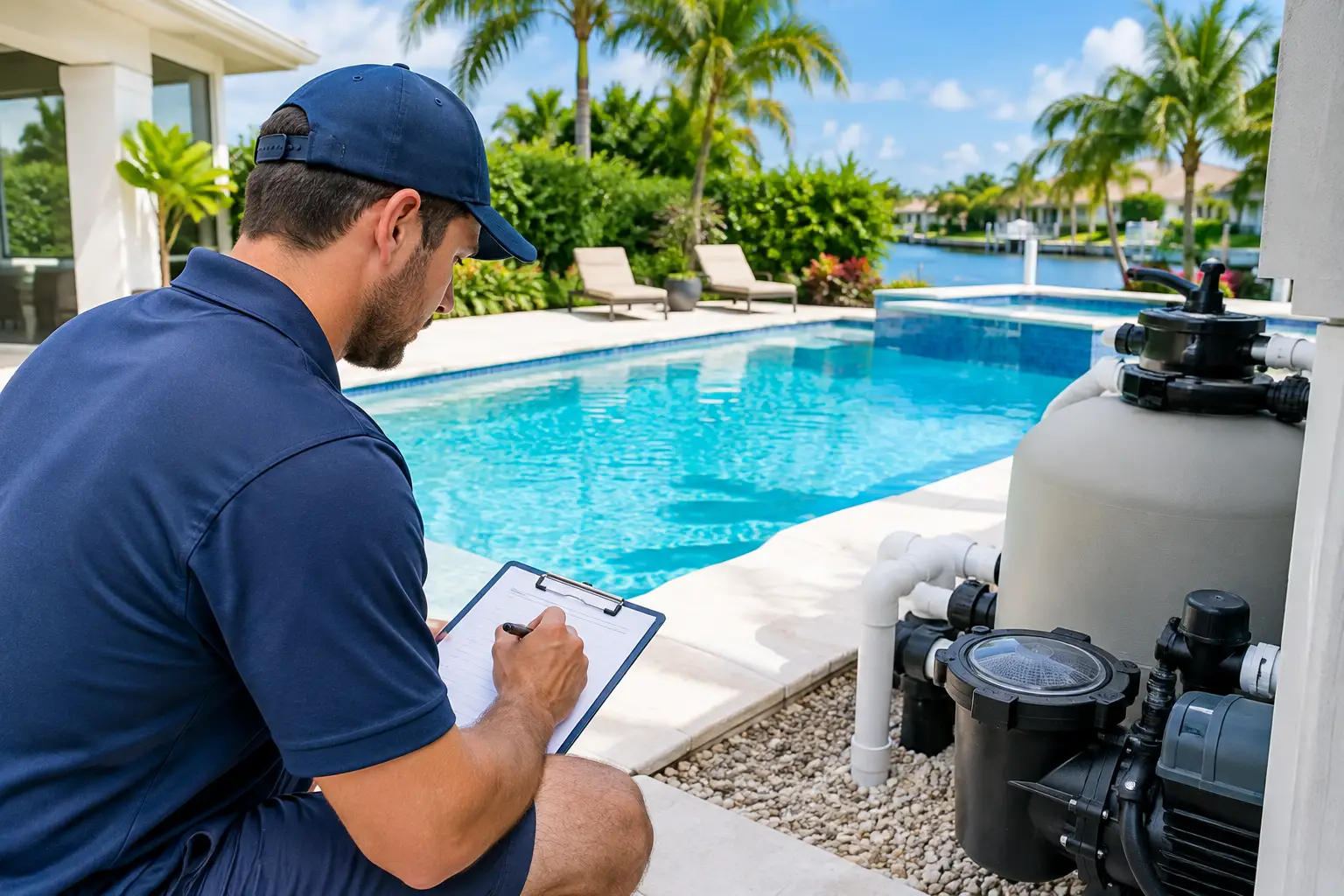
A good installation starts with the pool pad, not the app. Before selecting a controller, a technician should inspect the pump, filter, heater, chlorinator, lights, breakers, wiring and valves. Age, manufacturer compatibility and the condition of existing electrical connections all affect what can be installed safely and economically.
Start with the equipment you already have
A modern variable-speed pump is often an excellent candidate for automation, but some models offer more direct communication options than others. Older single-speed pumps can be switched by a relay, although replacing an inefficient or unreliable pump first may make more sense than building a new control system around it.
Heating equipment also needs careful review. Many heaters and heat pumps can accept an external control signal, but settings and safety requirements vary by model. Pool lighting may be simple to automate, while color-changing lights can require compatible controllers to access color shows and preset programs.
If a pool includes a spa, the plumbing layout matters just as much as the electronics. The system needs to move water correctly between pool and spa mode, protect the heater from inadequate flow and prevent unwanted water transfer when the spa is off. That is where accurate valve actuator placement and programming become essential.
Decide what should be automated now
It is tempting to automate every switch at once. Sometimes that is the right approach, especially during a wider equipment upgrade. In other cases, a staged plan is more practical: automate the pump, lights and heater first, then add features later if the control system has room to expand.
Consider the routines that cause the most frustration. If manual pump timing is the issue, scheduling may be the priority. If the family uses the spa often, pool-to-spa control and heating may matter more. If entertaining is common, easy lighting and water-feature control may deliver the most noticeable improvement.
Account for electrical and Wi-Fi realities
Automation controls are installed around electrical equipment and should be handled by qualified professionals using appropriate permits and electrical practices where required. The control panel needs safe placement, protected wiring and enough capacity for the equipment it will operate.
Wi-Fi is useful for app access, but it is not the foundation of a well-designed system. The pool should still follow its programmed schedule if the internet drops out. In South Florida, where storms and power interruptions are a fact of life, surge protection and a clear plan for restoring settings after an outage are worthwhile considerations.
What happens on installation day
The exact process depends on the complexity of the pool, but most projects follow a similar sequence. The technician confirms the equipment plan, shuts down power where necessary, mounts the control equipment and connects relays, communication cables and valve actuators. Existing timers may be removed or bypassed as the new system takes over their role.
Next comes testing. Each controlled item should be operated individually before schedules are created. The installer should verify pump speeds, heater response, light operation, valve movement and any safety interlocks. For a spa system, this includes checking that water is circulating through the correct lines in each mode.
Programming is not an afterthought. It is the point where the system becomes useful. Pump schedules should reflect the pool’s circulation requirements, the season, bather load and any attached equipment. Heating settings should be practical for how often the pool or spa is used, rather than set to maintain an expensive temperature around the clock.
Finally, the homeowner should receive a simple handover. That means knowing how to use the app or panel, how to pause equipment for service, what alerts mean and who to call if something does not behave as expected. A system is only convenient if the people using it feel confident with the controls.
Common mistakes to avoid
The most common mistake is treating automation as a cure for equipment problems. A controller cannot repair a leaking pump, improve a clogged filter or make a failing heater dependable. Address those issues first, or include the repairs in the upgrade plan.
Another mistake is using a generic schedule. A pool with heavy leaf fall in The Acreage may need a different approach from a screened pool in Wellington. Summer storms, frequent swimming, nearby trees and water features all influence filtration time and cleaning needs.
Homeowners should also avoid choosing a system based solely on the number of app features. A simpler, compatible controller that reliably operates the equipment you own is usually a better investment than a feature-packed system that requires compromises or leaves key devices disconnected.
Keeping an automated pool turtly clean
Once automation is installed, routine care still protects the investment. Keep baskets clear, maintain the recommended water level, and let a pool professional know if the pump sounds different, flow drops or the app reports an error. Automation makes patterns easier to spot, but it cannot prevent every mechanical issue.
Weekly service remains the practical partner to smart controls. Regular water testing and precise chemical balancing ensure that the circulation schedule is supporting clean, safe water rather than simply moving an imbalance around the pool. Equipment checks also catch small concerns before they turn into a no-swim weekend.
For homeowners considering an upgrade, Turtle Pool Care can assess whether the current equipment is a good fit for automation and help build a plan around the way the pool is actually used. The best system is not the one with the most buttons. It is the one that makes your pool easier to enjoy, easier to maintain and ready when family time calls.