A sparkling pool can still be out of balance. Water may look clear while carrying levels that irritate skin, allow early algae growth or slowly damage the pool finish and equipment. A professional pool chemical balancing service takes the guesswork out of those readings, keeping your water safe, comfortable and ready for the next family swim.
For homeowners in Palm Beach County, water chemistry is not a set-and-forget task. Year-round heat, strong sun, heavy rain, frequent swimming and wind-blown debris all affect the balance of a pool. The right service is about more than adding chlorine. It is about testing what the water needs, making precise adjustments and spotting the small changes before they become a green pool, a costly repair or a weekend without swimming.
What a Pool Chemical Balancing Service Checks
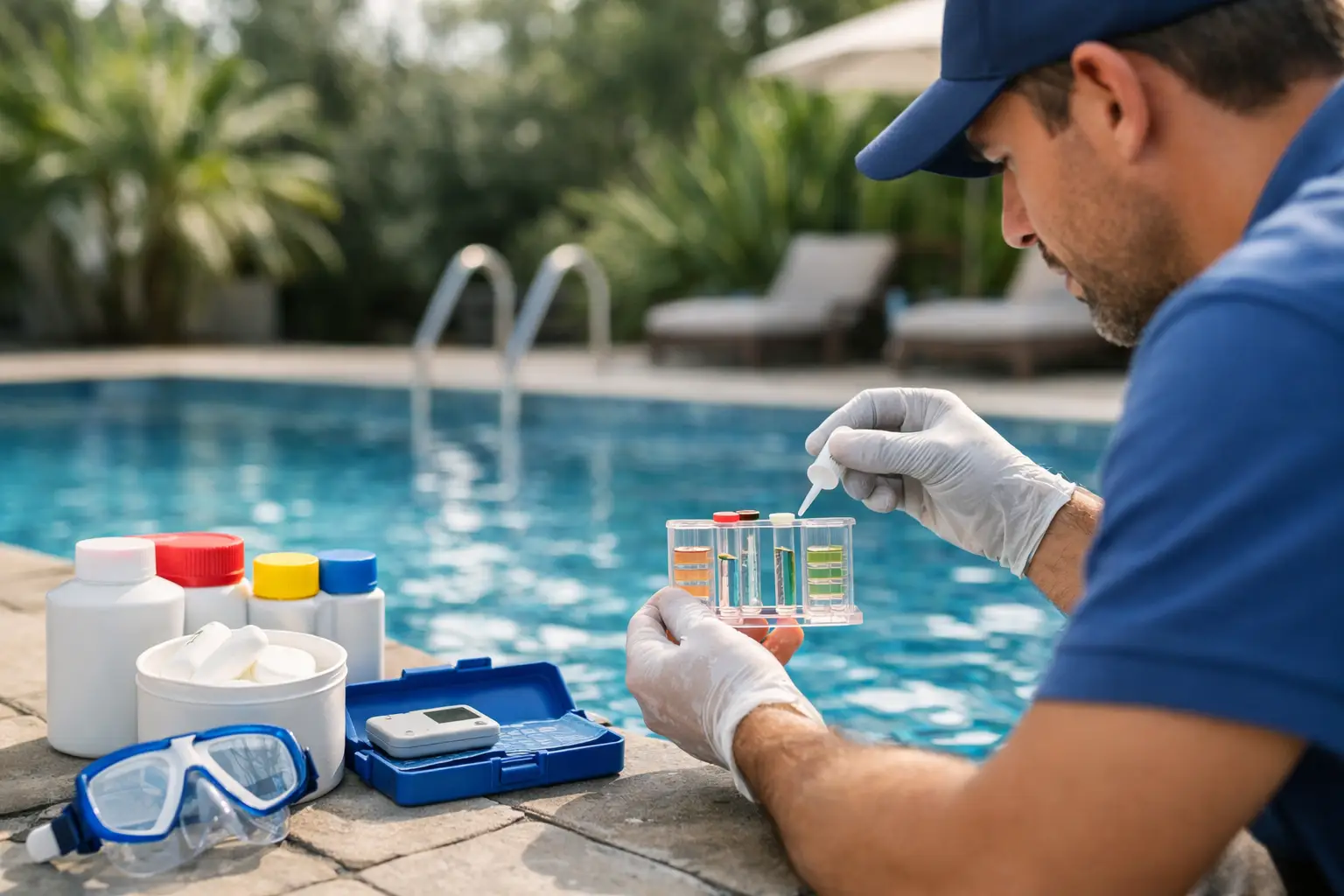
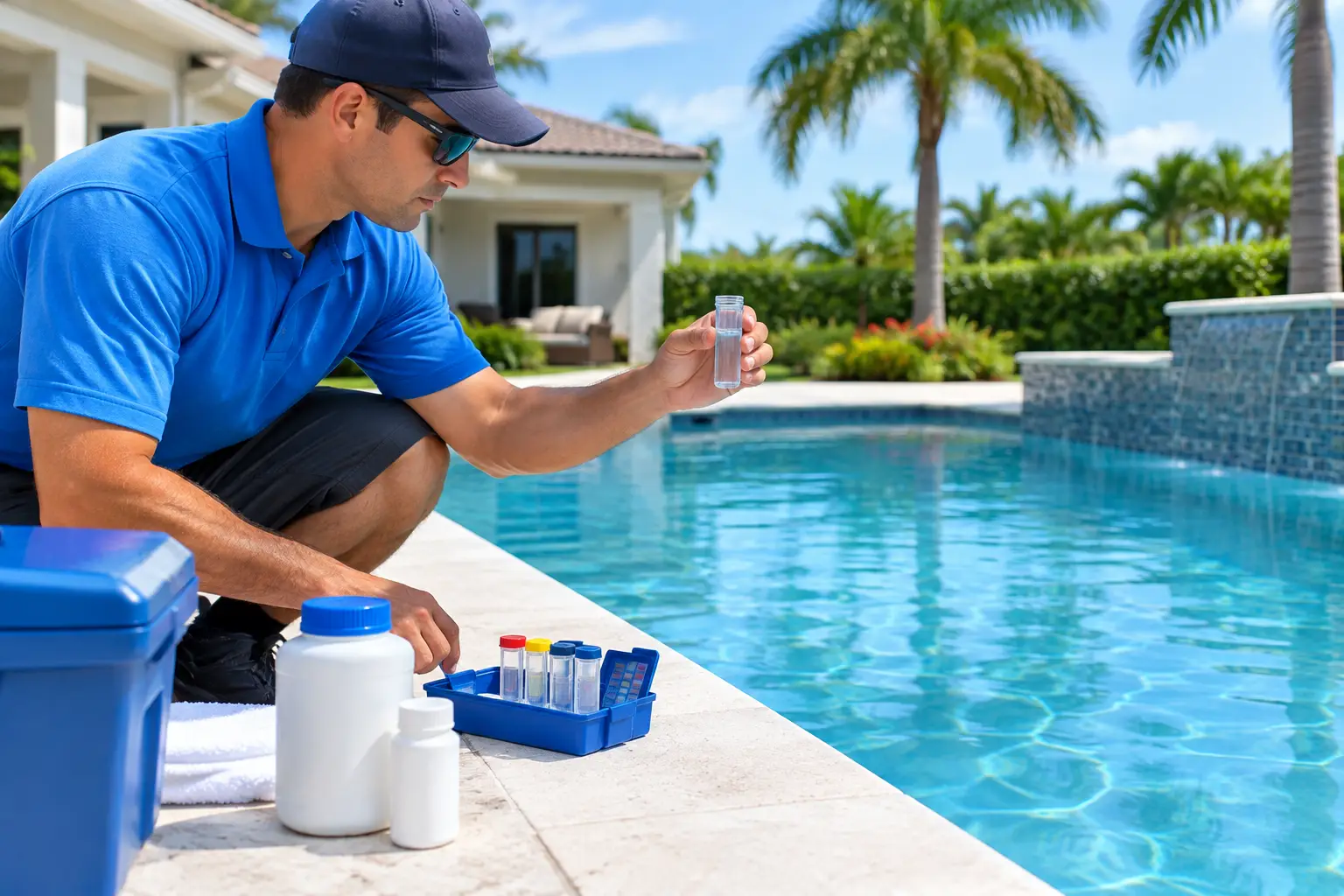
Chemical balance is a relationship between several measurements, not one magic number. Chlorine is essential, but it can only work properly when the surrounding water conditions support it. A technician tests the water at each visit and adjusts treatment based on the actual result, rather than relying on a fixed dose or a guess.
The main readings include sanitizer level, pH, total alkalinity, calcium hardness and stabiliser. Each has a different role. Sanitizer controls bacteria and algae. pH affects swimmer comfort, sanitizer performance and the tendency for water to corrode or form scale. Alkalinity helps keep pH from swinging too quickly, while calcium hardness protects plaster, tile and equipment from aggressive or scale-forming water.
Stabiliser, often called cyanuric acid, is particularly relevant in sunny South Florida. It helps protect chlorine from the sun, but too much can reduce chlorine’s effectiveness. That is one reason simply adding more chlorine is not always the answer to a water problem.
A reliable service also considers visible and practical clues: water clarity, debris load, algae beginning in corners, waterline buildup, unusual odours and how the equipment is running. Chemical results make more sense when they are read alongside the condition of the pool.
Why Florida Pools Need Regular Attention
A pool can change quickly after one summer storm. Rain dilutes chemicals, alters pH and introduces contaminants from the surrounding area. A busy afternoon of children, guests and sunscreen can increase the demand on chlorine. High temperatures and sunlight consume sanitizer faster than many homeowners expect.
That does not mean every pool needs the same adjustment every week. A screened, lightly used pool with stable equipment may need a lighter correction than an uncovered pool surrounded by trees. A pool with a salt system has different considerations from one using traditional chlorine treatment. The important part is regular testing and a response that fits the conditions.
Weekly service creates that consistency. A trained professional can identify whether a minor adjustment will restore balance or whether there is a deeper issue, such as poor circulation, a failing salt cell, a clogged filter or a phosphates problem feeding recurring algae. Treating the symptom without checking the cause can lead to repeated chemical costs and frustrating results.
Clear Water Is Not Always Safe Water
Many pool owners use appearance as their main test. Clear water is certainly a good sign, but it is not a complete answer. Low sanitizer levels, imbalanced pH or excessive stabiliser may not be visible right away. By the time cloudiness, staining or algae appears, the pool may need more intensive treatment to recover.
On the other hand, a sharp chemical smell does not necessarily mean a pool is especially clean. It can indicate chloramines, which form when chlorine has already reacted with contaminants. Proper testing shows what is actually happening in the water and helps determine the correct next step.
Signs It Is Time to Book Professional Help
If your weekly pool routine has become a cycle of testing, adding products and hoping for the best, professional chemistry support can bring real peace of mind. It is especially useful when readings are inconsistent, swimmers complain of dry skin or burning eyes, or the water turns dull shortly after treatment.
Persistent algae is another clear sign. Brushing and adding shock may improve the appearance for a few days, but recurring green spots on walls, steps or shaded corners point to an underlying balance, filtration or circulation problem. A proper green-to-clean treatment should address the source as well as the visible algae.
Consider booking help when you notice:
- Water that looks cloudy, dull or green despite regular chemical additions.
- pH or chlorine readings that swing dramatically from one test to the next.
- Scale on tile, heaters or fittings, or stains developing on the pool surface.
- A new pump, salt system or automation setting that has changed circulation or dosing.
- A pool that has just been resurfaced, filled or returned to use after a long period of neglect.
New plaster deserves particular care. Its first month is a critical curing period, and water chemistry must be managed closely to protect the finish. A structured 28-day start-up program includes frequent testing, brushing and controlled adjustments so the surface cures evenly and the pool begins life on the right footing.
The Difference Between Adding Chemicals and Balancing Water
Pool-shop advice and home test kits can be useful tools, especially for an experienced owner who enjoys hands-on maintenance. The trade-off is that water treatment is cumulative. Adding products without understanding the interaction between readings can create a second problem while trying to solve the first.
For example, repeatedly treating low chlorine without checking stabiliser can leave a pool inadequately sanitised. Raising pH without looking at alkalinity may result in another rapid swing. Adding calcium without confirming the existing hardness can increase the risk of scale. These are not reasons for homeowners to feel intimidated. They are reasons to use an orderly process instead of a trial-and-error approach.
A professional pool chemical balancing service brings consistent testing, properly measured treatments and records that help reveal patterns over time. At Turtle Pool Care, completed visits can include clear service reports and photographic proof, so homeowners know what was checked, what was done and how the pool looked when the technician left.
Chemistry Works Best With Good Pool Maintenance
Balanced water cannot compensate for neglected cleaning or poorly performing equipment. Leaves and organic debris consume sanitizer. A full skimmer basket limits circulation. A dirty filter reduces the system’s ability to capture fine particles. A pump that is losing performance can leave dead spots where algae gets established.
That is why weekly service should connect chemistry with skimming, vacuuming, brushing and routine equipment checks. When these jobs are handled together, the water stays cleaner with less dramatic intervention. It is a practical way to protect the pool’s finish, its equipment and the time you would rather spend enjoying your garden.
It also makes repairs easier to catch early. An air leak, weak flow, a noisy pump or a light that has failed may seem separate from water quality, yet each can affect how reliably the pool operates. Early attention is usually simpler than waiting until the pool is visibly struggling.
What Homeowners Can Do Between Visits
Professional service removes the burden of managing pool chemistry, but a few small habits help keep conditions stable between scheduled visits. Run the circulation system as recommended for your pool and season, keep the water level near the middle of the skimmer opening, and empty baskets if they fill with leaves after a storm.
Avoid adding chemicals unless you have been advised to do so or have a clear test result to guide the dose. Well-meaning overcorrection is common, particularly after heavy rain or a busy pool day. If the water changes color, the equipment stops running normally or you see algae beginning to form, report it promptly. Quick action can often prevent a bigger recovery job.
A well-balanced pool should feel easy to own. The water is clear without being harsh, the equipment runs as it should, and there is no need to second-guess every test strip. With regular, precise care, your pool can stay turtly clean and ready whenever Florida life calls for a swim.