A pool can look clear at breakfast and be one rainstorm, busy weekend or failing pump away from trouble by Sunday afternoon. In Palm Beach County, pool chemical expertise is not about tipping chlorine into the water when it starts to look questionable. It is the steady, measured work of keeping water safe, comfortable and protected against the Florida conditions that constantly try to change it.
For homeowners, the goal is simple: a pool that is ready when the family wants to swim, without cloudy water, harsh smells, algae on the steps or uncertainty about what is happening beneath the surface. Achieving that takes more than a quick test strip and a hopeful guess.
What pool chemical expertise really means
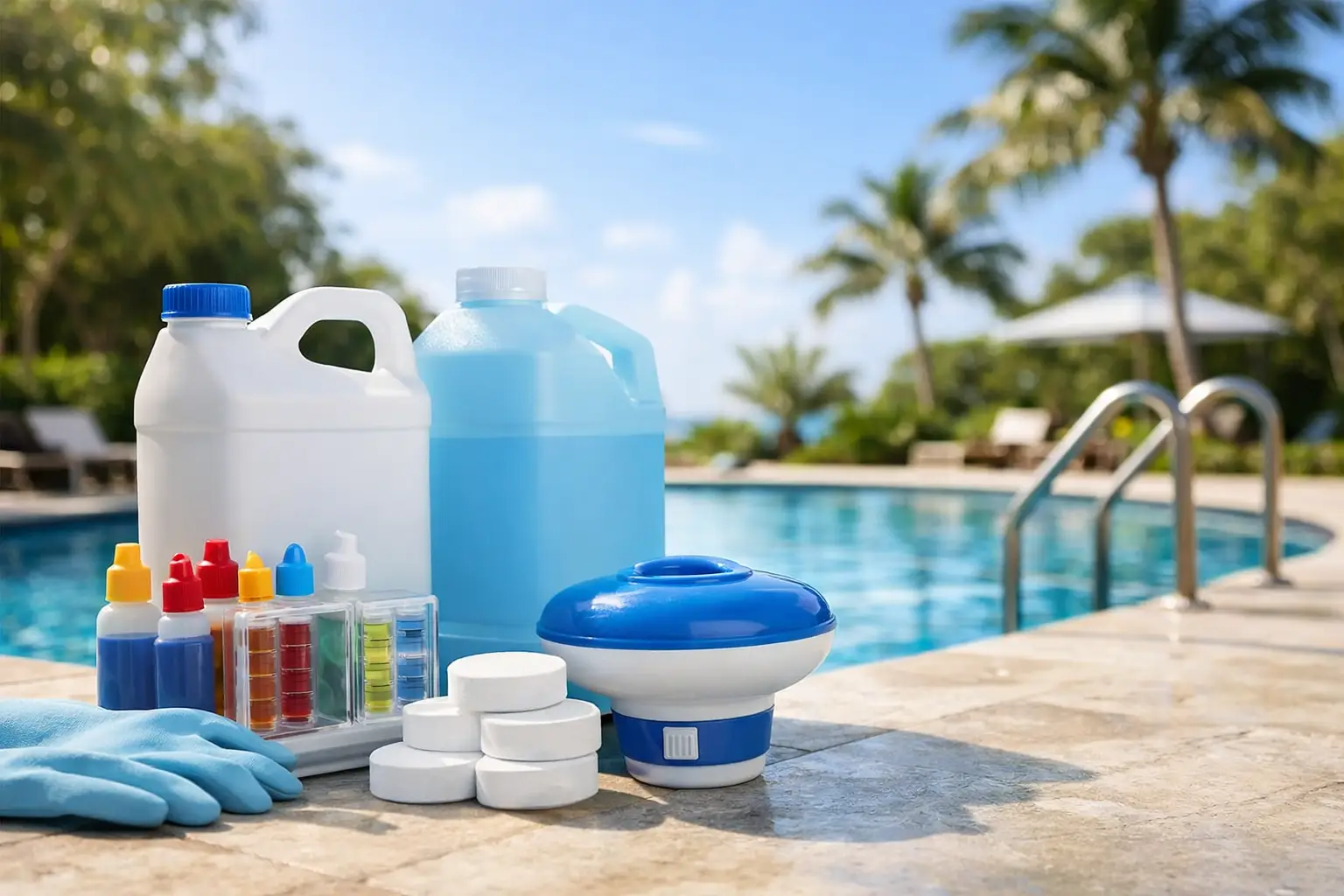
Good water chemistry is a balance of connected readings, not a single chlorine number. Chlorine must be present at an effective level, but it also needs the right conditions to work. If pH is too high, chlorine becomes less efficient and water can become cloudy. If it is too low, swimmers may experience irritation and pool surfaces or equipment can be put under unnecessary stress.
Alkalinity helps keep pH from swinging wildly. Calcium hardness matters because water that is too aggressive can draw minerals from plaster and grout, while excessively hard water can encourage scale on tile, heaters and salt cells. Cyanuric acid, often called stabiliser, helps protect chlorine from Florida sunshine, but too much can make chlorine less effective.
These readings influence one another. That is why chemical care should never follow a one-size-fits-all routine. A pool with fresh plaster has different needs from an older pool. A saltwater pool behaves differently from a traditionally chlorinated pool. A screened pool that is used twice a week may need a different approach from a sunny, heavily used pool with a spa.
Professional expertise means reading the whole picture, making measured adjustments and returning often enough to confirm that the water is responding as expected.
Why Florida pools need closer attention
South Florida pools work hard all year. Strong sun consumes available chlorine. Afternoon rain can dilute chemicals and shift pH. Wind carries pollen, leaves and fine debris into the water, giving algae more material to feed on. Warm water accelerates algae growth, especially in areas with poor circulation.
Then there are the less obvious changes. A birthday party, visiting family or a week of frequent swimming increases the organic load in the pool. Sunscreen, body oils and organic debris use up sanitizer. If the filter is dirty or the pump is not circulating properly, even carefully balanced water may not stay clear.
This is why a clean-looking pool is not always a balanced pool. Water can appear fine while pH is drifting, stabiliser is building up or chlorine is being consumed faster than expected. Regular testing catches those issues before they become a green-pool recovery, a stained surface or an avoidable equipment repair.
The chemistry checks that protect your pool
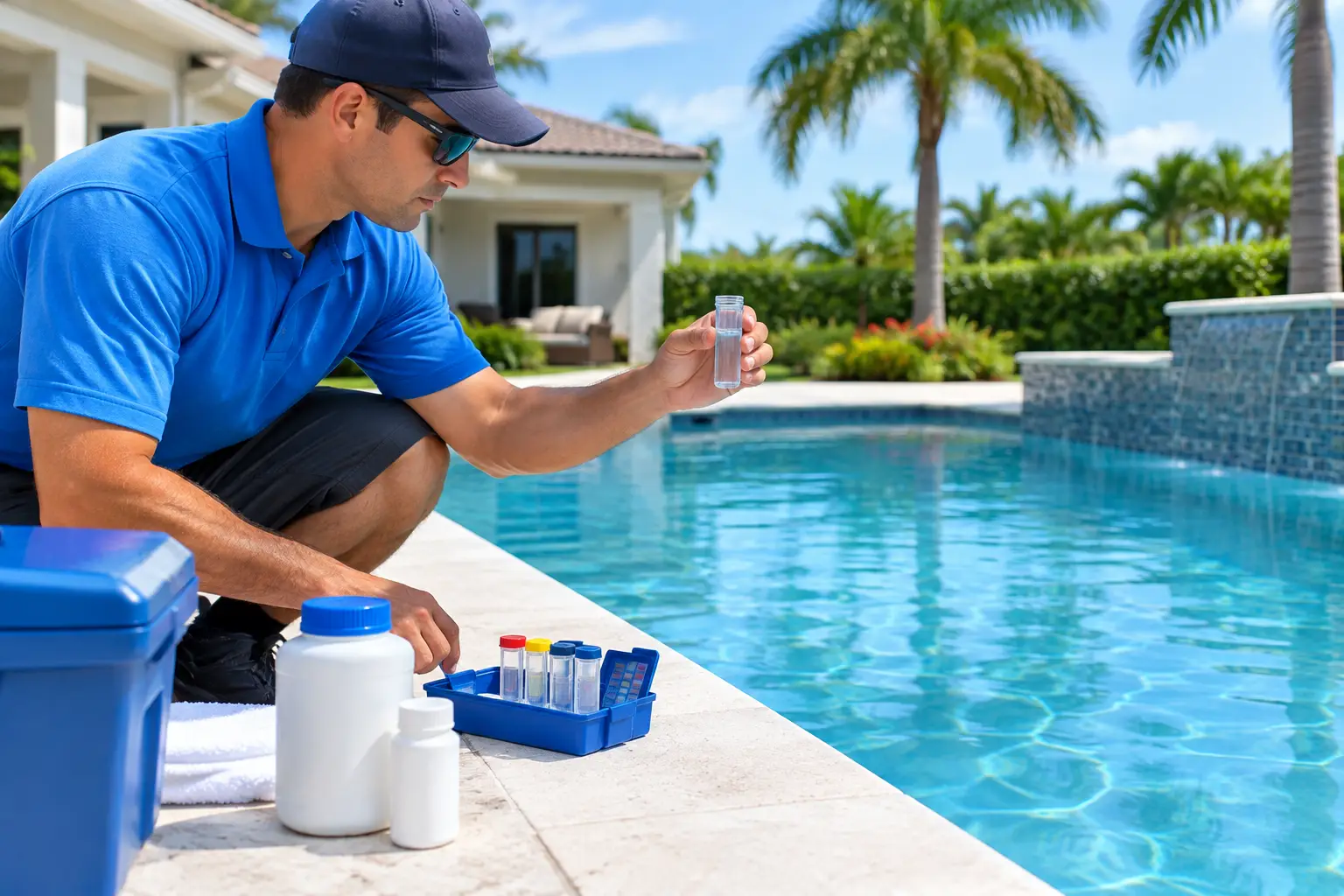
A thorough service visit starts with testing, but testing only has value when the results guide the next actions. The key readings are assessed in context with the pool's surface, sanitising system, recent weather and visible condition.
Sanitizer and chlorine demand
Chlorine sanitises the water by controlling bacteria and algae, but its effectiveness depends on more than the number shown on a test. A pool with high swimmer use, heavy rain or emerging algae may have a higher chlorine demand than usual. Simply adding a standard amount each week may not be enough.
A strong chlorine smell does not necessarily mean there is too much chlorine. It can indicate chloramines, which are compounds created as chlorine does its job. Correct treatment and proper balance are needed to restore fresh, comfortable water.
pH, alkalinity and swimmer comfort
pH is often the reading homeowners notice first because it affects comfort and chlorine performance. However, pH rarely stays stable without correct alkalinity. Treating one without considering the other can lead to a cycle of adjustments that never quite settles.
Careful chemical dosing protects more than swimmers' eyes and skin. It also helps protect plaster, tile, metal components, heaters and pump seals. Water chemistry is preventative maintenance, not just a cleanliness task.
Calcium, stabiliser and the long view
Calcium hardness and stabiliser levels tend to create problems gradually. Calcium can rise as water evaporates and is replaced, particularly where source water already contains minerals. Stabiliser can accumulate when certain chlorine products are used regularly. Neither issue is always solved by adding another chemical.
Sometimes the right answer is a partial water exchange, a change in treatment method or a more targeted plan. This is where experience matters. The most convenient treatment is not always the best treatment for the pool over the next six months.
Chemistry only works with circulation and cleaning
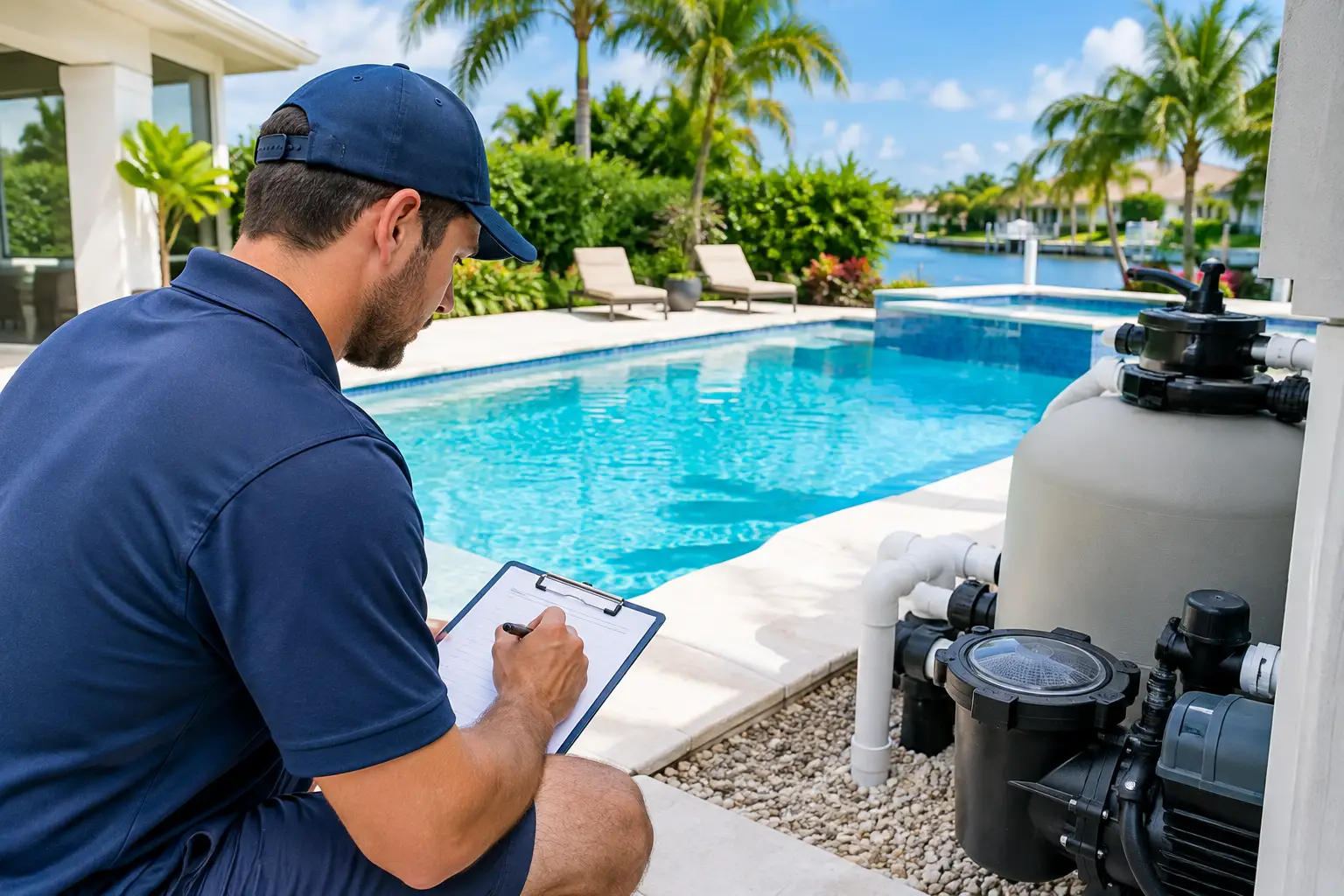
No chemical program can compensate for poor circulation. The pump moves sanitised water through the pool and filter, while the filter captures particles that would otherwise make water dull or provide a home for algae. If the pump is noisy, losing prime, leaking or running for too little time, chemistry can become difficult to maintain.
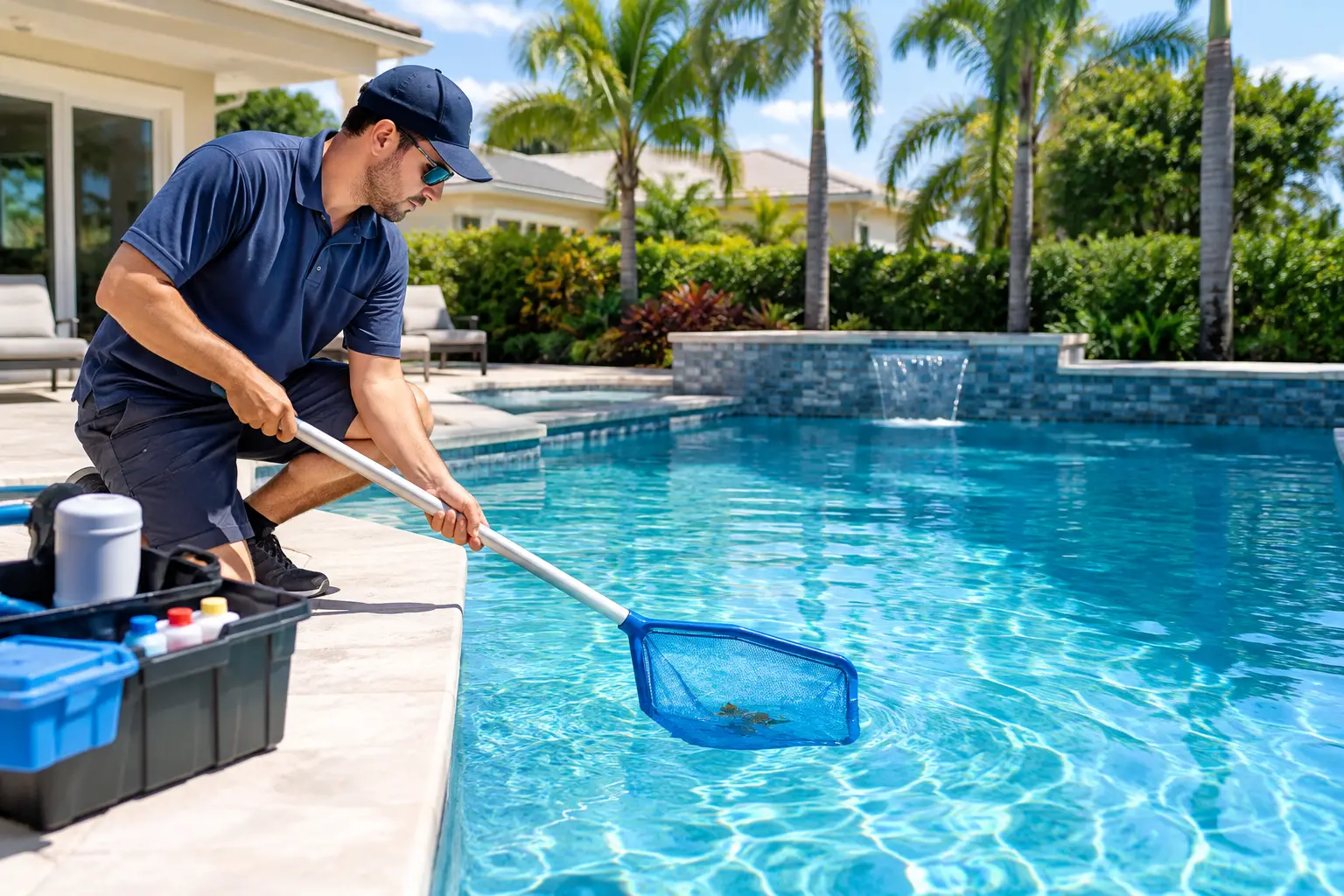
The same is true of physical cleaning. Skimming leaves, brushing walls and steps, vacuuming settled debris and emptying baskets reduce the material that consumes chlorine and strains the equipment. Brushing is particularly valuable because algae can establish itself on walls, in corners and along tile lines before it is obvious in the water.
For that reason, dependable weekly service combines cleaning, water testing and a routine equipment check. They are not separate jobs. They are the three parts of keeping a pool reliably swim-ready.
When a quick chemical fix is not enough
A green pool is a good example. Algae often appears after a lapse in sanitation, heavy weather, weak circulation or an unnoticed equipment issue. Adding chlorine may be part of the recovery, but it is rarely the entire solution. The water needs to be tested accurately, debris removed, walls brushed, filtration supported and chemistry monitored as the algae is cleared.
The same principle applies to cloudy water. It could be an imbalance, but it may also point to a blocked filter, worn pump component, inadequate run time, very fine debris or a combination of causes. Guessing can waste chemicals and delay the real repair.
Newly plastered and resurfaced pools also require specialist attention. During curing, plaster changes the water chemistry and requires frequent monitoring. A structured 28-day start-up program helps prevent scale, staining and surface damage while establishing stable water conditions from the beginning. This is one area where cutting corners can leave lasting marks.
What reliable service should feel like
Pool care should not leave homeowners wondering whether anyone attended, what was adjusted or whether a developing concern was noticed. Clear communication makes professional chemical care more useful. After a visit, it helps to know that the pool was cleaned, water was tested, treatment was applied where needed and equipment concerns were documented.
Turtle Pool Care combines hands-on weekly service with visit notifications, detailed reports and photographs, so homeowners have a clear record of the work carried out. That level of visibility is especially reassuring after a storm, during travel or when a pool has recently needed repair or recovery.
It also creates a useful history. Repeated changes in chemical demand, pressure, water level or clarity can reveal a developing issue earlier than a single visit ever could.
A better standard than “looks fine”
The best time to deal with algae is before you can see it. The best time to address an imbalanced pH reading is before swimmers feel it or surfaces suffer from it. And the best time to identify weak circulation is before a pool loses clarity.
That is the value of consistent pool chemical expertise: less guesswork, fewer emergencies and more confidence that the water is safe and perfectly balanced for ordinary family time as well as the spontaneous swim that makes Florida living so enjoyable. With attentive testing, careful adjustments and dependable weekly care, your pool can stay turtly clean without becoming another item on the weekend to-do list.