A pool can look crystal clear on Monday and begin turning dull, cloudy or green by the weekend if its sanitizer is not keeping pace with Florida heat, rainfall and regular swimming. This pool chemical sanitizer comparison looks beyond the label to explain how each option actually performs in a residential pool - and what it asks of you in return.
For most homeowners, the right choice is not about finding a completely maintenance-free system. It is about choosing a dependable way to keep water safe, comfortable and consistently swim-ready without creating unnecessary work or equipment issues.
Pool Chemical Sanitizer Comparison: What Matters Most
A sanitizer’s job is to control bacteria, algae and other contaminants introduced by swimmers, wind, rain and debris. In an outdoor Palm Beach County pool, sunlight also consumes chlorine quickly unless the water is properly stabilised. That means the best sanitizer is the one that can maintain an effective level reliably, not simply the one with the most appealing sales pitch.
When comparing options, consider your pool’s surface, the amount of sun it receives, how often the family swims, your equipment and how hands-on you want to be. A shaded pool used by two adults has very different needs from a busy family pool with weekend gatherings, dogs and children splashing for hours.
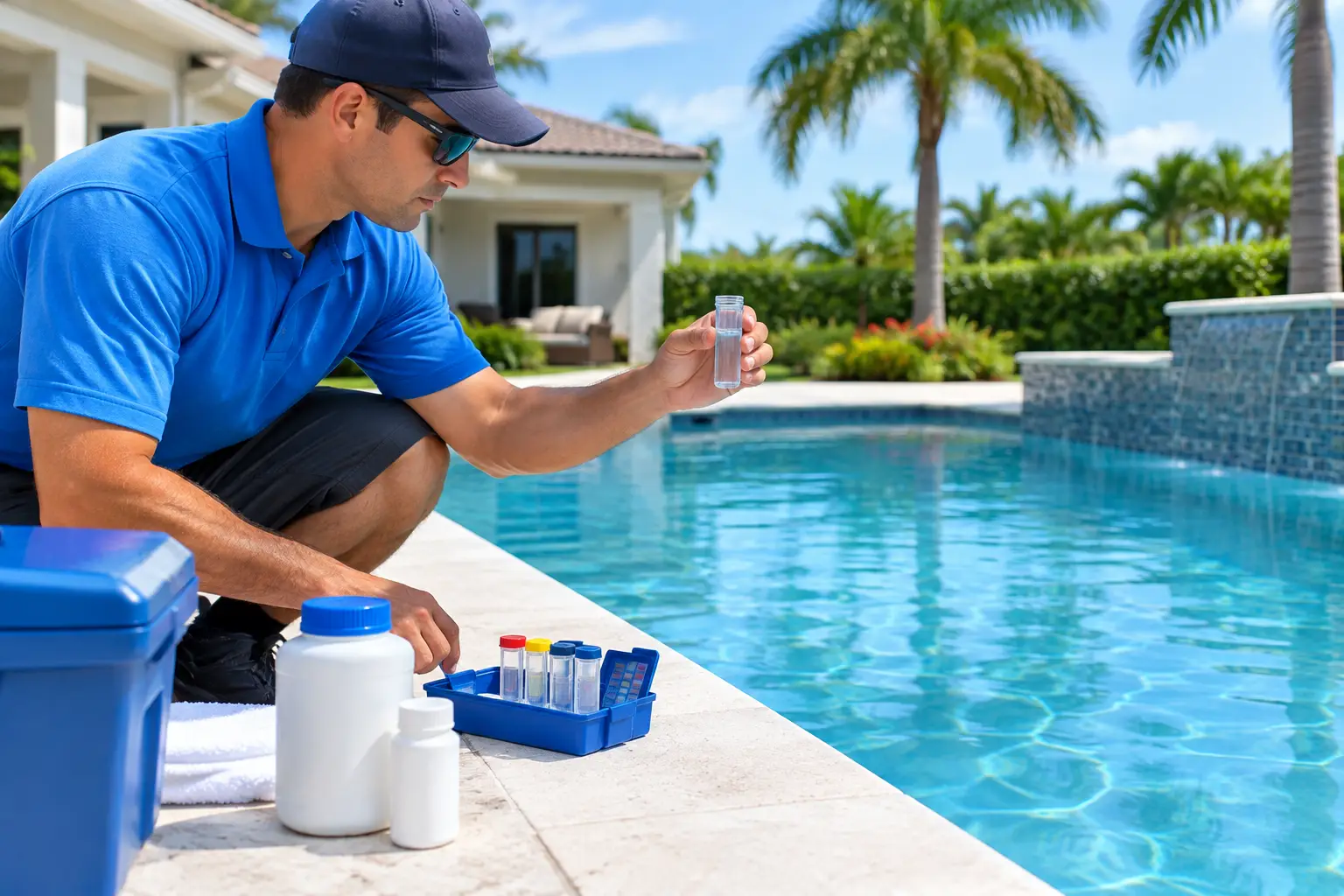
Water balance still matters whichever sanitizer you choose. pH, total alkalinity, calcium hardness and cyanuric acid all affect sanitizer performance. Even an excellent chlorination system can struggle when those foundations are out of range.
Traditional Chlorine: Flexible and Proven
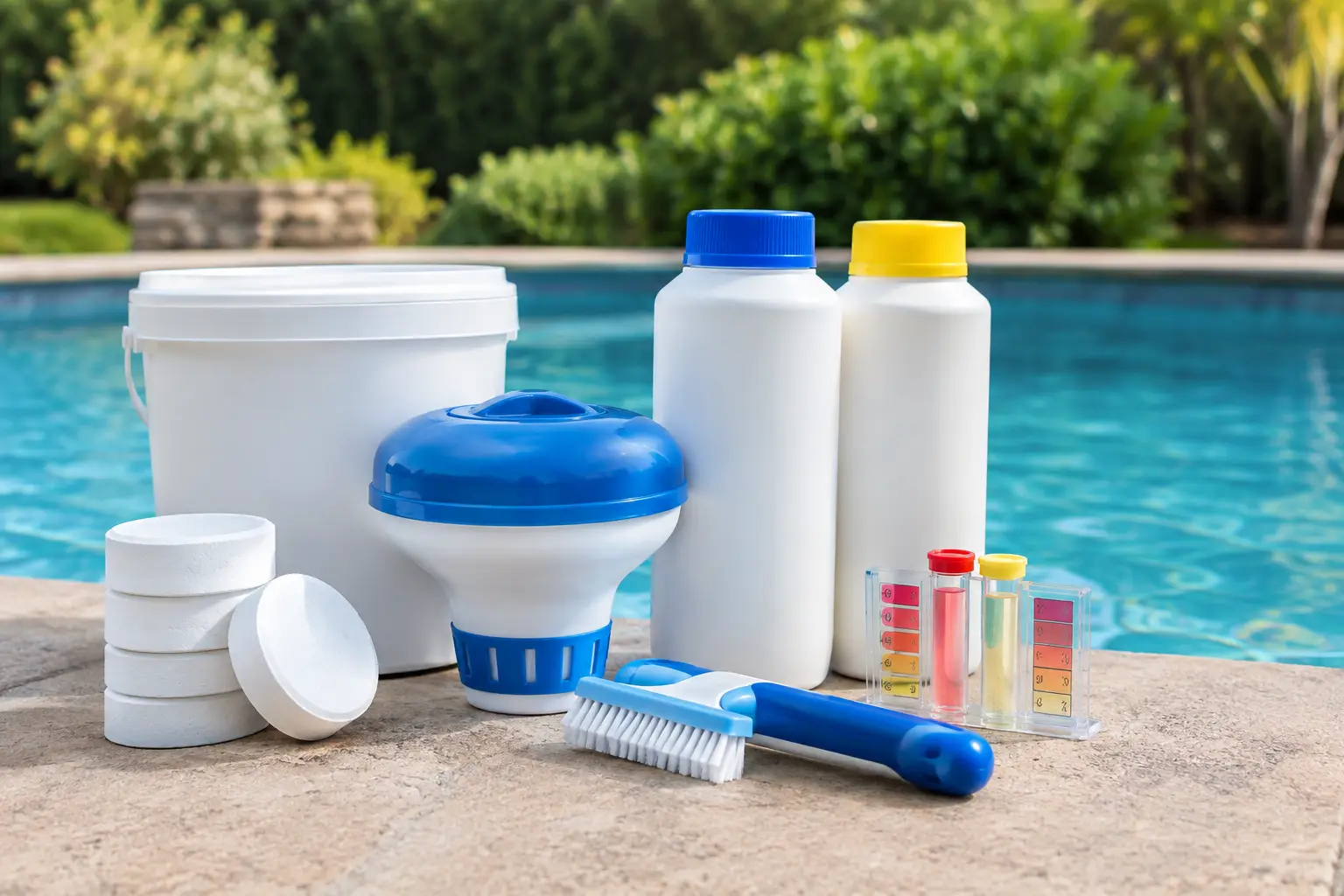
Traditional chlorine remains the most common choice for residential pools because it works, responds quickly and fits nearly every pool setup. It may be added as liquid chlorine, tablets or granular products, depending on the pool and service routine.
Liquid chlorine is particularly useful for regular dosing and for correcting a temporary chlorine shortfall. It adds no stabiliser or calcium, but it needs to be added consistently because it does not provide a slow release. In Florida’s sun and rain, that often means frequent attention without professional weekly service or an automated feeder.
Chlorine tablets dissolve slowly and are convenient for maintaining a residual between visits. The trade-off is that most tablets also add cyanuric acid, commonly called stabiliser. A sensible level of stabiliser protects chlorine from sunlight. Too much can make chlorine less effective, even when test strips appear to show an acceptable reading. This is a common reason a pool seems to need more and more chlorine while algae keeps returning.
Granular chlorine products can be useful, but the type matters. Some add calcium, which can contribute to scale in hard water. Others add stabiliser. They should never be selected solely because they are convenient or on sale. Good pool care comes from knowing what every treatment adds to the water over time.
For many homes, a carefully managed chlorine program is the most practical, cost-effective route to turtly clean water. It offers flexibility after a heavy storm, a pool party or the first signs of algae.
Best fit for traditional chlorine
Traditional chlorine suits homeowners who want a straightforward, widely supported system and are comfortable with routine testing and balancing. It also works well for pools that need occasional fast adjustments, including pools recovering from cloudy water or algae.
Saltwater Pools: Still Chlorine, Just Made On Site
A saltwater pool is not chlorine-free. A salt chlorine generator uses dissolved salt to produce chlorine continuously as water passes through the cell. The result is usually steadier sanitizer delivery and a softer-feeling swimming experience, rather than a fundamentally different method of sanitation.
The main benefit is consistency. Instead of relying only on manual additions, the system generates chlorine daily while the pump runs. This can reduce peaks and dips in chlorine levels and makes it easier to maintain clear water through the swimming season.
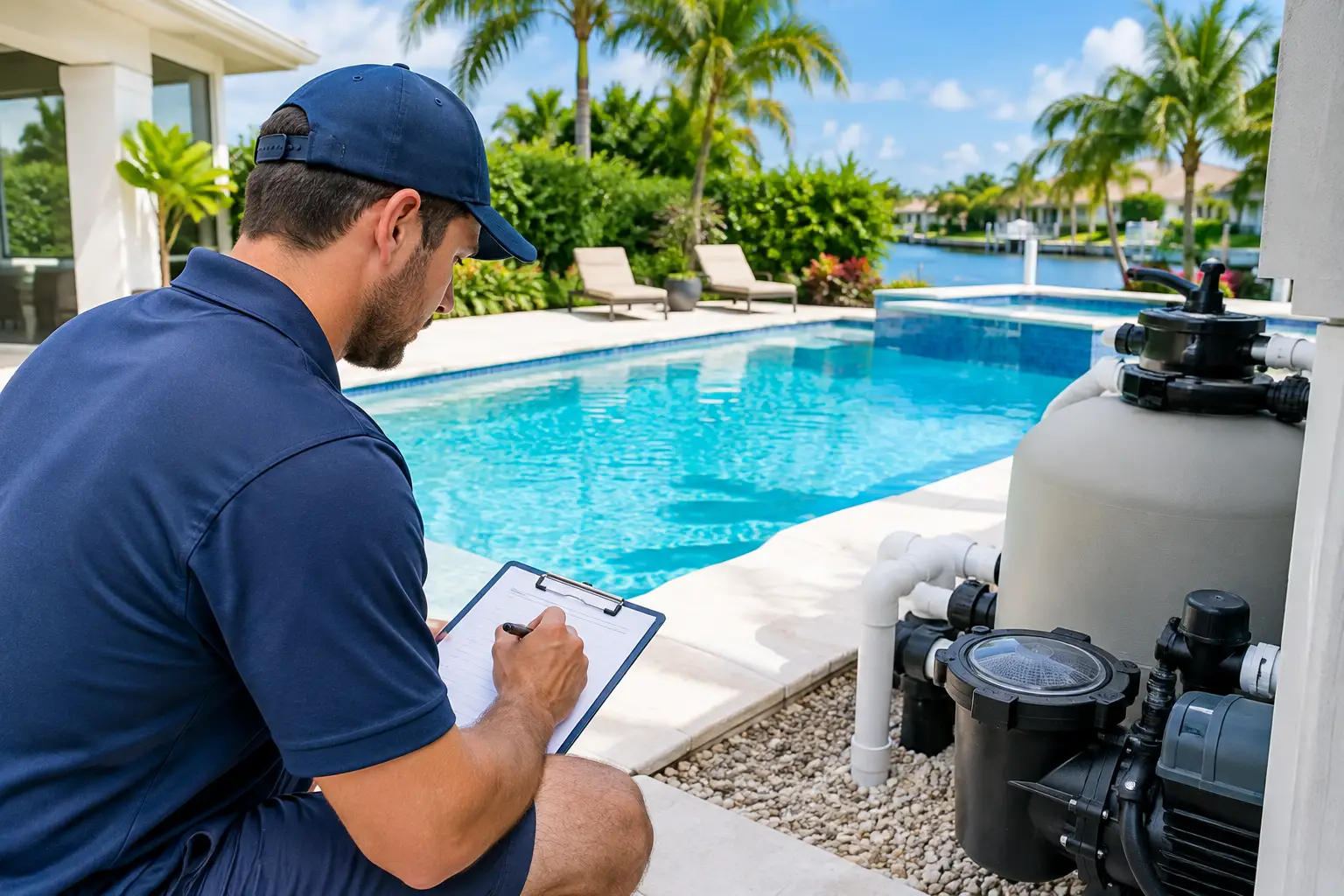
Salt systems do require attentive care. The salt cell needs inspection and periodic cleaning, the generator has a finite lifespan, and the output must be adjusted for water temperature, swimmer load and sunlight. A generator cannot compensate for poor circulation, an oversized algae problem or neglected water balance. It also cannot produce enough chlorine if the cell is scaled, worn out or set too low.
Saltwater can also raise pH over time, so regular pH testing is especially valuable. Homes with natural stone, decorative water features or sensitive surrounding surfaces should discuss the broader chemistry plan with a pool professional, as salt exposure and splash-out may affect nearby materials.
Best fit for saltwater
Saltwater systems are a strong option for homeowners who prefer automation, use their pool often and are willing to invest in equipment upkeep. They are especially appealing when paired with reliable circulation and regular professional chemistry checks.
Bromine: Better for Spas Than Outdoor Pools
Bromine is an effective sanitizer and holds up well in warm water, which is why it is widely used in spas. However, it is usually not the first recommendation for a full-size outdoor swimming pool in South Florida.
Bromine is less practical in a sun-exposed pool because it does not receive the same stabiliser protection that chlorine does. It is also typically more expensive and less convenient to manage in large volumes of water. Once a pool has been run on bromine, converting its chemistry back to chlorine can require careful handling.
For an attached spa, bromine may be worth considering in certain setups. For the main pool, chlorine or a salt chlorine generator will generally be easier to maintain and more economical.
Mineral Systems, UV and Ozone: Helpful Support, Not a Replacement
Mineral systems use metals such as copper or silver to inhibit algae or bacteria. UV and ozone units treat water as it moves through the equipment. These can reduce the demand placed on chlorine, but they should be viewed as supplementary tools rather than standalone sanitizers for a residential outdoor pool.
Water in the pool still needs a measurable, residual sanitizer to protect swimmers between filtration cycles. A UV chamber only treats water that passes through it, and ozone dissipates quickly. Mineral systems can also create staining risks if metal levels are not monitored closely.
These upgrades can make sense for owners who want another layer of support, particularly on a heavily used pool. They do not eliminate the need for routine testing, circulation, brushing and a correctly maintained chlorine residual.
Choosing the Right Sanitizer for Your Pool
There is no single winner for every backyard. A traditional chlorine pool is often the most flexible and affordable choice when chemistry is monitored properly. A saltwater pool offers convenient, steady chlorination but brings added equipment responsibility. Bromine is generally better reserved for spas, while minerals, UV and ozone can complement - not replace - chlorine-based sanitation.
Your pool’s condition matters too. A newly plastered pool requires a structured start-up program with careful chemistry control while the surface cures. A pool that has gone green needs more than a change of sanitizer - it needs targeted treatment, filtration support and testing that identifies why the water lost its balance in the first place.
Whatever system you use, avoid mixing chemicals, keep products dry and stored securely, and do not assume a strong chemical smell means the pool is clean. That smell often points to chloramines, which form when chlorine is busy reacting with contaminants rather than maintaining a clean sanitising residual.
At Turtle Pool Care, weekly service is built around testing what the water needs at that moment, not applying the same dose to every pool. Clear reporting and routine equipment checks help catch issues such as a failing salt cell, low circulation or rising stabiliser before they become a green-pool headache.
The most comfortable pool is rarely the one with the fanciest sanitizer. It is the one where the chemistry, circulation and cleaning routine work together quietly, leaving your family with water that feels safe, looks inviting and is ready whenever the Florida weather calls for a swim.