A bag of chlorine left beside a bottle of acid may look like ordinary pool equipment. It is not. Heat, moisture, a leaking cap or one accidental spill can turn a storage corner into a safety issue very quickly. This pool chemical storage guide gives Florida homeowners a clear, practical way to protect their family, their pool equipment and the products that keep the water safe and perfectly balanced.
Why pool chemical storage deserves attention
Pool chemicals are designed to react. Chlorine sanitises, acid adjusts pH and alkalinity, shock oxidises contaminants, and algaecide helps prevent unwanted growth. Those reactions are useful only when they happen in the pool, in the correct dose and in the correct order.
When products are stored carelessly, they can react with each other instead. Chlorine products can release dangerous fumes or create heat when contaminated by acid, oils, moisture or incompatible chemicals. Liquid chlorine can lose strength in high temperatures. Even a small leak can damage a garage floor, rust nearby tools or ruin stored garden supplies.
Palm Beach County weather adds another consideration. A shed that feels merely warm in the morning can become extremely hot by mid-afternoon, while summer humidity can cause granular products to clump or break down. Good storage is not about making a supply area look tidy. It is a simple part of keeping a pool thoroughly clean without bringing unnecessary risk onto your property.
Pool chemical storage guide: choose the right location
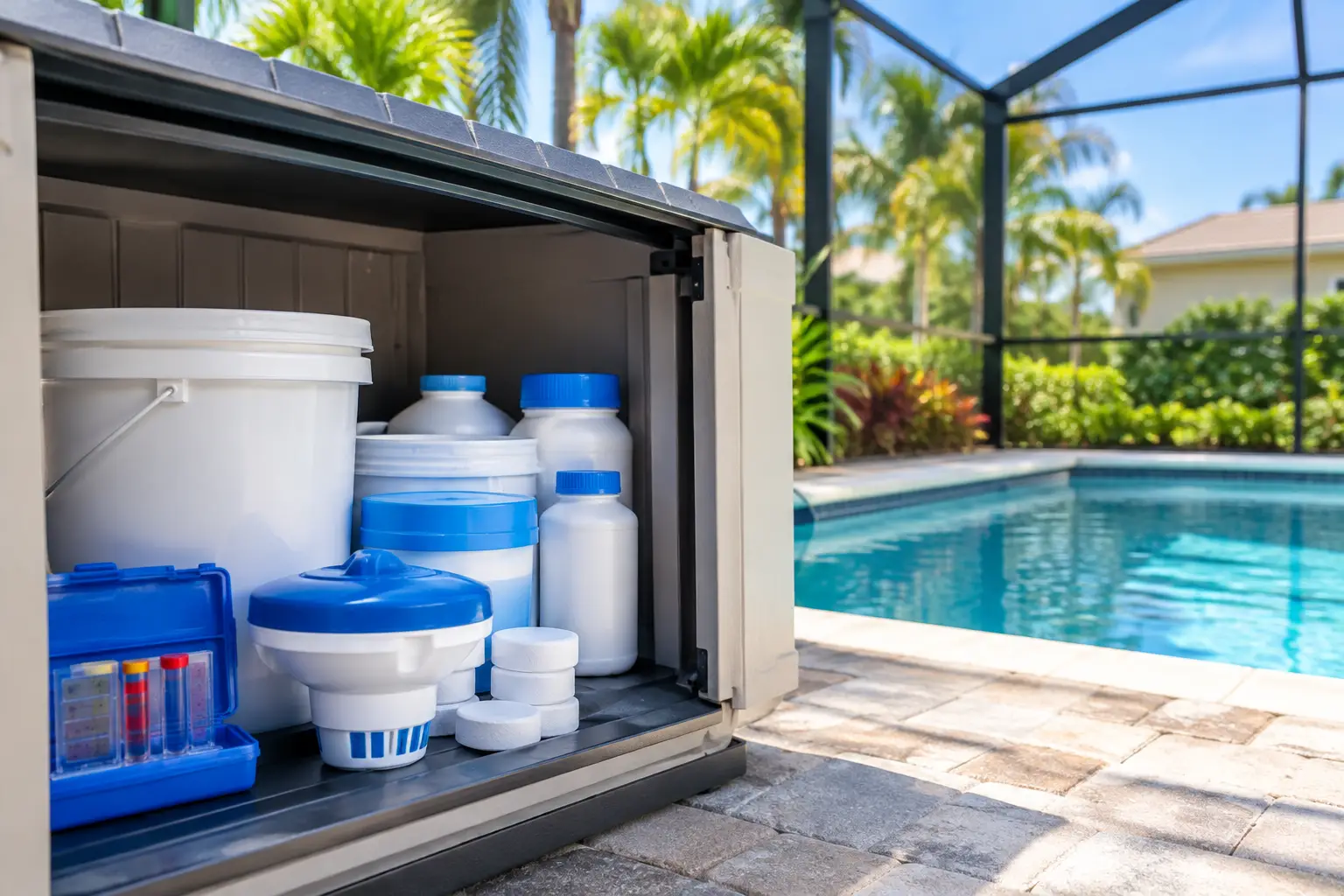
The best location is cool, dry, shaded and well ventilated, with a solid floor that will not be damaged by a minor spill. A dedicated, lockable outdoor storage cabinet or ventilated pool-equipment enclosure is often a better choice than the family garage. It should be away from direct sun, rain runoff, sprinklers and flood-prone areas.
Keep chemicals out of reach of children and pets. A high shelf is not enough on its own, particularly if a child could climb nearby shelving. Use a lockable cabinet and avoid storing chemicals near outdoor toys, barbecue supplies, pet food or anything routinely handled by family members.
Never keep pool chemicals inside the home, beneath a kitchen sink, in a laundry room or near an air-conditioning intake. Do not place them beside fuel, paint, fertiliser, pesticides, solvents or propane cylinders. These products have their own storage requirements and can create additional fire, fume or contamination risks.
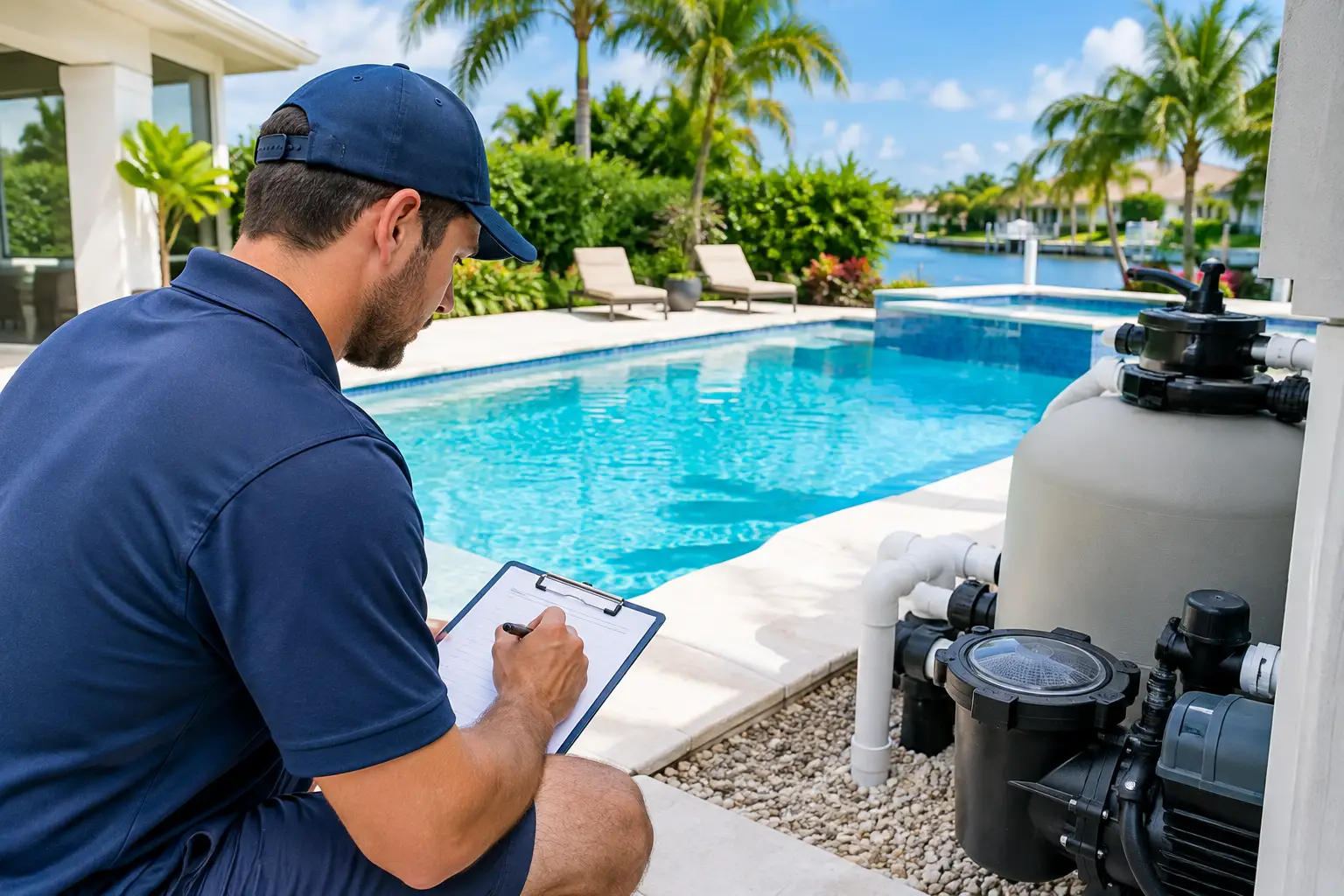
The pool pump area is not always the right answer. It may be convenient, but a tightly enclosed equipment space can be hot, humid and poorly ventilated. If that is the only practical option, use a separate ventilated chemical cabinet, keep it clear of electrical equipment and inspect the area regularly for leaks and corrosion.
Keep acid and chlorine apart
This is the rule homeowners should remember most clearly: store muriatic acid and chlorine products separately. Do not place them on the same shelf, in the same open bin or directly beside each other. If a container leaks, vapours and liquids need to be unable to meet.
A sensible setup uses separate, clearly labelled plastic trays or shelves with space between them. Store liquid chlorine upright in its original bottle, with the cap tightly closed. Keep dry chlorine, shock and tablets dry in their original containers. Acid should also remain upright and separated from any chlorine product.
Do not assume all chlorine products can share a container or bucket. Calcium hypochlorite shock, stabilised chlorine granules and trichlor tablets have different formulations. Mixing leftover products, even if they all appear to be “chlorine”, can cause a violent reaction.
Use the original container every time
Original packaging carries the label, handling instructions, hazard information and expiry guidance. It is built to suit that specific product. Transferring chemicals into drink bottles, food tubs, unmarked jars or generic buckets is dangerous and can lead to a serious mistake.
If a label is fading, do not guess what is inside. Treat the container cautiously and seek advice from your pool professional or local household hazardous waste program before moving or disposing of it. Never combine mystery powders or pour one partly used product into another container to save space.
Keep lids closed immediately after use. For dry products, use only a clean, completely dry scoop dedicated to that chemical. A damp scoop can contaminate a container of shock or granular chlorine. For liquid products, wipe drips from the outside of the bottle before returning it to storage, wearing appropriate protective gloves and eye protection.
Avoid buying more than you can store well
A bulk purchase can seem economical, but it is only a saving if the products remain effective and safely stored. In Florida heat, liquid chlorine degrades faster than many homeowners expect. Buying a manageable supply usually delivers more reliable water treatment than keeping a year’s worth of chemicals in a hot shed.
Check labels for storage temperature recommendations and use the oldest suitable product first. Keep a quick inventory on the cabinet door or in your pool-care notes. That makes it easier to spot duplicates, avoid expired stock and know when a container has been sitting untouched for too long.
Keep the storage area dry, clean and organized
Moisture is a particular enemy of dry pool chemicals. Do not set containers directly on damp concrete or soil. A raised plastic shelf or pallet helps protect them from standing water, and a weatherproof cabinet reduces exposure to humidity and rain.
Inspect the area at least once a month. Look for swelling bottles, cracked lids, crystallised residue, rusted shelving, wet patches, chemical odours or clumped granules. Do not use a pressure washer or hose to clean around stored products. Water can spread contamination and trigger a reaction with dry chemicals.
If a product has leaked, keep people and pets away from the area. Do not attempt to neutralise a spill by adding another chemical. Follow the product label and safety data guidance, ventilate the space if safe to do so, and contact emergency services if fumes are strong, a fire occurs or anyone feels unwell. For a small, contained issue, a qualified pool professional can help assess the safest next step.
Safe habits when adding chemicals to the pool
Storage and handling go together. Read the label before each use, even for a product you have used many times. Wear gloves and eye protection, work in fresh air and keep children and pets away until chemicals have dispersed as directed.
Add products to pool water, never water to a container of chemical. This is particularly critical with acid and dry chlorine products. Do not mix chemicals in a bucket, and do not add different products together at the same time unless a qualified professional has specifically instructed you to do so.
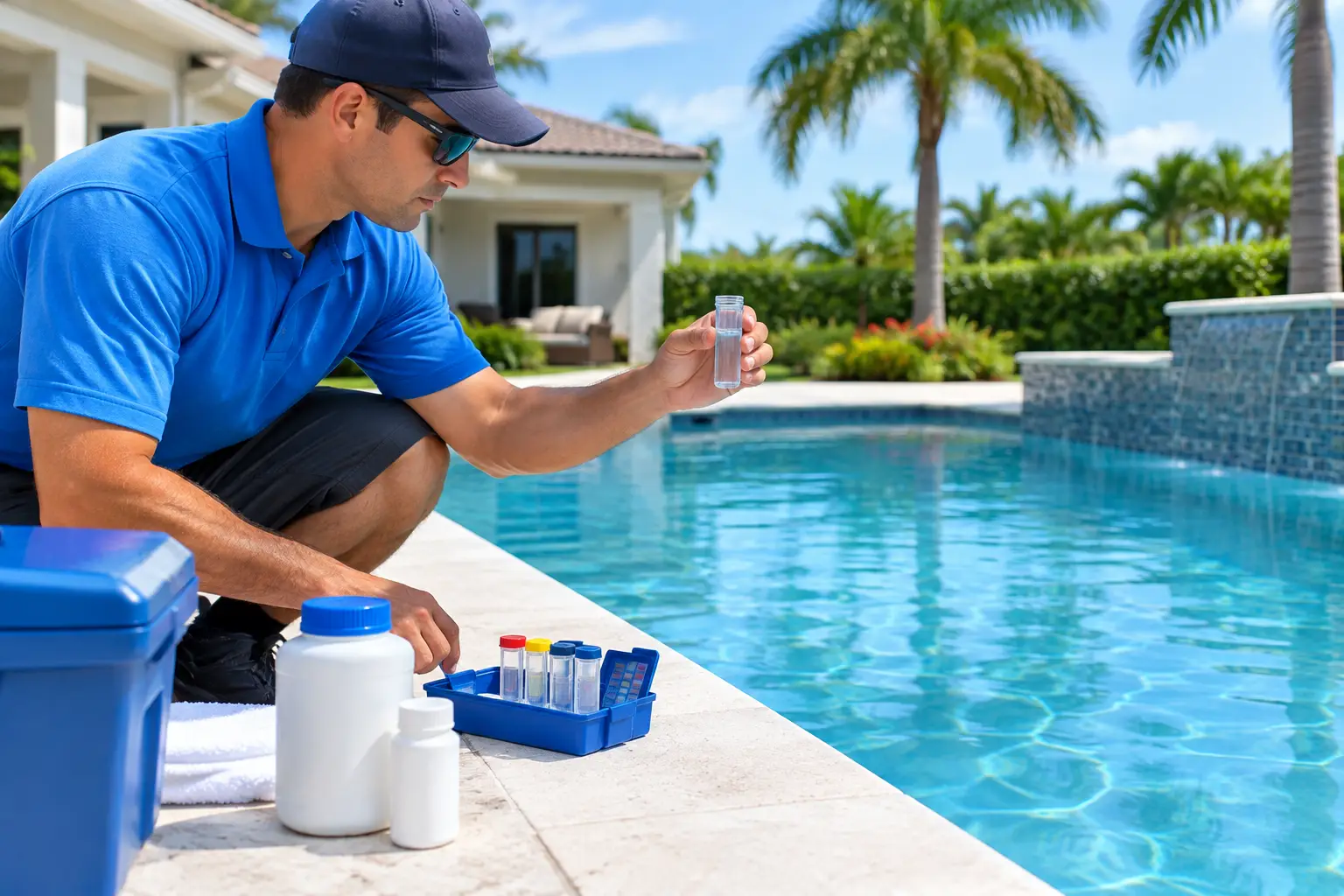
Give each treatment time to circulate before introducing another. The exact wait time depends on the product, water volume, pump operation and the chemistry correction being made. Testing first prevents the common problem of adding chemicals simply because they are on hand rather than because the water needs them.
For homeowners with a new plaster pool, correct handling matters even more. During the first 28 days, water chemistry changes frequently as the surface cures. A structured start-up program protects the finish and avoids the temptation to store, dose and adjust several chemicals without a clear testing plan.
Prepare for storms and seasonal changes
Before a tropical storm, check that every container is sealed, upright and secured inside its locked cabinet. Move chemicals away from areas that could flood. Do not leave them loose on a pool deck, in a screen enclosure or beside equipment that may be exposed to wind-driven rain.
After the storm, inspect the storage area before restarting regular pool care. If labels are unreadable, containers are damaged or chemicals have been exposed to floodwater, do not use them. Floodwater can contaminate products and make them unsafe to handle.
A clean pool should feel easy to enjoy, not like a chemistry project stored in the corner of the garage. When storage is dry, separated, labelled and locked, homeowners can focus on the part that matters: a safe pool ready for a quiet afternoon, visiting friends or another Florida family weekend. If something in your storage setup does not look right, pause before using it. A quick professional check is far easier than dealing with a preventable chemical incident.