Cloudy water before a weekend swim, green patches climbing the walls, or a sharp chemical smell can make a pool feel off-limits fast. A proper pool chemistry turnaround is not simply a case of adding more chlorine. It is a methodical reset that identifies what pushed the water out of balance, corrects it in the right order, and keeps the problem from returning.
For homeowners in Palm Beach County, the usual suspects are familiar: intense sun, warm water, heavy rain, windblown debris and frequent use. Those conditions can change water balance surprisingly quickly. The good news is that most troubled pools can be brought back to clear, safe, turtly clean condition when the chemistry, circulation and cleaning work together.
What a pool chemistry turnaround actually involves
A turnaround is the focused work needed when routine weekly maintenance is no longer enough on its own. The pool may be green, dull, cloudy, foamy, scale-prone or carrying an ongoing chlorine demand that makes normal treatment ineffective.
The aim is not to chase a perfect test result on one afternoon. It is to restore stable water that stays clear between services. That means looking beyond the visible symptom. Green water may be algae, but algae usually gained ground because sanitizer was too low for the stabiliser level, circulation was poor, debris was feeding the problem, or several of those factors happened at once.
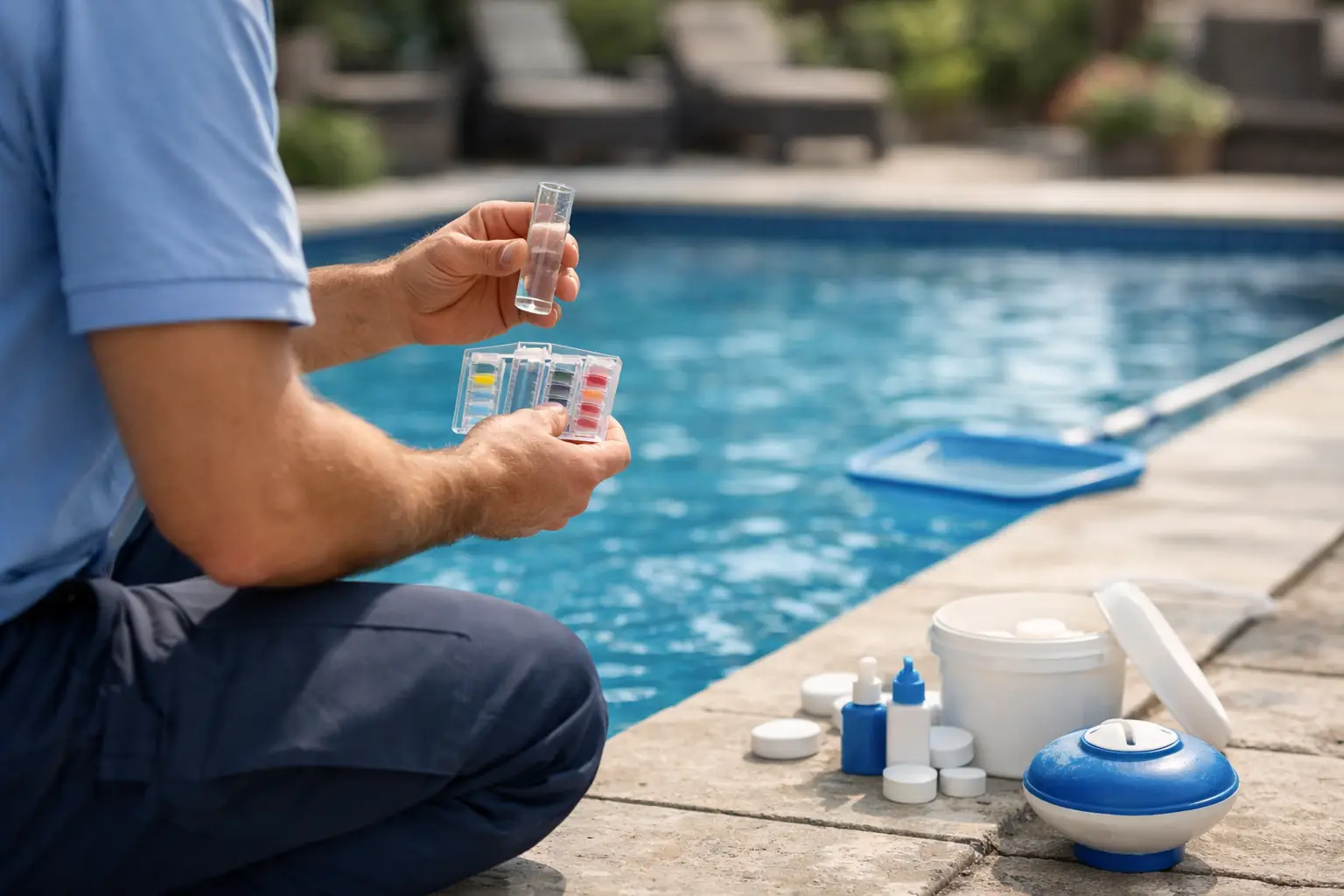
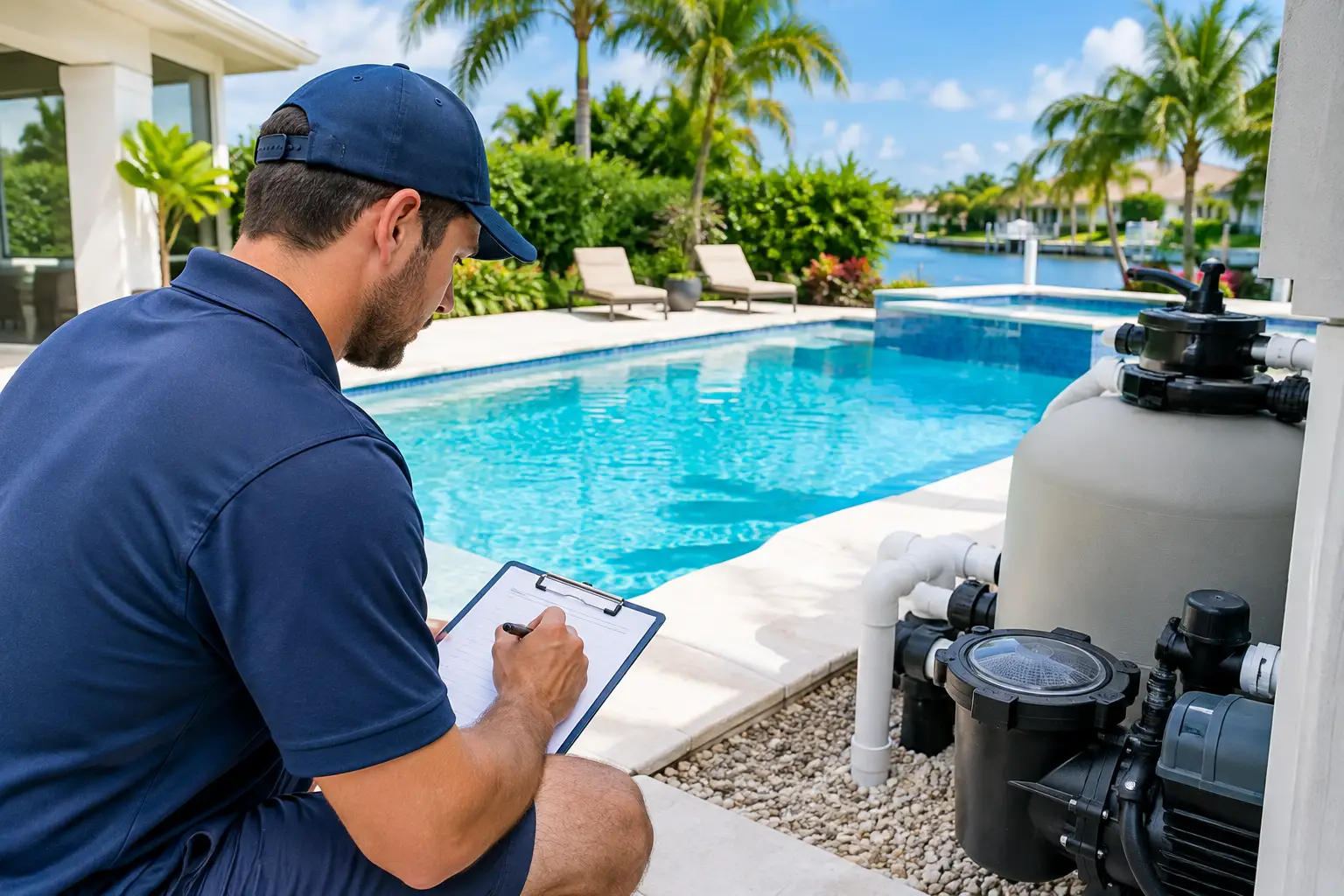
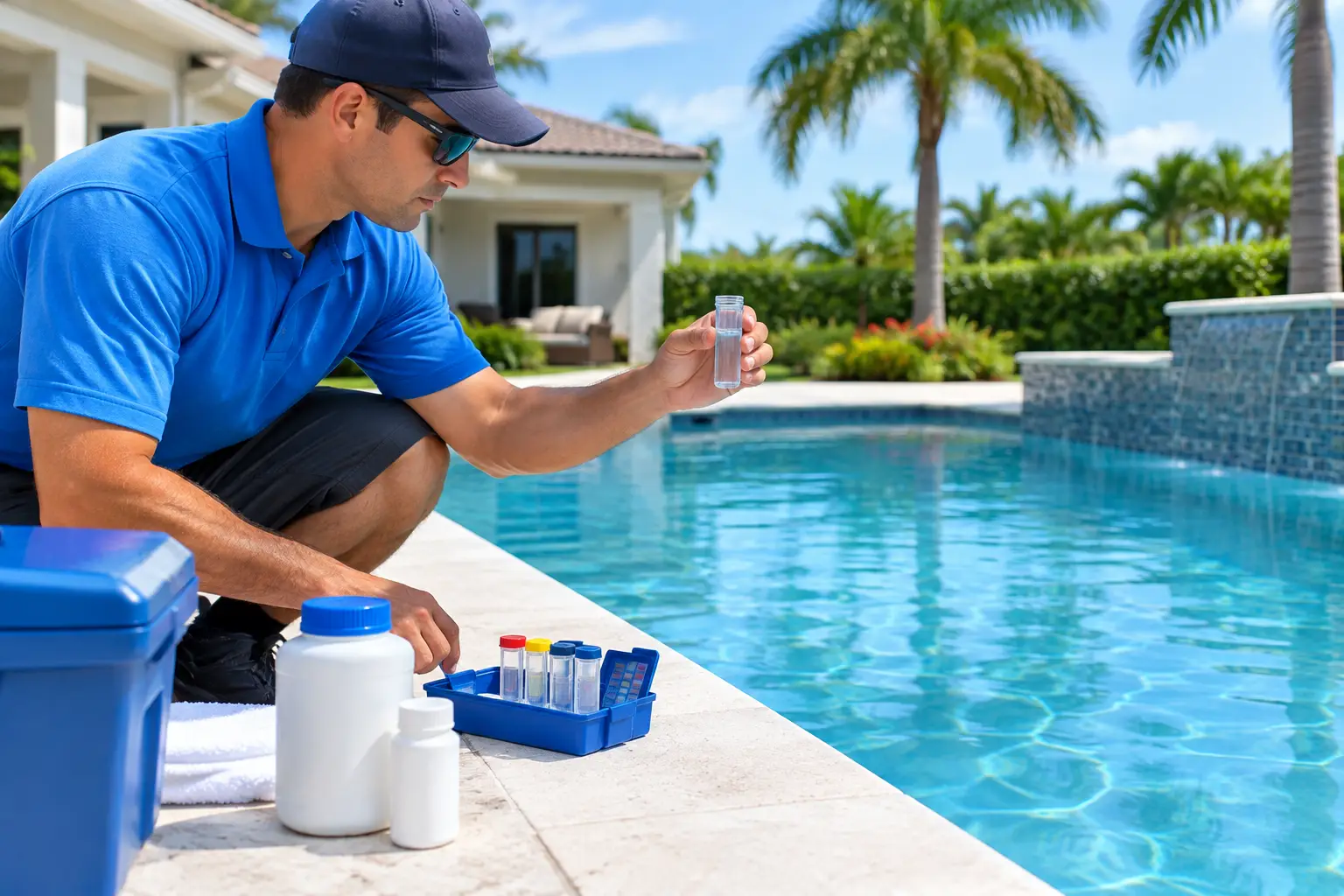
A careful technician begins with a full water assessment and an equipment check. Free chlorine, combined chlorine, pH, total alkalinity, calcium hardness and cyanuric acid all tell part of the story. Filter pressure, pump run time, cleaner operation and water movement tell the rest.
Start with the cause, not the color
Pool water can look similar while needing very different treatment. A pale, cloudy pool after a busy family gathering may have insufficient filtration and fine particles suspended in the water. A deep green pool with slippery walls points more clearly to active algae. Brown or tea-colored water may involve organic debris, metals or both.
This distinction matters because adding chemicals without diagnosis can waste time and money. For example, repeated chlorine additions may not hold if cyanuric acid is excessively high. Cyanuric acid, often called stabiliser, protects chlorine from Florida sunshine. Too little leaves chlorine vulnerable to rapid burn-off; too much reduces chlorine’s effectiveness and can make algae recovery much harder.
Likewise, low chlorine is not always the whole issue. A clogged filter, a failing pump, a blocked skimmer line or poor return-jet direction can leave areas of the pool with little circulation. Chemistry cannot compensate indefinitely for water that is not moving through the filtration system properly.
The right order makes the turnaround safer
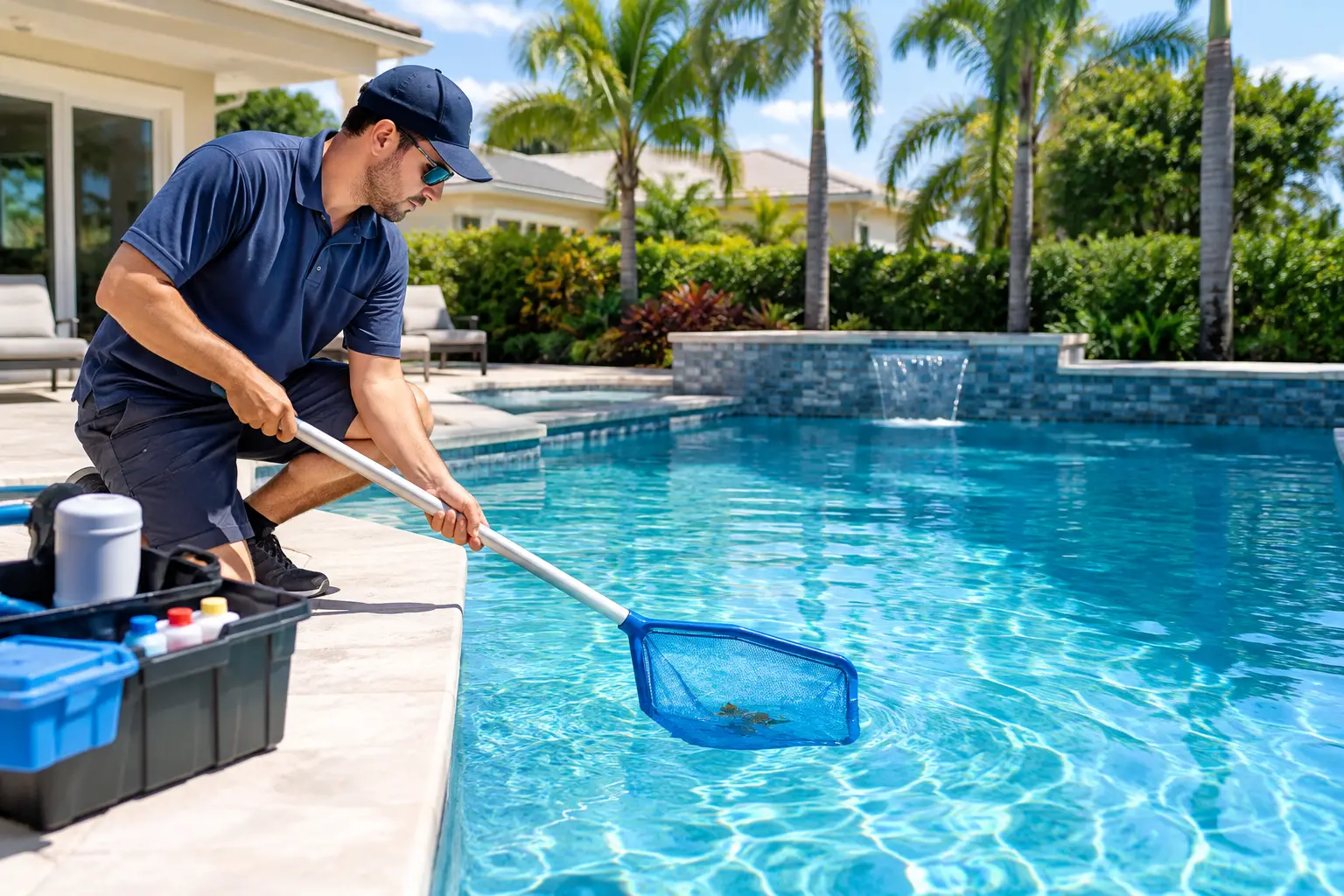
Successful recovery follows a sequence. First, remove leaves, algae clumps and other debris so they are not continually consuming sanitizer. Brushing walls, steps, tile lines and tight corners is equally important because algae attaches to surfaces before it becomes obvious in the water.
Next comes testing and measured balancing. pH is usually adjusted into a range where chlorine can work effectively and the water remains comfortable for swimmers. Total alkalinity helps prevent abrupt pH swings, while calcium hardness needs attention to protect plaster, grout, metal components and equipment. The right target can vary with the pool finish, source water and treatment system, so one-size-fits-all advice is rarely ideal.
Once the foundation is correct, sanitizer is raised to the level appropriate for the pool’s condition and stabiliser reading. In an algae recovery, that level may need to be maintained rather than added once and forgotten. Sunlight, contaminants and living algae all consume chlorine. Follow-up testing shows whether the treatment is winning or whether there is still a hidden demand in the water.
Filtration then does its share. A clean, correctly operating filter captures dead algae and fine debris after treatment. During a serious recovery, the filter may require more frequent cleaning or backwashing because it is doing much more work than usual. Leaving a dirty filter in place can slow the process and send fine particles back into the pool.
Why shocking alone often falls short
“Shock it” is common pool advice, but it describes only one possible part of a recovery. Shocking without knowing the existing chemistry can create a short-lived improvement rather than a real fix.
If the pool has high stabiliser, poor circulation or an overloaded filter, chlorine may disappear quickly and the water can turn again within days. If pH, alkalinity or calcium are neglected, a pool may clear visually while becoming uncomfortable, corrosive or prone to scale. And if the pool is not brushed, algae may survive in the places chemicals reach least effectively.
There are also practical trade-offs. Strong treatment may be necessary for a neglected pool, but it should be followed by confirmation that the water is safe for swimming. Homeowners should never assume clear water automatically means balanced water. A professional test is what turns a cosmetic improvement into genuine peace of mind.
Signs your pool needs more than weekly balancing
Routine service is designed to prevent problems. A turnaround becomes worthwhile when a pool is persistently fighting back. Watch for water that stays hazy despite normal cleaning, walls that feel slick, recurring green dust or patches, a strong chloramine odour, rapid chlorine loss, staining, scale around the waterline, or a filter that needs attention far more often than expected.
A pool that turns green after every storm also deserves a closer look. Heavy rainfall dilutes chemicals and introduces debris, but repeated green-water events can point to insufficient run time, an undersized or dirty filter, faulty circulation or a balance issue that has not been fully corrected.
Newly resurfaced pools need a different level of care again. Fresh plaster is curing, and its water chemistry must be managed closely during the first 28 days. Aggressive treatment or neglected balance during this period can affect the finish. A start-up program should be structured around the surface manufacturer’s needs, not handled as ordinary weekly service.
Keeping clear water clear after recovery
The final stage of a pool chemistry turnaround is prevention. Once the water has recovered, a consistent weekly routine protects the investment. That includes skimming and vacuuming, brushing when needed, checking baskets and equipment, testing chemistry, and making precise adjustments before small changes become a costly problem.
Equipment care belongs in that routine. A pool can have excellent readings on a test kit and still struggle if the pump loses prime, the filter is overdue for cleaning, the timer is incorrect or the cleaner is not reaching the areas where debris settles. Modern automation can help with dependable schedules, but it still needs periodic human oversight.
For busy homeowners, documented service makes a real difference. Knowing what was tested, what was added, what was cleaned and whether an equipment concern was spotted removes the guesswork. Turtle Pool Care combines hands-on service with visit notifications and post-service reports, so homeowners can see how their pool is being cared for rather than simply hoping it was handled.
A pool recovery should leave you with more than water that looks good from the patio. It should leave you with stable chemistry, working circulation and confidence that the next family swim is ready when you are.