A pool cleaner can be running every day and still leave the steps gritty, the waterline marked and the shallow end full of leaves. That is why pool cleaner reliability is about far more than whether a machine switches on. For Florida homeowners, a reliable cleaner must suit the pool’s shape, circulation system, debris load and the way the pool is used week after week.
A good cleaner reduces the everyday workload. It does not replace water testing, brushing, skimming or attentive equipment care. When those parts work together, your pool stays truly clean, safe and ready for the next family swim without becoming another item on the weekend to-do list.
What pool cleaner reliability really means
Reliability has three parts: consistent coverage, dependable operation and sensible upkeep. A cleaner should reach the areas where debris naturally settles, complete a useful cleaning cycle and avoid repeatedly getting stuck on drains, steps or sharp changes in depth. It should also do this without putting unnecessary strain on the pump, filter or plumbing.
The right answer depends on the pool. A compact rectangular pool with a screened enclosure has different needs from a freeform pool beneath palms and oaks in Wellington, The Acreage or Loxahatchee. Windblown leaves, seed pods, fine sand, heavy summer rain and frequent swimming all change what a cleaner needs to handle.
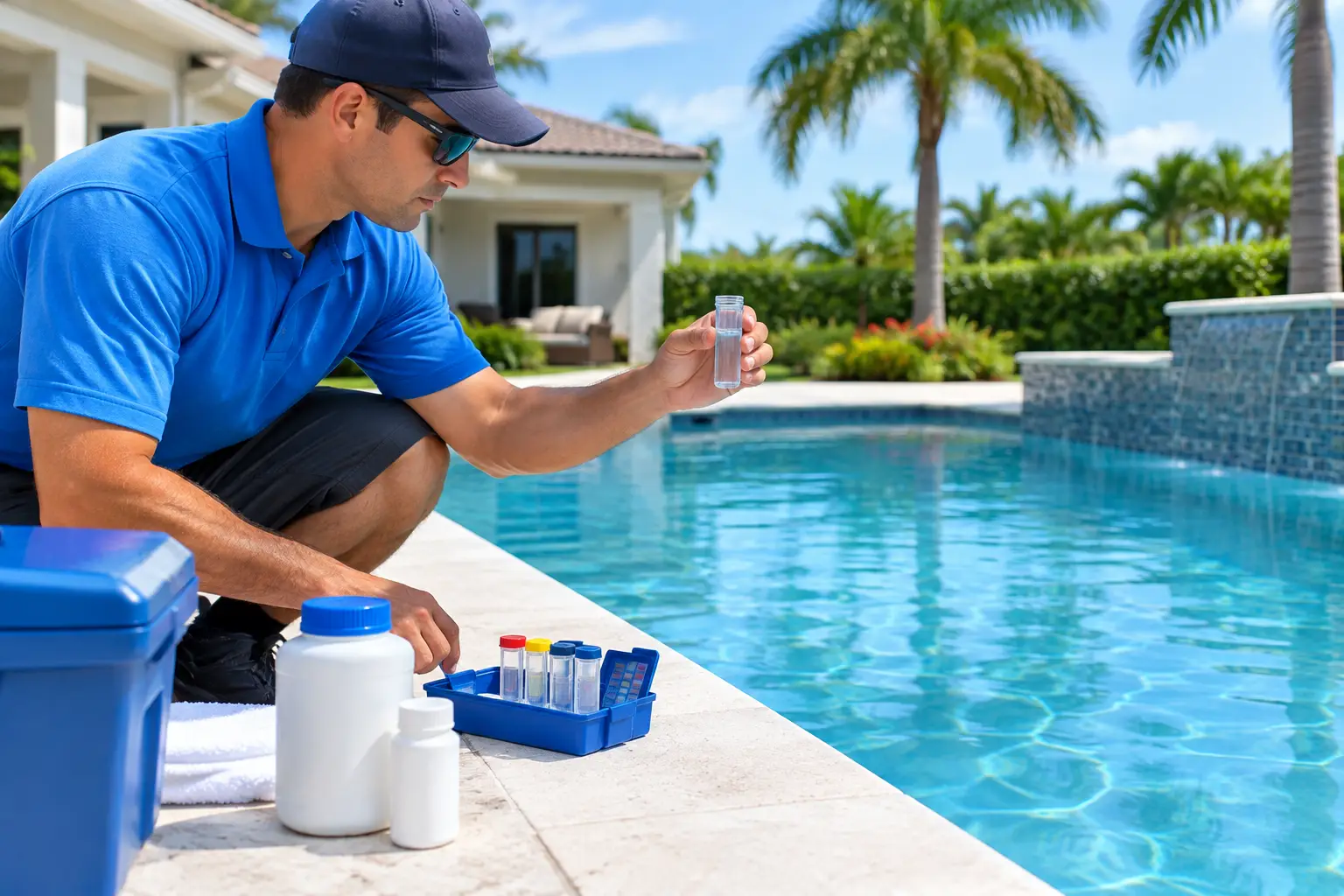
It is also worth separating cleaning performance from water quality. A cleaner removes visible debris from floors and, in some cases, walls. It does not correct low sanitizer, poor pH, rising calcium or early algae growth. A pool can look clear at a glance while its chemistry is moving in the wrong direction.
Choose the cleaner to match the pool, not the sales pitch
There is no single best cleaner for every home. The most reliable option is usually the one that matches the pool’s plumbing, surface, contours and typical debris, rather than the machine with the longest feature list.
Robotic cleaners
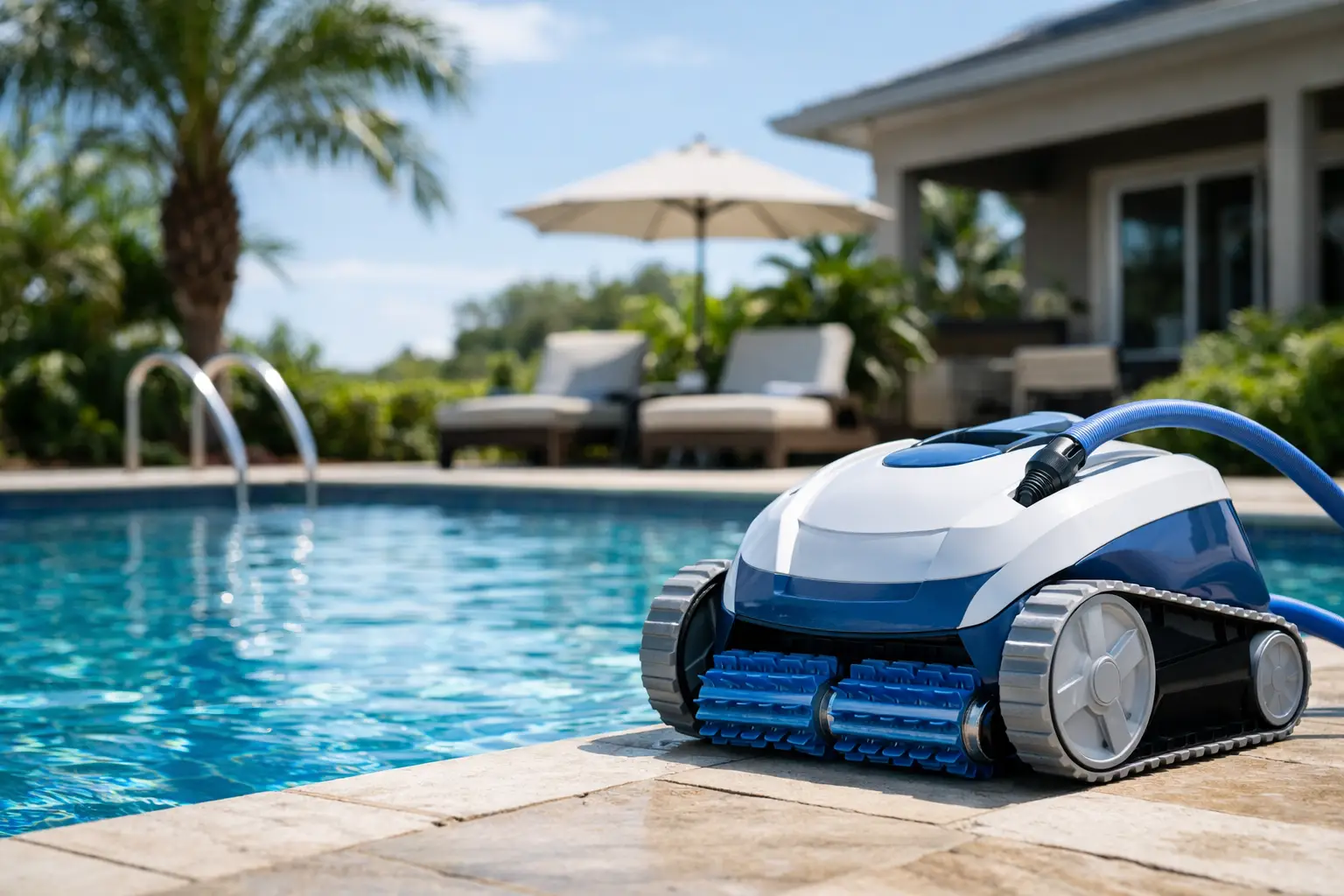
Robotic cleaners are self-contained units that plug into a safe power supply and collect debris in their own basket or filter. They are often a strong choice for pools that receive a lot of leaves because they do not rely on the skimmer basket to catch everything. Many models scrub the floor and walls, which helps with dust, pollen and the fine film that can build up around the waterline.
Their trade-off is that they require hands-on handling. The basket needs emptying, the filter needs rinsing and the unit should be removed and stored properly after use rather than left in the water indefinitely. Cables can tangle, and a robot that is too light or poorly matched to the pool surface may struggle on slopes or walls.
Suction-side cleaners
Suction-side cleaners connect to the skimmer or a dedicated suction line and use the pool pump’s draw to move around the pool. They can be simple, effective and economical when the pool has good circulation and the equipment is correctly set up.
However, they send collected debris to the pump basket and filter. In a pool with frequent leaf fall, those baskets can fill quickly. A blocked basket reduces flow, and low flow means the cleaner slows down or stops. This style also depends on the pump running for adequate hours, so it needs to be considered alongside the pool’s wider circulation schedule.
Pressure-side cleaners
Pressure-side cleaners use returning water pressure and collect debris in an attached bag. They can be especially useful for larger debris and can keep leaves out of the skimmer and pump basket. Some arrangements need a dedicated booster pump, which adds equipment, energy use and another component to maintain.
For homeowners who already have compatible plumbing and regularly deal with larger leaves, the extra complexity may be worthwhile. For a pool with mostly fine debris, a different option may offer better value and less maintenance.
The conditions that affect pool cleaner reliability
A cleaner can only perform as well as the environment around it allows. Before assuming the cleaner is failing, check the basics of the pool system. This is where many frustrating problems begin.
A correct water level matters. If the water is too low, a suction cleaner may pull air into the line and lose movement. If it is too high, skimming can become less effective and floating debris may remain in circulation. The skimmer weir, baskets and cleaner filter should all be clear enough for water to move freely.
Pump performance matters just as much. A worn pump basket lid O-ring, a small suction-side air leak, a dirty filter or partially closed valve can reduce the flow available to a cleaner. Variable-speed pumps add another consideration: the speed set for normal circulation may not provide enough suction or pressure for the cleaner to work properly. Raising the speed during the cleaning window may help, but it should be balanced against energy use and the equipment manufacturer’s guidance.
Pool shape has a role too. Deep hopper bottoms, beach entries, raised ledges, tight corners and prominent main drains can all create areas a cleaner misses or gets caught around. That does not always mean the cleaner is poor quality. It may mean that a short manual brush or vacuum touch-up is the realistic solution for a particular feature.
A simple routine that keeps cleaners dependable
Pool cleaner reliability improves dramatically when small checks happen before small issues turn into equipment problems. For a busy household, these are the practical habits that matter most:
- Empty the cleaner basket, bag or filter before it becomes packed with leaves and fine debris.
- Check the skimmer and pump baskets, particularly after storms or windy days.
- Inspect hoses, tracks, wheels, cables and connections for splits, wear or tangles.
- Confirm the cleaner is moving through its normal pattern and not repeatedly stopping in one location.
For robotic units, rinse the filter after each use if the pool receives heavy debris. Fine silt can clog a filter even when it does not look full. Let the unit drain before lifting it out, carry it by the handle rather than the cable, and keep it out of direct sun when stored.
For suction and pressure cleaners, inspect hose sections and swivels periodically. Small air leaks, worn diaphragms and loose fittings often show up first as erratic movement. These repairs are usually far easier and less costly when addressed early.
Warning signs not to ignore
A cleaner that starts missing the same area, moving in circles or stopping after a few minutes is giving useful information. It may be a simple blockage, but it can also point to declining pump flow, a dirty filter, a worn internal part or an issue with the pool’s plumbing.
Watch for cloudy water despite the cleaner running, persistent debris on the floor, a noticeably weaker return flow, air bubbles in the pump lid or repeated tripping of a robotic cleaner’s power supply. A cleaner should never be used to push through a potential electrical issue. Turn it off and have the unit and supply assessed.
Algae is another sign that cleaning alone is not enough. If walls feel slippery, green dust keeps returning after brushing, or the water has lost its sparkle, the priority is proper testing and precise chemical balancing. Trying to make a cleaner solve an algae problem often wastes time and puts more debris into an already stressed filter.
When professional pool care makes the difference
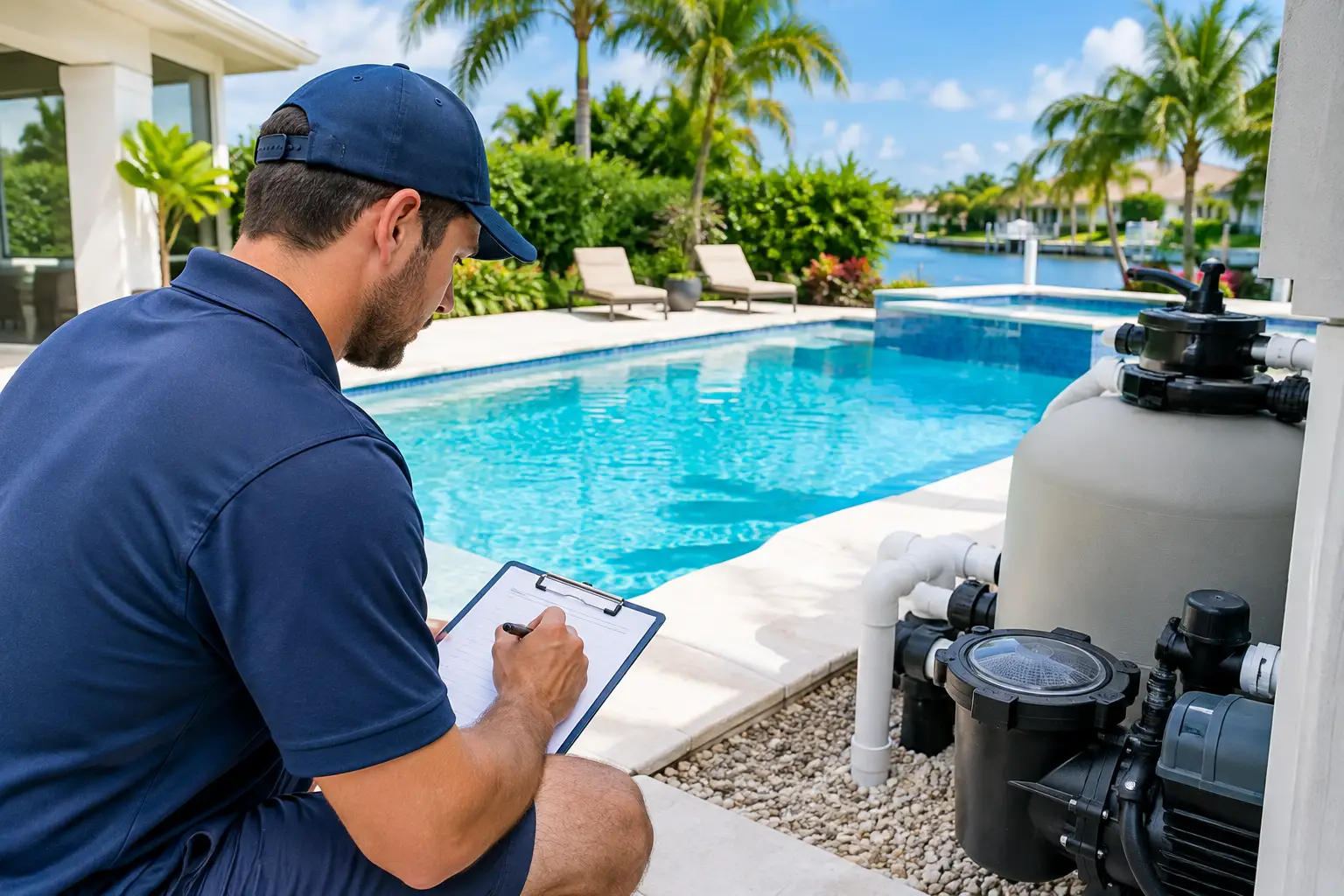
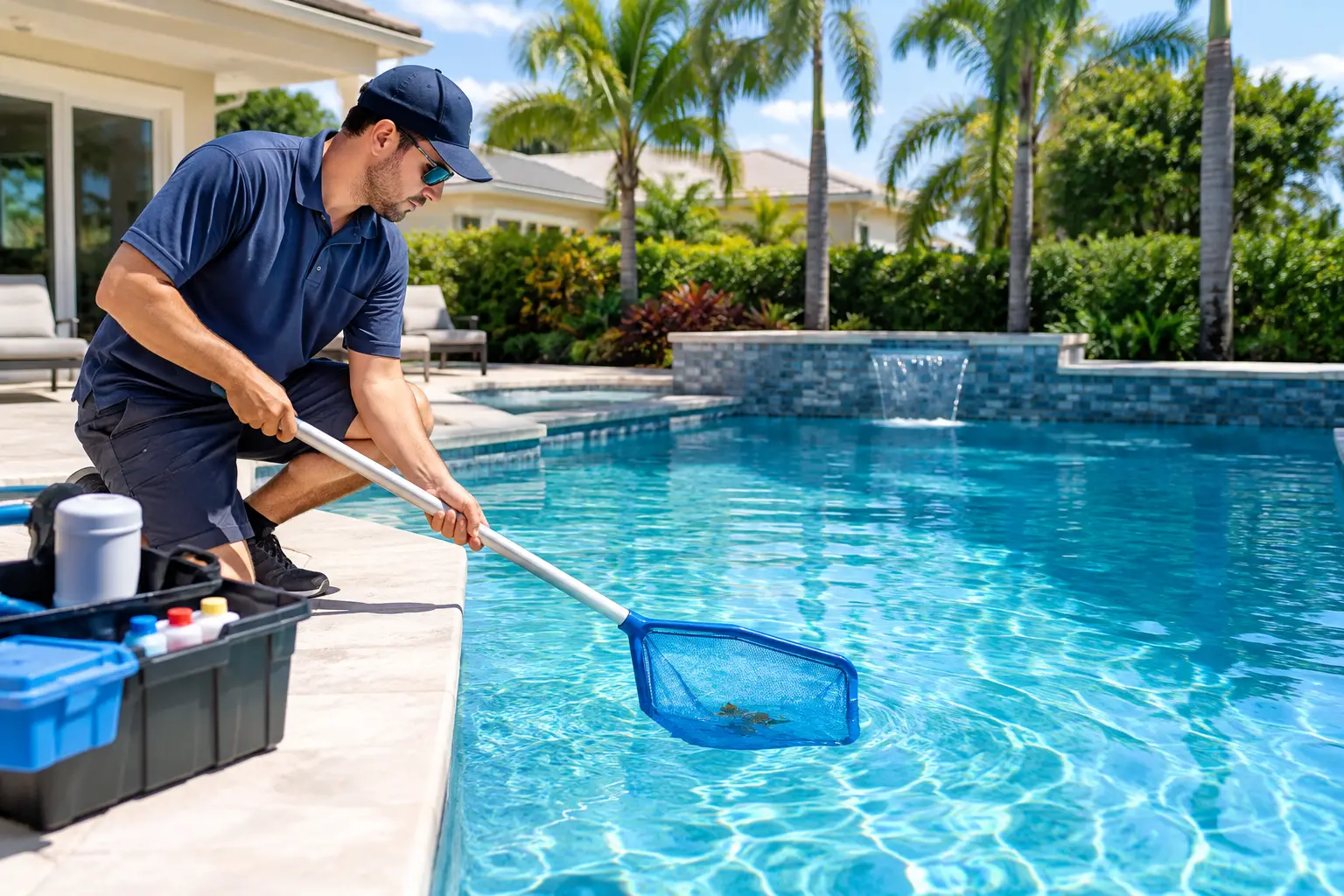
A cleaner is helpful equipment, not a complete pool-care plan. Weekly service brings together the tasks a machine cannot manage alone: surface skimming, vacuuming where needed, brushing, equipment checks, filter awareness and water chemistry tailored to the pool’s current condition.
That level of attention is particularly valuable after heavy rain, periods of high heat, a busy weekend of swimming or a change in equipment performance. Consistent records also make it easier to spot patterns, such as a pump that is gradually losing efficiency or a cleaner that only struggles when the filter pressure rises.
For homeowners who want clear evidence rather than guesswork, detailed post-service reports and photographs can provide real peace of mind. You can see what was done, understand any developing concern and make informed decisions before a minor cleaner issue becomes a larger repair.
The best test of a reliable cleaner is not whether it leaves a perfect stripe pattern on the floor. It is whether, alongside sound circulation, balanced water and regular care, it helps keep your pool inviting whenever you want to use it. Give it the right conditions, pay attention to the early warning signs and your pool will ask for far less of your time.