A pool can look clear in the morning and still be heading towards an algae problem, poor circulation or unbalanced water by the weekend. In South Florida, heat, rain, wind-blown debris and frequent use all place steady demands on pool cleaning. The goal is not simply a tidy surface. It is water that is safe and perfectly balanced, equipment that runs as it should, and a pool that is ready whenever the family wants to use it.
For many homeowners, the challenge is consistency. Skimming a few leaves is straightforward. Staying ahead of chemistry shifts, brushing the areas where algae starts, emptying baskets before circulation suffers and spotting a weakening pump is where professional attention makes a real difference. Good care turns a pool from another weekend job into a reliable part of home life.
What Weekly Pool Cleaning Should Cover
A proper weekly service follows a routine, but it should never be mechanical or rushed. Each pool has its own bather load, surrounding landscape, equipment setup and water behaviour. A screened pool in Wellington may collect less debris than an open pool in The Acreage, for example, while both can be affected by the same heavy rainfall.
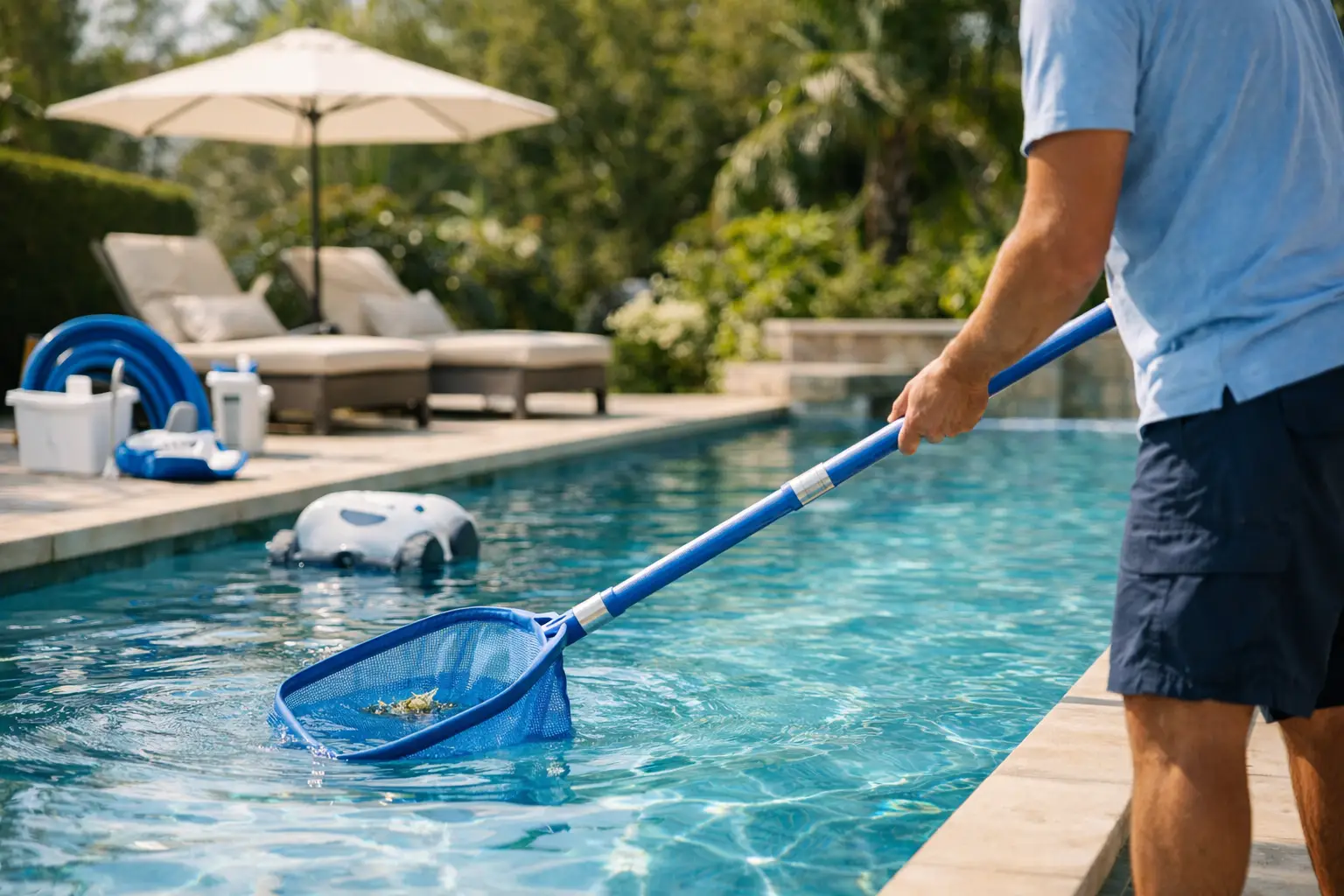
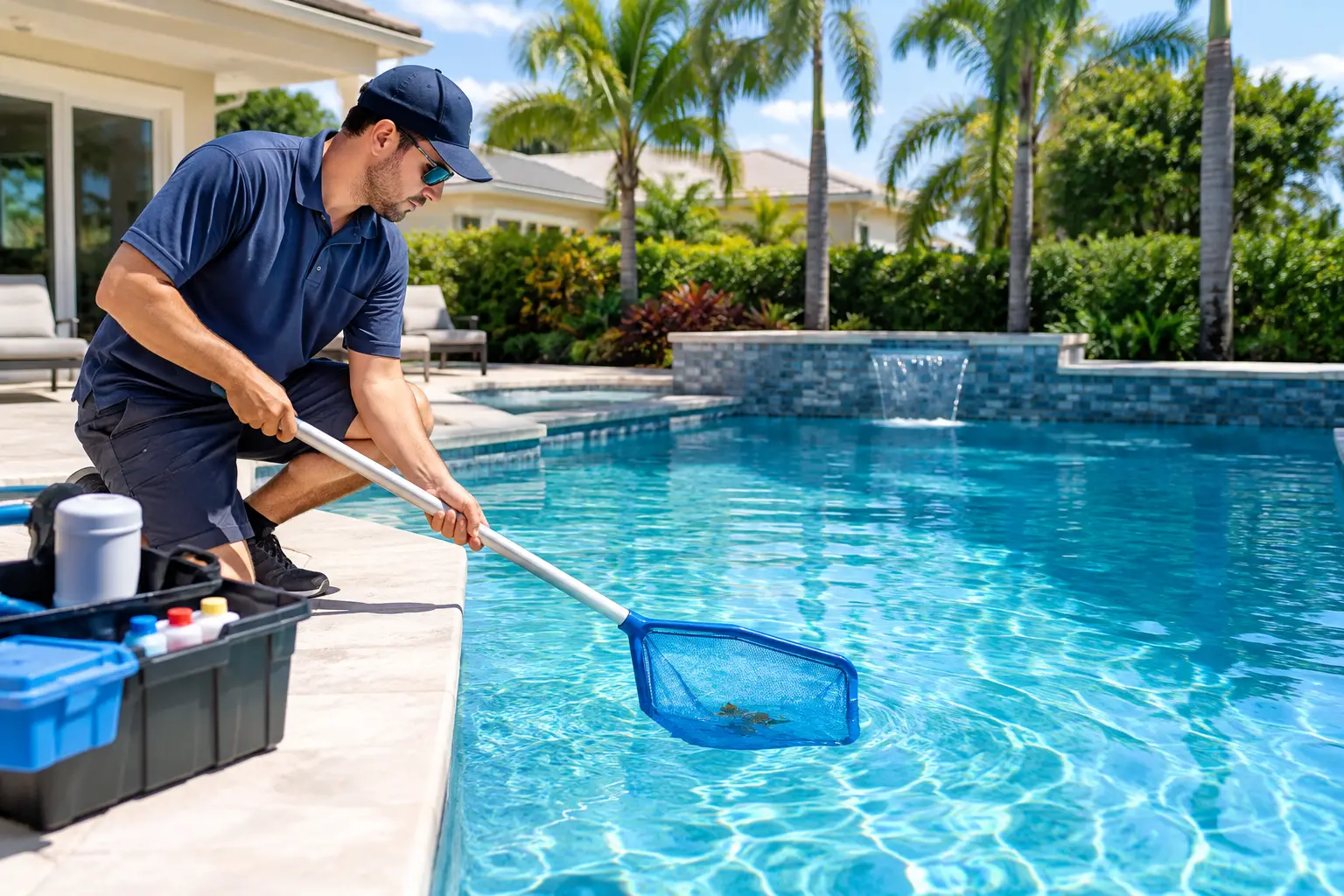
The visit normally starts with removing leaves, insects and surface debris. Skimmer and pump baskets need checking and emptying so water can move freely through the system. A technician should then brush the walls, steps, tile line and other areas where fine debris and early algae growth settle. Brushing matters because algae can cling to surfaces before it becomes visible as a green pool.
Vacuuming removes the material that has sunk to the floor rather than floating to the skimmer. Depending on the pool and its condition, this may be done manually or with a cleaner that is inspected as part of the visit. Tile-line cleaning also keeps body oils, sunscreen and airborne residue from building into a stubborn ring.
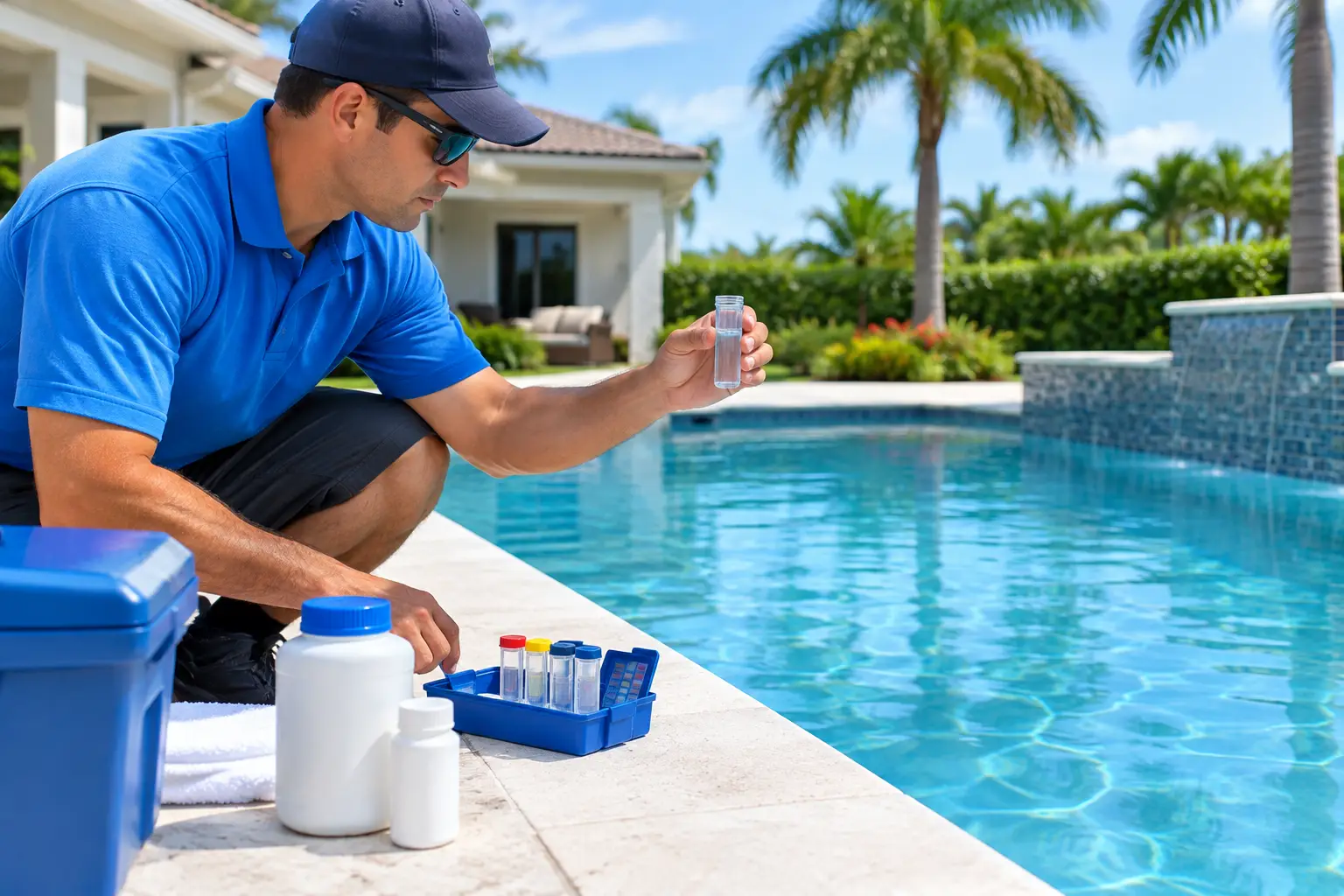
The most valuable part of weekly care is often what cannot be seen. Water testing should guide precise chemical adjustments, not guesswork. Sanitizer levels, pH, total alkalinity, stabiliser and calcium hardness all work together. If one reading moves too far, the result can be irritating water, scale formation, corrosion, ineffective sanitising or cloudy conditions.
A dependable service provider records what was done and what they found. Visit notifications, clear post-service reports and photos give homeowners a useful level of visibility, especially when they are away, busy or simply do not want to inspect the pool after every appointment.
Clear water is not always balanced water
It is tempting to judge pool health by appearance alone. Clear water is encouraging, but it does not guarantee that the sanitizer is effective or that the water is comfortable for swimmers. Equally, a short spell of cloudiness does not always mean the pool needs large amounts of chemicals. It may point to filtration, circulation, rainfall dilution, a dirty filter or a developing algae issue.
This is why measured testing and an understanding of the full water balance are better than adding products until the water looks better. Overcorrecting can create a second problem and make the following service visit more complicated. The right response depends on the readings, the recent weather, how heavily the pool has been used and how the equipment is performing.
The Equipment Checks That Protect Your Pool
Cleaning and chemistry are only part of the picture. Your pump, filter and circulation system are what allow treated water to reach the whole pool. When they are not working correctly, even careful chemical dosing can struggle to keep up.
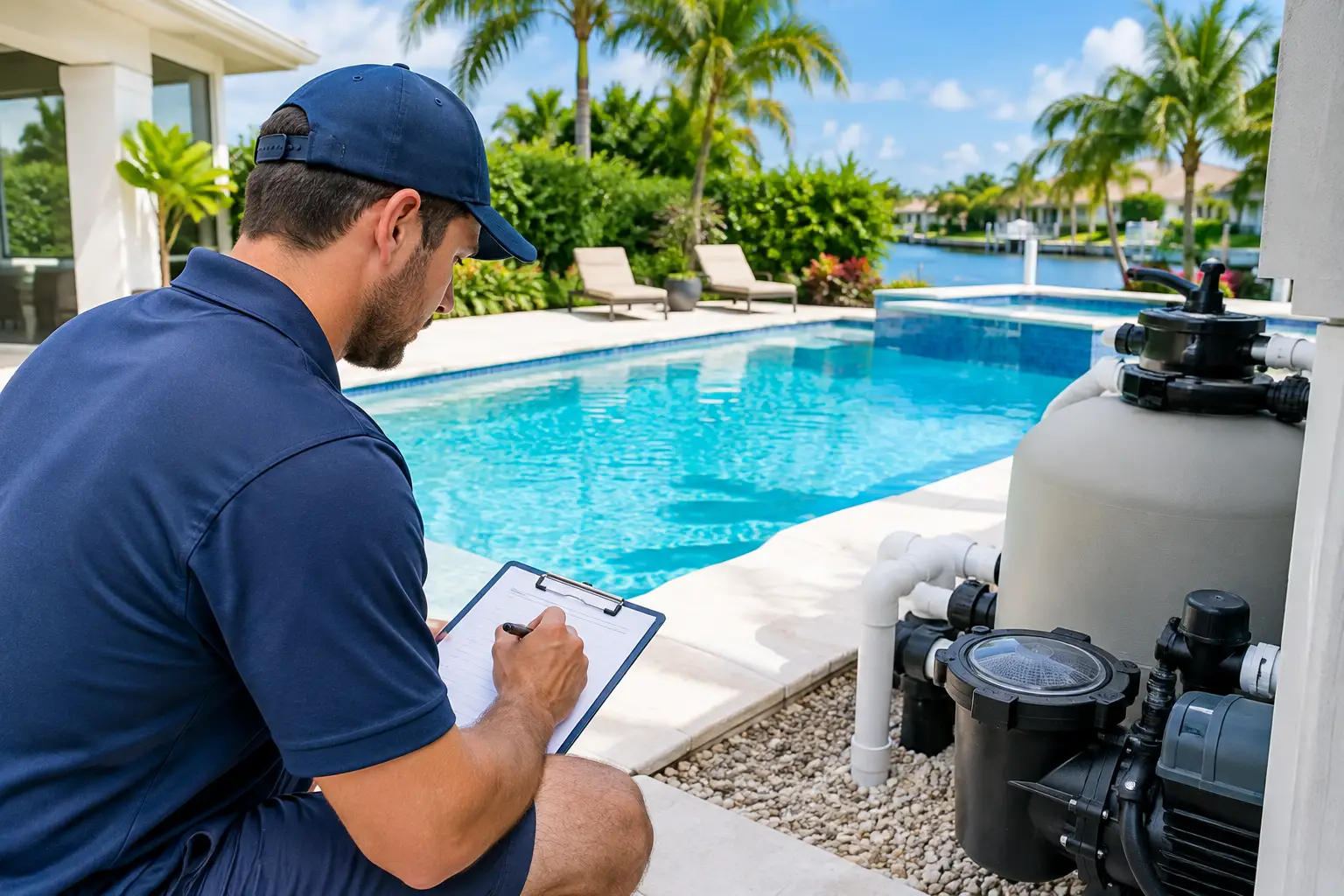
During routine service, equipment should be checked for leaks, unusual noise, weak water flow, air in the pump basket and pressure changes at the filter. These signs are not always an emergency, but early attention can prevent a small repair becoming a lost weekend of swimming or a more expensive replacement.
Filters deserve particular attention. A filter that is overdue for cleaning restricts circulation and makes the pump work harder. However, cleaning it too often is not automatically better. The right timing depends on the filter type, pressure readings and debris load. This is one of many areas where a tailored approach is more sensible than a fixed rule.
Modern upgrades can also make day-to-day ownership easier. Variable-speed pumps can reduce running costs when correctly selected and programmed. LED lighting improves visibility and atmosphere, while automation can help homeowners manage schedules and equipment settings with less effort. An upgrade should solve a genuine need, not add complexity for its own sake.
Why Florida Pools Need Consistent Attention
Florida’s pool season does not neatly end when summer does. Pools around Royal Palm Beach, Westlake and Wellington may be used throughout the year, and warm water gives algae more opportunity to grow. Summer storms can dilute water chemistry, introduce organic debris and create conditions that change quickly between visits.
High temperatures also increase sanitizer demand. More swimmers, pets, sunscreen and lawn debris add to that workload. Leaving the pool for several weeks without testing and cleaning can turn a manageable adjustment into a green-to-clean recovery.
A green pool is not a reason for panic, but it does need a structured response. The water should be tested, debris removed, surfaces brushed and filtration assessed before treatment begins. Algae recovery often takes more than one visit because dead algae and fine particles must be filtered out after the initial treatment. Adding chemicals without addressing circulation or brushing is unlikely to give a lasting result.
Homeowners can help between weekly visits by keeping the water level near the middle of the skimmer opening, removing large debris after a storm and reporting unusual equipment sounds promptly. Avoid making major chemical changes unless you are confident in the test results and the reason for the adjustment. A quick photo of a leak, error message or discoloured water can help a technician arrive prepared.
New Plaster Pools Need a Different Plan
A new or resurfaced pool has a particularly important first month. Fresh plaster cures over time, and its water chemistry needs close, regular management. Treating this period like ordinary pool maintenance can risk staining, scaling, surface roughness or an uneven finish.
A structured 28-day start-up program gives the plaster the right conditions to cure. It usually involves frequent water testing and adjustment, regular brushing, close monitoring of calcium and pH, and careful attention to the pool’s circulation. The exact process can vary with the surface material and builder guidance, so it should be followed rather than improvised.
The reward for that extra care is long-term protection for a significant home investment. It also establishes healthy water from day one, making the move into normal weekly service far more straightforward.
Choosing a Service You Can Trust
Pool service should feel accountable, not anonymous. A low price may be tempting, but it is worth asking what happens during each visit, whether water is tested rather than treated by habit, and how repair concerns are communicated. You should know when the team has attended, what work was completed and whether anything needs your attention.
Look for a licensed and insured provider that can handle both routine maintenance and the issues discovered along the way. A company that understands pumps, filters, lighting, automation and recovery treatments can offer practical advice without sending every concern elsewhere. Local knowledge matters too, because a service team familiar with nearby water, weather and property conditions can respond with better context.
At Turtle Pool Care, family-owned accountability is paired with detailed digital reporting, photo proof and careful chemistry management. That combination is designed to give homeowners the useful details without handing them another list of tasks.
The best time to address a pool concern is when it is still small: a little extra debris, a faint patch on a step, a pressure change or a pump that sounds different. With attentive weekly care, those early signs can stay just that, leaving the water turtly clean and ready for the next unplanned swim.