A pump that suddenly sounds louder, a filter that needs constant attention, or a light that has stopped working can make a pool feel like one more household problem. Pool equipment restoration is often the sensible first response, especially when the core system is sound and a targeted repair can return it to reliable service. The key is knowing whether restoration will genuinely improve performance or simply postpone a larger failure.
For homeowners in Palm Beach County, equipment works hard. Long swim seasons, heat, rain, falling debris and frequent circulation demands all place pressure on pumps, filters, heaters, lights and control systems. A thoughtful assessment protects your pool, your energy bills and the peace of mind of knowing the water will stay safe and perfectly balanced.
What pool equipment restoration really involves
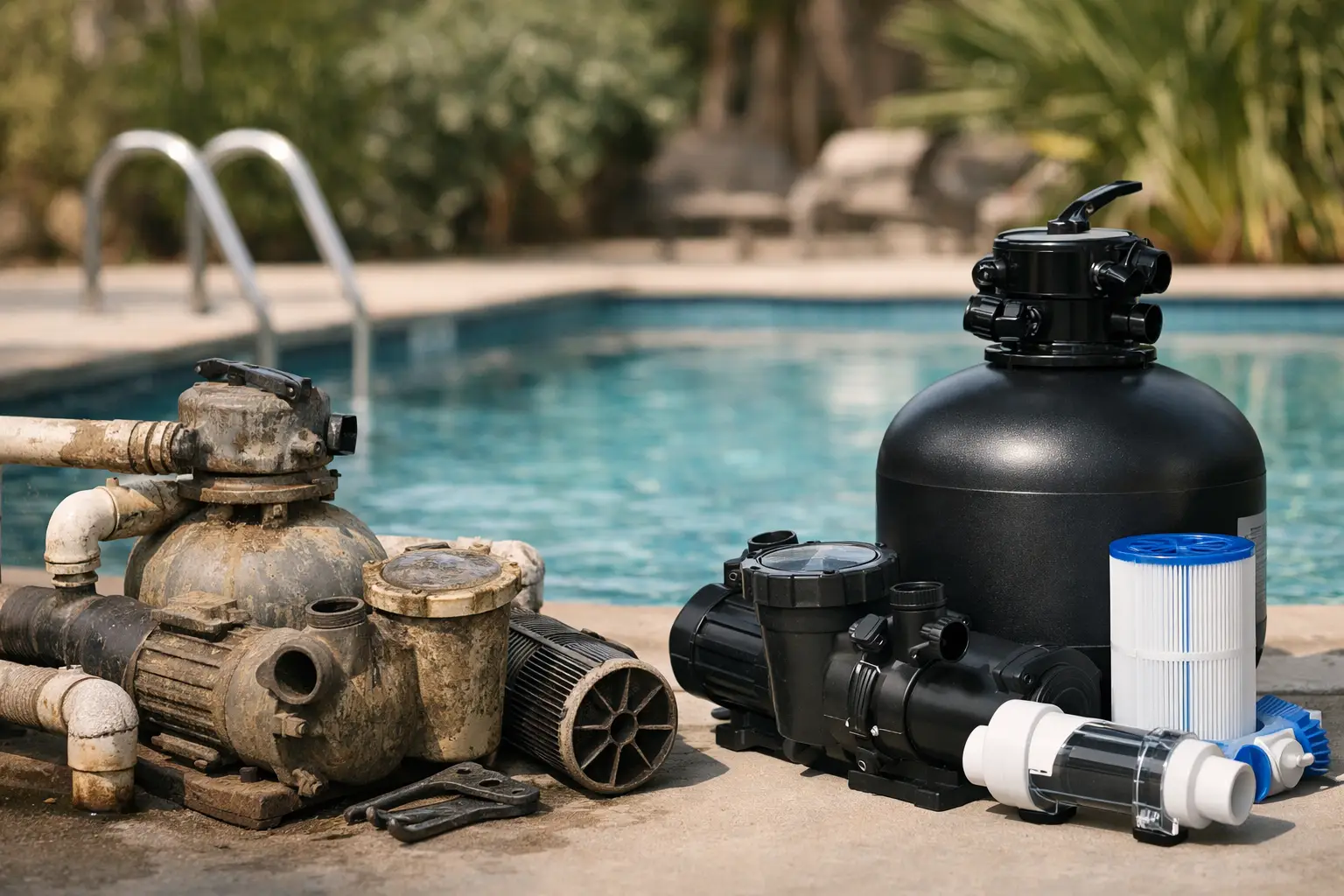
Restoration is more than replacing the most obvious broken part. It is the process of inspecting equipment as a working system, identifying the source of poor performance and repairing or renewing the components that are still worth saving. Depending on the issue, that may mean replacing pump seals and bearings, repairing a leaking valve, renewing worn plumbing fittings, correcting electrical connections or servicing a filter.
A good restoration also considers the reason the part failed. A pump seal may leak because the seal is old, but it can also be damaged by poor water chemistry, a suction-side air leak or a pump that is running dry. Replacing the seal without addressing the underlying cause can lead to another call-out far sooner than expected.
This is why equipment maintenance during weekly service matters. Small changes such as drips around the pump, reduced return pressure or air bubbles under the pump lid are easier and less expensive to address before they affect water circulation and chemistry.
Start with the symptoms, not the assumed fix
Pool equipment usually provides warning signs before it stops completely. Paying attention early gives you more options and may keep a straightforward repair from becoming an urgent replacement.
A pump that is noisy, leaking or losing prime
A healthy pool pump has a consistent operating sound and a full basket of moving water. Grinding or screeching can point to worn bearings. Water underneath the motor may indicate a failed shaft seal, while repeated loss of prime can suggest a lid O-ring issue, a blocked basket, low water level or an air leak in the suction plumbing.
Some of these faults are excellent candidates for restoration. A seal, gasket or lid replacement is generally far less involved than changing the entire pump. However, if an older single-speed motor has failed or the housing is badly corroded, an energy-efficient variable-speed pump may be the better long-term choice. It costs more upfront, but can reduce electricity use significantly when correctly sized and programmed.
A filter that cannot keep the water clear
Cloudy water is not always a chemistry problem. If circulation is weak or the filter is not capturing fine debris, sanitizer has a much harder job. A pressure reading that rises quickly after cleaning, poor return flow, a damaged pressure gauge or visible debris returning to the pool all deserve investigation.
Cartridge filters may need deep cleaning or replacement cartridges. Sand filters may need a new multiport valve gasket, laterals or fresh media, depending on their condition. DE filters can develop torn grids, manifold damage or valve issues. Each repair has a different cost-benefit calculation, so the best option depends on the filter’s age, condition and whether it is appropriately sized for the pool.
Pool lights and controls that no longer behave properly
A failed pool light is not simply cosmetic. Electrical equipment around water should be inspected and repaired with care. In some cases, a faulty bulb, gasket or transformer is the issue. In others, upgrading to modern LED lighting offers lower running costs, longer service life and a better experience for evening swimming.
The same thinking applies to timers and automation. A basic timer that loses its schedule may be repairable, but an outdated control arrangement can make it harder to run a variable-speed pump efficiently or coordinate lights and water features. An upgrade is most useful when it solves a real daily inconvenience, not merely because newer technology exists.
When repair is the right call
Restoration tends to make sense when the equipment is relatively modern, the fault is isolated and replacement parts are readily available. It is also a good route when the repair will restore dependable operation without creating a mismatch elsewhere in the system.
For example, repairing a pump leak on an otherwise efficient, correctly sized variable-speed pump is usually a practical decision. Replacing a filter valve gasket or a cracked union can also prevent wasted water and protect the equipment pad from further damage. These are targeted jobs with a clear purpose.
Repair may be less attractive when the unit has repeated faults, extensive corrosion, obsolete parts or a history of poor performance. Spending money on several small repairs across a short period can be more frustrating than investing once in a system that is quieter, more efficient and easier to manage. There is no one age at which every piece of pool equipment must be replaced, but repair history should be part of the decision.
When an upgrade earns its cost
Equipment replacement should deliver a meaningful improvement. The strongest cases are usually a failed single-speed pump, an undersized or failing filter, ageing lights that are expensive to maintain, or controls that no longer support the way the pool is used.
A variable-speed pump is a common upgrade because it can run at lower speeds for longer periods, maintaining circulation while using less energy than a traditional single-speed model. Proper installation and programming matter. Running any pump too slowly can reduce skimming and filtration, while running it faster than necessary wastes energy and may increase noise.
Filter upgrades can be worthwhile for households that want simpler maintenance or clearer water with less intervention. The right choice depends on pool size, bather load, surrounding trees, available equipment space and the owner’s preference for cleaning frequency. Bigger is not automatically better, but an appropriately sized filter gives the circulation system more breathing room.
Before approving a replacement, ask what problem it will solve, what parts of the existing system can remain, and how the new equipment will be set up. A good recommendation should be specific to your pool rather than a one-size-fits-all product swap.
Protect restored equipment with better water care
Equipment and water chemistry are closely connected. Acidic water can contribute to corrosion and seal damage. Scale-forming water can restrict heaters, clog filters and reduce flow. Low water levels can cause a pump to draw air, while neglected baskets force the system to work harder than it should.
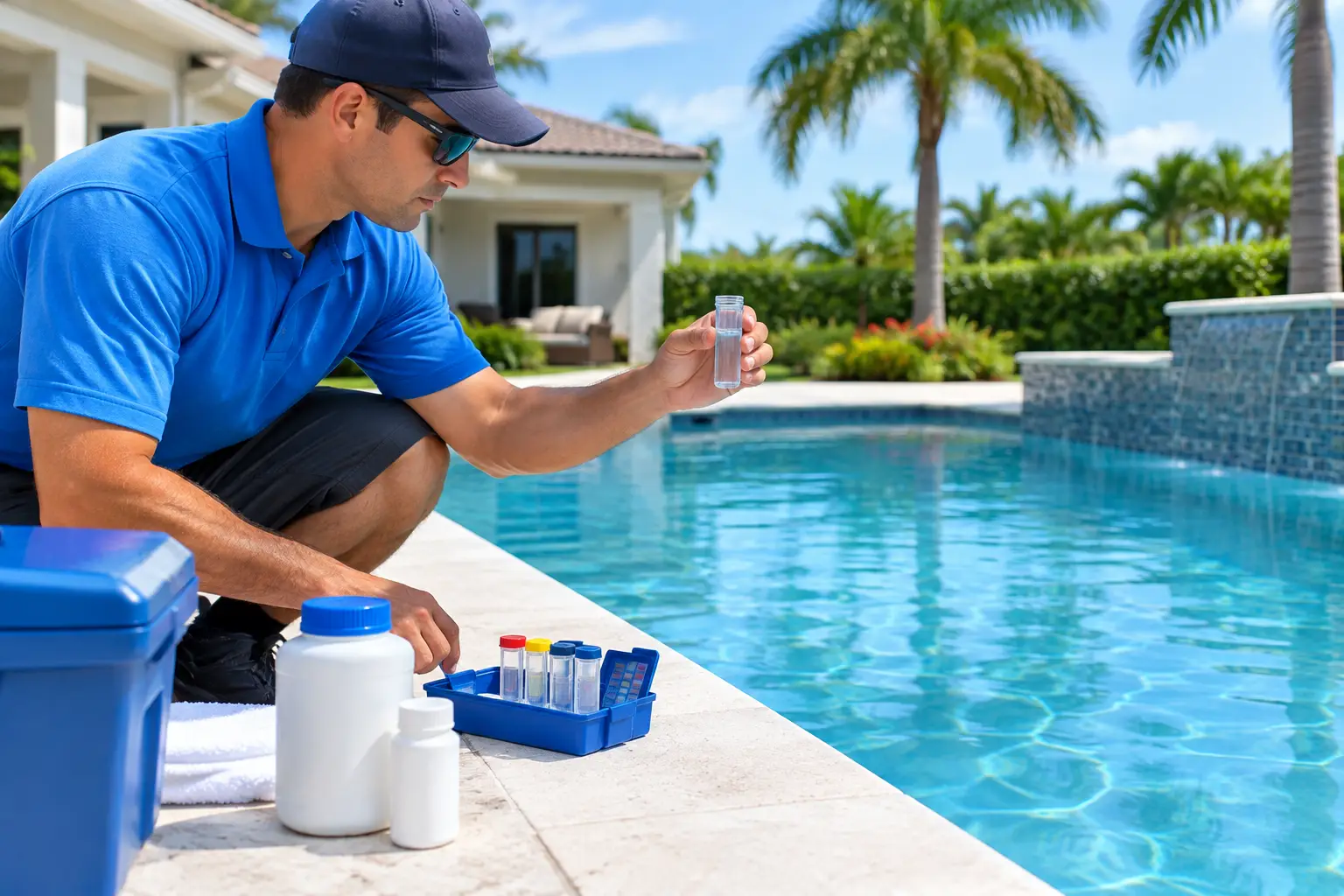
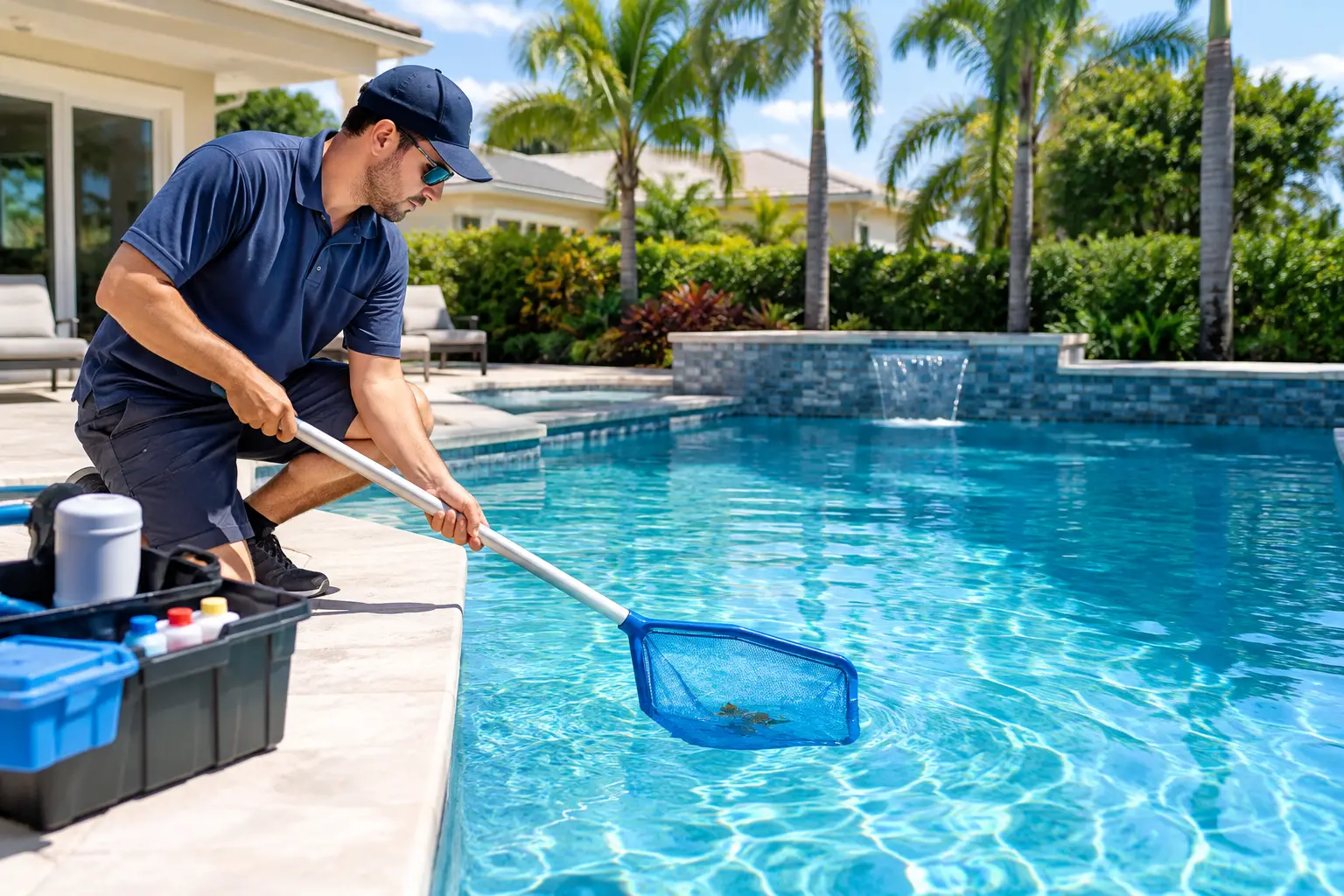
Consistent weekly care helps prevent these conditions. Skimming, vacuuming, emptying baskets, checking circulation, testing water and making precise chemical adjustments all support the equipment behind the scenes. It is a less dramatic form of pool care, but it often has the greatest impact on equipment life.
After a green pool recovery, a remodel or a resurfacing project, this attention becomes even more important. Heavy debris and algae can load a filter quickly, while new plaster needs carefully controlled water chemistry during its curing period. Equipment should be checked regularly through these higher-demand phases rather than treated as an afterthought.
A practical way to make the decision
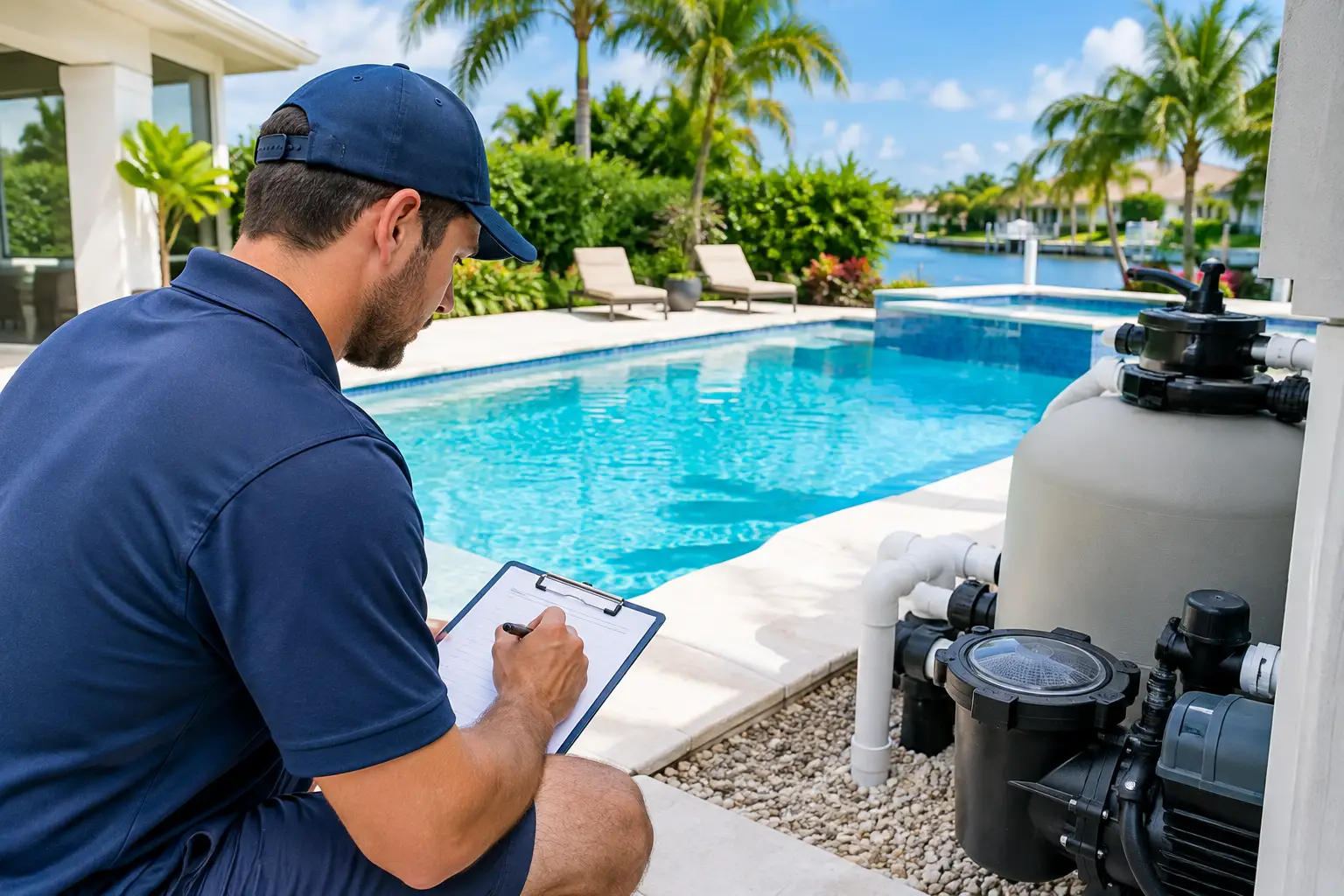
When a component fails, start with a full inspection rather than choosing repair or replacement based on the visible symptom alone. Consider the equipment’s age, the availability of parts, its current efficiency, the condition of connected plumbing and electrical components, and the likelihood of additional repairs in the next year or two.
It also helps to look beyond the immediate invoice. A lower-cost repair may be the right answer for a well-maintained system with years of useful life left. Conversely, a higher initial investment can be sensible when it improves energy use, reliability and day-to-day convenience for a busy family.
Turtle Pool Care approaches these decisions with the same attention used in weekly service: clear findings, practical options and no guesswork. Detailed service reporting can help homeowners spot patterns over time, whether that is a recurring pressure issue, declining flow or a repair that has reached its reasonable limit.
Your pool should not demand constant troubleshooting to stay inviting. Address a new noise, leak or drop in circulation early, and you will have more time to choose the restoration or upgrade that keeps every swim turtly clean and worry-free.