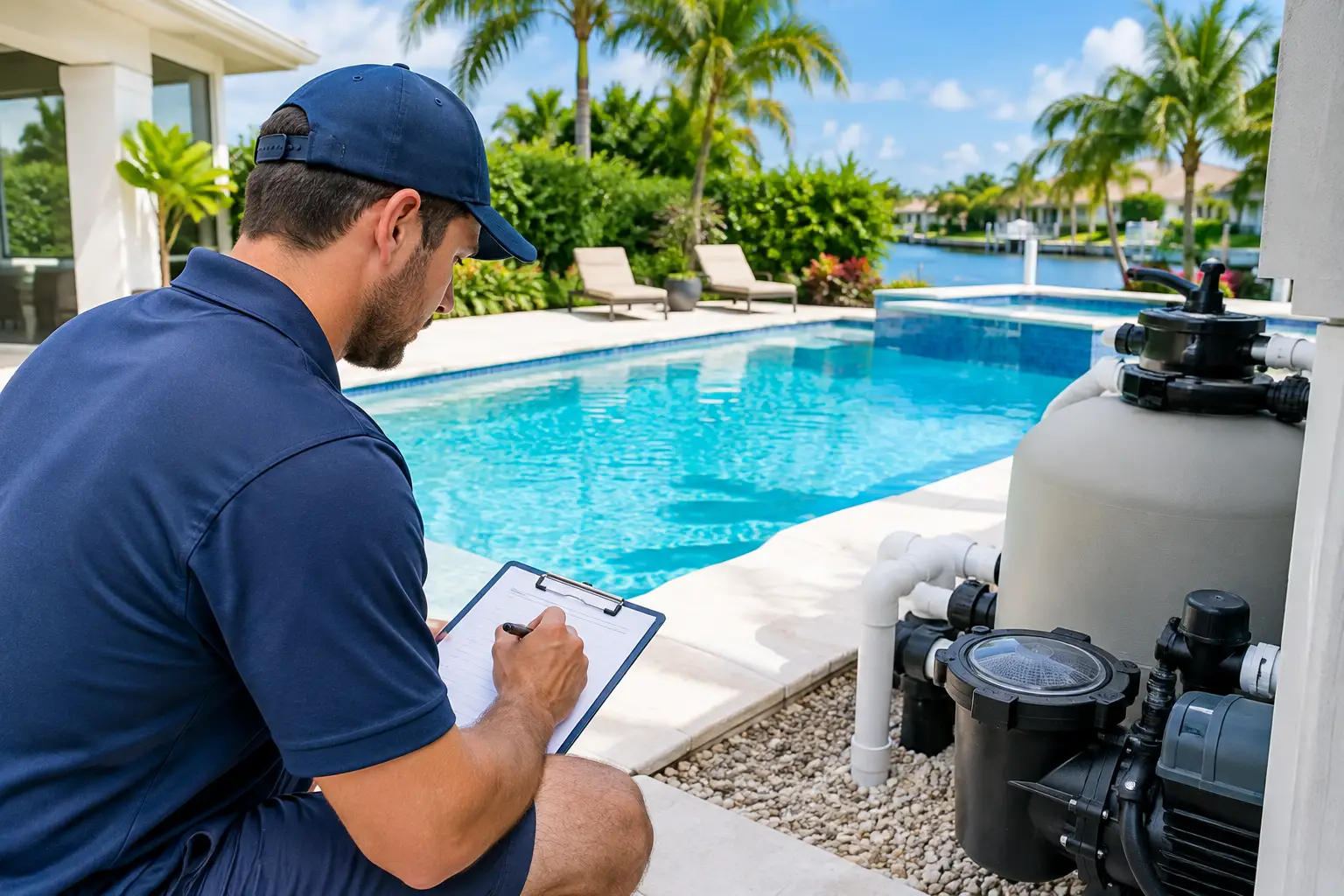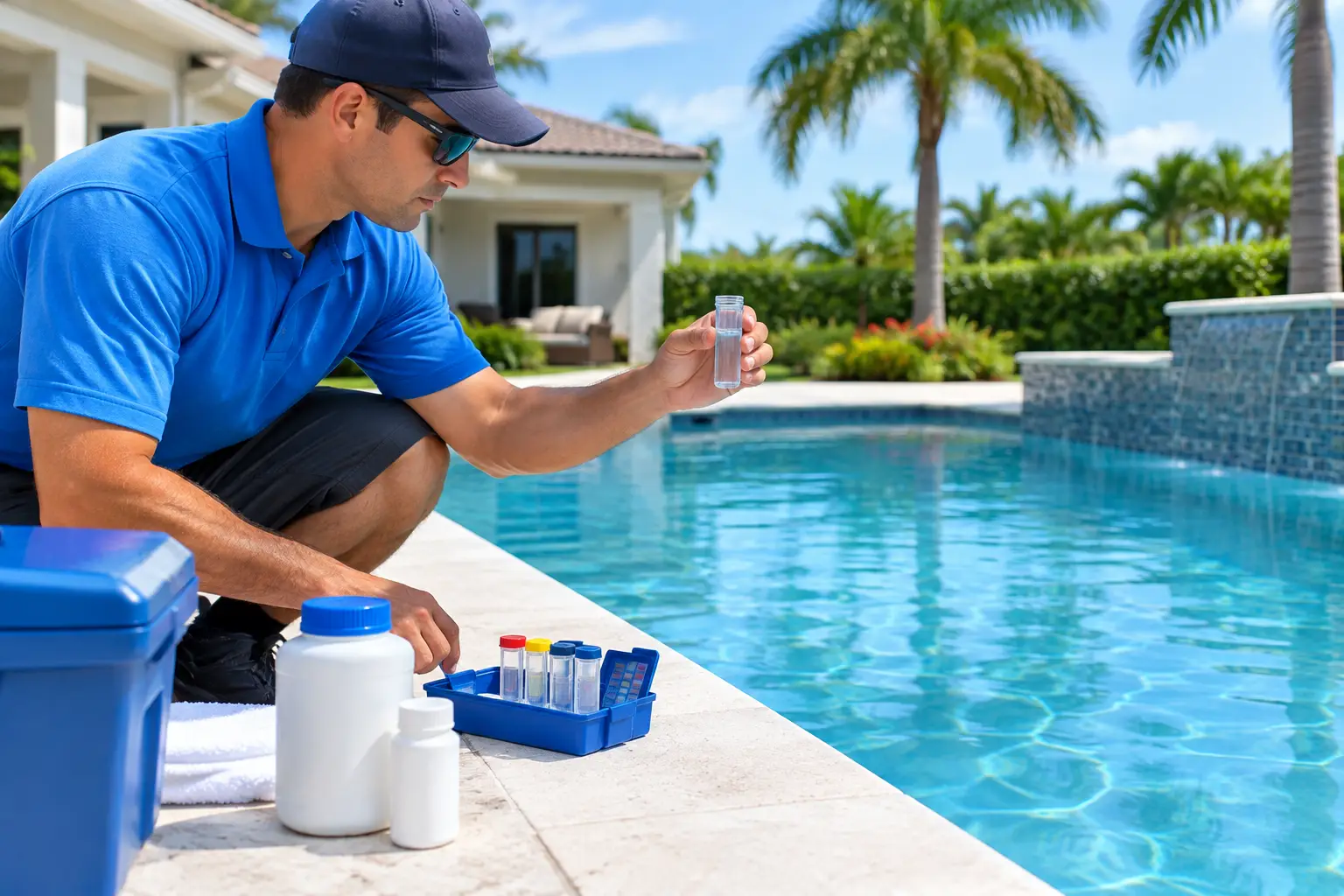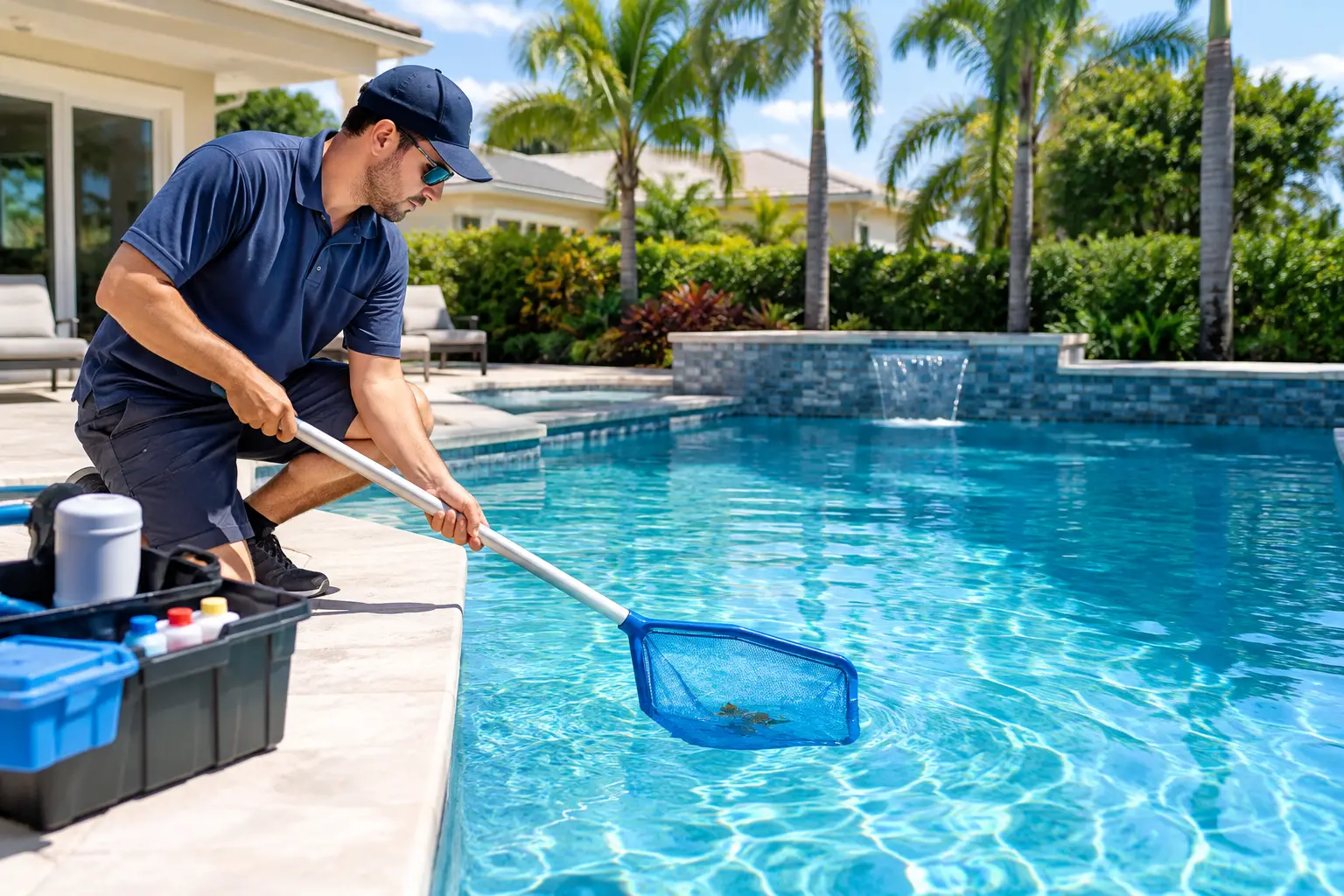
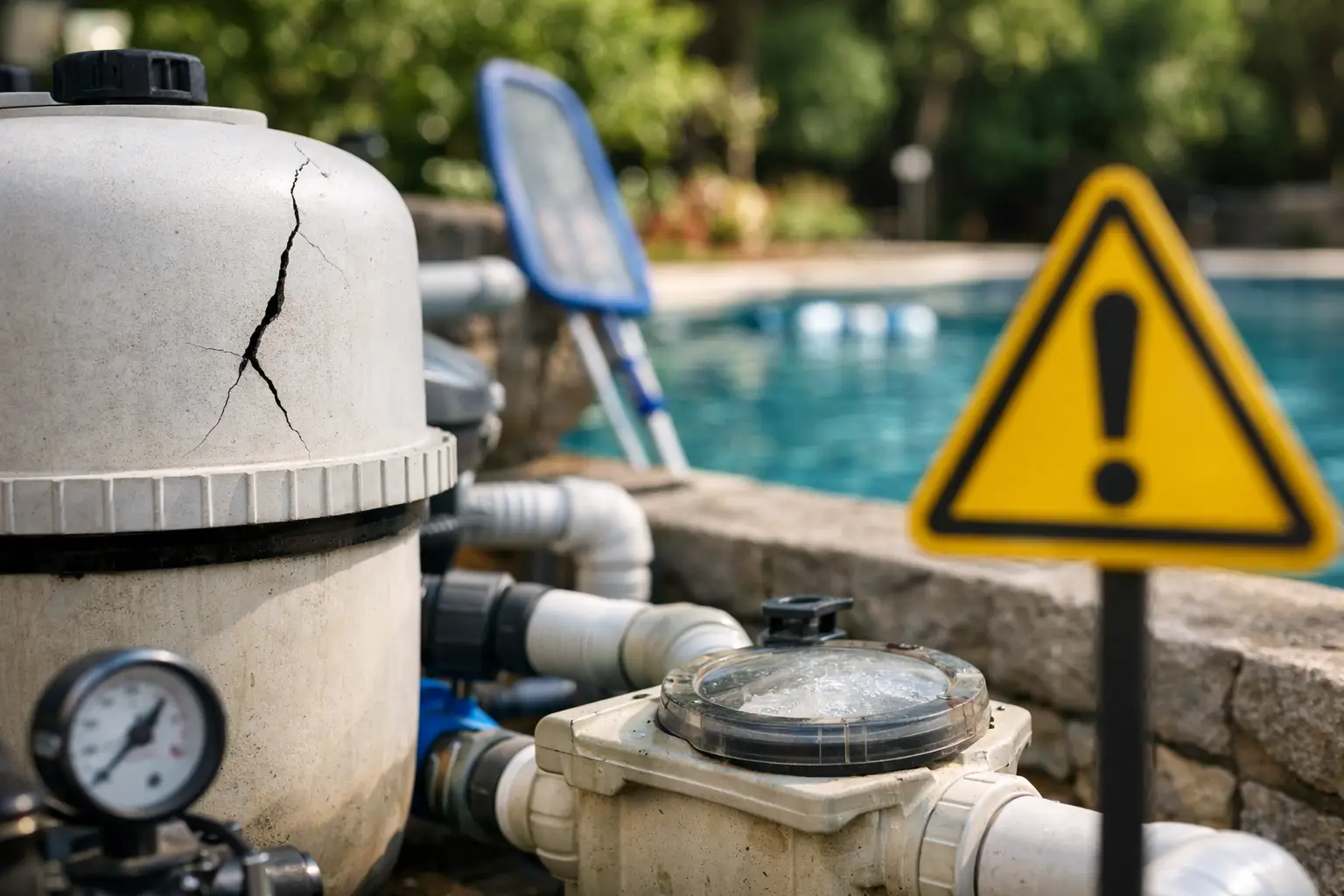
A pool can look clear at breakfast and still be heading for a costly repair by the weekend. The most useful pool equipment warning signs are often small changes: a pump that sounds different, a return jet that has lost its push, or a light that flickers when everyone is ready for an evening swim. Catching them early protects your water quality, your equipment and the relaxed pool time your family expects.
Pool equipment warning signs that need attention
1. The pump is louder than usual
Pool pumps make a steady working sound, but grinding, screeching, rattling or a high-pitched whine is not part of normal operation. A noisy pump may have a worn bearing, a failing motor, debris in the fan or an issue affecting water flow.
Do not assume that turning the pump off and on again has solved the problem. If the sound returns, arrange an inspection before the motor overheats or fails completely. A repair may be possible when the issue is addressed promptly, while a motor left to struggle can lead to a more expensive replacement.
2. Water is leaking around the equipment pad
A small puddle after rain is one thing. Water consistently appearing beneath the pump, filter, heater or plumbing connections is another. Leaks can come from worn seals, loose unions, cracked fittings or a failing pump lid O-ring.
Apart from wasting water, an equipment-pad leak can allow air into the circulation system. That affects pressure, reduces filtration and can make it harder to keep chemistry safe and perfectly balanced. Check whether the area dries between runs, and look for drips while the system is operating. Never tighten plumbing fittings aggressively, as overtightening can crack them.
3. The pool has weak circulation
When the return jets feel noticeably weaker, the skimmer barely pulls surface debris, or leaves seem to linger in one corner, the pool is telling you that circulation has changed. The cause might be as simple as a full skimmer basket or dirty filter. It could also point to a clogged impeller, an air leak, a blocked line or a pump that is losing performance.
Start with the straightforward checks: empty the baskets and confirm the water level is around the middle of the skimmer opening. If flow remains weak, avoid compensating by adding extra chemicals. Chemicals cannot make up for poor filtration, and repeated dosing without circulation can create another water-balance problem.
4. The pressure gauge has shifted sharply
Your filter pressure gauge gives a useful baseline for how your system normally runs. A gradual rise commonly means the filter needs cleaning. A sudden high reading can indicate a blockage, while an unusually low reading may suggest poor flow, a suction-side air leak or a gauge that is no longer reading accurately.
The exact normal pressure varies by pool and filter type, so there is no single number that suits every home. The key is change. Make a note of the clean-filter pressure after professional service or a proper cleaning, then watch for unusual movement from that baseline.
5. Air bubbles are returning to the pool
A few bubbles at the returns immediately after the pump starts can be normal. Constant bubbles, however, often mean air is entering the plumbing before the pump. You may also see air collecting under the pump lid or hear a surging, hollow sound as the pump runs.
Common causes include a dry or damaged lid O-ring, a loose pump lid, low pool water or a leak at a suction-side connection. Left alone, air leaks reduce circulation and can place unnecessary strain on the pump. They are usually much easier to diagnose before the pump starts losing prime altogether.
6. The pump loses prime or switches itself off
A properly operating pump basket should remain full of water while the system is running. If it repeatedly fills with air, the pump struggles to prime, or it shuts down during a cycle, act quickly. Running dry can overheat and damage internal components.
Check that the pool water is not too low and that the skimmer and pump baskets are clear. Beyond those simple homeowner checks, this is best treated as a repair issue. The problem may be electrical, related to overheating, or caused by a suction leak that needs a careful inspection.
7. The water turns cloudy or green despite treatment
Cloudy water and algae are often described as chemical problems, but equipment performance is part of the story. If the pump is not running for the right duration, the filter is dirty, circulation is weak or a valve is set incorrectly, even well-tested water can lose its sparkle.
This matters especially during hot, wet South Florida weather, when algae can gain ground quickly. Adding shock or algaecide without identifying the circulation issue may provide a short-lived improvement but not a dependable solution. A green-to-clean recovery works best when filtration, brushing, debris removal and chemistry are handled together.
8. The breaker trips or equipment has electrical warning signs
A tripped breaker, burning smell, hot motor housing, flickering pool light or damaged-looking wiring should never be ignored. Turn the affected equipment off and do not repeatedly reset the breaker to keep the pool operating. Water and electricity require a cautious response.
Some causes are minor, such as a failed light fixture or a component nearing the end of its life. Others require an appropriately qualified electrical professional. Pool service can identify equipment concerns and coordinate the right next step, but electrical faults should not become a DIY experiment.
9. The heater, salt system or automation panel shows errors
Modern equipment is designed to flag trouble before it becomes invisible. Error codes, low-flow messages, a salt cell warning or automation that no longer follows its schedule deserve attention, even if the pool still appears normal.
Sometimes the fix is routine maintenance, such as cleaning a cell or correcting flow. Other times, the message indicates a sensor, communication or internal component issue. Take a clear photo of the display and note when the error appears. That information makes diagnosis faster and helps avoid replacing parts based on guesswork.
10. Your running costs suddenly rise
An unexplained increase in electricity use can be a pool equipment warning sign, particularly if a single-speed pump runs longer than usual, a motor is labouring or a heater is cycling inefficiently. You might not see an obvious puddle or hear an alarming noise, yet the system could still be working harder than it should.
Compare the current bill with a similar period and consider changes in pump schedule, heating habits and weather. A variable-speed pump upgrade can reduce operating costs for many households, but it is not automatically the answer for every set-up. The existing plumbing, equipment condition and how the family uses the pool all matter.
What to do before a small issue becomes a big repair
Take a photo or short video whenever you notice a new sound, leak, error code or change in water flow. Record when it happens, whether it is constant and what equipment was running. These details are far more useful than trying to describe a noise from memory several days later.
Keep baskets clear, maintain the correct water level and avoid delaying routine filter care. But resist the temptation to dismantle pumps, force valves or repeatedly restart equipment that is clearly struggling. A quick professional assessment can preserve a repairable part, protect water quality and prevent an unexpected interruption to swim plans.
For homeowners in Wellington, Royal Palm Beach, Westlake and nearby communities, consistent weekly care is one of the simplest ways to spot changes before they become failures. Turtle Pool Care checks the details that are easy to miss between swims, with clear visit reporting to give you genuine peace of mind. When your system sounds, looks or behaves differently, treat that change as your cue to get it checked and keep your pool turtly clean.