A pool can look clear at a glance while its filter is quietly restricting circulation, placing extra strain on the pump and making water chemistry harder to manage. In Palm Beach County, where pools work through every season, a timely pool filter cleaning service is one of the most practical ways to protect water quality, equipment and your time.
Your filter is not an optional extra. It is the part of the system that captures fine debris, pollen, sunscreen residue, algae spores and the particles that leave water looking dull. When it is clean and correctly maintained, the rest of your pool equipment can do its job more efficiently. When it is neglected, even regular skimming and chemical treatment can start to feel like a losing battle.
Why a clean pool filter matters
The filter works alongside your pump to keep water moving. Good circulation helps chemicals distribute evenly, carries debris to the filter and reduces the conditions algae needs to take hold. As the filter fills with material, water has to work harder to pass through it. That can mean weaker return flow, longer run times and unnecessary wear on the pump.
For homeowners, the early signs are often subtle. You may notice that the water no longer has that bright, polished look after a weekly visit, debris seems to return quickly, or the pressure gauge sits higher than usual. A spa spillover may weaken, the cleaner may move slowly, or the pump may sound as though it is working harder than it should.
None of these symptoms automatically means the filter is the only issue. A blocked skimmer basket, a worn pump component, a suction-side air leak or an inaccurate pressure gauge can create similar problems. That is why filter cleaning should be handled as part of an equipment check, not as a one-size-fits-all chore.
What a pool filter cleaning service should include
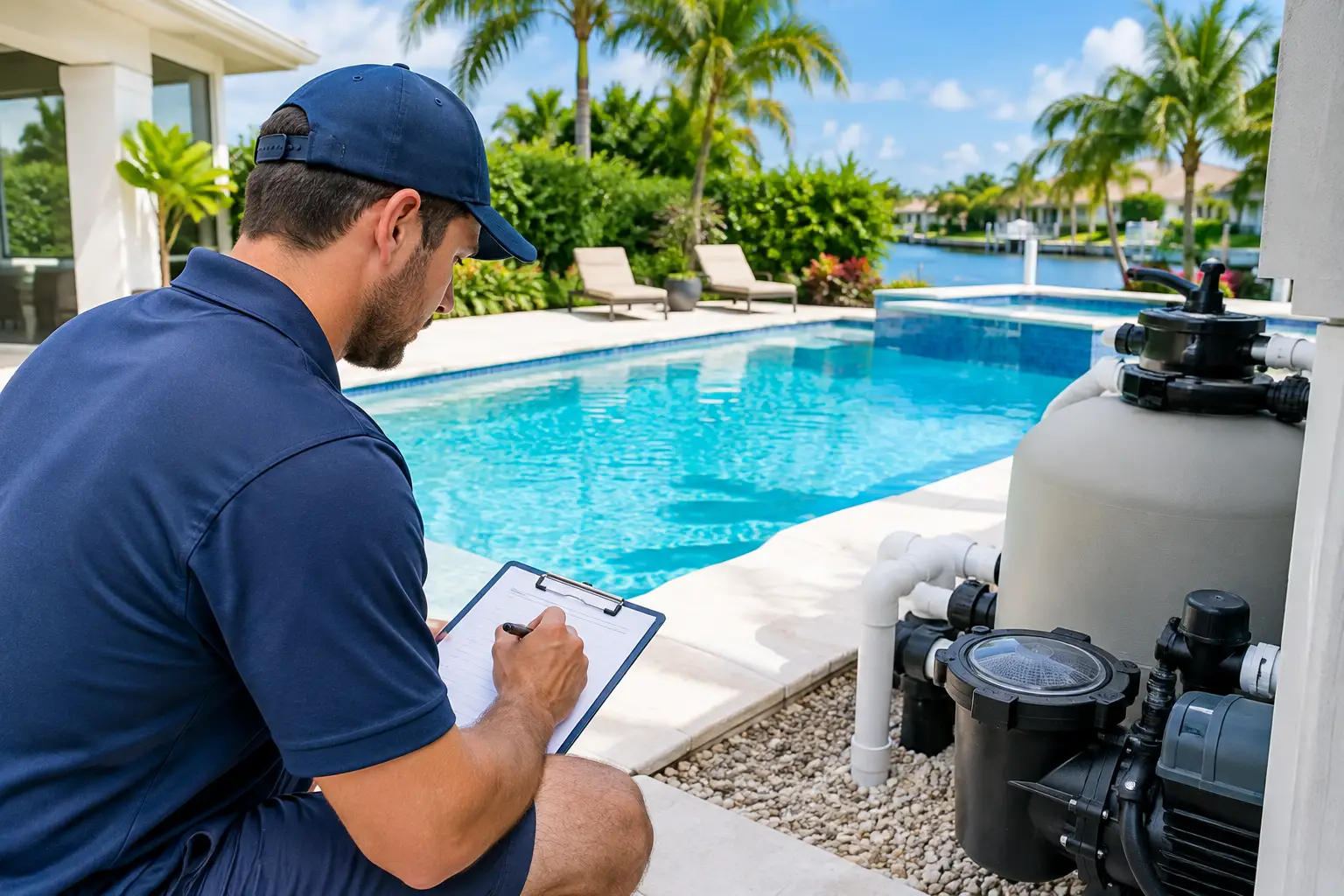
A proper service begins by looking at how the pool is operating before the filter is opened. The technician should check circulation, note filter pressure and inspect baskets, valves and visible equipment connections. This establishes whether a dirty filter is likely to be the cause of reduced flow or whether another repair may be needed.
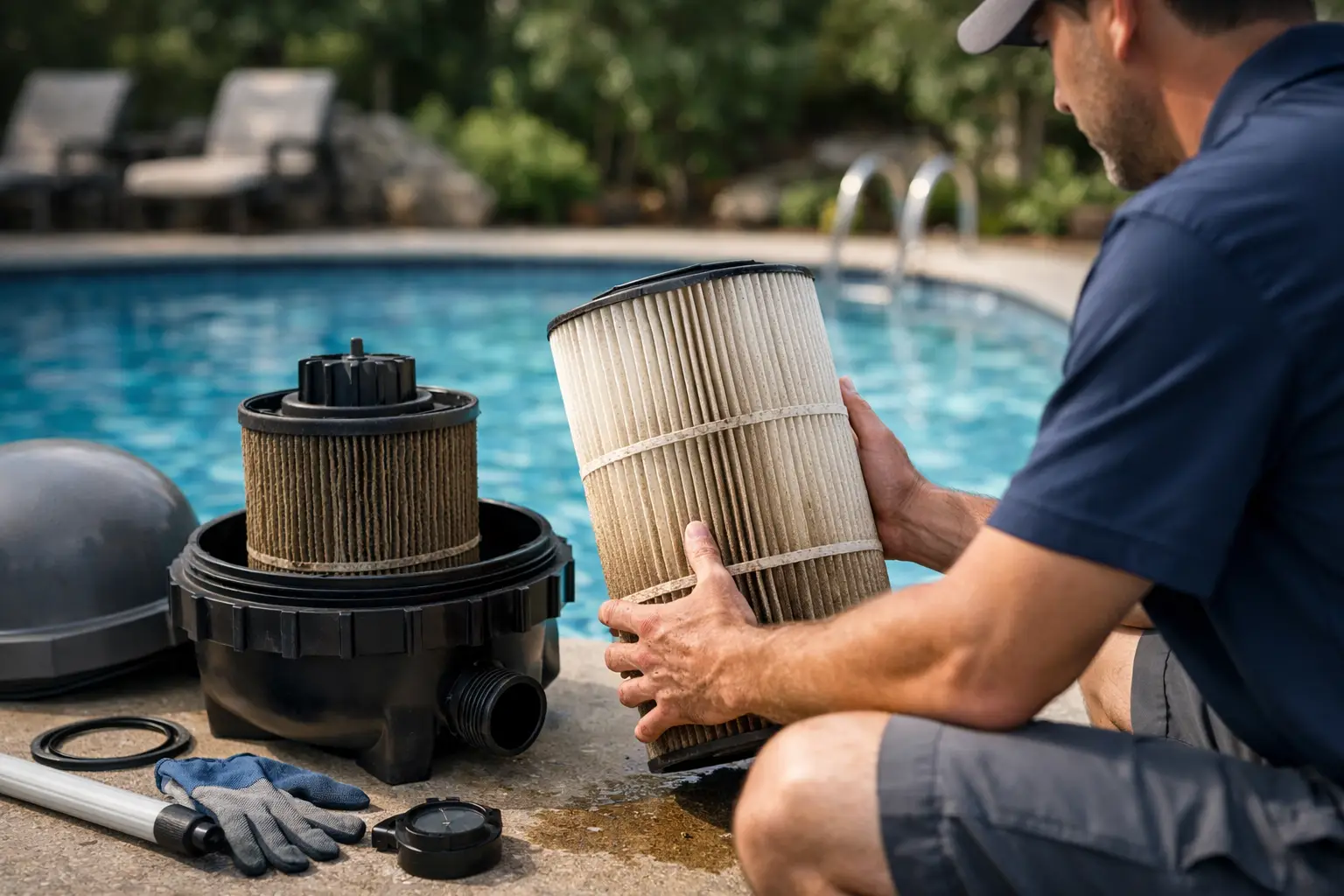
The cleaning method depends on the filter type. Sand filters are generally backwashed when pressure rises above their normal clean operating level. Cartridge filters are opened, inspected and rinsed carefully to remove trapped debris from the pleats. DE filters require more specialised handling because the grids, manifold and internal elements need inspection, cleaning and correct recharging with fresh DE media.
A thorough appointment is also an opportunity to spot problems that are easy to miss during everyday pool use. Cartridge bands can stretch, pleats can collapse and seals can dry out. DE grids can tear, allowing powder back into the pool. Sand can become channelled or clumped over time. Catching these issues early can prevent cloudy water, reduced performance and a much larger equipment bill later.
Chemical washing is not necessary at every clean. Oils, calcium scale and stubborn staining sometimes call for a deeper treatment, but overusing harsh cleaners can shorten the life of cartridges and seals. The right approach depends on the filter condition, the pool’s water balance and the manufacturer’s recommendations.
How often should your filter be cleaned?
There is no single calendar date that suits every pool. The best schedule depends on filter type, bather load, nearby trees, construction dust, pets, lawn debris and how often the pool is used. A pool used regularly by a busy family will generally load its filter faster than one used only at weekends.
In much of South Florida, a professional filter clean is commonly needed every few months for cartridge systems, while DE and sand filters follow their own maintenance patterns. The pressure gauge is a useful guide: when pressure rises roughly 20 to 25 percent above the clean baseline, the filter usually needs attention. The key word is baseline. A reading of 20 psi is not automatically a problem if that is normal for your specific system.
Seasonal changes matter too. Heavy rain, windy weeks, pollen, landscaping work and an algae episode can overload a filter quickly. After a green-to-clean treatment, cleaning the filter is particularly important. It has captured the debris and dead algae removed from the water, and leaving that material in place can slow the recovery process.
Filter cleaning is more than hosing off a cartridge
Many homeowners are comfortable taking care of a cartridge filter themselves, and light rinsing can be appropriate when done correctly. The trade-off is that filters are easy to damage. High-pressure washing can separate cartridge pleats, cleaning solutions can be mixed incorrectly, and an incorrectly seated lid O-ring can create leaks or draw air into the system.
There is also the question of diagnosis. If the filter is cleaned but pressure remains high, a professional can look further into valve settings, plumbing restrictions, pump performance or media condition. If pressure is unusually low, the issue may be a blockage before the pump, a leak or a circulation fault rather than a clean filter.
A pool filter cleaning service is especially worthwhile when the filter has not been opened for a long time, the pool has turned green, pressure readings are inconsistent, or you have noticed reduced water movement. It is also sensible after major storms or renovation work, when fine dust and debris can overwhelm the system.
Protecting your pump and reducing avoidable repairs
A dirty filter does not just affect appearance. Restriction makes the pump work against increased resistance, which can contribute to higher energy use and accelerate wear on moving parts. Modern variable-speed pumps are efficient, but they still need a clear circulation path to perform properly.
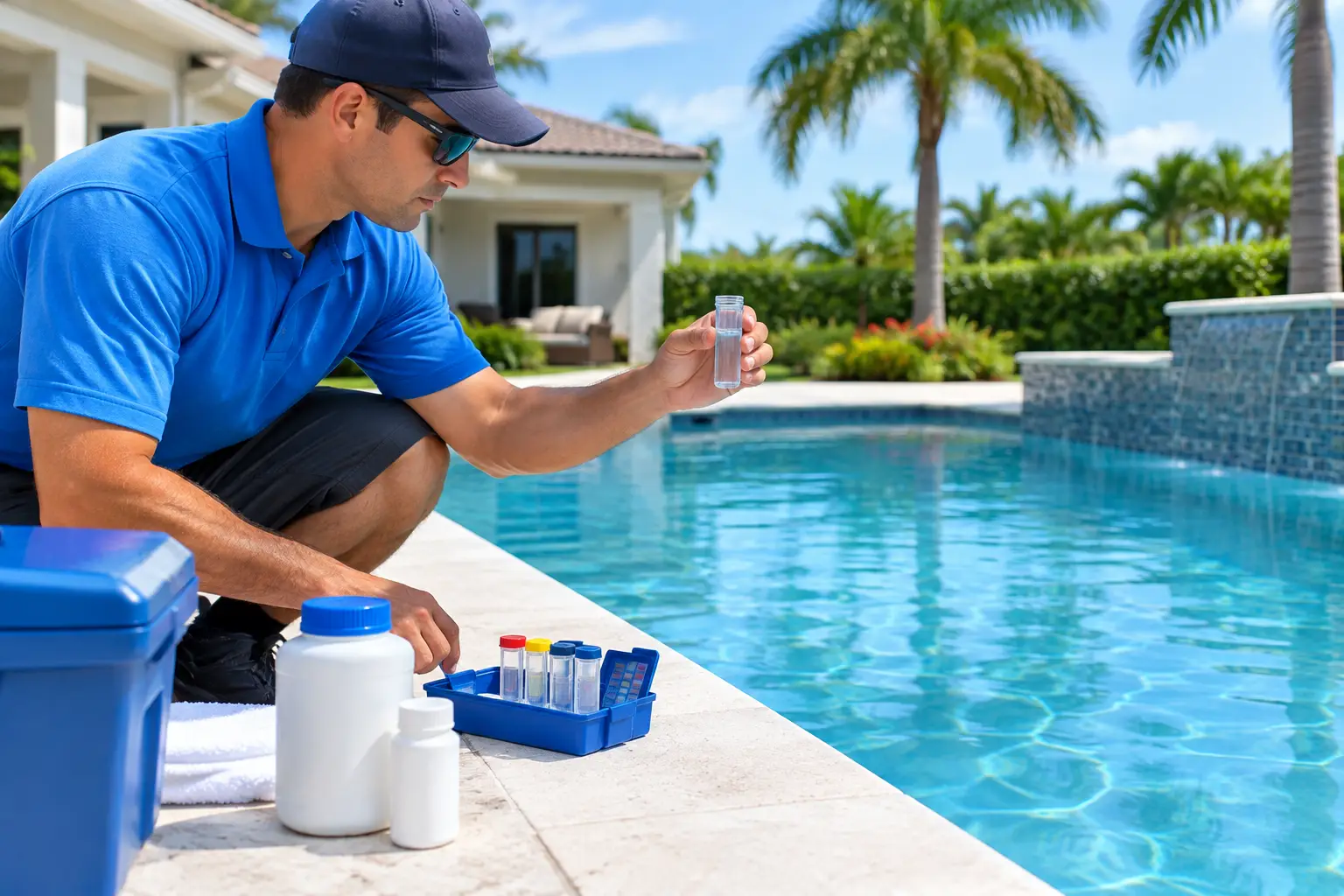
Keeping the filter maintained can also support more stable chemistry. When water moves properly, sanitizer reaches all areas of the pool more effectively. This does not remove the need for precise testing and balancing, but it gives the chemicals a fair chance to work. Clear water is the result of circulation, filtration and chemistry working together - not one of them carrying the entire load.
For new pools and resurfaced pools, filtration is particularly important during the early curing period. Fine plaster dust can collect quickly, and the water must be managed carefully to protect the finish. A structured 28-day start-up program should include close attention to circulation, brushing, chemical balance and filter condition.
What to expect from a dependable service visit
A good provider should leave you knowing what was done and what the equipment needs next. That means clear communication, not vague assurances that the filter was “looked at”. You should be told whether cartridges are approaching replacement, whether pressure has returned to normal and whether any seal, grid or valve needs attention.
At Turtle Pool Care, filter maintenance is assessed as part of attentive, ongoing pool care. Detailed service reporting and photographic proof help homeowners see that the work has been completed and understand the condition of their pool equipment. It is the kind of practical transparency that makes it easier to plan maintenance before it becomes an urgent repair.
Keep the whole system working together
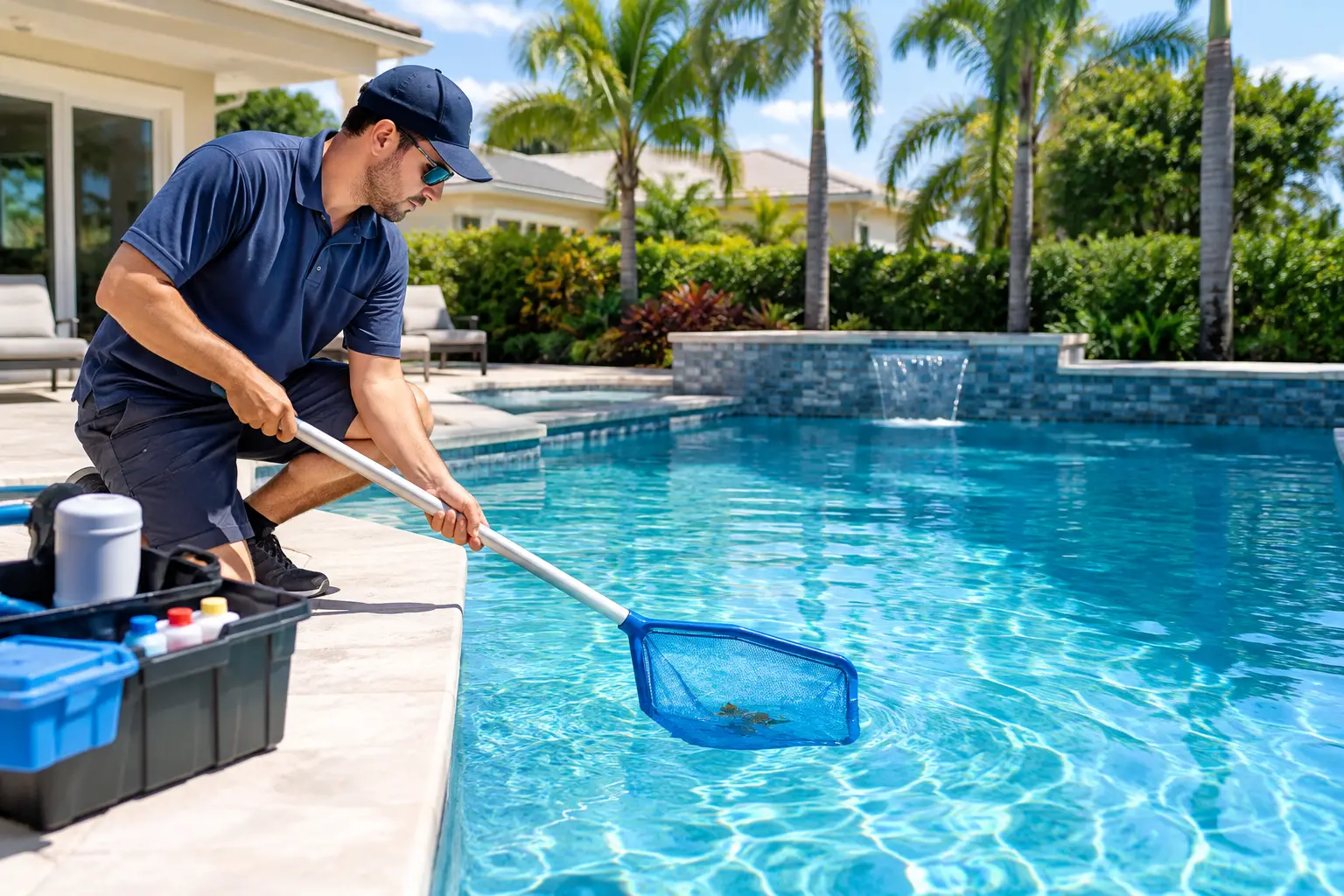
Between professional visits, empty skimmer and pump baskets as needed, keep water at the proper level and pay attention to changes in return flow or filter pressure. Do not wait for water to become cloudy before acting. By that point, the filter may already be heavily loaded and the chemistry may need more correction than it would have earlier.
A clean filter will not solve every pool problem, but it gives your pool the circulation foundation it needs to stay safe, balanced and turtly clean. When the system is looked after before it struggles, your next swim, family gathering or quiet afternoon by the water can remain just that - time to enjoy your pool, not troubleshoot it.