A pool can look perfectly blue at breakfast and start turning dull by the weekend if the water is not moving and filtering as it should. In Palm Beach County’s heat, frequent rain and near year-round swimming weather, pool filtration is not background equipment. It is the daily process that removes debris, catches fine particles and gives your water chemistry a fair chance to do its job.
For homeowners, the goal is simple: water that is clean, safe and ready when the family wants to use it. Reaching that point does not always mean buying the largest filter or running a pump endlessly. It means having the right equipment, sensible circulation and regular attention to the small changes that signal a problem early.
What pool filtration actually does
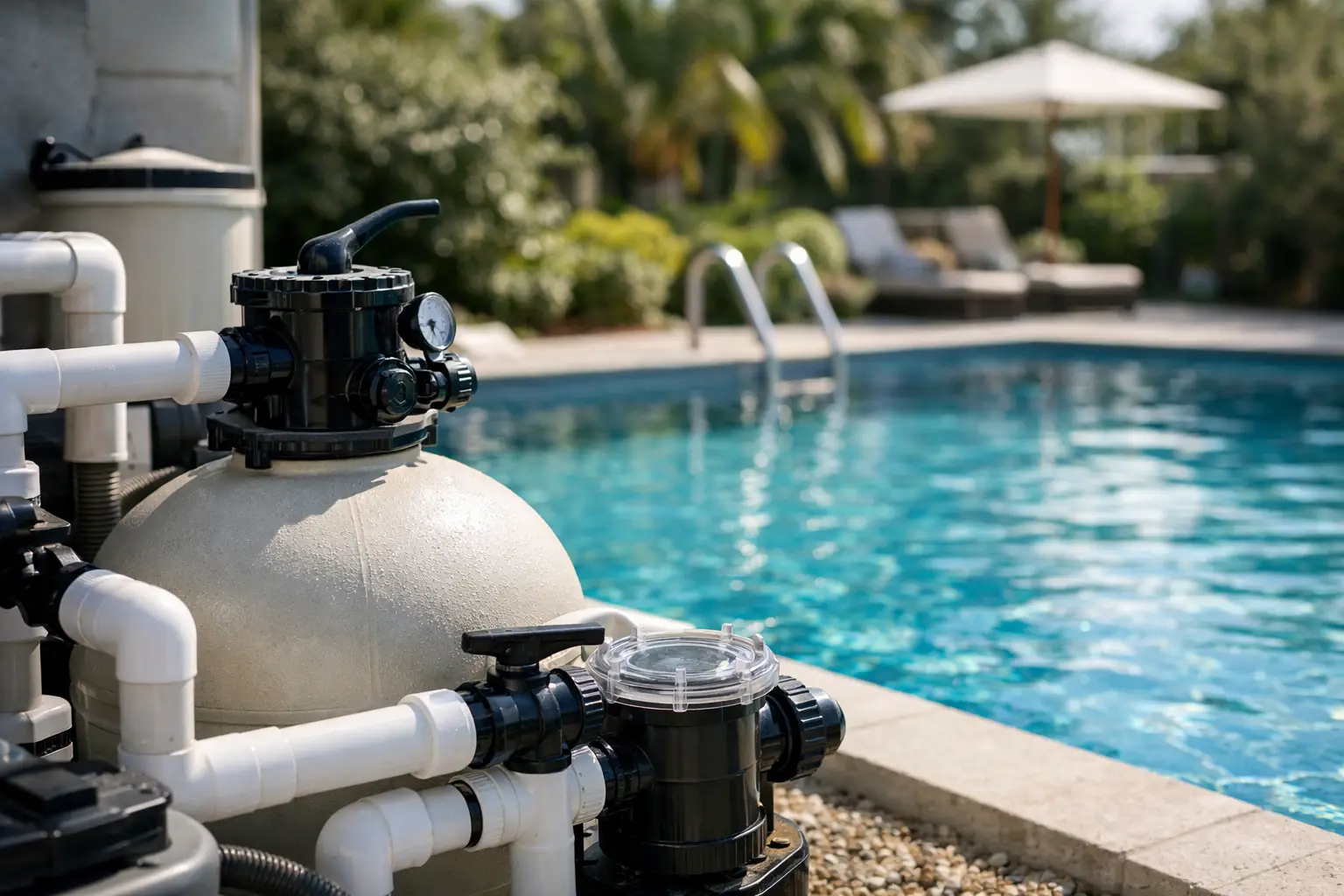
Your pump pulls water through the skimmer and main drain, pushes it through the filter, then returns it to the pool through the jets. Along the way, the skimmer basket catches leaves, seed pods and larger debris. The filter takes on the smaller material: dust, pollen, dead algae, sunscreen residue and other particles that make water look hazy.
Filtration does not replace chemical treatment. Chlorine or another sanitizer deals with microorganisms, while balanced pH, alkalinity and calcium hardness help keep that sanitizer effective and protect surfaces and equipment. But chemistry and circulation work together. Chemicals need moving water to distribute properly, and dead algae or oxidised contaminants still need to be filtered out.
That is why a pool with acceptable test readings can still look cloudy. The issue may be poor circulation, a dirty filter, worn filter media or debris bypassing a damaged basket or seal. Clear water is a system result, not just a chemical reading.
The three common pool filter types
Most residential pools use a sand, cartridge or diatomaceous earth, often called DE, filter. Each can provide excellent results when correctly sized, maintained and matched to the pool’s use.
Sand filters
A sand filter sends water through a bed of specialised filter sand. It is a familiar, straightforward option and generally forgiving for busy households. When pressure rises, the filter is cleaned by backwashing, which reverses the water flow and sends trapped debris to waste.
The trade-off is filtration precision. Standard sand filters usually catch larger particles than cartridge or DE systems, so a pool with very fine dust or persistent haze may need more time, a clarifier used appropriately, or an equipment check. Sand also needs replacing periodically because the grains become smoother and less effective over time.
Cartridge filters
Cartridge filters use pleated elements with a large surface area to capture fine debris. They are popular because they do not require backwashing, which can save water. In areas where water conservation matters, that is a meaningful advantage.
They need hands-on cleaning. A cartridge should be removed and rinsed carefully when pressure indicates it is dirty, rather than being left until water flow drops dramatically. A neglected cartridge can collapse, tear or restrict the pump, turning a simple clean into a replacement cost. It is also wise to keep a spare set for larger pools or heavy debris seasons.
DE filters
DE filters use fine powder made from fossilised diatoms to coat internal grids. They can capture exceptionally small particles, making them highly effective at polishing water to a bright finish. For a pool that sees heavy use, fine airborne dust or recurring cloudiness, that performance can be appealing.
They are also the most demanding option. The grids, manifolds and powder charge require correct servicing, and DE must be handled and disposed of properly. A damaged grid can allow powder back into the pool, while too much or too little DE after cleaning affects performance. This is equipment where experienced service makes a real difference.
Signs your pool filtration needs attention
The pressure gauge is one of the clearest indicators. Every clean filter has a normal starting pressure. Once the reading rises around 20 to 25 percent above that baseline, the filter is usually due for cleaning. The exact timing depends on the equipment, debris load and pool conditions, which is why recording the clean pressure is so useful.
Do not wait for pressure alone if you notice poor circulation. Weak return jets, a skimmer that barely pulls surface debris, air bubbles in the pump lid or a pump that sounds strained all deserve attention. So do recurring cloudy water, debris returning through the jets, or algae appearing in the same low-flow corner of the pool.
A clean filter can still struggle when the pump is undersized, valves are incorrectly positioned, the water level is too low or an impeller is partially blocked. The fix depends on the cause. Repeated backwashing, for example, may make a sand filter look temporarily better while wasting water and failing to address old sand, a suction-side leak or an algae problem.
How long should a pool pump run?
There is no responsible one-size-fits-all answer. Pump run time depends on pool volume, pump flow rate, filter condition, bather load, temperature, weather and whether the pool has a variable-speed pump. The aim is to circulate the full volume of water effectively, often described as turnover, while keeping energy use sensible.
In Florida, many pools need longer daily circulation during hot weather, after storms and during periods of frequent swimming. A variable-speed pump can often run for longer at a lower speed, giving consistent filtration with lower energy demand than a single-speed pump. However, it still needs enough speed at certain times for skimming, heating features, cleaners and water features to operate correctly.
Rather than guessing, watch the pool. Surface debris should move towards the skimmer, the returns should create gentle circulation rather than dead spots, and the water should remain clear between weekly visits. If the water loses clarity despite balanced chemistry, circulation and filter condition should be assessed before adding more products.
Weekly care keeps filtration efficient
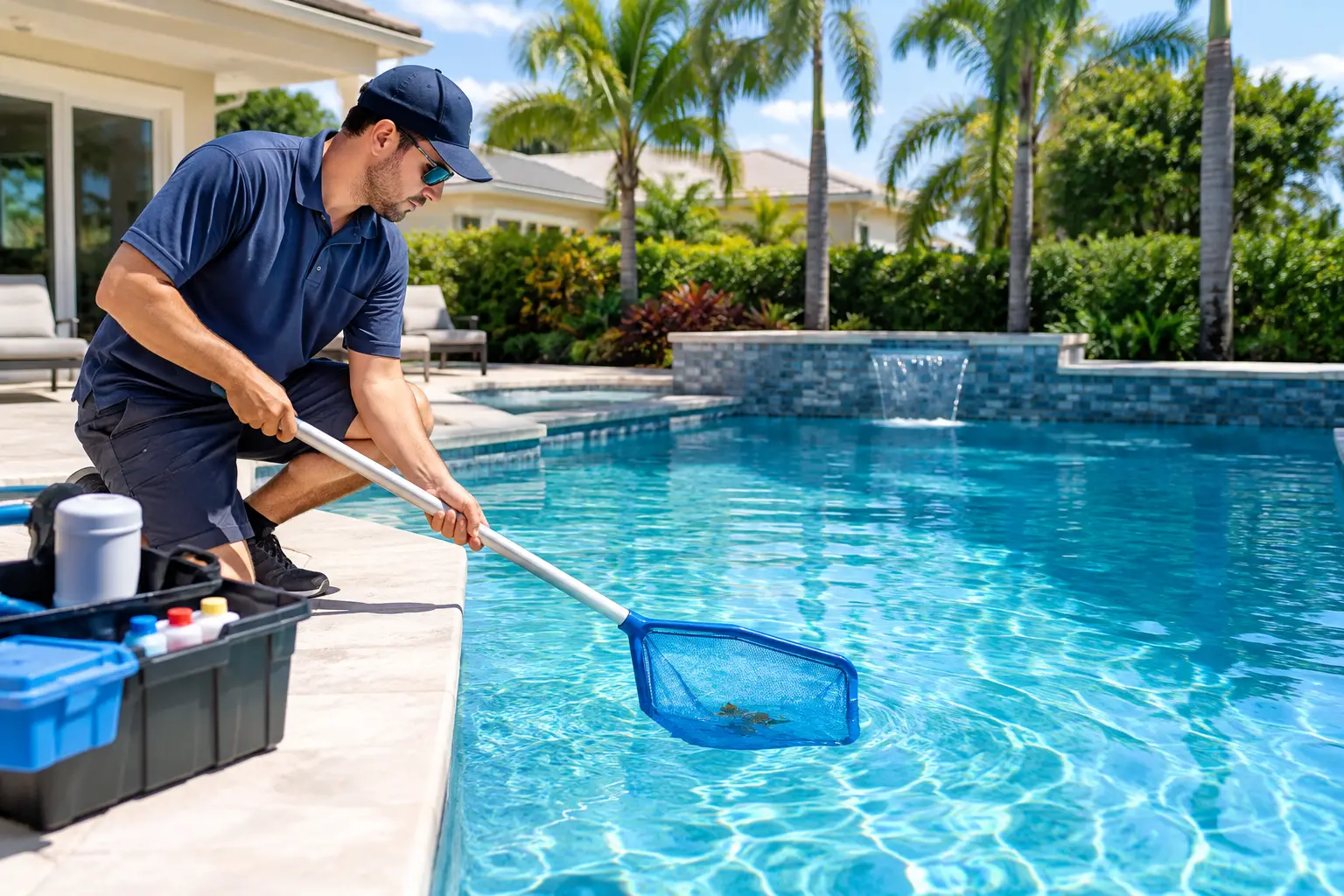
A filter works best when it is not asked to solve every problem alone. Regular skimming removes large debris before it breaks down and consumes chlorine. Emptying pump and skimmer baskets protects water flow. Brushing walls, steps and corners loosens material that would otherwise cling to surfaces, while vacuuming removes settled debris from the floor.
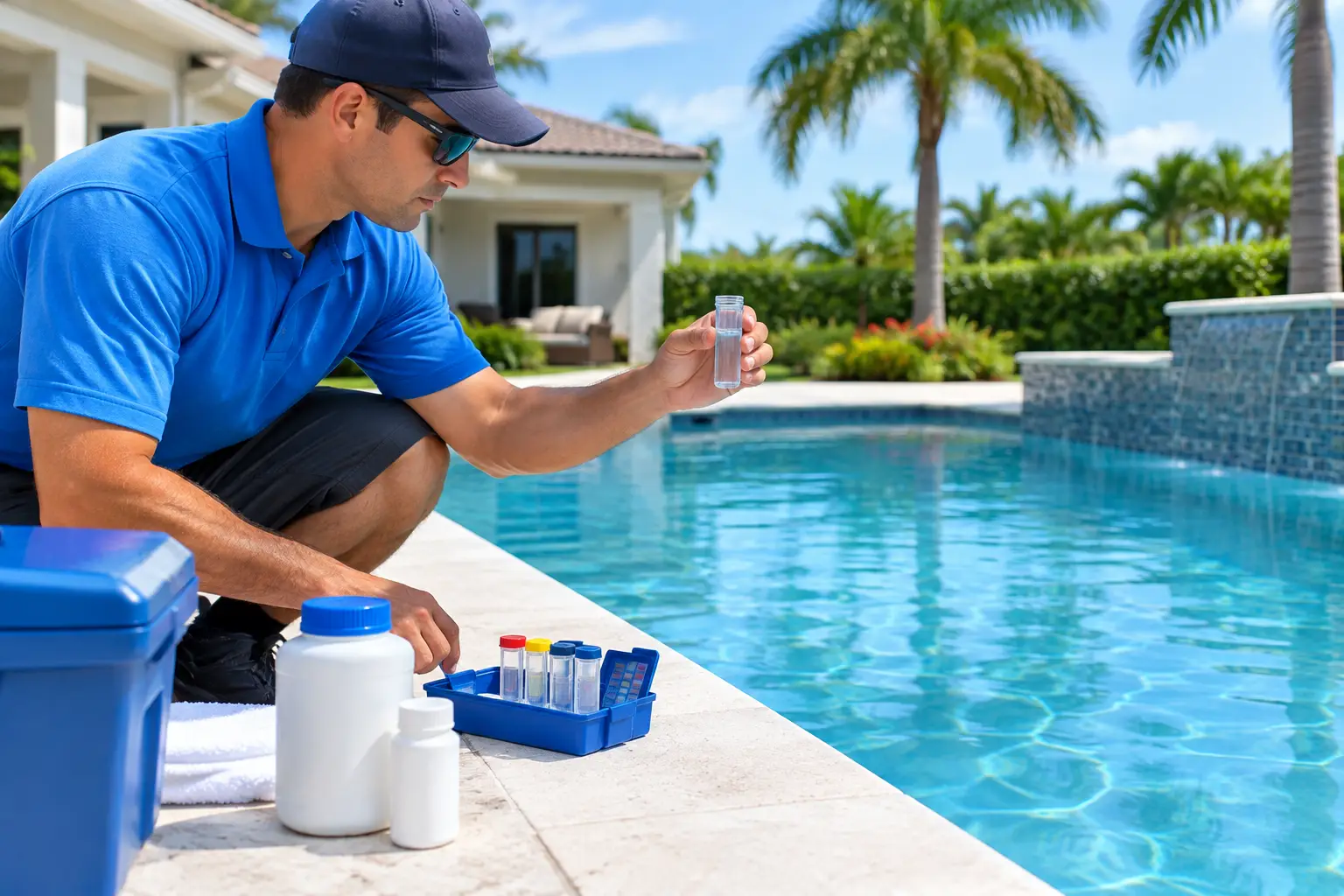
Water testing matters just as much. High pH can reduce sanitizer effectiveness and encourage scale, which can affect equipment and filter performance. Low pH may be corrosive. Poor calcium balance can lead to scale or surface damage, and high stabiliser levels can make chlorine less responsive. After heavy rain, wind-blown debris or a busy weekend of swimming, the pool may need a more tailored response than its usual routine.
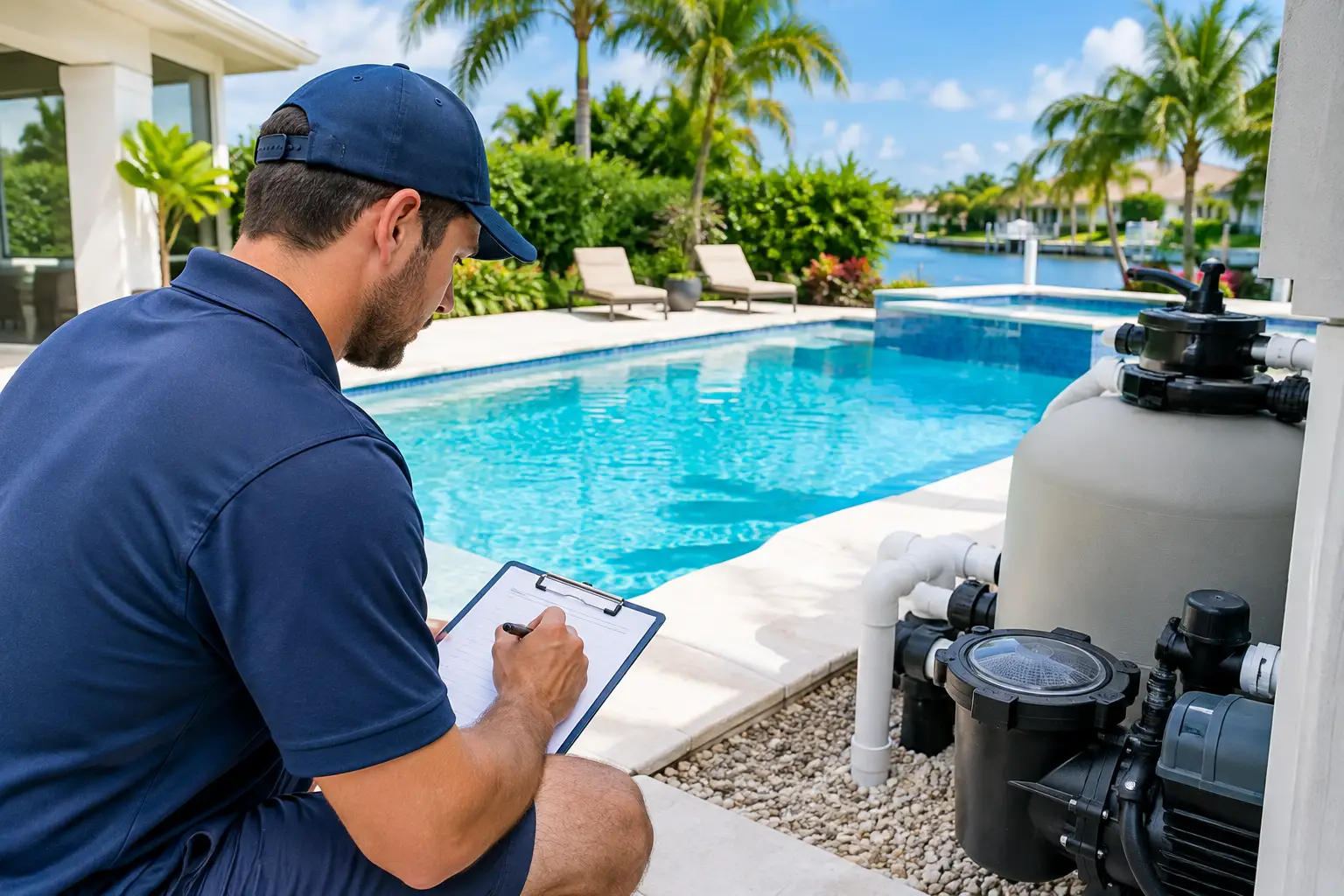
This is where detailed weekly service earns its value. A technician can spot a rising pressure trend, a weakening pump seal or a return fitting that has shifted before the pool becomes green or the equipment suffers avoidable damage. At Turtle Pool Care, post-service reporting and photographic proof help homeowners see what was checked and what needs watching, rather than being left to wonder whether the pool was simply skimmed.
When clear water needs more than a clean filter
If a pool turns green, cleaning the filter is only one part of the recovery. Algae needs the right chemical treatment, brushing and sustained circulation so the filter can capture the dead material. The filter may need cleaning more than once during a green-to-clean process because it is doing unusually heavy work.
Newly resurfaced pools also require special care. Plaster curing changes water chemistry quickly, and dust from the curing surface can place extra demand on filtration. A structured 28-day start-up program helps protect the finish while establishing balanced water and reliable circulation from day one.
Equipment age matters too. A cracked filter tank, leaking multiport valve, failing pressure gauge or pump that cannot maintain flow should not be treated as a minor inconvenience. Small faults can reduce filtration quality and, if ignored, become a larger repair. Modern variable-speed pumps, correctly sized filters and automation can make routine operation more efficient, but only when they are selected and set up for the specific pool.
A truly clean pool is not achieved by chasing a perfect appearance for one afternoon. It comes from keeping water moving, maintaining the filter before it is overloaded and responding early when the pool tells you something has changed. Give the system that steady care, and your pool is far more likely to be ready for an unplanned swim, a family gathering or a quiet evening at home.