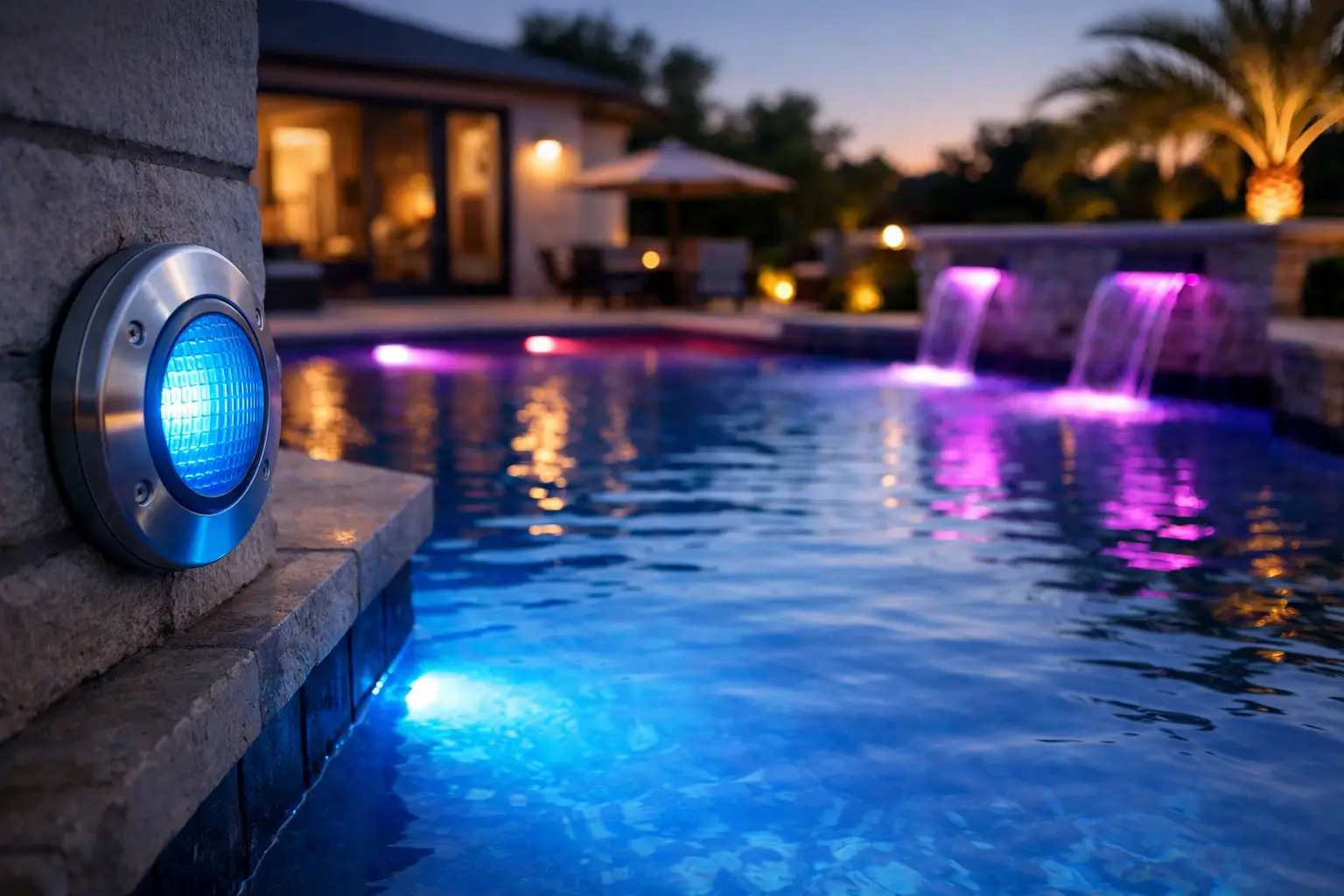
The difference is obvious the first evening you switch the new light on. Instead of one dull patch of light at the deep end, the water has an even, inviting glow that makes after-dinner swimming, weekend entertaining and keeping an eye on the children far easier. A pool LED lighting upgrade can make an established pool feel newer without the disruption of a major renovation.
For homeowners in Palm Beach County, lighting is not simply a finishing touch. Pools are used well beyond daylight hours for much of the year. The right system should improve visibility, suit the way your family uses the pool and work safely with the existing electrical equipment. Here is what to consider before choosing a new pool light.
Why a pool LED lighting upgrade changes more than appearance
Older incandescent pool lights consume far more energy and often produce a yellow, uneven light. They also run hot and have bulbs that need replacing more regularly. LED pool lights use considerably less electricity, run cooler and generally have a much longer service life. That can mean fewer lamp changes and lower running costs over time.
The practical benefit is visibility. Steps, benches, ledges and changes in depth are easier to see when the light is bright enough and positioned correctly. This matters when children are in the pool, when guests are unfamiliar with its layout, or when someone is simply taking an evening swim after work. Lighting supports pool safety, but it does not replace active adult supervision or sensible pool barriers.
Aesthetics count too. A clean blue-white light can make clear water look crisp and modern, while color-changing LEDs can bring a celebratory feel to a barbecue or birthday gathering. For many homeowners, the best choice is a light that looks polished every night, with color options available when they genuinely add to the occasion.
Start with the existing pool light and electrical set-up
Not every light can be upgraded in exactly the same way. Before selecting a fixture, a technician should identify the current light type, its voltage, the condition of the niche in the pool wall, the cable and conduit, and the transformer or control system serving it.
Some older pools have a full-sized wet niche designed for a traditional incandescent fixture. In this case, a compatible LED replacement may be straightforward. Other pools use smaller fixtures, fibre-optic lighting, or older equipment that needs more careful planning. A new LED light is only as reliable as the electrical connection and equipment behind it.
Voltage is particularly important. Pool lights may be low voltage, often supplied through a transformer, or line voltage depending on the original installation. The replacement must be compatible with the system. Trying to match a light by appearance alone can lead to poor performance, premature failure or an unsafe installation.
It is also worth checking the condition of the gasket, housing and cord. A failed gasket can allow water into a fixture, while damaged wiring or a compromised conduit can turn a simple upgrade into a repair project. The good news is that identifying these issues before installation helps prevent repeat visits and unexpected faults later.
One light may not light the whole pool
A common expectation is that replacing a single old light will brighten every corner of the pool. It may improve the situation significantly, but shape and size matter. Long pools, freeform designs, deep ends, tanning ledges and raised spas can all create shadowed areas.
In some cases, adding a second fixture or separately lighting the spa produces a better result than choosing the brightest possible single light. That is a design decision as much as an electrical one. The aim is comfortable, even illumination rather than glare reflecting off the water surface.
White LED or color-changing LED?
A fixed white LED is often the sensible choice for homeowners who want dependable, clear visibility with straightforward operation. It gives the pool a clean appearance and is usually the easiest option for everyday use.
Color-changing LEDs offer a wider range of moods. Many provide programmed shows and a choice of static colors, controlled from a switch, remote, compatible automation panel or app. They can be great for families who entertain regularly, but the control method deserves as much attention as the colors themselves. A feature that requires several switch cycles or an unreliable remote is less likely to be used.
There is also a trade-off in cost. Color-changing fixtures and their controls can cost more than a white-light replacement. They are worth considering when the pool is a central part of outdoor entertaining or when automation is already planned. If the priority is safe, bright everyday swimming, a quality white LED may deliver better value.
Pair lighting with controls that fit your routine
A lighting upgrade is an ideal time to consider how you turn the pool on and off. A basic wall switch remains practical for some homes. Others prefer a timer, remote control or pool automation that manages the light alongside the pump, water features and spa functions.
Automation can be particularly convenient when you arrive home after dark or want the pool ready before guests arrive. It also helps avoid leaving lights on unnecessarily. However, compatibility should always be checked first. Not every existing control panel communicates with every LED fixture, and upgrading controls may add to the project cost.
For a simple, low-maintenance set-up, clear controls and dependable scheduling are usually more valuable than having every possible feature. The best system is one your household can use confidently.
Installation details that protect the upgrade
Pool lighting combines water and electricity, so this is not a job for trial and error. The power should be isolated, the fixture should be correctly installed in the niche, and the electrical protection and connections should be inspected by a qualified pool professional or electrician as appropriate.
After installation, the light should be tested for proper operation, secure fit and correct control response. The pool should also be checked for water intrusion around the fixture. A professional service record with photographs gives homeowners useful documentation of what was installed and the condition of the equipment at the time.
If a light repeatedly trips protection, flickers, loses a color channel or has moisture inside it, switch it off and arrange an inspection. Continuing to operate a faulty fixture is not a sensible shortcut. Prompt diagnosis often limits damage to the light or connection before it affects more of the system.
Keeping LED lights looking turtly clean
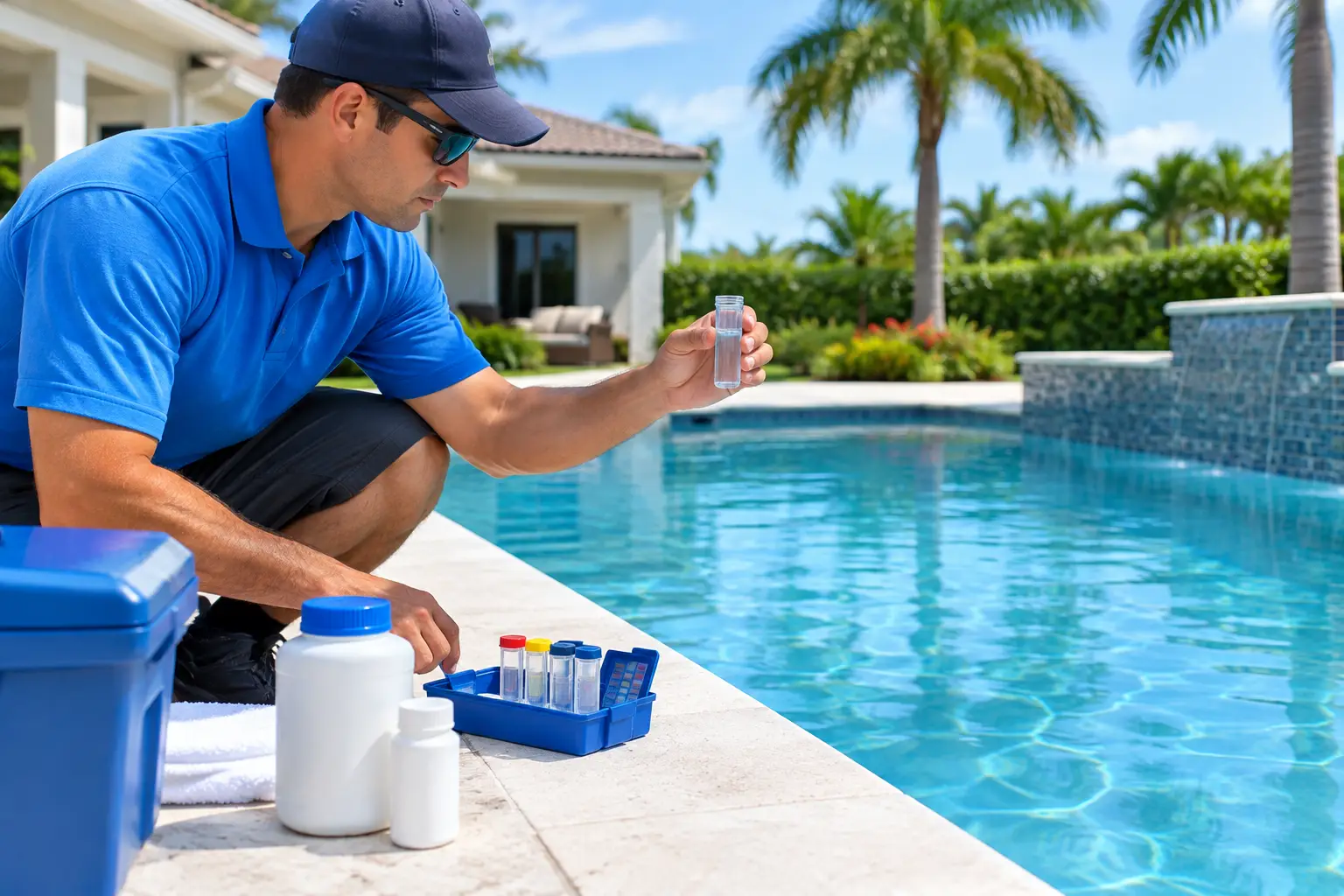
LED lighting itself needs little routine maintenance, but the pool around it still does. Balanced water chemistry helps protect fixture components and keeps the lens clear enough for the light to do its job. Scale, staining, algae and cloudy water can all reduce the effect of even a high-quality LED.
During regular pool service, it is useful to look for signs of a lighting issue: a dimmer-than-usual beam, an intermittent light, visible moisture, a loose face ring or a control that no longer responds as expected. Catching a small concern early is usually easier than waiting for the light to fail during an evening gathering.
For pools with salt systems, careful chemistry management is especially helpful. Saltwater pools are not maintenance-free, and poor balance can still be hard on metal components and equipment. Consistent testing and precise adjustments protect the whole pool environment, not just the light.
Planning the right upgrade for your pool
Before booking the work, think about how you actually use the space. Do you need clearer steps for young children? Do you want a brighter spa? Are you hoping to create a calmer evening setting, or do you want color scenes for entertaining? These answers help determine whether a straightforward white LED replacement, a color-changing system or a wider automation upgrade makes the most sense.
It also helps to set a realistic budget that includes any needed electrical repairs, transformer changes or control upgrades. The cheapest fixture is not always the best value if it is difficult to service or incompatible with the existing equipment. A clear assessment upfront prevents assumptions and helps the finished result feel right for the pool, not merely new.
At Turtle Pool Care, that assessment is approached with the same attention given to water chemistry and weekly equipment checks: explain what is there, identify what needs attention and recommend a practical path forward. A well-planned lighting upgrade gives your family more reasons to enjoy the water after sunset, with a pool that feels safe, welcoming and ready for the next swim.