A pool can look clear at breakfast and start turning dull, slippery or stubbornly green within days of Florida heat and rain. That is why consistent pool maintenance is less about reacting to a problem and more about stopping one before it interrupts a family swim, weekend plans or time with guests.
For homeowners, the goal is simple: water that is clean, safe and perfectly balanced, with equipment that quietly does its job. Achieving that takes more than dropping in a chlorine tablet when the water begins to look off. It takes a regular routine that accounts for debris, bather use, rainfall, sun exposure and the condition of the pool equipment.
What Weekly Pool Maintenance Should Cover
A proper weekly visit combines cleaning, water care and a close look at the system behind the scenes. Each task supports the next. Skimming leaves from the surface, for example, helps prevent debris from breaking down and consuming chlorine. Vacuuming removes the fine dirt that settles before it can stain surfaces or feed algae.
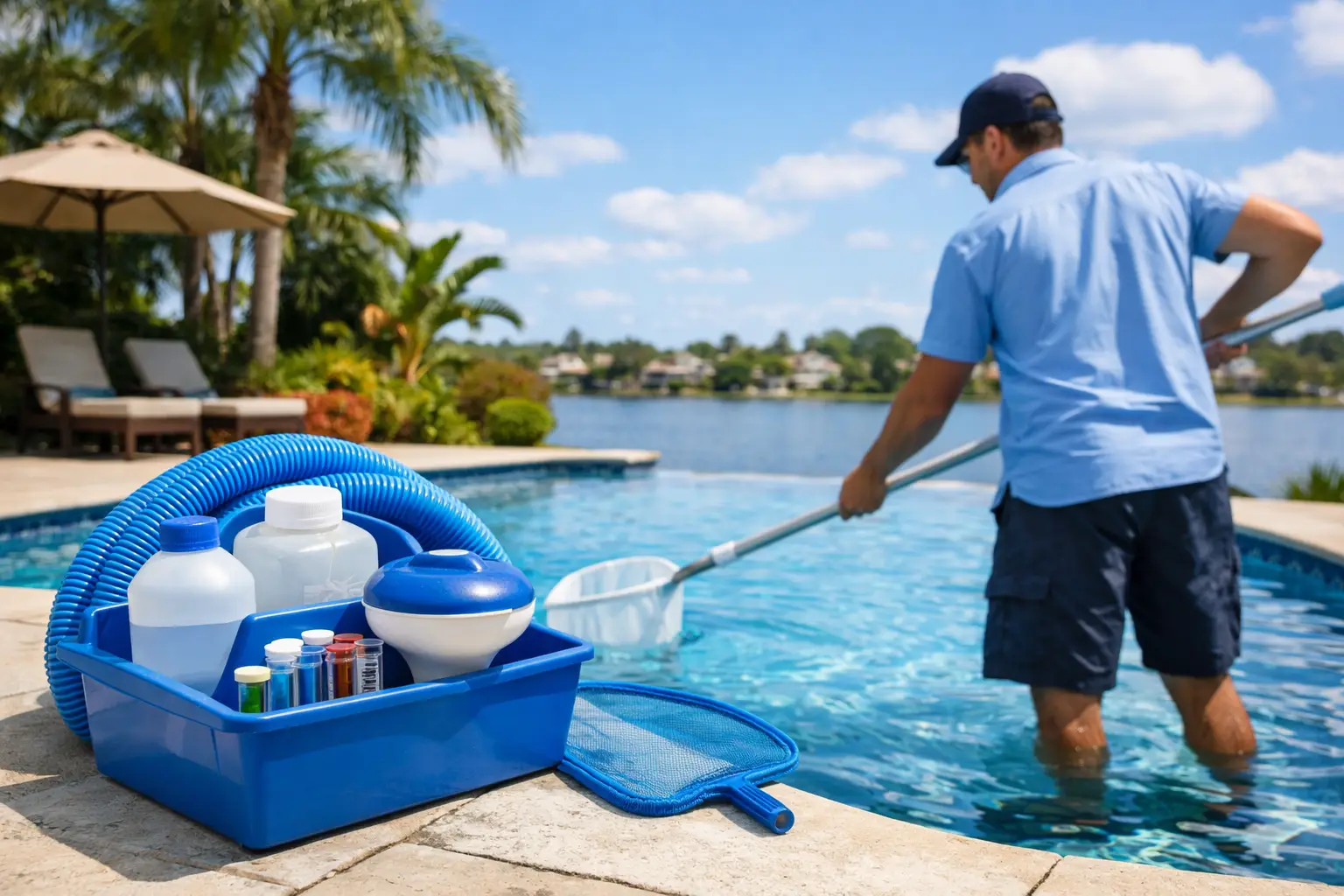
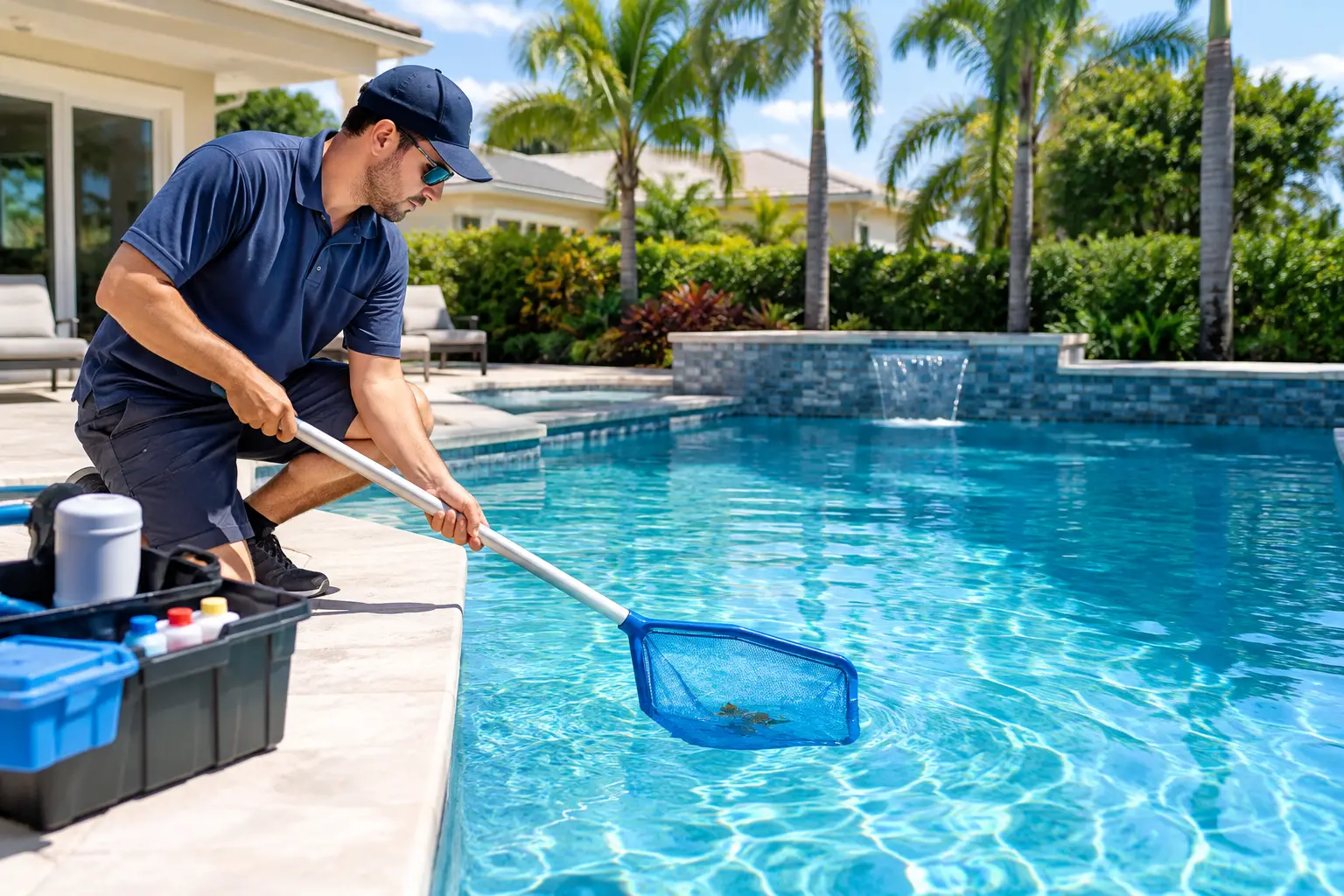
The visible work usually includes skimming, brushing steps, walls and tile lines, emptying baskets and vacuuming the pool. Brushing is especially valuable in corners, along waterlines and on textured finishes where algae can gain a foothold even when the water still appears clear. In communities surrounded by trees or open land, including The Acreage and Loxahatchee, wind-blown leaves, pollen and fine dust can make this step even more important.
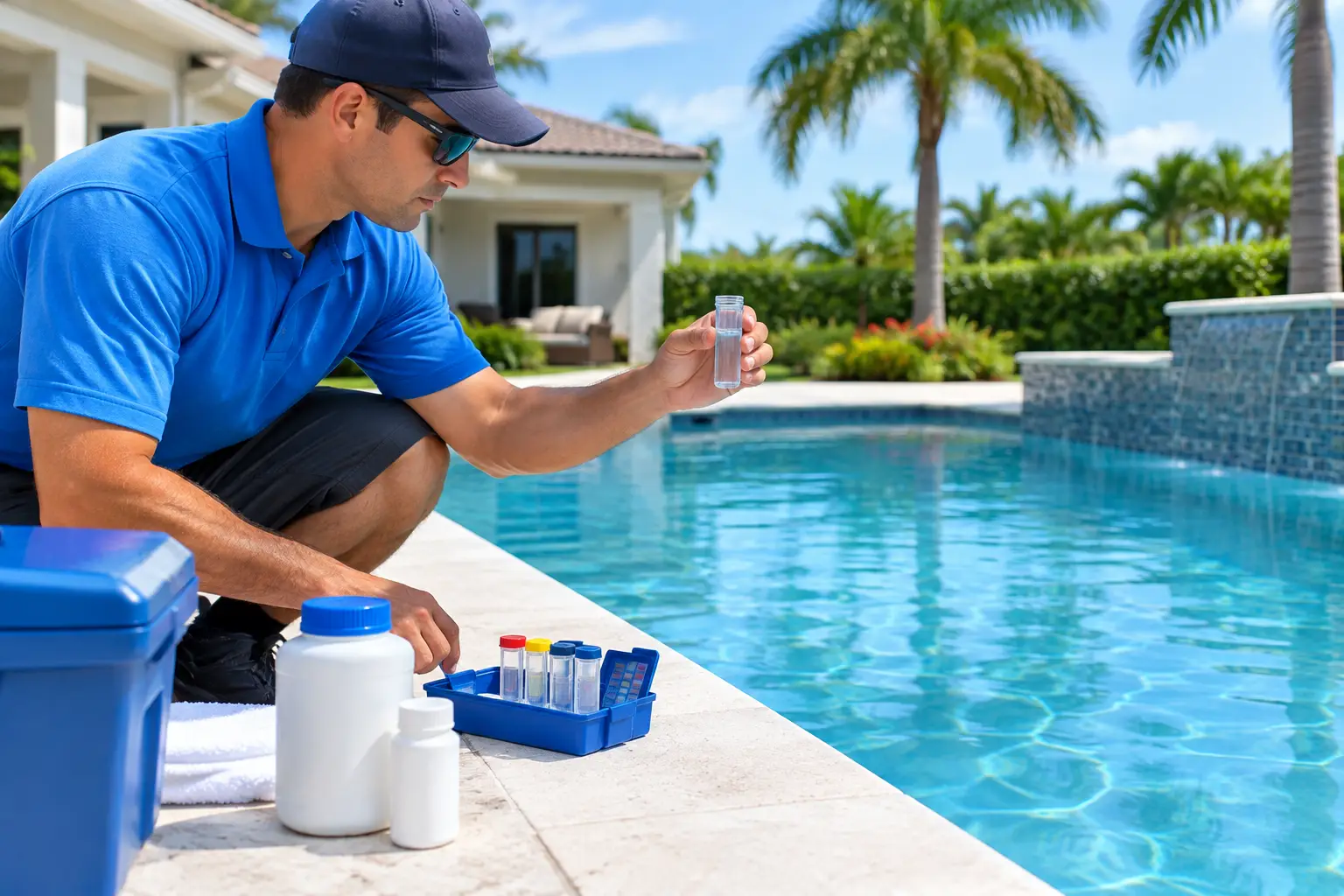
Water testing is the other half of the visit. Chlorine or another sanitizer must be available to manage contaminants, while pH, alkalinity and stabiliser levels need to work together. When one reading drifts, it can affect the others. Water may become irritating, cloudy or difficult to keep sanitised, and equipment can be exposed to unnecessary wear.
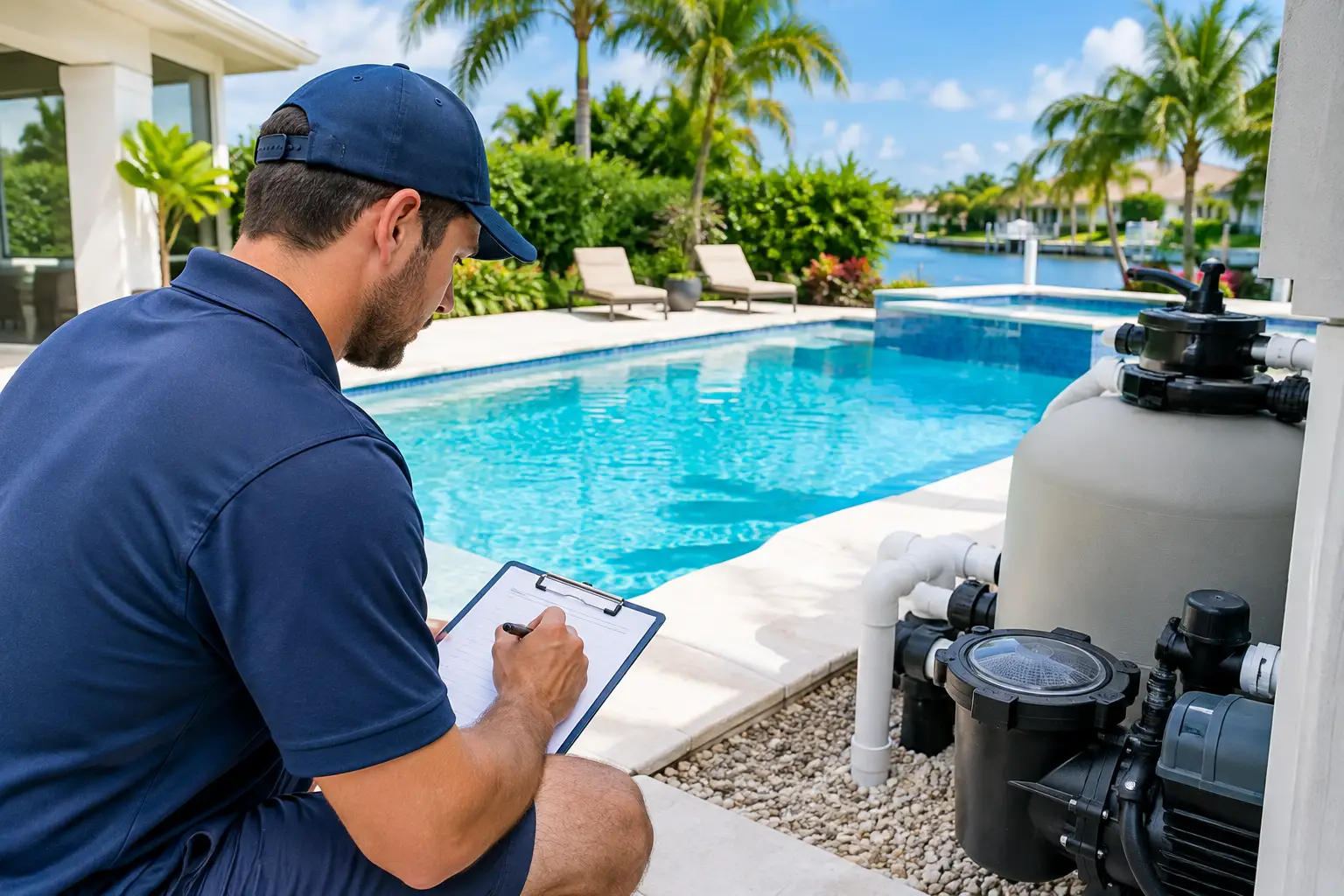
A technician should also inspect circulation. That means checking the pump, filter pressure, returns, cleaner operation and visible signs of leaks or unusual noise. Catching a weakening pump, clogged basket or small plumbing issue early is usually far less disruptive than discovering it after circulation has stopped altogether.
Why Florida Pools Need Consistent Attention
Palm Beach County pools work year-round. Strong sun burns through sanitizer, warm water encourages algae growth and sudden downpours can dilute chemicals while carrying organic debris into the pool. A pool that was balanced on Monday may not be balanced after a busy weekend and an afternoon storm.
This is why occasional cleaning is not the same as dependable care. A pool can be skimmed and still have poor chemistry. It can have acceptable chemistry and still suffer from weak circulation, an overloaded filter or algae beginning to form on a shaded wall. Reliable pool care looks at the full picture rather than treating the most obvious symptom.
Heavy use changes the picture, too. Children, guests, sunscreen and pets all introduce contaminants. There is nothing wrong with enjoying the pool often - that is what it is for - but higher use may call for additional testing or an adjustment between routine visits. The same applies after a major storm, landscaping work or a pool party.
The Water Chemistry Balance Homeowners Notice
Most homeowners do not need to memorise every chemistry target. They do, however, benefit from knowing the signs of imbalance and why quick fixes can backfire.
Low sanitizer can allow algae and bacteria to develop. Excessively high sanitizer can be uncomfortable for swimmers and may signal that the pool is not being managed efficiently. pH affects comfort, sanitizer performance and the potential for scale or corrosion. Total alkalinity helps keep pH from swinging too quickly, while calcium hardness and stabiliser influence how the water behaves over time.
The challenge is that adding more of one product is not always the right answer. If the pH is persistently high, for example, the reason could relate to alkalinity, water features, fill water or a salt system. If chlorine is disappearing rapidly, organic contamination or stabiliser levels may be part of the cause. Good service is measured adjustment based on testing, not guesswork with chemicals.
That precision protects more than the water. Balanced chemistry helps preserve plaster, tile, metal fittings, heaters and salt cells. It also helps the pool feel inviting rather than harsh on skin and eyes.
Clear Water Does Not Always Mean Healthy Water
A sparkling pool is reassuring, but appearance alone cannot confirm that it is safe to swim in. Early algae growth can be hiding on surfaces, and water can look fine while its pH or sanitizer level sits outside the ideal range.
Conversely, a cloudy pool is not always an algae emergency. It may be related to filtration, fine debris, poor circulation or a chemical imbalance. The right response depends on the test results and equipment condition. Treating every cloudy pool with a large chemical dose can create a new imbalance while leaving the underlying issue unsolved.
Equipment Care Prevents Expensive Interruptions
Your pump, filter and plumbing keep the pool from becoming a still body of water. When circulation falls off, debris settles, sanitizer does not distribute properly and algae has a better chance to take hold. Routine checks make it easier to spot changes in performance before they become a breakdown.
Pump baskets should be cleared as needed, while filters require cleaning on a schedule suited to the type of filter, surrounding debris and pressure readings. Cleaning too rarely restricts flow. Cleaning certain filters too aggressively or too often can also reduce their effectiveness, so the right approach depends on the equipment installed.
Keep an eye out for air bubbles at the returns, a pump that loses prime, dripping equipment, a sudden rise in energy use or a new grinding sound. These can point to issues such as a suction-side air leak, worn seals, a blocked line or a failing motor. Modern variable-speed pumps, LED lighting and automation can improve efficiency and convenience, but they still need skilled installation and occasional maintenance.
When a Pool Needs More Than Weekly Service
Weekly care keeps a healthy pool on track. It does not always solve a pool that has been neglected for weeks, has turned green or has undergone a major change in use or condition.
A green-to-clean treatment may involve removing heavy debris, restoring circulation, correcting water chemistry, treating algae and repeatedly monitoring progress. The recovery period depends on how severe the algae is, the condition of the filter and whether the water can hold an effective sanitizer level. It is not always a one-visit solution, and honest expectations matter.
Newly built and resurfaced pools need a different level of attention. Fresh plaster goes through a curing process, and the first 28 days are critical for brushing, balancing and preventing staining or surface issues. Skipping that structured start-up care can affect the appearance and longevity of an expensive new finish.
Make Pool Care Easy to Verify
Trust matters when someone is caring for your home and water each week. Clear communication makes that trust practical. Visit notifications, a record of tested chemistry, notes on work completed and photographs of the pool give homeowners a useful view of what is happening between swims.
It also creates a better service relationship. If a technician spots a small repair, recurring debris issue or changing water demand, you can discuss it before it becomes urgent. A dependable provider should explain what they found, what they corrected and what, if anything, needs attention next.
Turtle Pool Care brings that family-owned accountability to weekly cleaning, water balancing, repairs, upgrades and recovery work, so homeowners can spend less time second-guessing their pool and more time enjoying it.
The best time to address a pool concern is when it is still small: a little cloudiness, a louder pump, a patch that needs extra brushing or chemistry that will not hold. Consistent attention keeps those small signals from stealing a sunny afternoon.