A newly resurfaced pool can look finished the moment the crew leaves, but pool plaster curing has only just begun. Those first 28 days have a major effect on how smooth, even and durable the surface remains for years to come. In Palm Beach County's heat, fresh plaster and water chemistry can change quickly, so a structured start-up is not a detail to leave to chance.
Fresh plaster is a cement-based finish. It continues to hydrate and harden after it is applied, while the pool water draws minerals from the surface and receives dust created during the early curing period. The goal is not simply to keep the water clear. It is to protect the new finish from staining, scaling, etching and uneven color while it gains strength.
Why the first 28 days matter
New plaster is more reactive than established plaster. During the first few weeks, it naturally raises the pH of the pool water as calcium hydroxide moves from the surface into the water. If that pH rise is not monitored and corrected, calcium can fall out of solution and leave a rough, cloudy deposit known as scale.
At the other extreme, water that is too aggressive can pull calcium from the plaster. That may leave the finish etched, mottled or prematurely worn. Neither problem is always obvious on day one. A pool may look bright and blue while the chemistry is quietly creating a surface issue that becomes harder to correct later.
The Florida climate adds another layer. Warm water, strong sun and regular rain can alter pH, chlorine and alkalinity faster than many homeowners expect. A proper 28-day start-up gives the water and plaster the close attention they need before the pool settles into a normal weekly maintenance routine.
Pool plaster curing starts with the fill
The filling process is the first critical step. Once filling begins, the water level should rise continuously until it reaches the middle of the skimmer opening. Stopping the fill part-way can create a visible waterline or ring on the fresh surface. It is best to use clean source water and avoid letting a hose sit directly against the plaster, where concentrated flow could mark the finish.
Do not turn on the circulation system until the water is high enough for safe operation. Running a pump without adequate water can damage the equipment, while trying to circulate too soon does nothing to improve the curing process.
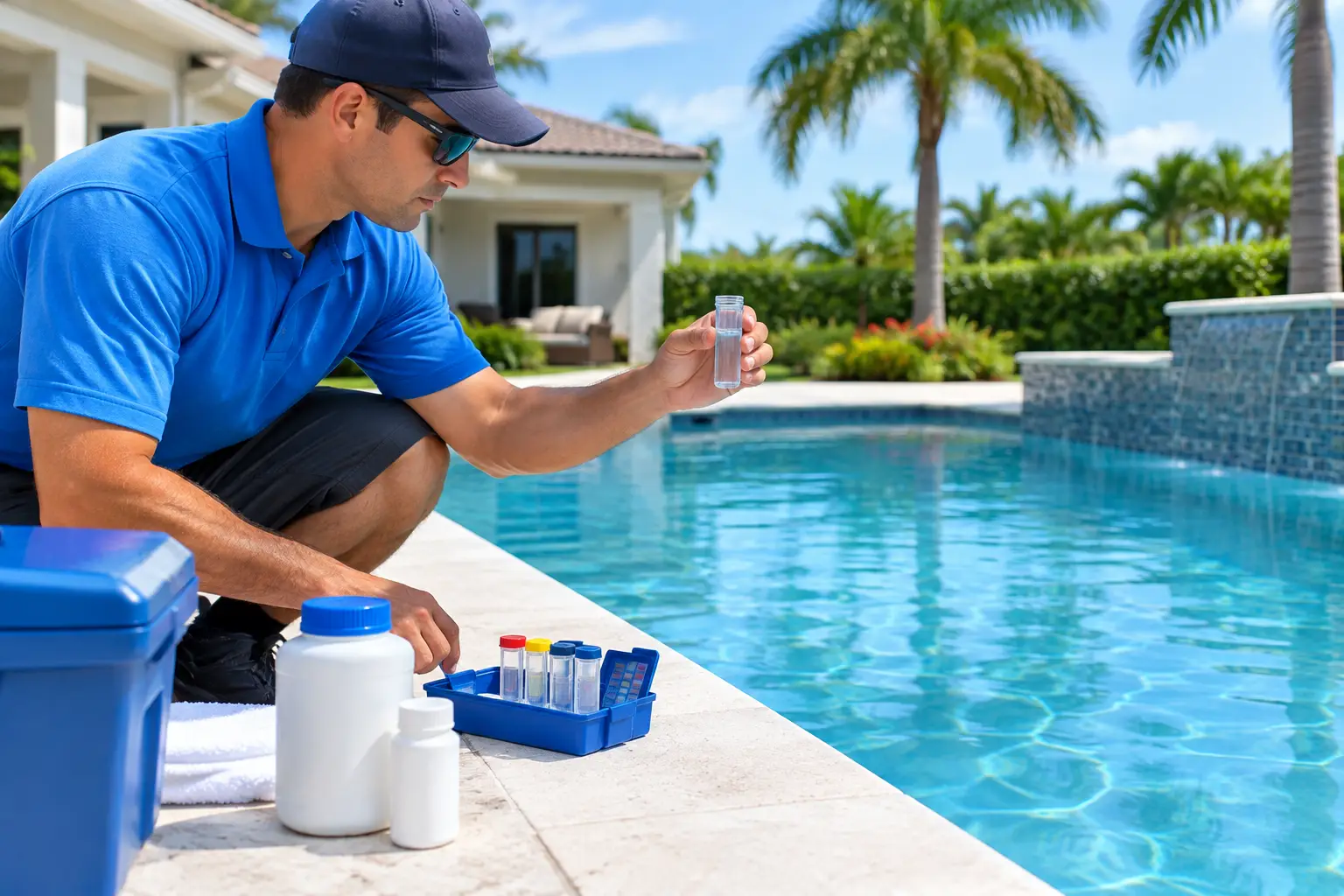
As soon as the pool is full, the equipment should be checked and the water tested. The first readings establish the starting point for pH, total alkalinity, calcium hardness, metals and sanitizer demand. The exact treatment plan depends on the water source, plaster type and finish manufacturer instructions. Standard white plaster, colored plaster, quartz finishes and pebble finishes do not all receive the same start-up recommendations.
Brushing is not cosmetic work
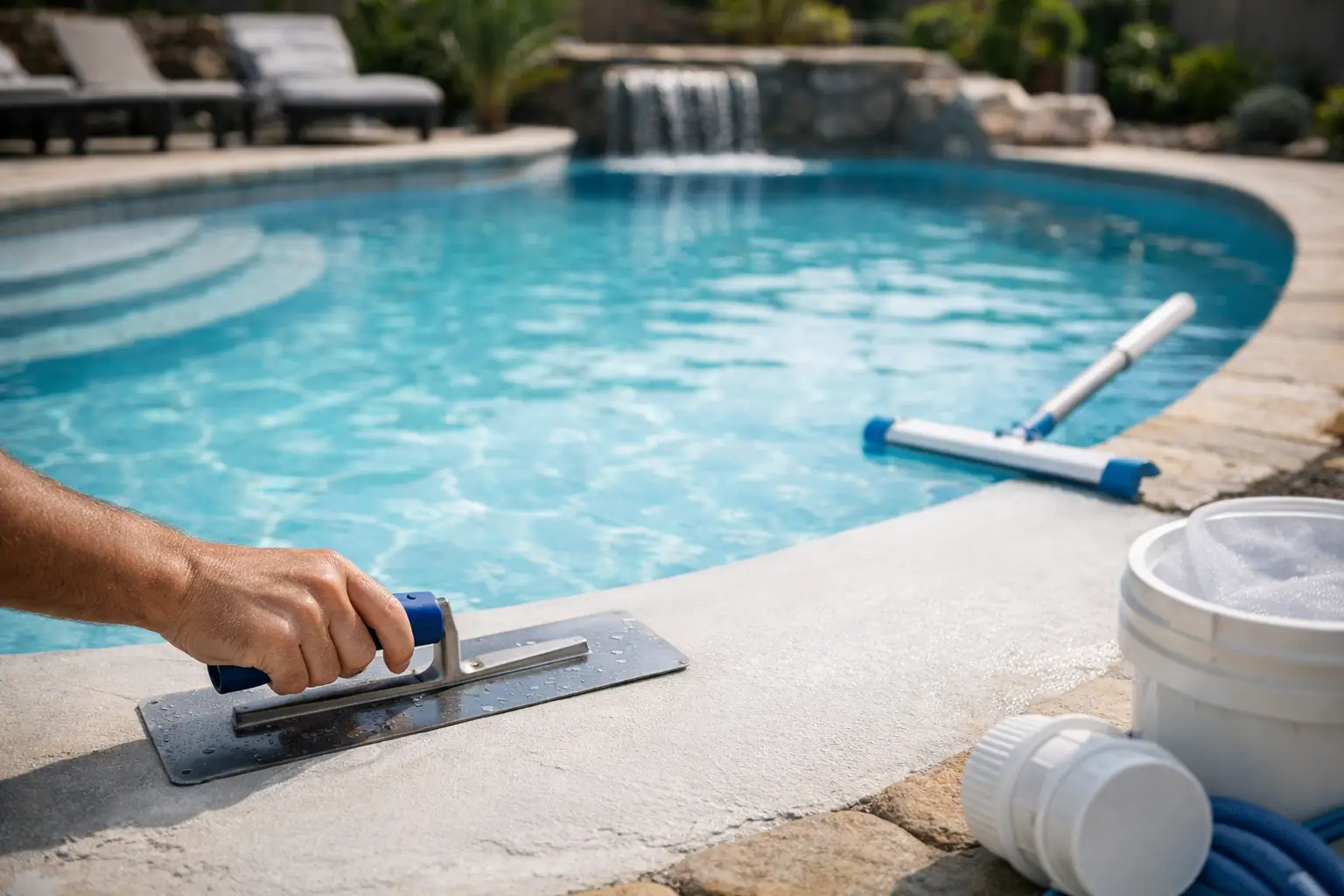
Daily brushing is one of the most valuable parts of a new-pool start-up. It removes plaster dust before it can settle, harden or contribute to a rough surface. It also keeps the finish looking more even as it cures.
For many fresh plaster surfaces, brushing is typically carried out twice daily during the early stage, then once daily through the remainder of the 28-day period. Use a brush suitable for the finish. A standard plaster surface generally needs a different brush from a more delicate aggregate or polished finish, so follow the installer’s guidance rather than assuming one brush suits every pool.
Brush walls from the waterline down towards the main drain, then brush steps, benches, coves and other areas where dust gathers. Corners and shallow ledges deserve extra attention because circulation is often weaker there. The aim is to move fine material into suspension so the filtration system can remove it, not to sweep debris into one stubborn pile.
Vacuuming may also be needed as plaster dust collects. A careful professional approach matters here. Aggressive cleaning methods or unsuitable equipment can damage a fresh surface that has not fully hardened.
Keep water chemistry stable, not just sanitised
A new pool needs active chemical management, often with testing and adjustments every day at the beginning. The chemistry must be balanced gradually and precisely. Large swings are not helpful, even if a quick correction seems convenient.
pH deserves particular attention because fresh plaster tends to push it upward. A technician may need to lower it carefully and repeatedly while monitoring total alkalinity and calcium hardness. These values work together. Adjusting one number without considering the others can create water that is scale-forming or aggressive.
Sanitizer is still necessary, especially in warm Florida weather, but the method and timing matter. Fresh plaster should not be exposed to concentrated chlorine products resting on the surface. Chemicals should be added in the correct manner, with circulation running where appropriate, and never tipped into a single spot where they can bleach or mark the finish.
Some products and equipment are commonly delayed during the curing window. Salt should usually not be added immediately to a new plaster pool, and heaters may be kept off early in the process because elevated water temperatures can affect curing and chemistry. The exact timetable should come from the finish manufacturer and the pool professional overseeing the start-up. If the pool has a salt system, automation or a variable-speed pump, those settings should be reviewed as part of the plan rather than guessed at.
What homeowners should avoid during curing
The temptation to enjoy a brand-new pool straight away is understandable. Still, giving the finish time and following the start-up guidance is the better investment. Swimming restrictions vary by finish and installer, but it is wise to wait for clear approval before regular use, pool parties or heavy bather loads.
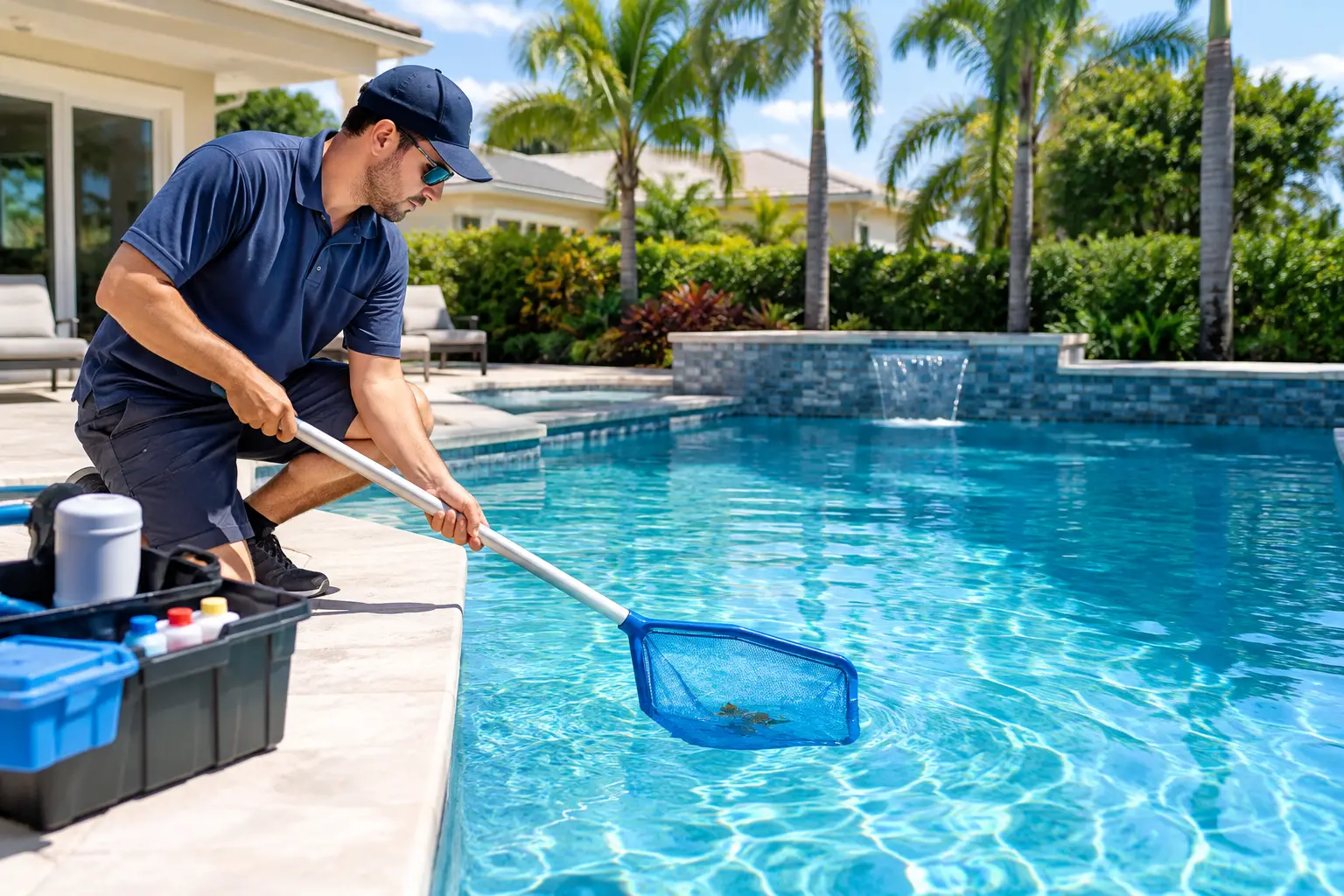
Avoid introducing anything that may stain, scratch or upset the water balance. That includes leaving metal objects in the pool, allowing leaves to sit on the surface, using floating chemical dispensers without professional advice, or adding decorative items that can release metals. If lawn work or building work is continuing around the pool, keep soil, mulch, fertiliser and construction dust out of the water.
It is also sensible to postpone automatic cleaner use unless the manufacturer or start-up technician has confirmed it is safe. Wheels, hoses and moving parts can disturb fresh plaster or leave tracks before the finish has properly cured.
Signs that need a prompt check
Some color variation and plaster dust can be normal in the early days, particularly as the surface is wet and still settling. However, unusual changes should be reported promptly rather than covered up with extra chemicals.
Cloudy water that does not improve, persistent staining, a rough or gritty feel, obvious scale, strong chemical odours or rapidly changing test readings all deserve attention. So does an unexplained drop in water level, which may indicate a plumbing issue rather than evaporation. Early action is usually simpler and less costly than trying to correct a set-in surface problem weeks later.
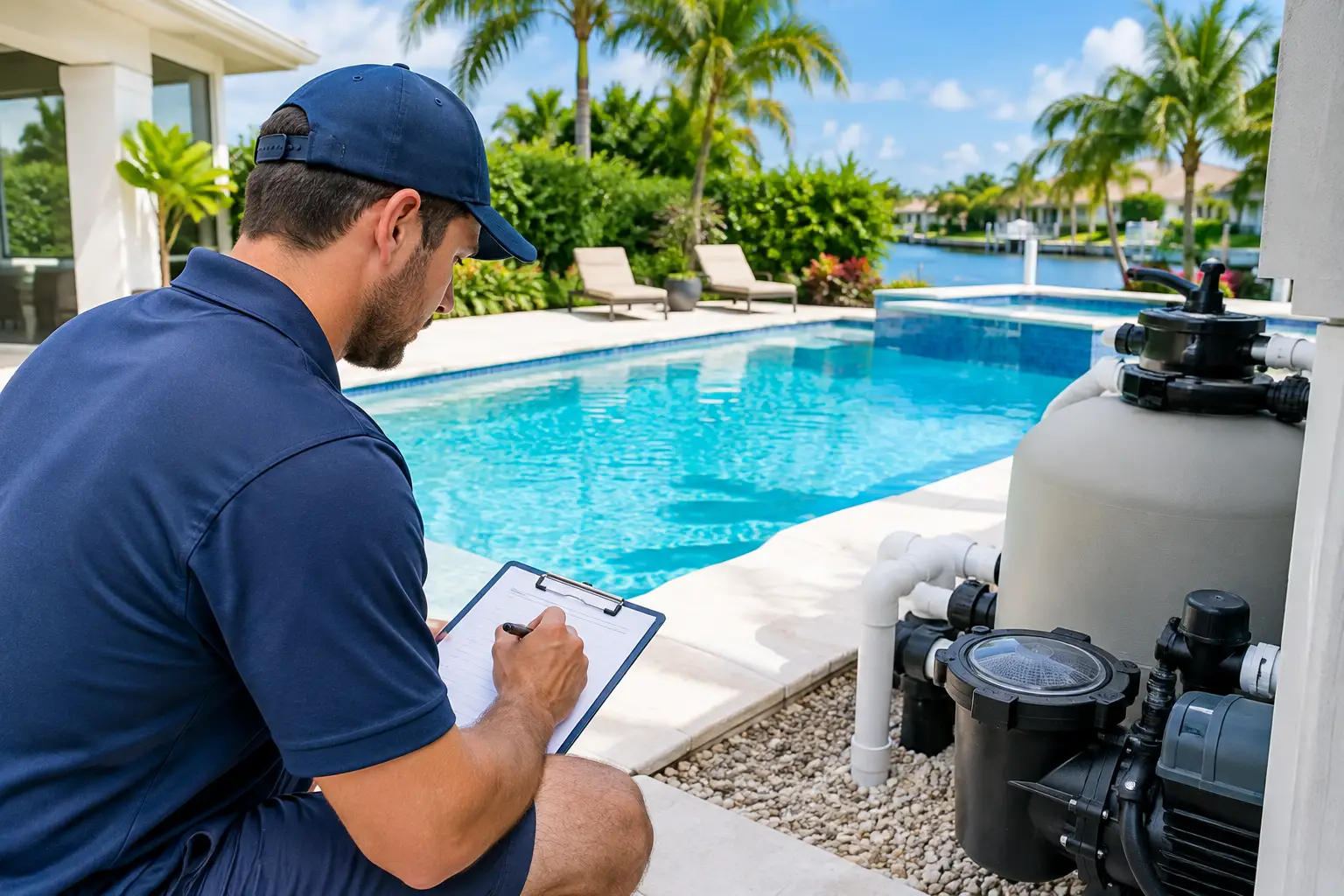
A documented start-up service provides useful reassurance here. Regular test results, notes on treatments, equipment checks and photos create a clear record of how the pool was cared for during its most sensitive period. For homeowners, that means fewer unknowns and more confidence that the surface is receiving the attention promised by the resurfacing investment.
A professional 28-day start-up takes pressure off
The first month asks more of a pool than ordinary weekly cleaning. It may require frequent visits, repeated brushing, water testing, measured chemical additions, filtration checks and close observation of the finish. Missing a few days can matter when pH is rising quickly or plaster dust is building up.
Turtle Pool Care’s 28-day pool start-up program is designed around those early needs, helping homeowners protect a resurfaced or newly built pool while establishing safe, balanced water chemistry. Detailed service reporting and photographic proof of work make it easier to see what has been completed and how the pool is progressing.
Once the curing period is complete, the pool can move into a dependable maintenance rhythm. Until then, treat every brush, test and careful adjustment as part of giving your new finish the best possible start - and the turtly clean look it deserves for many Florida seasons ahead.