A pool that looks clear can still be asking for help. A pump that sounds slightly louder, a light that flickers, or a water level that keeps falling may seem minor, but early pool repair often prevents a costly equipment failure, damaged surface, or a frustrating spell without a swim-ready pool.
For Florida homeowners, equipment works hard through long warm seasons, heavy rain, falling debris and frequent use. Knowing which changes need quick attention helps protect the pool you enjoy with family and friends, while keeping water safe and perfectly balanced.
When pool repair should move to the top of the list
Not every issue requires an emergency call-out. A small adjustment to run times after a weather change is very different from a pump that will not start. The key is to notice patterns rather than waiting for a complete breakdown.
If the circulation system is not moving water properly, chemistry becomes harder to control. When chemistry becomes difficult to control, algae and staining can follow. That is why a repair concern is rarely just about one noisy part. It can affect the cleanliness, safety and appearance of the whole pool.
Your pump is noisy, leaking or losing power
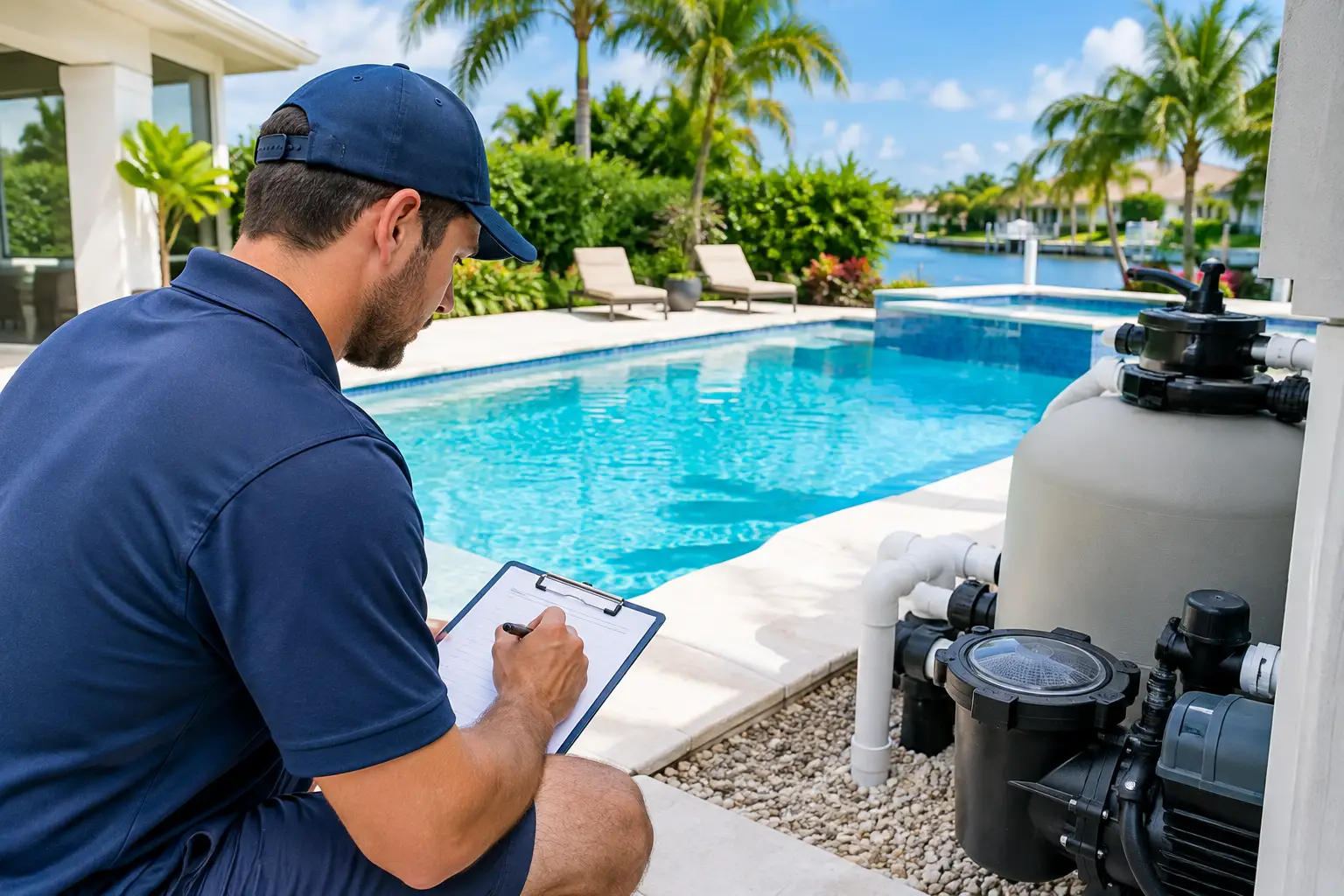
The pump is the heart of the circulation system. It sends water through the filter and back to the pool, helping sanitizer reach every area. A steady operating hum is normal. Grinding, screeching, rattling, repeated priming problems, or a pump that shuts itself off are not.
A small drip around the pump, pipe fittings or seal plate also deserves attention. Leaks can worsen over time, waste water and place extra strain on the motor. In some cases, a worn seal, failing capacitor or blocked impeller can be repaired. In others, especially with an older, inefficient motor, replacement may be the better long-term value.
It depends on the equipment’s age, condition and energy use. A careful assessment should look beyond the immediate fault and explain whether repair or an upgrade makes better sense for your household.
The pool is losing more water than usual
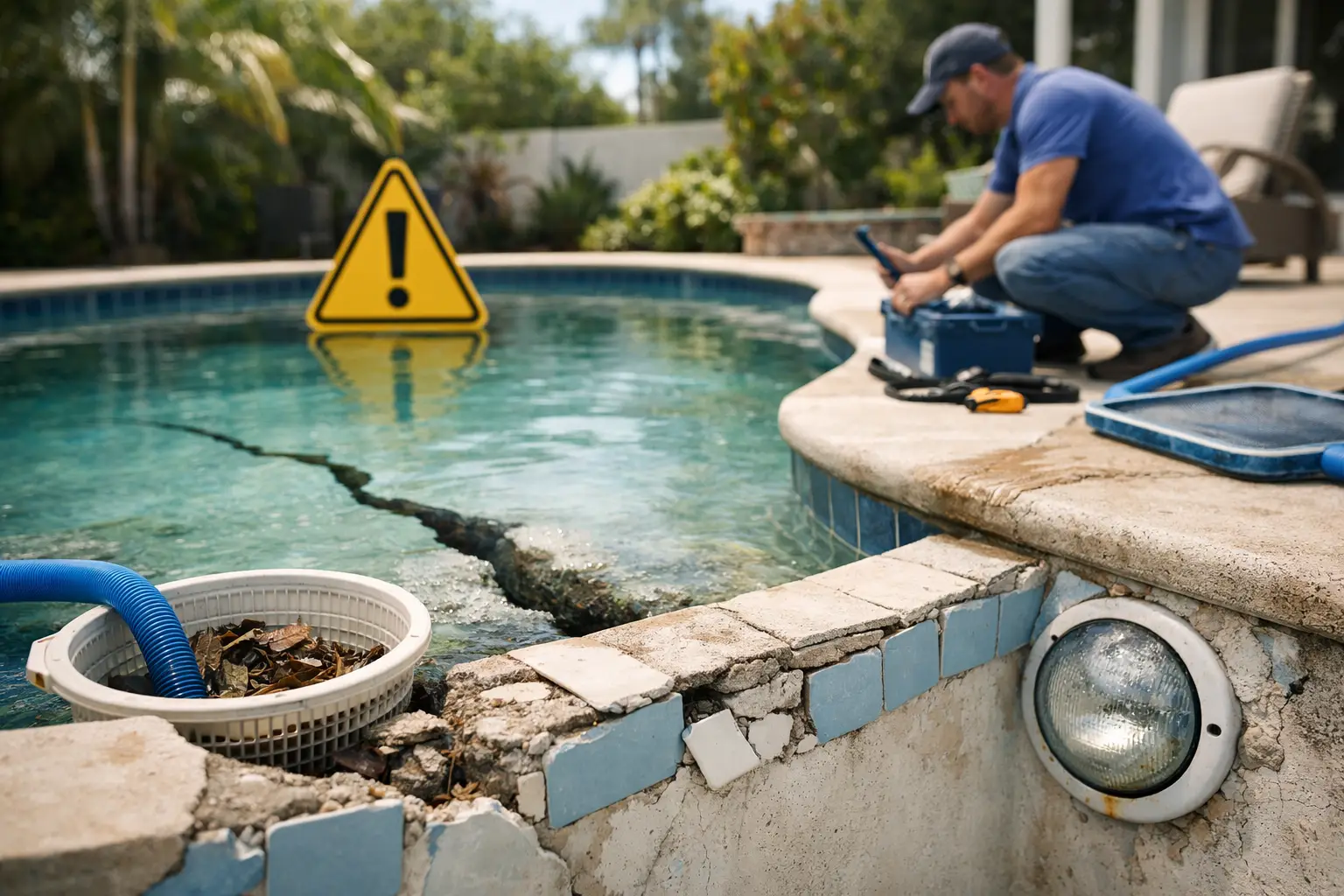
Water naturally evaporates in Palm Beach County, particularly during hot, dry or windy weather. However, a pool that needs frequent topping up, has a consistently low waterline, or develops soft, wet ground near plumbing may have a leak.
Do not assume every water-loss issue is evaporation. A leak can come from plumbing, a fitting, a skimmer, the shell, or equipment at the pad. It may also draw air into the system, creating bubbles from the return jets and making circulation less effective.
Addressing the source early helps avoid structural complications and reduces the amount of fresh water and chemicals needed to keep the pool balanced. More water is not always the answer when the level drops.
The filter pressure has changed
Pressure gauges provide a useful clue about what is happening inside the system. High pressure can point to a dirty filter, a blocked line or restricted flow. Unusually low pressure can indicate a suction-side leak, a clogged pump basket, a blockage before the pump, or an issue with the pump itself.
A clean filter is essential, but cleaning it too often or incorrectly can create its own problems. Cartridge filters, sand filters and diatomaceous earth filters each need different care. If pressure changes keep returning shortly after routine maintenance, the cause may be equipment-related rather than simply a dirty filter.
Lights flicker, trip the breaker or stop working
Pool lighting makes evening swimming safer and turns the water into part of your outdoor living space. Modern LED lights can also use less energy and offer reliable color and brightness options. But electricity and water require professional attention.
A light that flickers, fills with water, trips a breaker, or fails to switch on should not be ignored. The problem may be the fixture, transformer, wiring, switch or automation controls. Avoid attempting electrical repairs yourself. A qualified pool professional can identify the pool-side issue and advise when a licensed electrician is needed.
Why water problems can point to equipment trouble
Cloudy water, recurring algae or stubborn chemical readings are not always caused by poor water care. They can be signs that water is not circulating, filtering or sanitising as it should.
For example, if a pump is running for too few hours, has reduced flow, or is pulling air, sanitizer may not distribute effectively. A neglected filter can allow fine debris to remain suspended, leaving water dull even after it has been treated. A malfunctioning salt system, heater bypass or automation setting can also affect the chemistry routine.
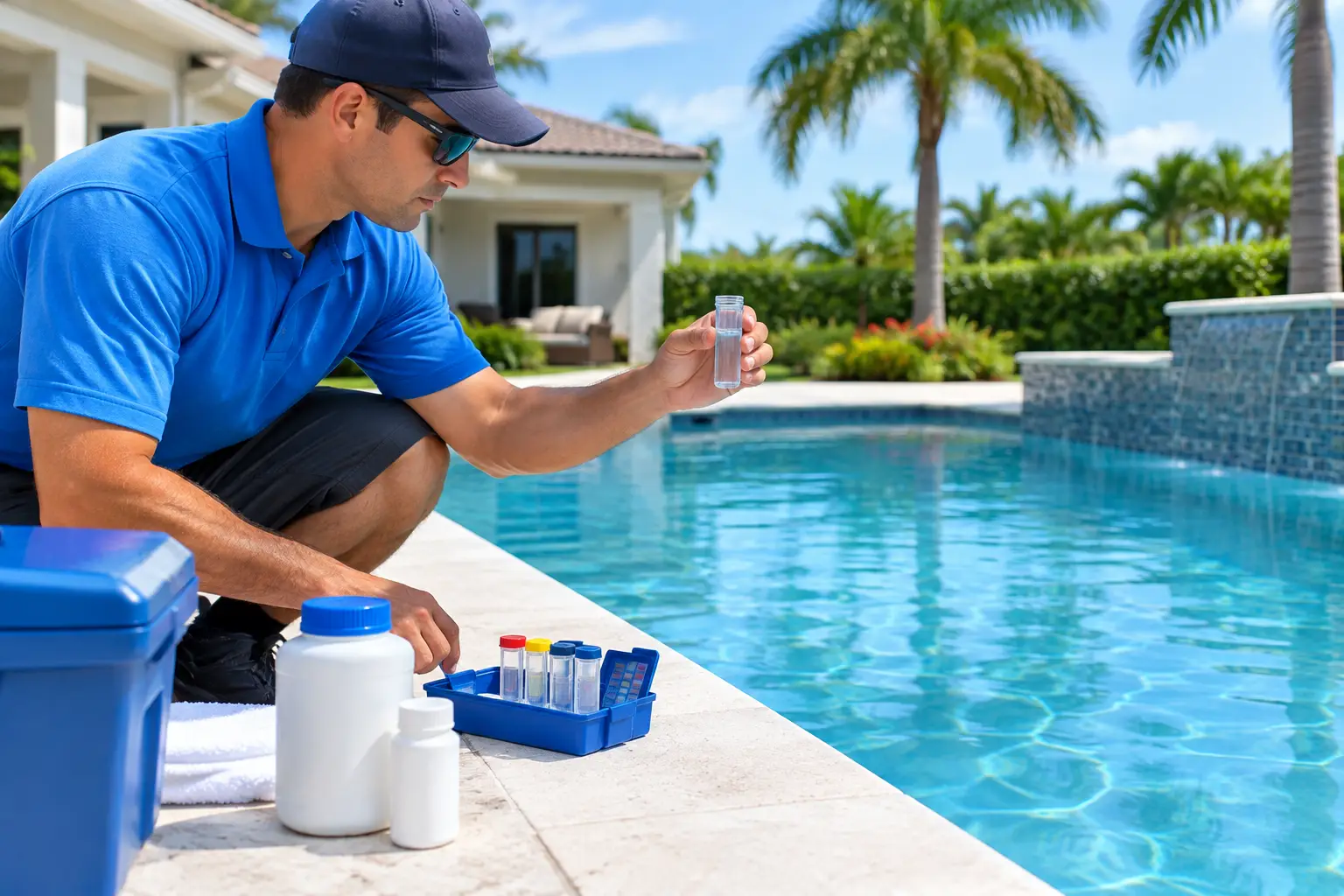
This is why adding more chemicals without checking equipment can be an expensive guessing game. Proper pool care starts with testing the water, inspecting circulation and determining why the reading is out of range. The goal is not to chase numbers. It is to restore stable conditions so the pool stays truly clean between visits.
Pool repair after storms, algae or long periods of neglect
Heavy rain can dilute chemical levels, overload baskets with debris and wash contaminants into the water. After a storm, check that the water level is not too high, empty skimmer and pump baskets if it is safe to do so, and look for visible damage around the equipment pad. If the water has turned green or the pump is struggling, prompt service can keep recovery more manageable.
A green pool does not always mean the equipment has failed, but it should be inspected as part of the recovery process. Algae can clog filters, conceal surface issues and rapidly consume sanitizer. An intensive green-to-clean treatment works best when circulation, filtration and chemistry are addressed together.
Similarly, a pool left unattended during a holiday, property renovation or home purchase may need more than a standard clean. The filter, pump, timers, valves and lighting should be checked before anyone assumes the pool is ready for use. Clear water alone is not proof of safe, balanced water.
Repair, replacement or an upgrade?
A good pool repair decision considers more than the first price quoted. Replacing a single worn part can be sensible when the wider system is in good condition. Yet repeatedly repairing an ageing pump or unreliable control system may cost more over time than choosing modern equipment.
Variable-speed pumps are a common example. They typically cost more upfront than single-speed options, but can use considerably less energy when correctly sized and programmed. Automation can simplify run times, lighting and selected features, although it is most useful when it matches how your family actually uses the pool. There is little value in adding complicated controls that nobody feels comfortable operating.
Ask clear questions before approving work: what caused the fault, what repair is proposed, how long should it reasonably last, and are there alternatives? Straightforward answers make it easier to choose confidently.
How weekly service helps prevent avoidable repairs
Some failures cannot be predicted. Motors, seals and electronics eventually wear out. Regular, attentive service can still catch many warning signs before they develop into bigger disruptions.
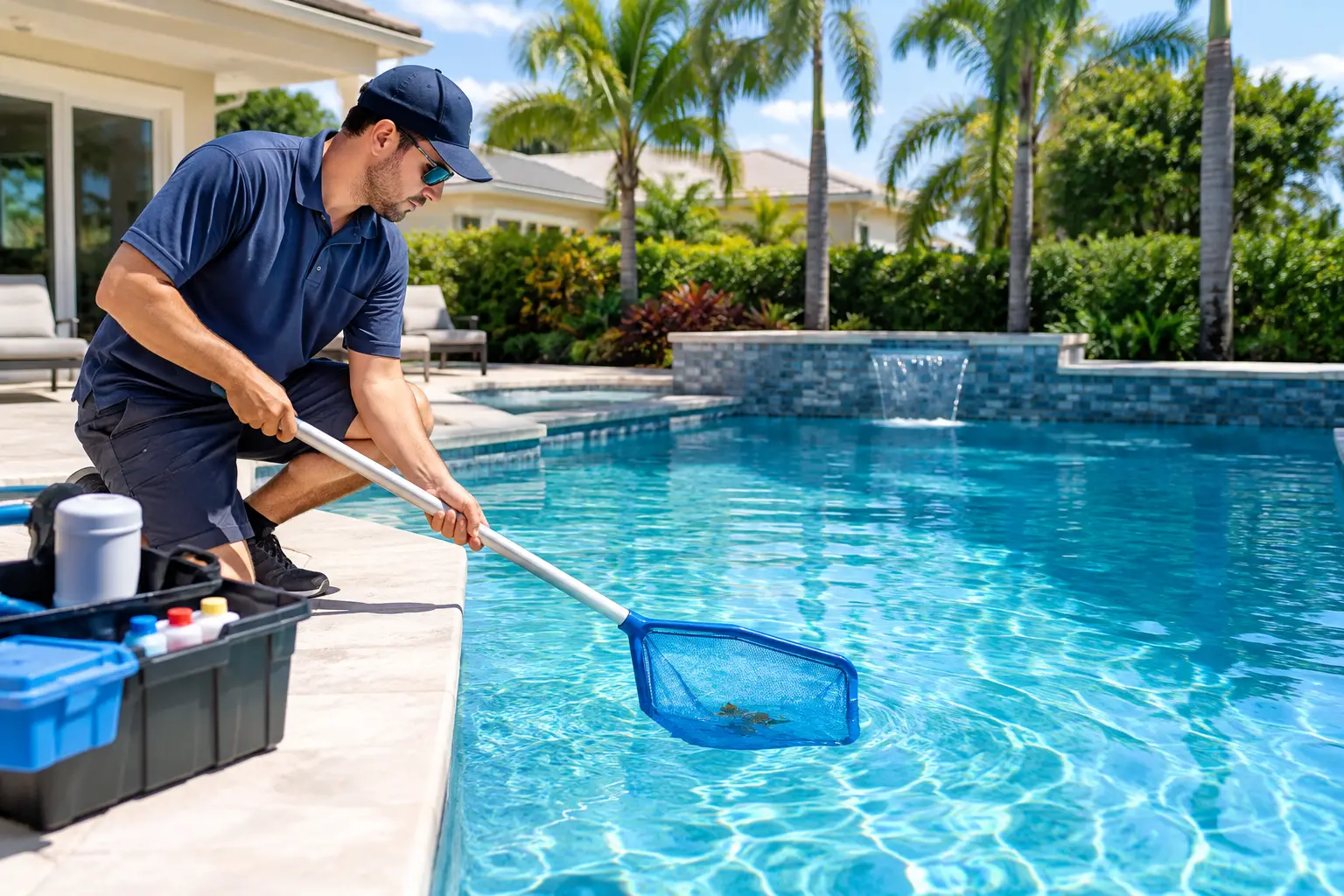
During a proper weekly visit, the pool should be skimmed and vacuumed, baskets cleared, equipment checked, and water tested and balanced with precision. The technician should notice changes in pressure, flow, sounds, leaks and water clarity. Consistent records are useful too, because a one-off reading means less than a trend over several weeks.
For homeowners in Wellington, Royal Palm Beach, Westlake, The Acreage and nearby communities, documented service reports and photos offer reassurance that the pool has been cared for, not simply glanced at. They also create a clearer history if an equipment concern develops.
Give small warning signs the attention they deserve
Your pool should feel like the easy part of Florida living, not another system waiting to cause a weekend headache. If the water will not stay clear, equipment sounds different, or a familiar routine suddenly changes, arranging an inspection sooner can protect both your investment and your peace of mind. A timely repair keeps the focus where it belongs: enjoying a clean, safe pool with the people you invited over.