A sparkling pool can still present a risk if a gate is left unlatched, the water chemistry drifts, or an adult assumes somebody else is watching. Proper pool safety is not one product or one rule. It is a set of everyday layers that make your pool easier to enjoy with confidence, whether children are practising their jumps, friends are visiting for lunch, or the family is taking an evening swim after a hot Florida day.
For homeowners, the goal is simple: keep the pool truly clean, properly maintained and protected by routines that work even when life gets busy.
Pool safety starts before anyone enters the water
The most effective protection is a properly maintained barrier around the pool. A fence, self-closing gate and self-latching mechanism create a physical pause between a child and the water. That pause matters. It gives adults time to notice, respond and prevent an unsupervised entry.
Walk the pool perimeter regularly, especially after storms, garden work or a busy weekend. Check that gates close fully from any open position, latches are not loose or obstructed, and furniture, bins or planters cannot be used as climbing aids. If you have a screen enclosure, inspect its doors too. A screened area may keep out leaves and insects, but it should never be treated as a substitute for a secure pool barrier.
Pool alarms, door alarms and safety covers can add useful protection. They are extra layers, not replacements for fencing and attentive supervision. The right combination depends on the layout of your home, the ages of children who visit, and how often the pool area is used.
Make supervision a clear responsibility
At a family gathering, everyone can assume someone else has an eye on the water. That is when supervision becomes vague. Instead, name one responsible adult as the designated water watcher whenever children or weaker swimmers are in or near the pool.
That person should stay poolside, avoid alcohol and put away the phone. A quick reply to a message can become far longer than intended, particularly when children are playing quietly. For larger gatherings, rotate the role deliberately so nobody is expected to remain alert for hours.
Floaties, inflatable loungers and pool toys are fun, but they can create a false sense of security. They are not life-saving devices, and toys left in the water can draw a child back to the pool after swimming has ended. Clearing the water and securing the gate should be part of the same end-of-swim routine.
Keep the water safe, not just clear
Clear water is reassuring, but appearance alone does not tell you whether the chemistry is safe. Water that looks bright can still have an unsuitable sanitizer level, an incorrect pH, or a developing balance issue that causes irritation and affects equipment.
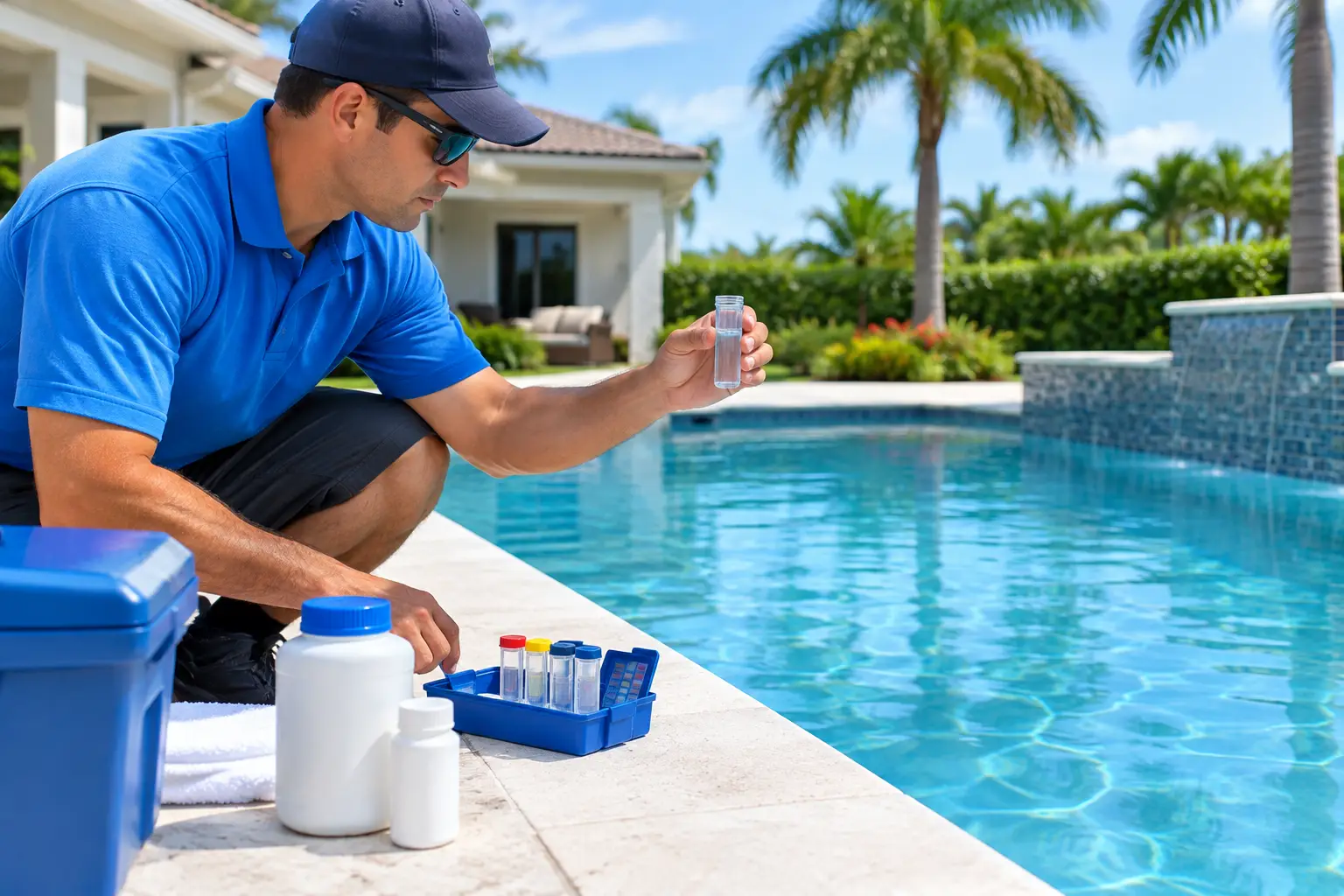
Consistent testing and precise chemical balancing protect swimmers as well as the pool itself. Sanitizer works to control bacteria and algae. pH affects swimmer comfort and how efficiently sanitizer performs. Total alkalinity, calcium hardness and stabiliser levels all influence how predictable that chemistry remains, particularly under Florida sun and heavy rain.
Avoid the temptation to add chemicals by guesswork. More is not always better. Overcorrection can leave water uncomfortable, damage surfaces or create another imbalance to solve. If the water turns cloudy, green, foamy or unusually strong-smelling, pause swimming until the cause has been identified and corrected. A heavy chlorine smell often signals that the water needs attention, not that it has been thoroughly sanitised.
New plaster pools require particular care. During the curing period, changing water conditions can affect the finish as well as swimmer comfort. A structured start-up program keeps brushing, circulation and chemistry on track while the surface settles.
Treat circulation equipment as a safety essential
Your pump, filter and drains do more than keep the pool attractive. Good circulation distributes sanitizer, filters debris and helps prevent stagnant areas where algae can take hold. When equipment is neglected, water quality can change quickly.
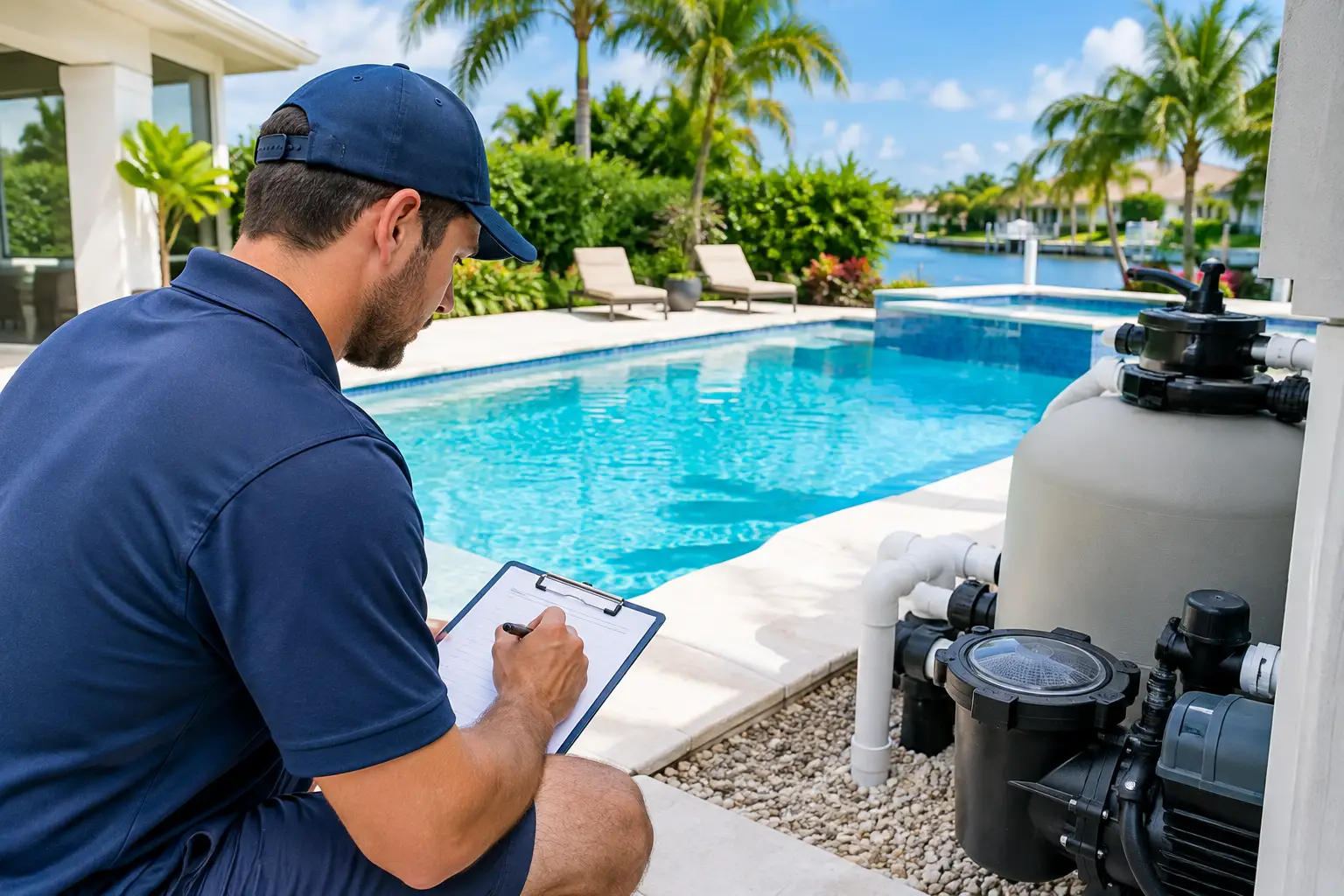
Listen for new pump noises, watch for reduced return flow, and take note if the pressure gauge reads unusually high or low. A clogged basket, dirty filter, air leak or failing pump may begin as a small issue, but it can soon affect water clarity and chemistry. Regular equipment checks during weekly service make these changes easier to catch early.
Drain safety deserves special attention. Main drains and suction fittings should have compliant, secure covers in good condition. A damaged, missing or loose cover can create an entrapment hazard. Never allow anyone to sit, play or dive near suction outlets, and do not use the pool if a drain cover is broken or absent. This is a repair that should be addressed promptly by a qualified pool professional.
Build safer habits around the pool edge
Most poolside accidents are not dramatic equipment failures. They are slips, trips and impulsive decisions. Wet decking becomes slick, especially where sunscreen, leaves or algae have collected. Keep walkways clear, clean up spills, and discourage running, pushing and rough play near the water.
Diving should only happen in an area designed for it. Many residential pools are too shallow for safe head-first entry, even if they appear deep from the deck. Make the rule easy to remember: feet first unless the pool has a clearly suitable diving depth and configuration.
Night swimming can be enjoyable, but only with working pool and landscape lighting. Check that lights illuminate steps, ledges and changes in depth. Modern LED lighting can improve visibility while reducing energy use, but any electrical issue, flickering fixture or damaged cable should be inspected rather than ignored.
Pool chemicals need a dry, ventilated storage area that children and pets cannot access. Keep products in their original labelled containers with lids firmly closed. Never store them beside fuel, paint, fertiliser or household cleaning products, and do not mix chemicals together. Even products used for the same pool can react dangerously when combined directly.
Add chemicals to water exactly as directed by the product instructions and avoid handling them in windy conditions. Keep the pool deck clear while treatments are being made, then allow suitable circulation time before swimming. If you are unsure when the water is ready again, testing is more reliable than guessing.
Pool poles, nets and vacuum hoses also deserve a home. Leaving equipment across a walkway creates a simple trip hazard, while damaged poles or sharp broken plastic can cause injuries during use.
Prepare for the moments nobody plans for
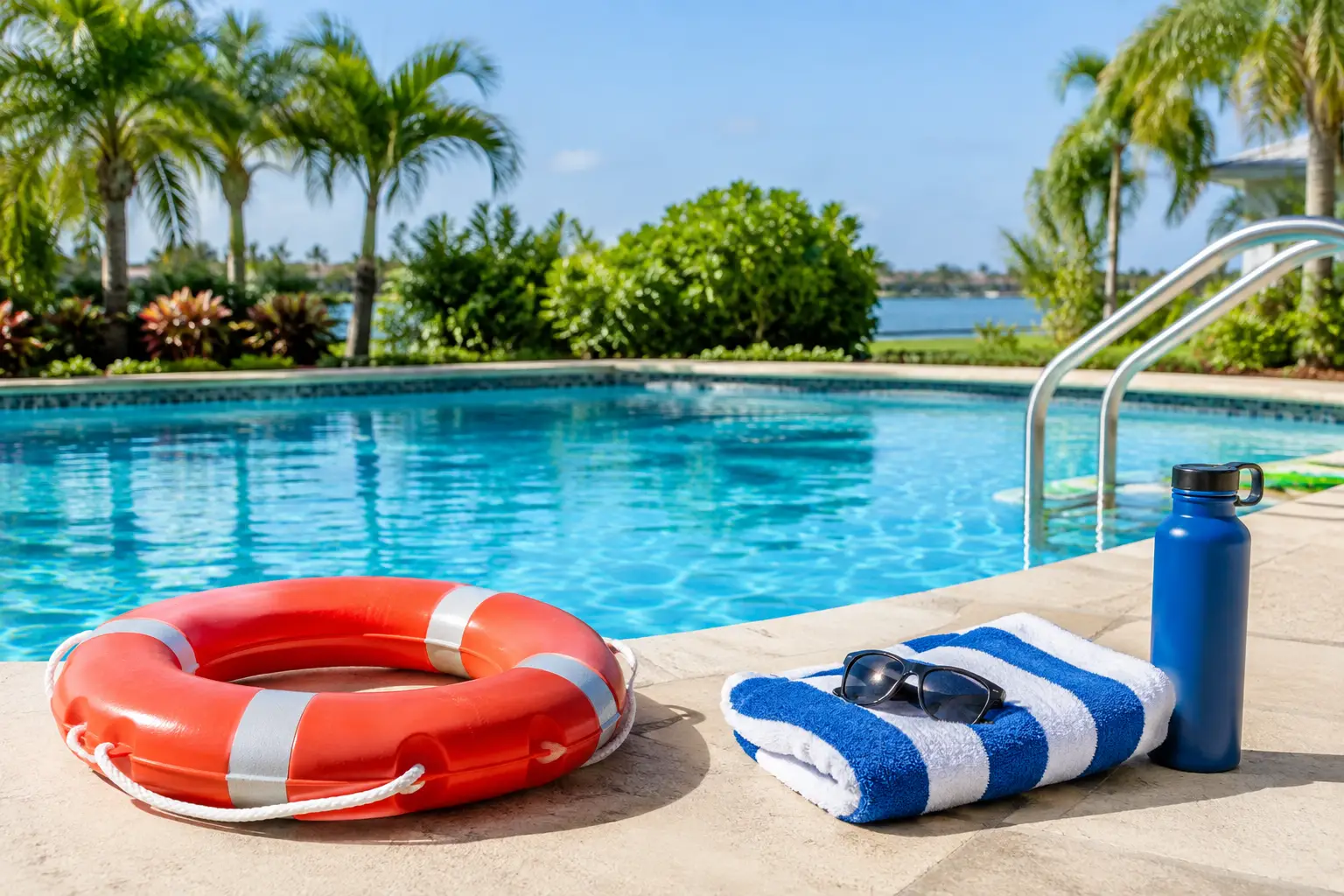
Every pool household should know where its emergency equipment is kept and how to call for help. A first-aid kit, a reaching pole and a life ring or flotation device should be visible, accessible and in good condition. They should not be locked away in a shed at the far end of the garden.
It also helps if adults in the household know basic water rescue and CPR. Formal training is a worthwhile investment for any pool owner, particularly when children, elderly relatives or inexperienced swimmers visit. In an emergency, call 999 in the UK context is familiar, but Florida homeowners should call 911 immediately.
Keep these four actions easy to follow during an emergency:
- Get the person out of the water if it is safe to do so.
- Call 911 and follow the dispatcher’s instructions.
- Begin CPR if you are trained and it is needed.
- Send somebody to meet emergency responders at the front of the property.
For thunderstorms, the safest choice is straightforward: get out of the water at the first sign of thunder or lightning. Wait until the storm has clearly passed before returning. Florida weather can change fast, and a bright sky overhead does not guarantee that lightning is not nearby.
Let routine maintenance support safer swimming
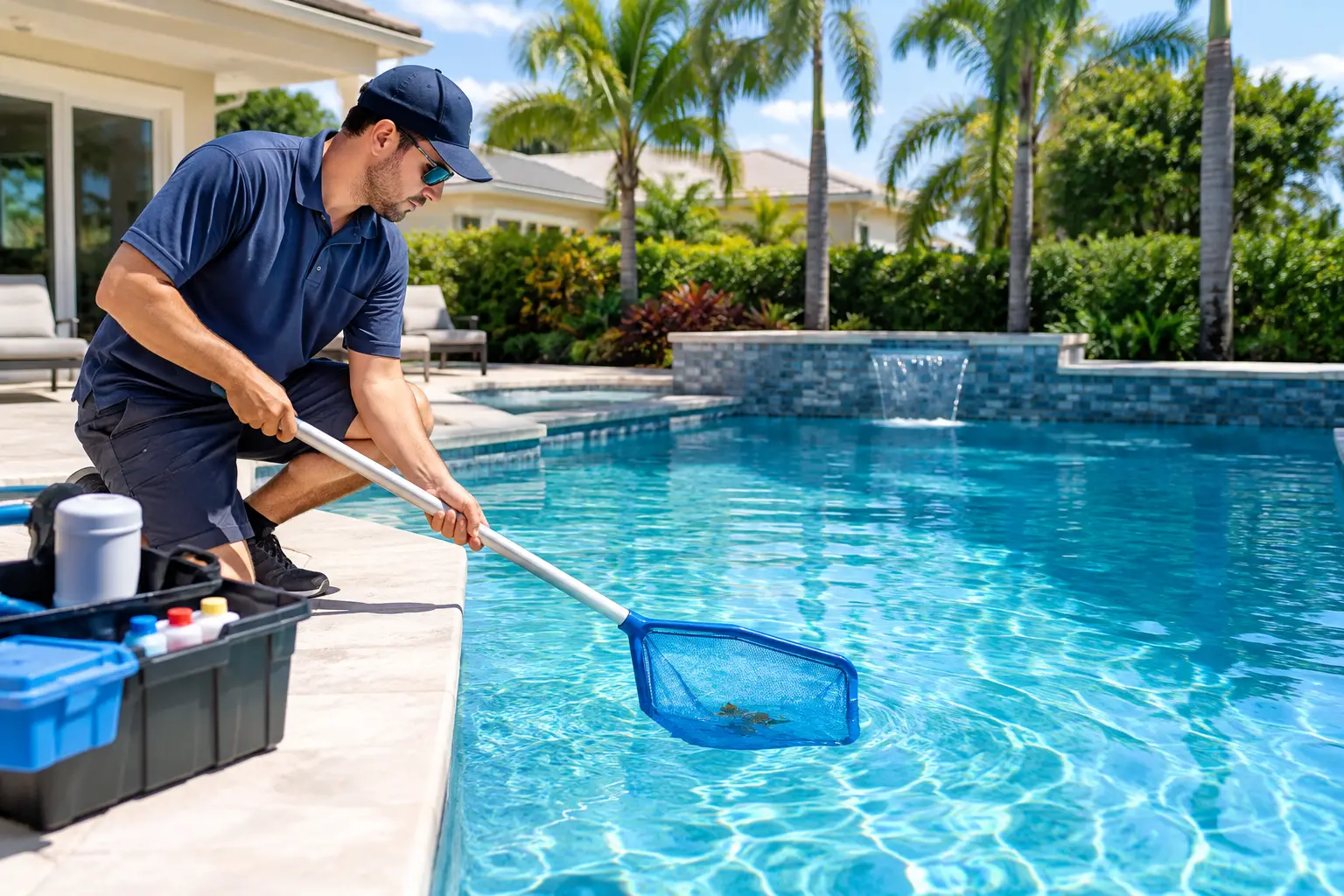
A reliable weekly service plan takes much of the uncertainty out of pool ownership. Skimming and vacuuming improve the swimming environment, while testing, balancing and equipment checks help prevent the less visible problems that affect safe water. Detailed visit reports are useful because they show what was checked, what was adjusted and whether an emerging repair needs attention.
For pools in Wellington, Westlake, Royal Palm Beach and surrounding communities, year-round use means there is little room to leave maintenance until the next season. Heat, rain, wind-blown debris and frequent swimming all place steady demands on circulation and chemistry. Prompt attention is usually less disruptive and less costly than recovering a neglected pool.
The best pool safety plan is one your household can follow without hesitation: secure the barrier, watch swimmers closely, maintain balanced water, respect the equipment and act quickly when something does not look right. That leaves more room for the part that matters most - enjoying a clean, comfortable pool with genuine peace of mind.