A clear pool can look effortless from the patio. Keeping it that way in Florida is not. Leaves, pollen, heavy rain, heat and daily bather use can all change what a pool needs from one week to the next. That is why pool service photo reports are more than a nice extra: they give homeowners a practical record of the work completed, the pool’s condition and anything that needs attention.
For families who are at work, away for the weekend or simply not watching the service visit happen, a report replaces uncertainty with useful information. You can see that the pool was cared for, understand the water readings and catch small equipment concerns before they become a no-swim problem.
What pool service photo reports should show
A worthwhile report should tell the story of that specific visit, not just send a generic message saying the pool was serviced. Photographs provide visual confirmation, while notes and chemical readings explain the work behind the clean water.
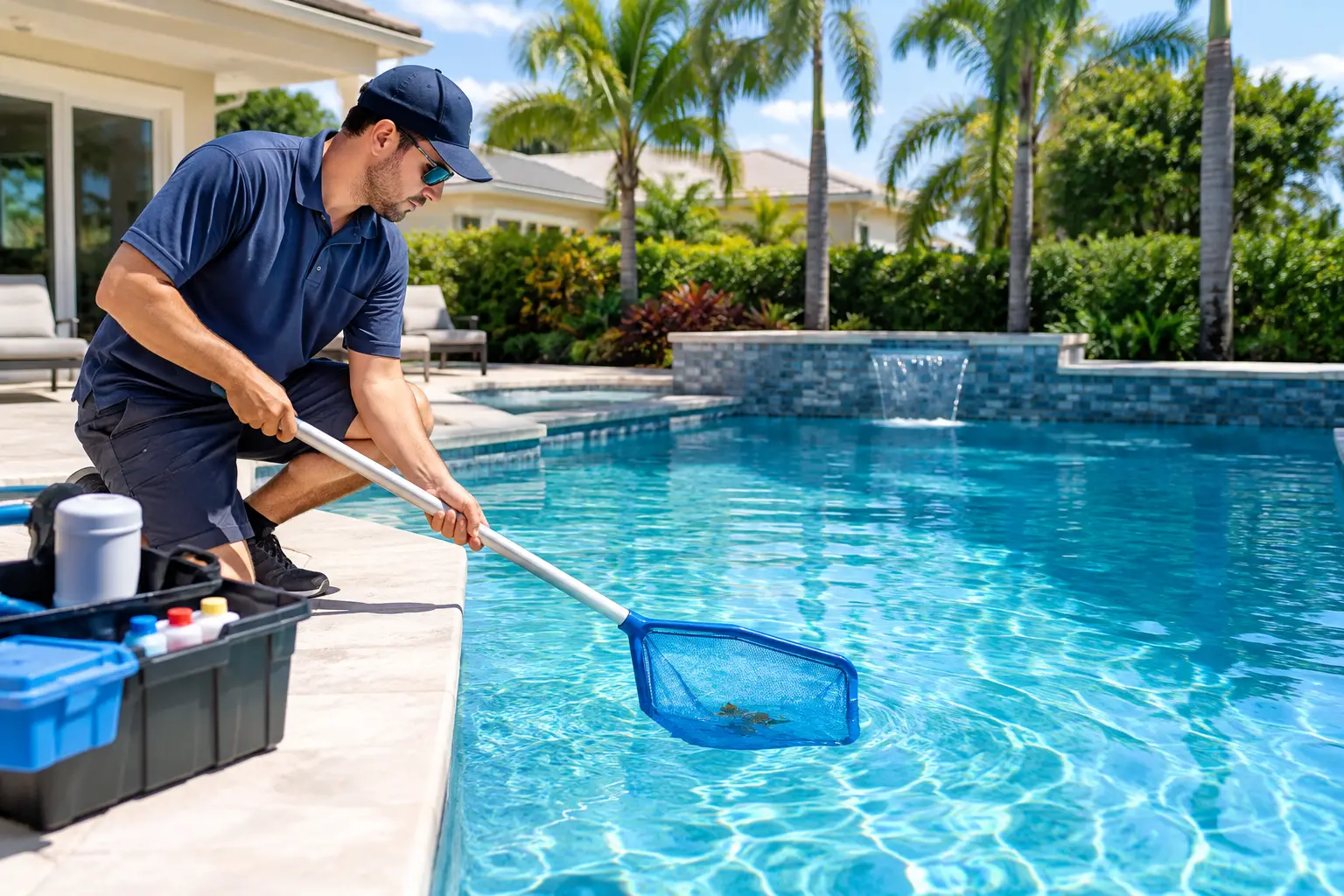
For a routine weekly visit, the report may include a photo of the pool after skimming, brushing and vacuuming, along with an image of the equipment area. The technician’s notes should identify the services completed, such as emptying baskets, checking the skimmer, inspecting circulation and testing the water.
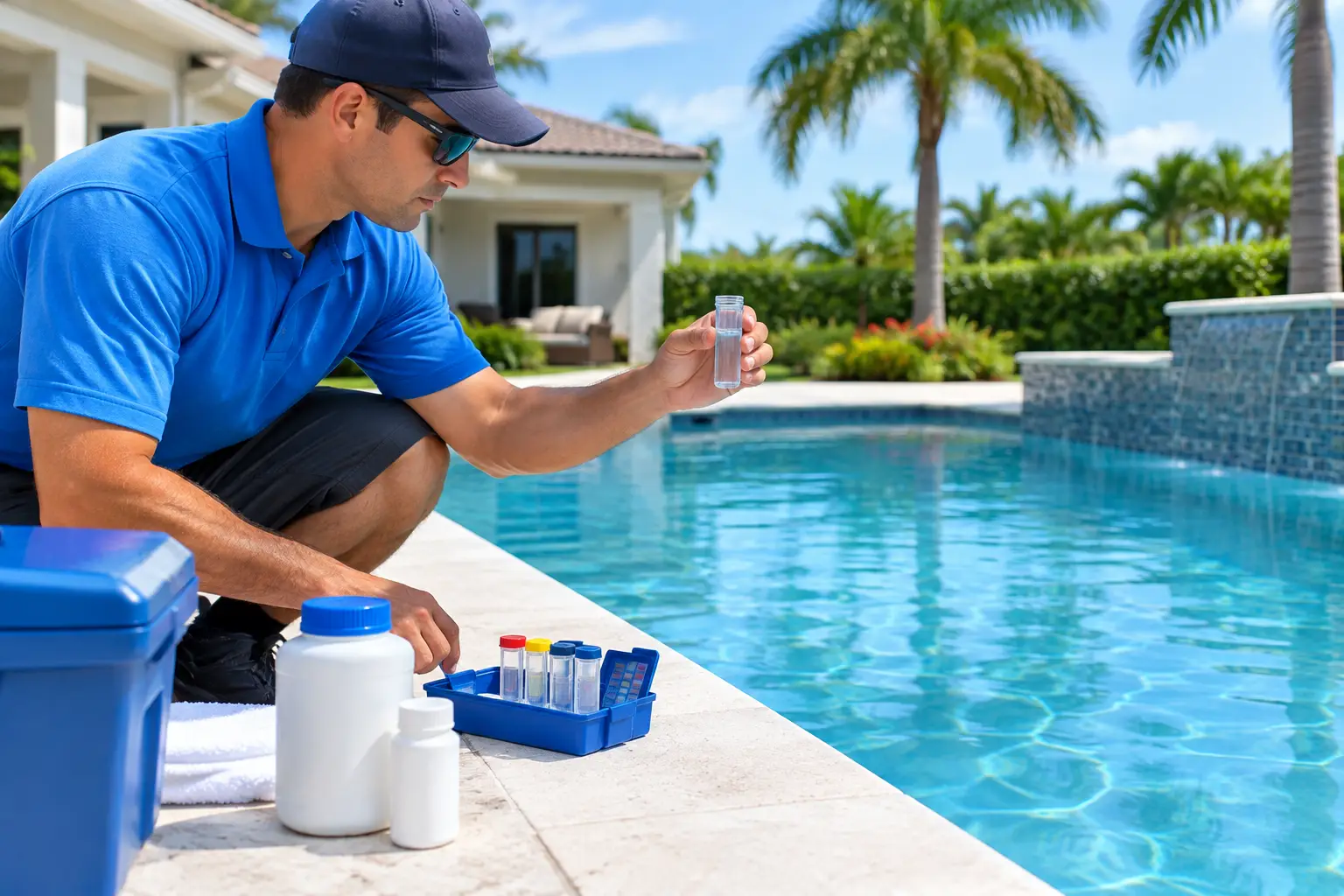
Chemical information matters just as much as the photographs. A pool can look blue while its sanitizer level, pH, alkalinity or stabiliser is moving in the wrong direction. Clear reporting allows the homeowner to see that the water was tested and adjusted with purpose, rather than treated by guesswork. The goal is water that is safe, comfortable and perfectly balanced for regular use.
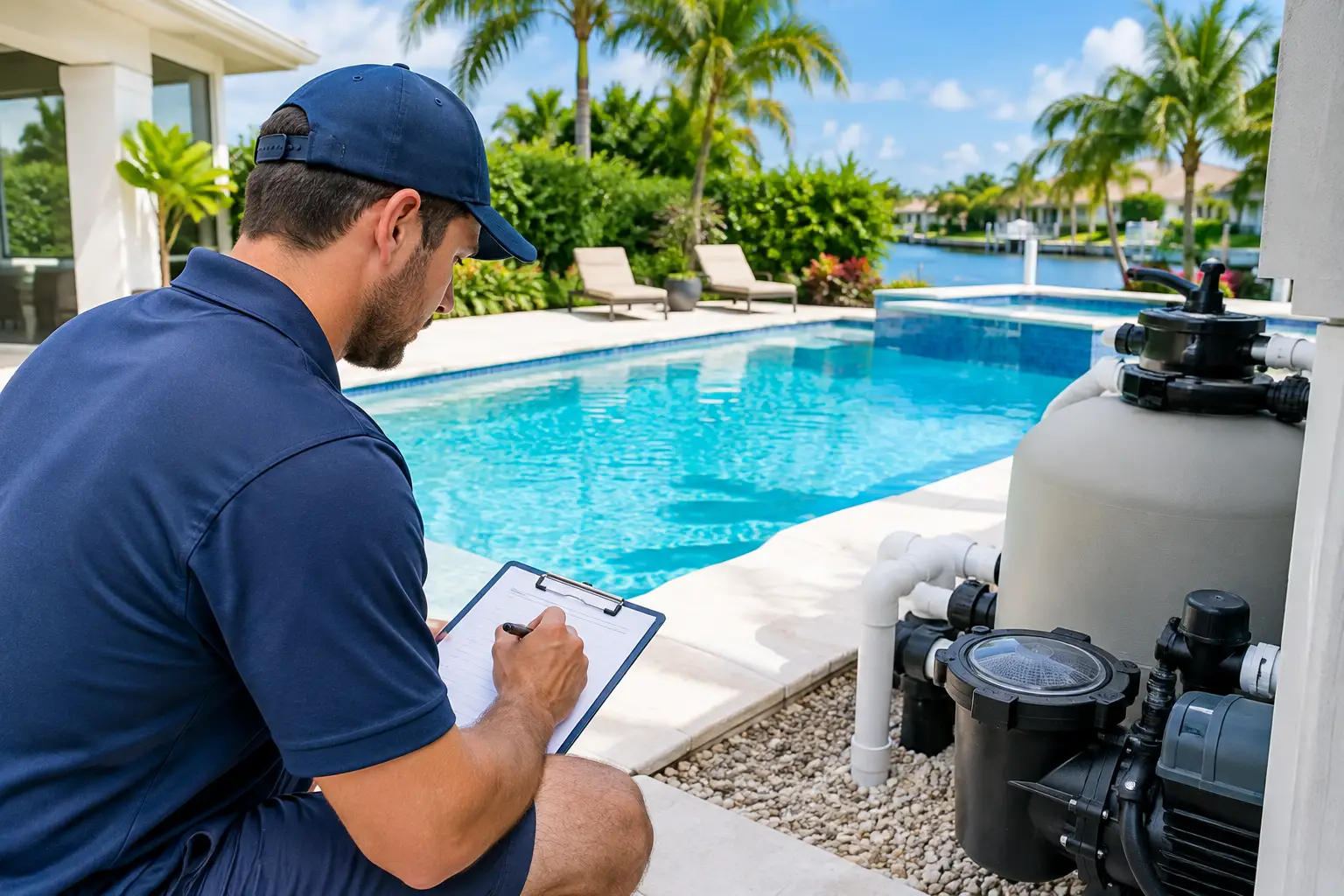
Equipment photographs can be especially helpful when an issue is found. A picture of a leaking pump seal, a cracked lid, a worn pressure gauge or a filter showing poor flow gives context to a recommendation. Instead of receiving an unexpected repair message with no explanation, you can see what the technician saw on site.
Why photo reports matter to busy homeowners
Weekly pool service is often invisible when it is done well. The pool stays inviting, the equipment keeps running and no one has to spend Saturday morning testing water or clearing debris. That convenience is valuable, but it should not mean the homeowner is left in the dark.
Photo reports create accountability without requiring you to be home. For a homeowner in Wellington, Westlake or The Acreage, that can be reassuring during the rainy season, when a pool’s appearance and chemistry may change quickly between visits. A dated visit notification and post-service report make it clear when the pool was attended to and what was found.
They also make communication easier. If you notice leaves in the pool after a windy afternoon, you can check whether they arrived after the weekly visit rather than wondering whether the pool was missed. If a cleaner was moved, a return jet was adjusted or a repair has been recommended, the service notes give everyone the same starting point for a conversation.
This record is useful for households with rental properties, second homes or busy family schedules too. Owners do not need a technical background to understand a good report. They need plain language, clear photos and a service provider willing to explain what needs action now, what should be monitored and what is simply part of normal pool operation.
Photos are proof, but not the whole service
A photograph of sparkling water is helpful, but it cannot prove every part of professional pool care. It does not show whether the water was properly tested, whether the pump is moving enough water or whether a chemical adjustment was calculated correctly. Conversely, a pool might have a few leaves on the surface shortly after service and still have received excellent care.
That distinction is important. Florida weather can change a pool in hours. Wind can carry debris into the water, a storm can dilute chemicals and a busy pool day can affect sanitizer demand. Photo reports should document the condition at the time of the visit, not promise that the pool will remain untouched by weather or use until the following week.
The best reports combine photographs with technician notes and readings. They should also distinguish between completed work and recommendations. If a filter needs a deep clean, a pump is making an unusual noise or an algae treatment is advisable, that should be explained clearly rather than buried in a vague comment.
What to look for in a quality service report
Not every digital report is equally useful. A simple stock image or a repeated message each week offers little value. A good report feels specific to your pool, your equipment and that day’s conditions.
Look for consistent visit timing, photographs that clearly relate to your property and notes that address the work performed. Water test results should be understandable, with an indication of any chemicals added or corrections made. When there is an equipment concern, a clear photo and straightforward explanation are far more useful than technical jargon alone.
It is also reasonable to expect the report to identify urgent issues promptly. A failed pump, a serious leak, an electrical concern or green water should not wait quietly in a routine note. Your pool company should contact you directly when fast action may protect equipment, water quality or safety.
At the same time, a trustworthy provider will not turn every observation into a sales pitch. Some items genuinely require repair; others can be monitored. Pool ownership involves judgement. For example, a minor drip may need a scheduled repair, while low circulation or a leaking pump seal may deserve quicker attention. Good reporting supports that judgement with evidence.
Reports are particularly valuable after unusual conditions
After a major storm, an extended absence or a pool party, the usual weekly report becomes even more useful. It establishes a record of the water condition, debris load and equipment performance at the visit. If algae is beginning to form, early documentation helps explain why extra treatment may be recommended before the problem spreads.
The same applies to green-to-clean work. Recovery is rarely a single visit and should not be presented as one. Progress photos, treatment notes and water readings help homeowners see the improvement as the pool moves from neglected to turtly clean.
For a new pool or a resurfaced pool, reporting is essential during the 28-day start-up period. Fresh plaster requires disciplined brushing and close chemistry management while it cures. Detailed records show that the process is being handled carefully and can help identify changes that need to be addressed promptly.
You do not need to scrutinise every reading or compare every photo to last week’s image. Read the notes, glance at the water and equipment photos, and pay attention when the report flags a change. If something is unclear, ask a direct question: Is this urgent? What happens if we wait? Is there a repair option and an upgrade option?
It also helps to keep your equipment area accessible. A locked gate, blocked pump pad or pets in the service area can prevent a technician from completing checks properly. If you have noticed a new sound, weak return flow, an air bubble in the pump lid or water loss, mention it before the next visit. The report is strongest when it supports two-way communication.
Turtle Pool Care uses detailed post-service reports and photographic proof because homeowners deserve to know how their pool is being cared for, even when they are not there to see the work. That level of visibility complements hands-on cleaning, careful water balancing and experienced equipment checks.
A pool report should leave you feeling informed, not overwhelmed. When it shows real work, clear water data and honest recommendations, it turns weekly service into something you can trust - and lets you get back to enjoying the pool with your family.