A pool can look clear at breakfast and be heading towards an algae problem by the weekend. In Palm Beach County’s heat, heavy rain and near year-round swimming weather, pool service versus DIY cleaning is not simply a question of who empties the skimmer basket. It is a decision about time, water safety, equipment protection and how confident you want to feel before the children jump in or guests arrive.
DIY care suits some homeowners very well. Others find that the weekly jobs, changing chemistry and surprise equipment issues slowly take the enjoyment out of owning a pool. The right choice depends on your schedule, your confidence with testing and repairs, and the condition of your pool.
Pool Service Versus DIY Cleaning: The Real Difference
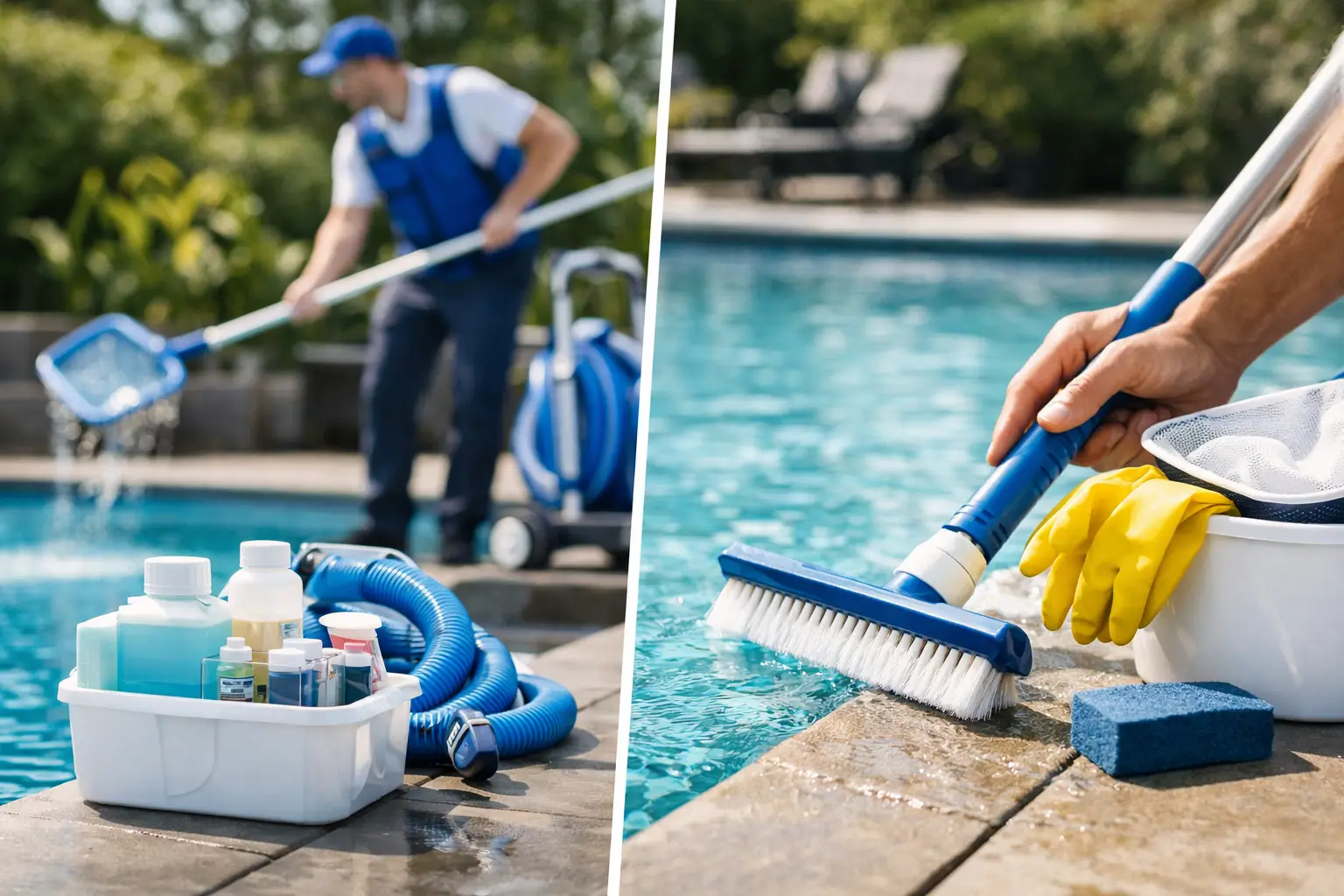
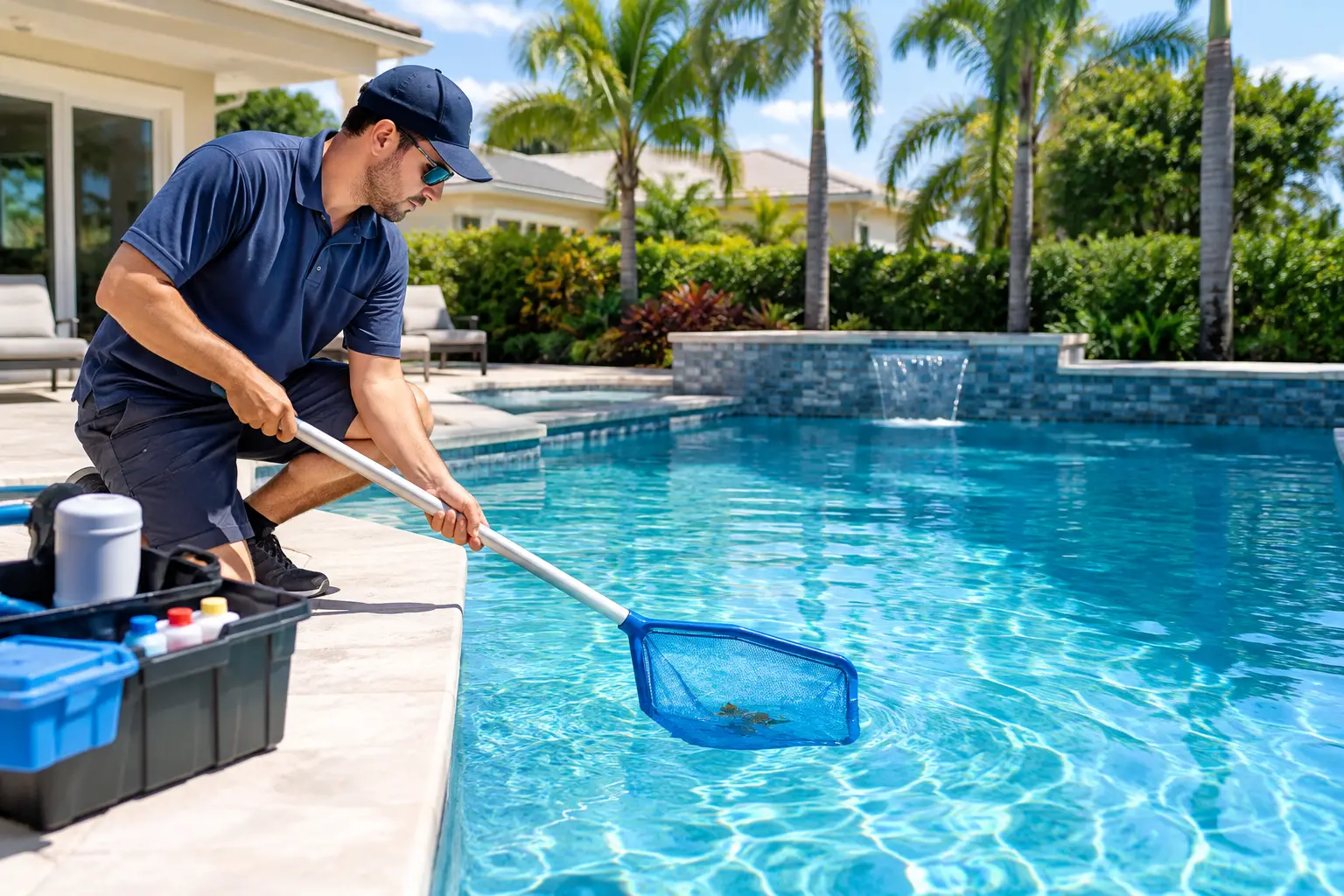
The visible work is familiar: skimming leaves, brushing walls, vacuuming debris and clearing baskets. Consistent pool care goes further. It means testing water accurately, adjusting sanitizer and pH, watching for early algae growth, checking circulation, and recognising when a pump, filter or cleaner is no longer performing as it should.
With DIY cleaning, the homeowner owns every part of that routine. You choose the test method, buy and store chemicals, fit pool care around work and family commitments, and decide whether a small change in water color is normal or a warning sign. There is satisfaction in understanding your pool, especially if you enjoy hands-on maintenance and have a reliable weekly routine.
A professional weekly service shifts that responsibility to a trained technician. The value is not just labour. It is the regularity of the visit, a measured approach to chemical balancing, and another set of experienced eyes on your equipment. For busy households in Wellington, Royal Palm Beach, Westlake or The Acreage, that consistency can prevent a simple issue becoming a green-pool recovery or costly repair.
What DIY Pool Cleaning Really Requires
DIY pool care is often presented as a quick Saturday task. In reality, a healthy pool needs attention throughout the week. Wind, storms, high bather loads, sunscreen, lawn debris and intense sunshine can all change water conditions faster than expected.
A capable DIY routine includes checking and emptying baskets, skimming and brushing, vacuuming as needed, testing water and making careful chemical adjustments. You also need to monitor water level, inspect the pump and filter pressure, and keep an eye on the return flow. If the pool has a salt system, heater, automation or variable-speed pump, there are additional settings and components to understand.
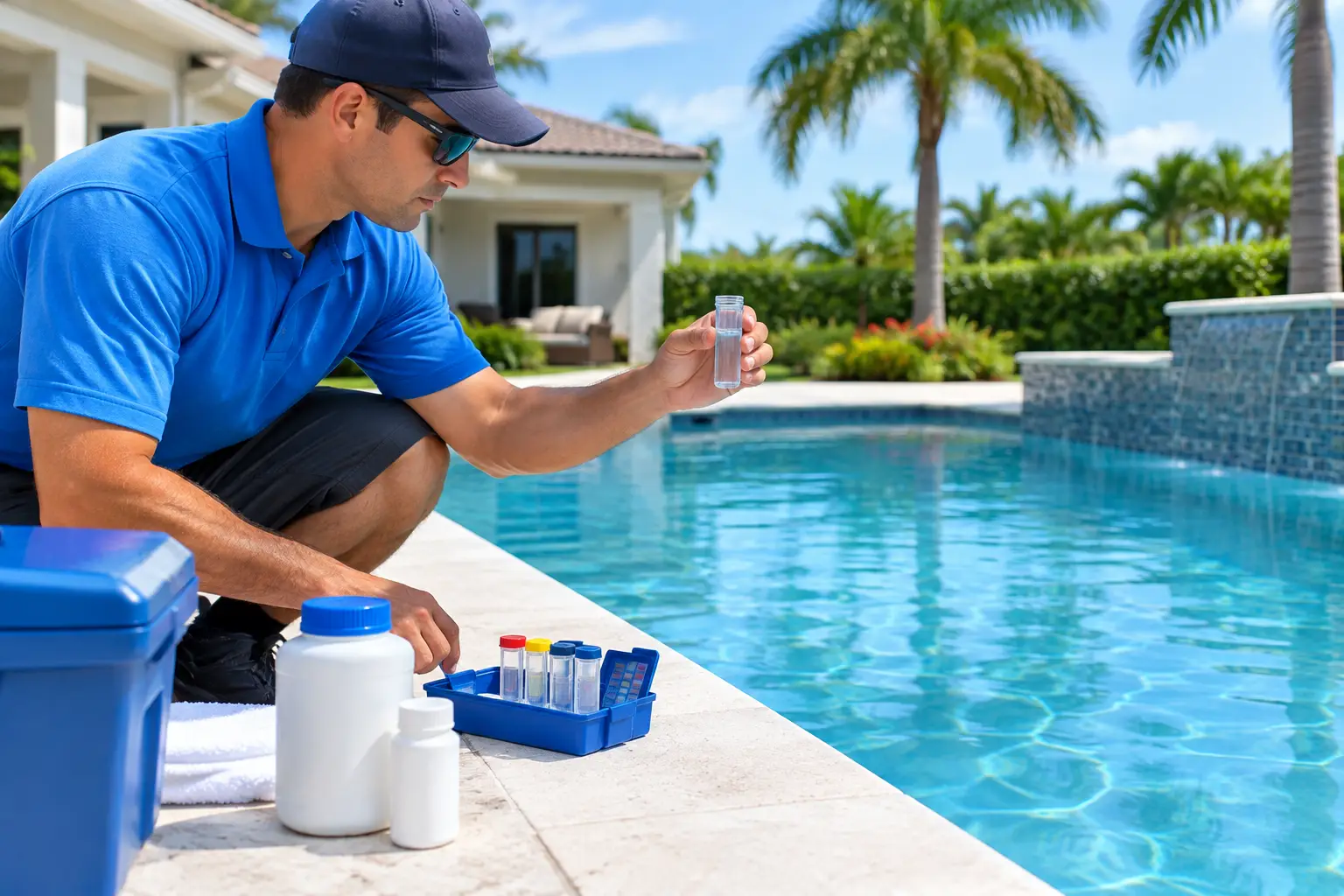
The chemistry is where small errors carry the biggest consequences. Chlorine must be effective, but its effectiveness depends on pH and stabiliser levels. High pH can leave water cloudy and reduce sanitising performance. Low pH can be uncomfortable for swimmers and harsh on finishes and equipment. Calcium hardness, alkalinity and phosphates may also need attention depending on the pool and source water.
Home test kits can be useful, but they require good technique and regular use. Adding chemicals by guesswork, reacting too strongly to one reading, or treating only when water looks wrong can create a cycle of cloudy water, scale, corrosion or algae. Clear water is encouraging, but it is not the full measure of safe, balanced water.
The hidden cost is usually time
The financial case for DIY begins with avoiding a weekly service fee. That can make sense when you have the time, enjoy the process and stay on top of supplies. However, the real cost includes test reagents, chlorine or salt-cell support products, balancing chemicals, algaecides where appropriate, brushes, nets, vacuum parts and occasional professional diagnostics.
There is also the cost of a missed week. A busy spell, a holiday or a run of afternoon storms can allow debris and algae to build quickly. Recovering neglected water generally requires more chemicals, more filtration time and more effort than steady maintenance would have required.
Where Professional Pool Service Earns Its Keep
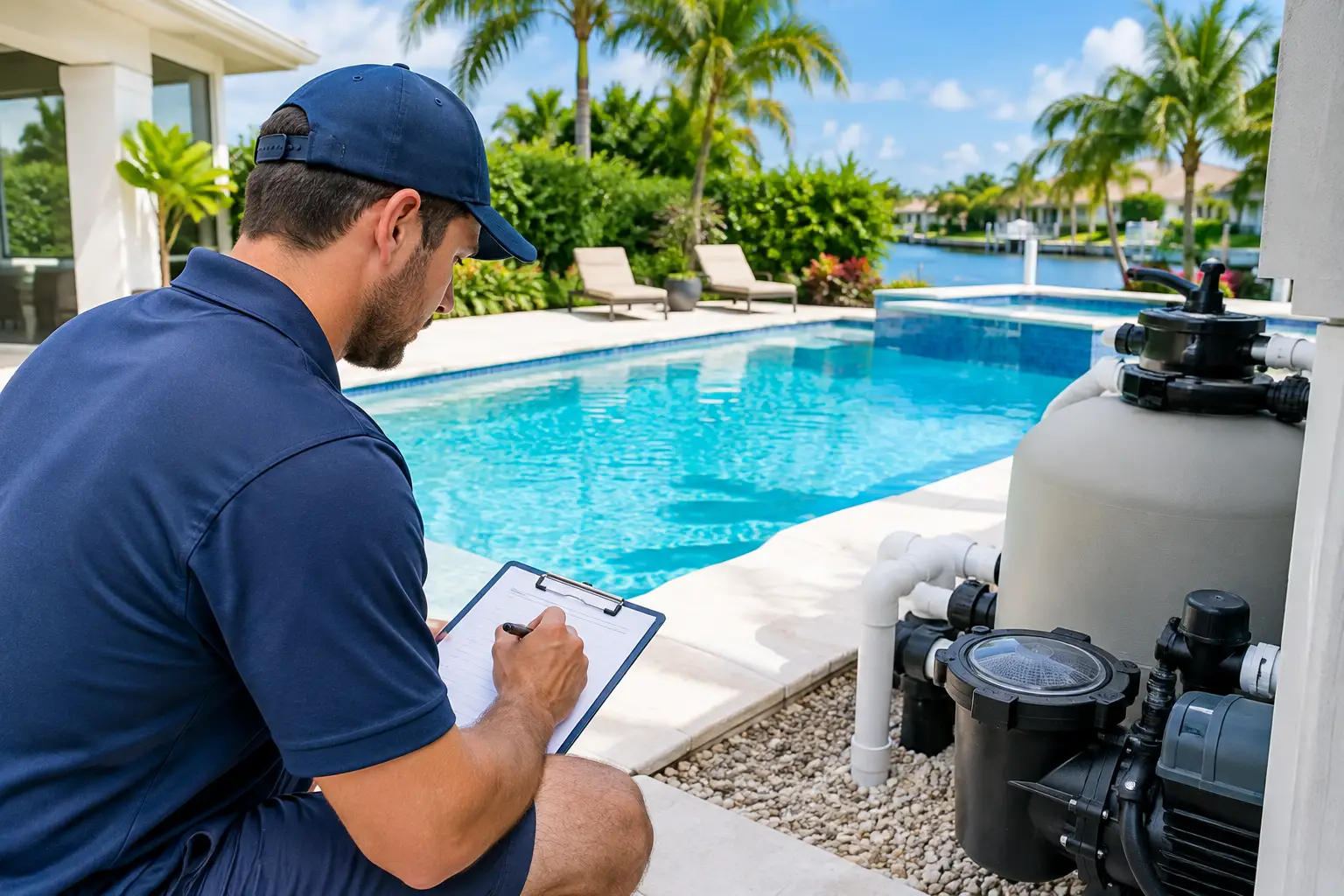
A good pool technician follows a dependable process, rather than merely making the surface look tidy. Weekly service typically includes skimming, vacuuming, brushing where needed, emptying baskets, checking circulation and testing the water before making precise chemical adjustments. Regular equipment checks can reveal a weakening pump, a blocked cleaner line or unusual filter pressure before the problem affects the whole pool.
For families, the practical benefit is simple: the pool is more likely to be ready when you want it. You do not need to spend Friday evening buying chemicals or wonder whether last week’s reading is still relevant after a major rainstorm. That peace of mind is particularly valuable for homes with frequent swimmers, pets around the pool area, or outdoor spaces used for entertaining.
Professional care also brings continuity. A technician who sees the pool every week can notice patterns: recurring debris from a particular tree, chemistry that shifts after rain, a salt cell losing output, or a pump that has become noisier. Those observations are difficult to make when maintenance is squeezed into irregular weekends.
At Turtle Pool Care, weekly visits are supported by proactive notifications, detailed service reports and photographs of completed work. That sort of documentation gives homeowners a clear record of what was checked, what was adjusted and whether an equipment concern needs attention. It is a practical form of accountability, especially if you travel, manage a second home or simply want to know your pool received the care promised.
Repairs and recoveries need a different level of attention
DIY maintenance is reasonable for routine tasks, but repairs deserve an honest assessment of your experience. A noisy pump, a tripping breaker, a leaking seal, poor circulation or inconsistent lighting may look straightforward until the wrong part is ordered or the original fault is missed.
The same applies to green water. Early algae can sometimes be addressed with correct testing, brushing, sanitising and filtration. A fully green or neglected pool needs a more structured recovery plan. Throwing in extra chemicals without understanding the water balance can waste money and extend the problem. Professional green-to-clean treatment focuses on the cause as well as the appearance, so the pool can return to being turtly clean rather than briefly looking better.
Newly built and resurfaced pools are another clear case for specialist oversight. Fresh plaster needs a disciplined start-up period to support proper curing and prevent avoidable surface issues. A 28-day start-up program includes frequent chemistry adjustments and close monitoring that goes well beyond ordinary cleaning.
When DIY Is the Right Choice
Not every pool owner needs weekly professional help. DIY can be a sensible route if you live at the property full-time, enjoy learning pool chemistry, have a straightforward pool system and can commit to a consistent schedule. It also works best when you are comfortable responding promptly after storms, parties or periods of heavy debris.
A hybrid approach can be useful too. Some experienced homeowners handle regular skimming and basket emptying but call on a professional for water testing, seasonal checks, repairs or a chemistry reset. This arrangement only works if responsibilities are clear. Pools do not benefit from two people assuming the other has checked the filter or adjusted the water.
Be realistic about the season ahead. A pool that feels easy to manage during a quiet month can demand more attention during summer rain, school holidays and frequent use. If maintenance regularly gets postponed, professional service is often less expensive than recovering from the consequences.
How to Make the Decision for Your Home
Start with your available time, not just the monthly price. Can you reliably inspect and test the pool every week, even when work is busy or you are away? Are you confident interpreting readings rather than just adding what the bottle recommends? Do you know what normal flow, pressure and pump sound like for your system?
Then consider the pool itself. A compact, screened pool with simple equipment is easier to manage than a large pool exposed to trees, with a heater, automation, water features and a salt system. New plaster, recurring algae, cloudy water or a history of equipment problems all strengthen the case for professional oversight.
Finally, think about what you want pool ownership to feel like. If you genuinely enjoy the routine, DIY can be rewarding. If your priority is a clean, safe and perfectly balanced pool for spontaneous swims, weekly service buys back more than time. It buys confidence that the water and equipment are being cared for before a small concern has a chance to spoil the weekend.
The best choice is the one you can sustain. Whether you keep the tools in your own shed or place care in trusted hands, give your pool the steady attention it needs, and it will remain the easy, welcoming part of home life it was meant to be.