A Florida storm can turn a clear pool cloudy before the patio has dried. Effective pool storm recovery is not just about removing leaves: heavy rain, wind-blown debris and interrupted circulation can dilute chemicals, strain equipment and give algae the opening it needs.
The good news is that most pools recover well when they are checked in the right order. A calm, measured response protects your equipment, restores safe water faster and helps prevent a small clean-up job becoming a green-to-clean treatment.
Start pool storm recovery safely
Wait until the storm has fully passed and there is no lightning risk before approaching the pool or touching any equipment. If your home lost power, do not assume the pump will restart safely on its own. Check that the surrounding area is dry and that there are no damaged cables, standing water near electrical components or loose branches around the equipment pad.
If the water level has risen above the middle of the skimmer opening, the pump may not skim effectively. After a major downpour, lowering the water level may be necessary before normal circulation resumes. This depends on your pool set-up and local drainage conditions. Do not drain water unnecessarily, particularly if the ground around the pool is saturated, as high groundwater can create problems for certain pool structures.
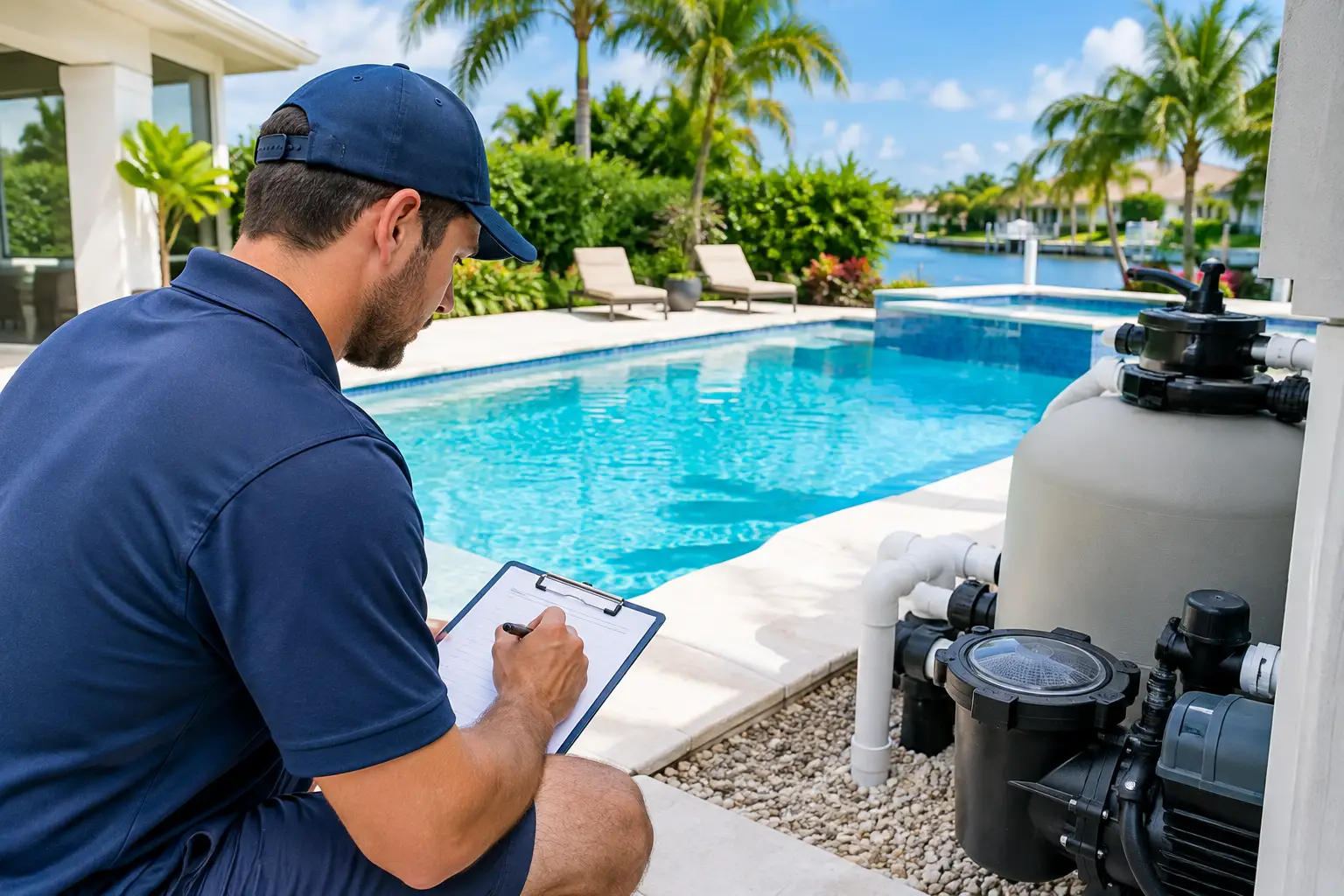
Before switching equipment back on, look for obvious signs of damage. A displaced pump lid, flooded timer, cracked pipe or fallen branch near plumbing deserves professional attention. Running a pump with an air leak, blocked line or electrical issue can turn a straightforward repair into a more costly one.
Remove debris before it reaches the filter
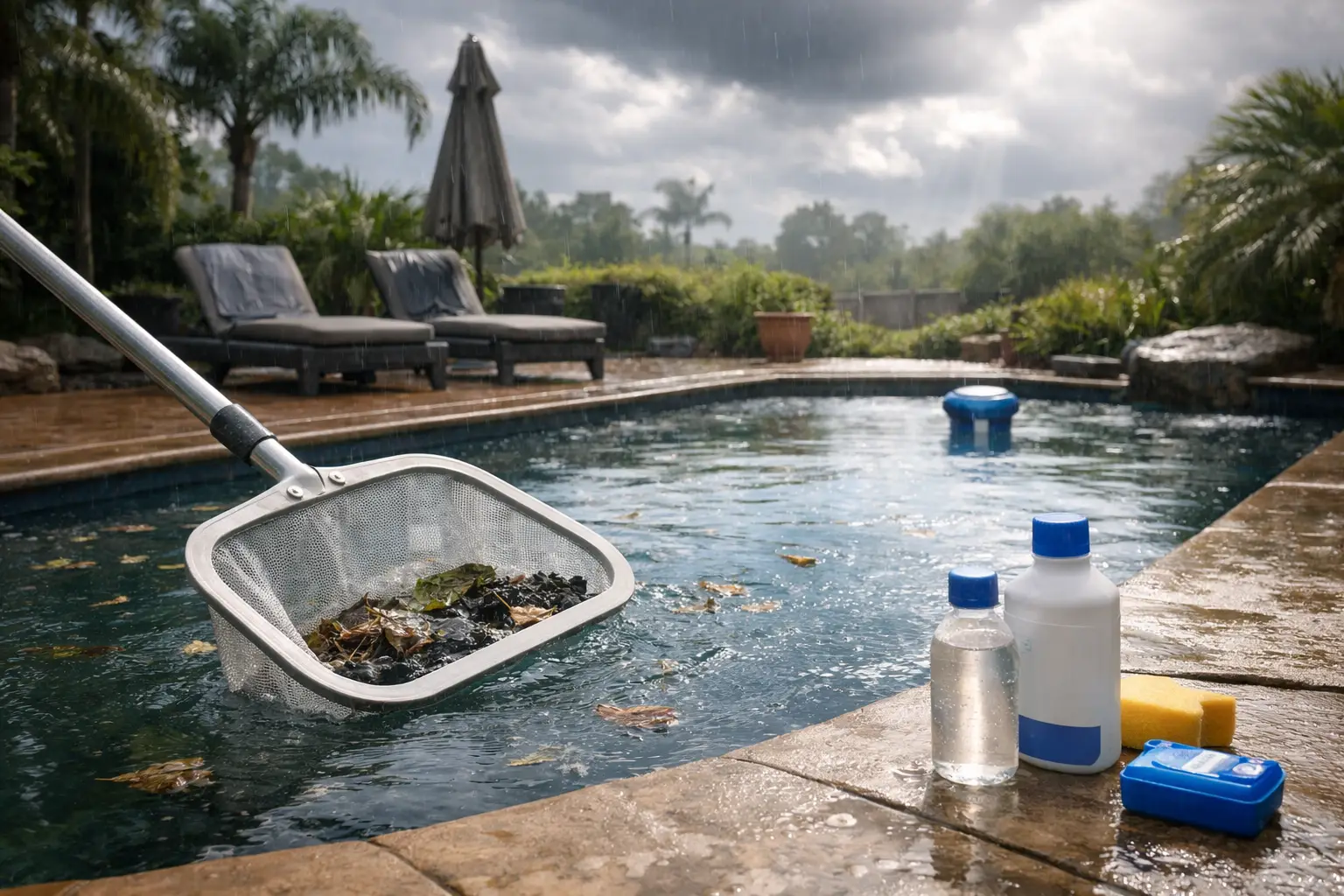
Leaves, seed pods, mulch and palm fronds may look like a surface-level mess, but they quickly affect water chemistry. Organic debris consumes sanitizer as it breaks down, stains plaster and adds fine material that can clog the filter.
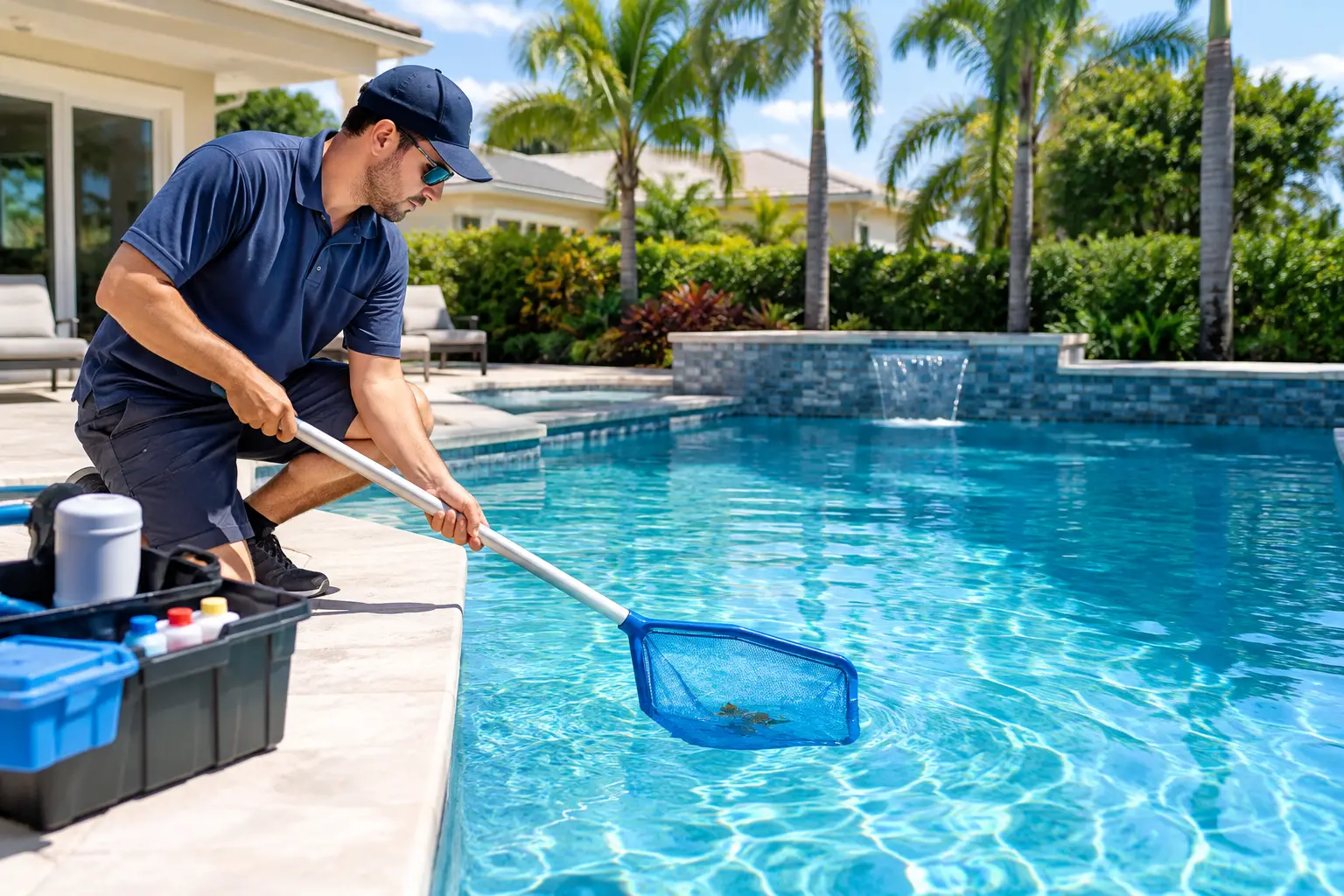
Use a leaf net to remove larger debris from the surface and floor first. Empty the skimmer and pump baskets once the power is off, then check them again after the pump has circulated for a few hours. Storm debris often collects in stages, especially when winds continue after the rain has stopped.
Avoid forcing an overloaded skimmer basket back into place or operating the pump with a packed basket. Restricted water flow puts extra pressure on the system and can leave the pool circulating poorly just when it needs filtration most.
Check the filter pressure and circulation
Once the baskets are clear and the system is safe to run, look at the filter pressure gauge and return jets. Water should be moving consistently back into the pool. A higher-than-normal pressure reading can indicate that the filter has collected storm debris and needs cleaning or backwashing, depending on the type of filter installed.
A low pressure reading is not automatically good news. It may point to a blocked pump basket, air entering the system, a suction-side restriction or a pump issue. If you are unsure what your normal pressure looks like, avoid guessing. Your regular service records should show a familiar baseline, and a technician can identify whether the problem is filtration, plumbing or circulation.
Test the water before adding chemicals
Rainwater itself is not usually the sole cause of a green pool. The bigger issue is dilution. A long period of rain can lower sanitizer, alter pH and alkalinity, and introduce contaminants from the surrounding landscape. Once those levels move out of range, algae can grow quickly in Florida warmth.
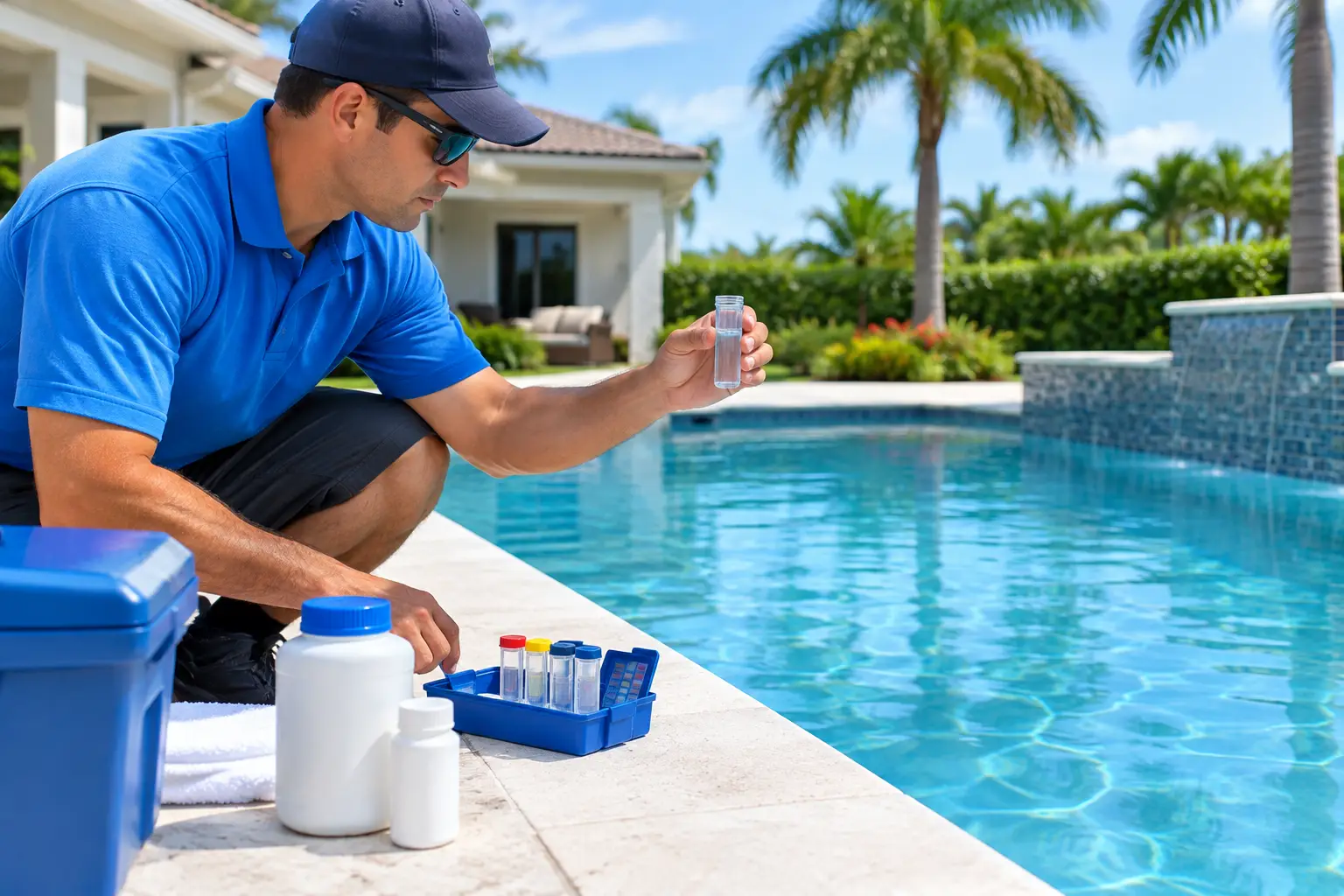
Test free chlorine, pH, total alkalinity and stabiliser before adding treatment. If the water is cloudy or has visible algae, phosphate and calcium readings may also help determine the right recovery plan. The goal is safe, perfectly balanced water, not simply adding a large amount of chlorine and hoping for the best.
This is where pool storm recovery can vary from one home to another. A pool that received a few inches of rain and a handful of leaves may only need debris removal, normal balancing and extra pump run time. A pool with muddy water, a broken circulation system or a heavy algae bloom needs a more deliberate treatment approach.
Be careful with chemical dosing. Adding multiple products at once can create misleading test results, waste chemicals and, in some cases, damage surfaces or equipment. Allow circulation time between adjustments and retest the water. If the pool has turned green, chlorine demand is high or the water has become milky after treatment, professional testing can prevent a cycle of overcorrection.
Give filtration time to do its job
Clear water does not always return overnight. After chemicals are corrected, the filter still needs time to remove the fine particles left behind by rain, dirt and treatment. Run the pump for a suitable extended period based on the condition of the water and your equipment, while monitoring pressure and emptying baskets as needed.
Vacuuming also matters. Fine sediment often settles on the floor after a storm, particularly in pools near The Acreage, Loxahatchee or other areas with more open landscaping. Vacuum slowly enough to capture the debris rather than stirring it back into suspension. If there is a heavy layer of silt, manual vacuuming may be more effective than relying on an automatic cleaner.
For cartridge filters, a thorough clean may be required once recovery is underway. For sand or DE filters, the right maintenance method depends on the pressure reading and the amount of debris collected. Cleaning a filter too often can be counterproductive, but leaving it overloaded restricts circulation. The correct balance comes from knowing the equipment and reading what the pool is telling you.
Watch for the problems that appear a day later
A pool can look better after the first clean-up and still develop issues 24 to 48 hours later. Algae may emerge when chlorine falls overnight, while trapped debris can continue to affect water clarity. Check the pool again after circulation has had time to work.
Pay attention to a persistent cloudy appearance, slippery walls, a strong chemical smell, weak return flow or a pump that is making unfamiliar noise. A strong smell does not mean there is plenty of chlorine. It can mean the sanitizer is working hard against contaminants and needs proper balancing.
Also inspect the pool light, automation controls and timer settings after a power interruption. If the pump schedule has reset, a pool may receive far less filtration than intended without anyone noticing. Modern automation is useful, but it still benefits from a post-storm check.
When professional help is the sensible call
Homeowners can handle light debris and basic testing after many storms. It is wise to call for support when the water is green or brown, the pool remains cloudy after balancing, equipment will not restart, there is a suspected leak, or the filter pressure is behaving abnormally.
Professional recovery is particularly useful after a storm has exposed an existing issue. A pump that has been losing prime, a filter nearing the end of its service life or a poorly balanced pool can all fail more visibly after heavy weather. Addressing the root cause is better than repeatedly treating the symptoms.
At Turtle Pool Care, a recovery visit can include careful debris removal, equipment inspection, water testing and targeted chemistry correction, with clear reporting on what was found and what was done. That accountability gives homeowners a practical record, not just the relief of seeing clearer water.
Make the next storm easier on your pool
The best storm clean-up begins before clouds build. Keep the water at a sensible operating level, trim loose vegetation around the pool area and make sure baskets, filter maintenance and pump schedules are not already overdue. A consistently maintained pool has stronger circulation and more stable chemistry, so it is better prepared to recover when the weather turns.
After any major rain event, give your pool the same attention you would give your roof or garden. A quick, safe check and timely correction can keep it turtly clean, ready for family swims and one less thing to worry about when the Florida sunshine returns.