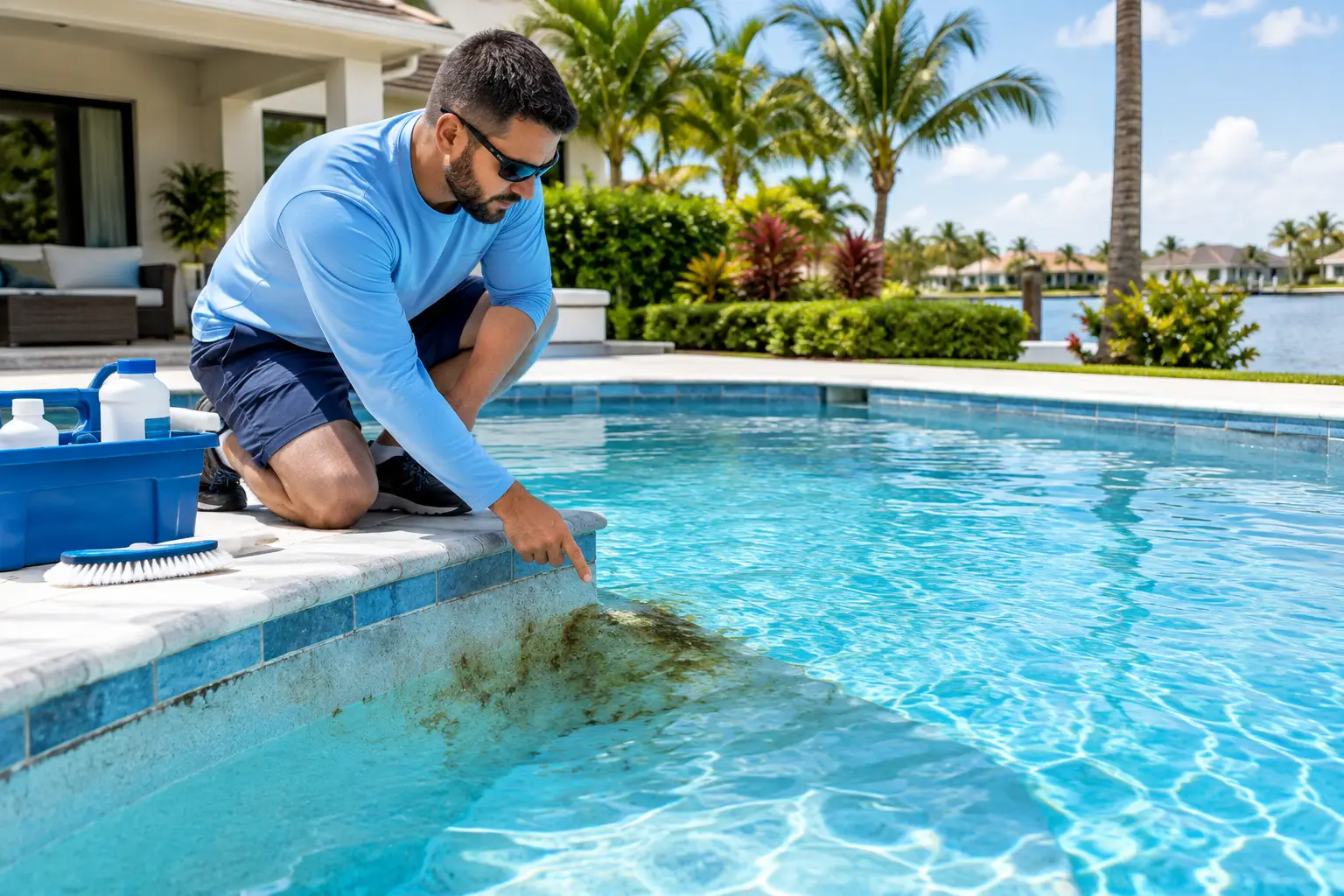
A stain that was not there last week can make an otherwise clear pool feel neglected fast. Pool surface staining is not always a cleaning issue, though. The color, shape, and location of the mark can point to a water-chemistry problem, metals in the water, organic debris, or a developing issue with the pool finish itself.
For homeowners, the goal is not simply to make the spot disappear. It is to identify what caused it, use the least aggressive effective treatment, and prevent it from returning. That protects both the appearance of the pool and the life of its surface.
What Pool Surface Staining Can Tell You
Stains are clues. A light brown mark around a return fitting is different from a black spot in a shaded corner, and neither should be treated exactly the same way. Brushing harder or adding random chemicals can waste time and, in some cases, make the discoloration more difficult to correct.
A pool professional will usually consider the stain's color, texture, location, how quickly it appeared, the pool's surface type, and recent changes to the water. A new fill, heavy rain, nearby landscaping, a dropped metal object, or an extended period of low sanitizer can all help explain what happened.
Organic stains
Organic stains often come from leaves, berries, acorns, pollen, algae, or other plant material sitting on the surface. In western Palm Beach County, wind and afternoon storms can quickly move debris into a pool, especially when trees or dense landscaping are close by.
These marks are commonly brown, tan, greenish, or dark purple. They may appear where leaves settled on the floor, along steps, or in corners with lower circulation. If caught early, consistent brushing, proper sanitizer levels, and filtration may lift a mild organic stain. Older stains may need more targeted treatment.
Metal stains
Metal staining is often rusty brown, reddish, blue-green, grey, or nearly black. Iron and copper are common culprits. They may enter the pool through source water, certain chemical products, corroding equipment components, or metals left in the water, such as a hairpin, toy, or outdoor furniture part.
Metal stains do not always mean a large piece of metal fell into the pool. Water can look perfectly clear while dissolved metals remain present. Then a change in pH, sanitizer level, or temperature causes those metals to come out of solution and settle onto the pool finish.
Algae-related discoloration
Algae is not always a bright green, floating problem. Some algae-related discoloration clings to rough areas, shaded walls, steps, or spots with weak circulation. It can look black, dark green, mustard yellow, or grey.
A surface stain and an algae colony can look similar, but the response is different. If the mark has a slimy feel, brushes away somewhat, or returns quickly, water chemistry and circulation deserve close attention. Treating only the visible area without correcting the underlying conditions often leads to a repeat problem.
Mineral scale and surface changes
Not every discoloration is technically a stain. White, grey, or rough deposits may be calcium scale. This is more likely when calcium hardness, pH, or total alkalinity has been allowed to run high. Scale can hold dirt and algae, making the pool look stained even when the original issue is mineral buildup.
On older plaster, exposed aggregate, or a finish nearing the end of its service life, mottling and color variation may also be part of the surface condition. No cleaning method can make a worn finish new again. An honest assessment matters before anyone recommends an aggressive treatment.
How to Respond to Pool Surface Staining
Start by avoiding the urge to scrub with an abrasive pad or pour chemicals directly onto the stain. Aggressive methods can damage plaster, dull a finish, weaken grout, or create a lighter patch that stands out just as much as the original mark.
Instead, note when the stain appeared and whether anything changed recently. Was the pool topped off after a storm? Did a heater, pump, or saltwater system have an issue? Has debris been sitting in the pool? Did the water turn cloudy or require extra chemical adjustment? Those details make diagnosis much more reliable.
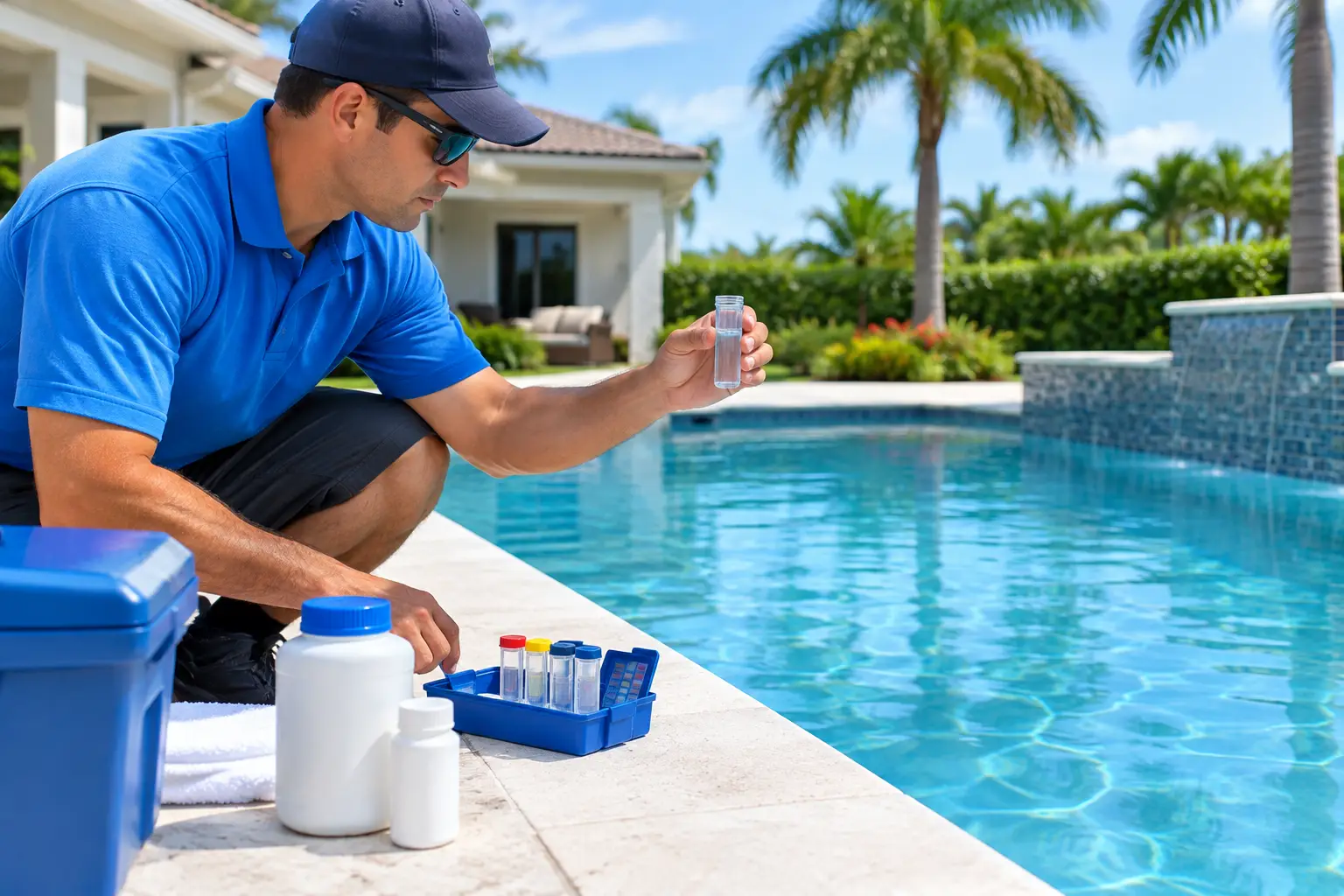
Next, have the water tested beyond the basics. Sanitizer, pH, total alkalinity, calcium hardness, and stabilizer all affect how clean and balanced the water remains. When metal staining is suspected, testing for metals can help determine whether treatment should focus on removing existing staining, controlling dissolved metals, or both.
The right correction depends on the surface and the cause. A small organic stain may respond to brushing and properly balanced water. Metal stains may require a carefully selected treatment and follow-up water management. Algae-related discoloration requires restoring dependable sanitation, circulation, and filtration before it is considered resolved.
Acid washing can be effective for certain stains and some older plaster surfaces, but it is not a routine first step. It removes a thin layer of the surface along with the staining, which means repeated or unnecessary acid washing can shorten the life of plaster. It should be considered only after the stain has been evaluated and less aggressive options have been weighed.
Prevention Is Mostly About Consistency
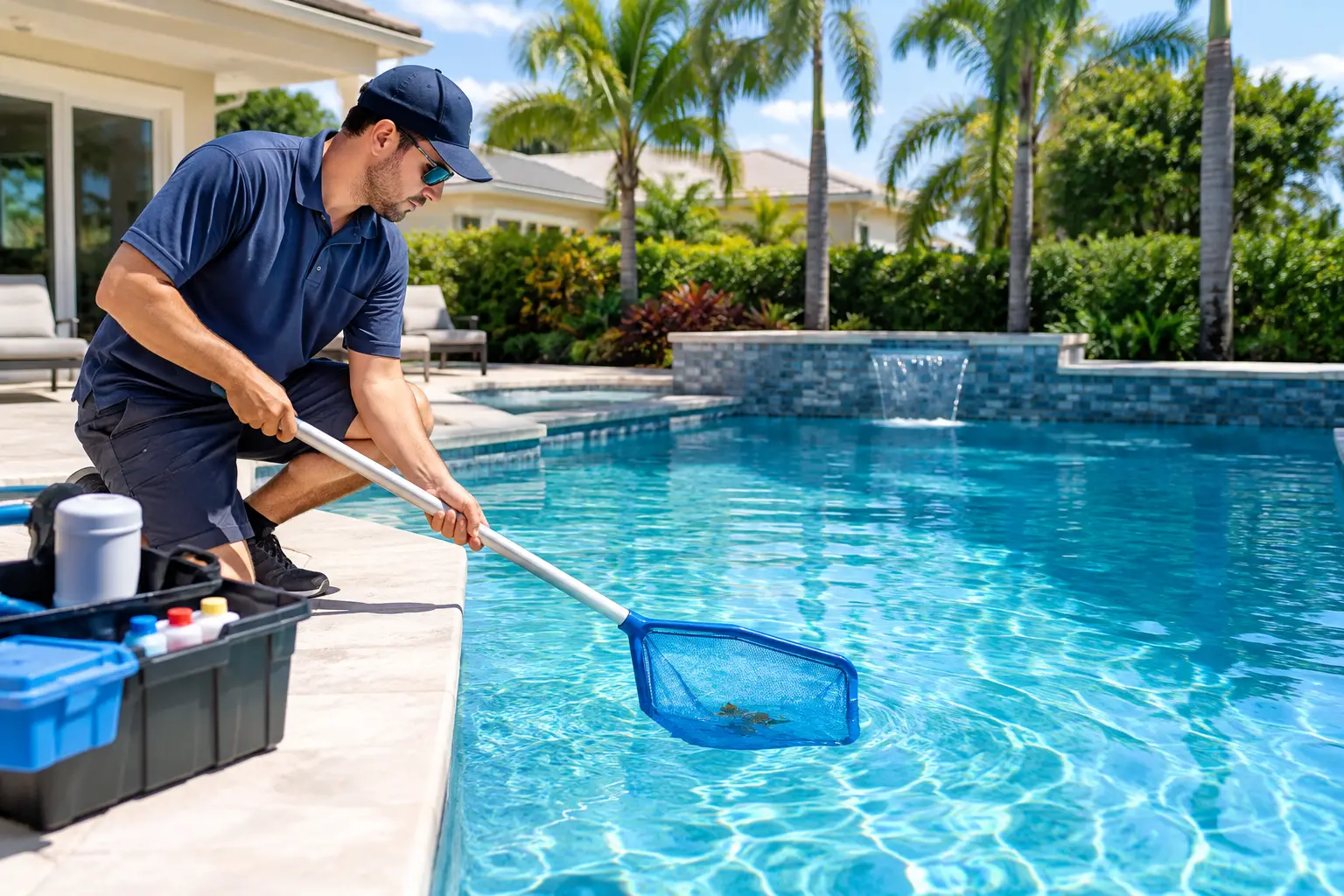
Most recurring stains have a recurring cause. Weekly skimming, brushing, water testing, and visual equipment checks make it easier to catch that cause before it becomes a noticeable mark on the wall or floor.
Brushing matters because it removes the beginnings of algae and prevents fine debris from settling into textured finishes. Good circulation matters because still areas are more likely to collect debris, develop algae, and show uneven chemistry. A pump that is underperforming, a dirty filter, or poorly aimed returns can all contribute to problem spots.
Balanced water is equally important. Water that is consistently out of balance can encourage scale, make metals more likely to deposit, and stress a pool surface over time. That is why dependable service should include more than a quick skim and a chlorine check. The details behind the water's balance affect what homeowners see on the finish.
For pools with recurring metal concerns, source water and chemical choices may need to be reviewed. This is especially useful after major refills or repairs. The best prevention plan is practical, surface-specific, and based on what the water is actually doing rather than a one-size-fits-all chemical routine.
When a Professional Evaluation Makes Sense
A professional assessment is worthwhile when a stain is spreading, returns after cleaning, changes color, appears near fittings or equipment, or is paired with cloudy water, algae, or rough scale. It is also the sensible choice when the pool has a delicate finish, exposed aggregate, or suspected plaster wear.
Turtle Pool Care approaches staining with the same careful attention used for weekly residential service: inspect the pool, test the water, consider the equipment and circulation, and document what was found. That measured process helps homeowners avoid unnecessary treatments while keeping the pool safe, balanced, and turtly clean.
If a stain turns out to be cosmetic surface aging rather than a chemistry issue, knowing that is still valuable. It allows you to plan realistically instead of repeatedly spending money on temporary fixes. A clear pool should also look cared for, and the right diagnosis is the best place to start.