A pool can look perfectly clear while quietly wasting electricity, struggling with circulation or drifting out of chemical balance. The right pool technology helps prevent those hidden problems before they spoil a weekend swim. The wrong upgrade, however, can add cost and complexity without making pool ownership any easier.
For homeowners in Palm Beach County, technology should have a practical job: keep the water safer, reduce unnecessary running costs, simplify routine care or make equipment easier to monitor. Here is where modern equipment genuinely earns its place.
Pool technology starts with circulation
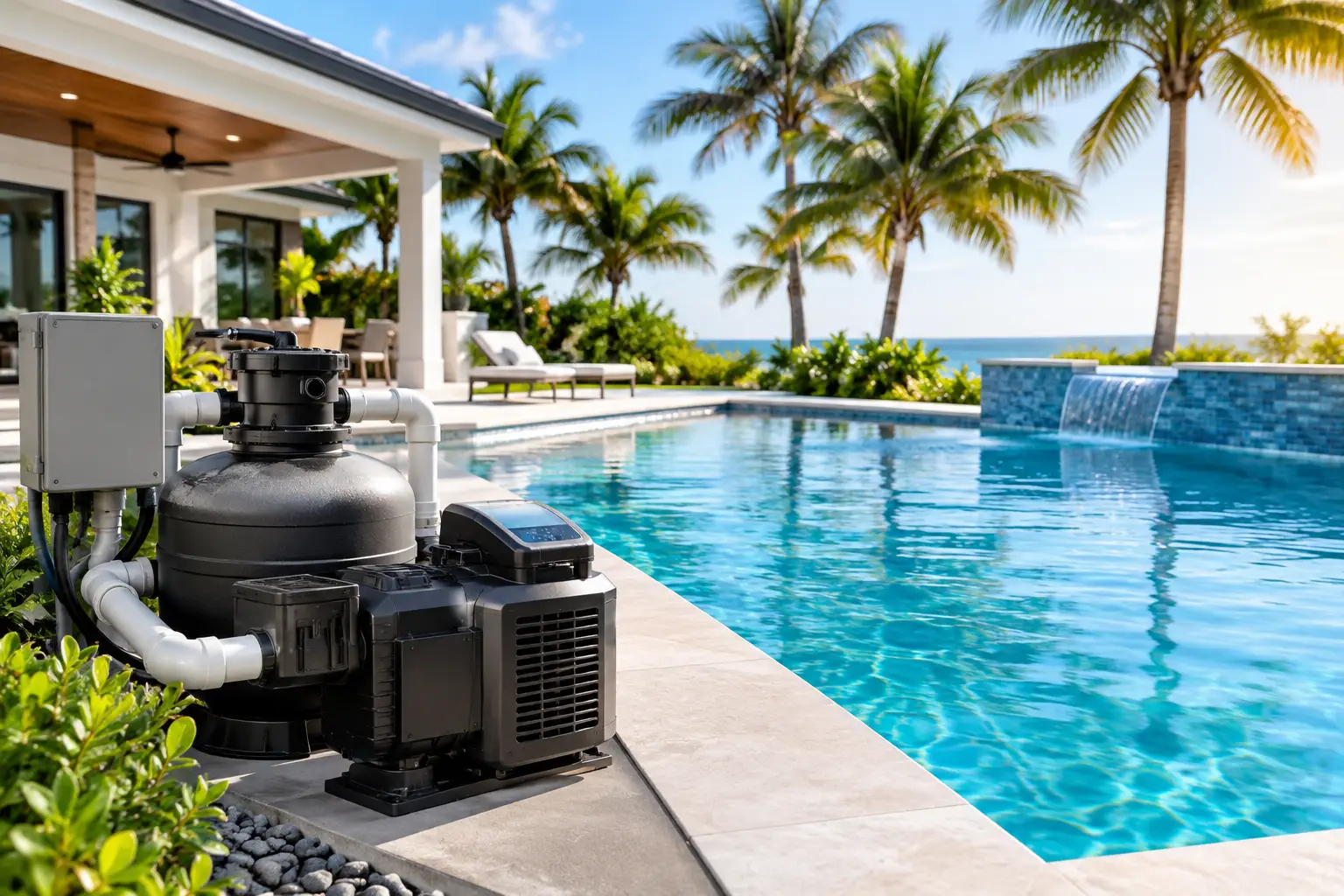
If an older single-speed pump is the heart of your pool system, it may be working harder than necessary. It runs at one fixed, high speed regardless of whether the pool needs heavy cleaning, normal filtration or simply enough circulation to maintain water quality.
A variable-speed pump changes that. It can run slowly for longer periods during everyday filtration, then increase speed when the cleaner, water feature or heater needs more flow. Because electricity use rises sharply at higher speeds, a correctly sized variable-speed pump can make a meaningful difference to operating costs.
The key phrase is correctly sized. Bigger is not automatically better. An oversized pump can create excessive flow, strain plumbing and filter components, and make the system noisier. Pump selection should account for pool volume, pipe size, equipment layout, water features and whether the pool has a spa or heater.
Longer, lower-speed circulation also gives the filter more opportunity to catch fine debris. That is especially useful after windy afternoons, summer rain and the heavy leaf load common around established Florida gardens. Still, a variable-speed pump does not replace cleaning, filter care or accurate chemistry testing. It simply gives the system a more efficient foundation.
Automation should make ownership simpler
Pool automation allows selected equipment to operate on a schedule or through a control panel or app. Depending on the system, that may include the pump, lights, heater, spa, water features and salt chlorinator.
The benefit is not pressing a button from the sofa. It is consistency. A pump that runs at the right times, a heater that is not left on unnecessarily, and lights that shut off automatically all help the pool run predictably. For families who use their pool after work or enjoy weekend entertaining, automation can take away the small, repeated jobs that are easy to forget.
It also helps when you are away from home. A properly programmed system can maintain its normal schedule rather than leaving water stagnant for days. That said, automation cannot see algae beginning on a step, empty a full skimmer basket or correct water chemistry after a major storm. It is a useful control tool, not a substitute for attentive weekly service.
What to automate first
For most residential pools, start with the equipment that delivers the clearest return: pump scheduling, lighting and heating controls. These are easy to use and directly affect energy use, convenience and enjoyment.
Complex systems with multiple water features, spa valves and extensive smart-home connections can be worthwhile for larger or newly renovated pools. They also require careful installation and programming. A system with too many features that no one understands is not smart pool ownership.
Better sanitation still needs balanced water
Saltwater pools are often described as chemical-free, but that is not quite right. A salt chlorinator uses dissolved salt to generate chlorine, giving the pool a steadier supply of sanitizer. Many swimmers prefer the feel of saltwater, and the system can reduce the need for manually adding chlorine as often.
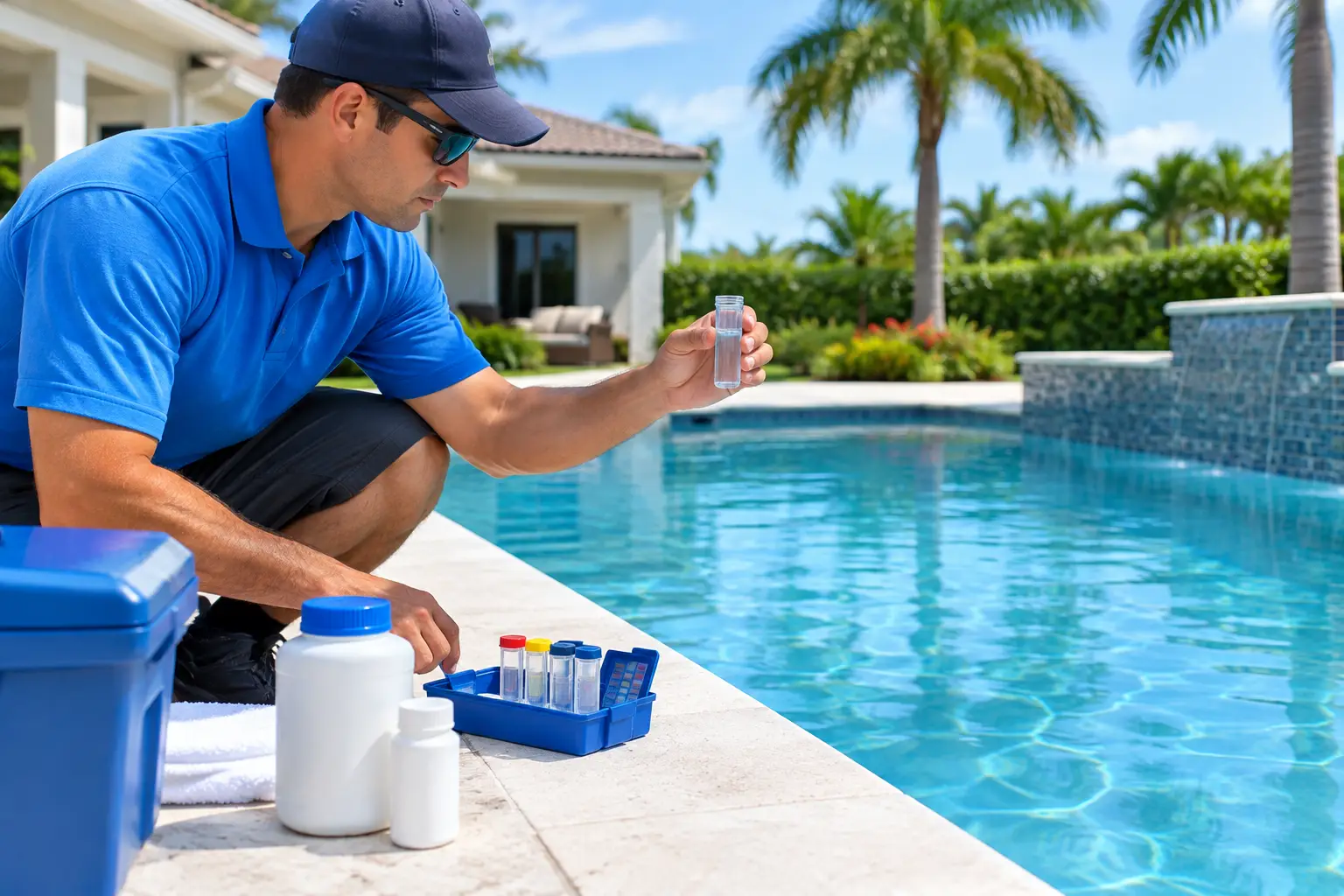
The trade-off is that salt systems still depend on good water chemistry. pH, total alkalinity, stabiliser, calcium hardness and salt level all affect how well the chlorinator performs. In Florida heat, chlorine demand can increase quickly, while heavy rain can dilute and disrupt balanced water.
Salt cells also need inspection and occasional cleaning. Scaling on the cell can reduce chlorine production, and a failing cell may look like a chemistry problem when it is actually an equipment issue. A weekly professional test and service report gives homeowners a clearer picture of what the system is doing, rather than relying on guesswork or a single app alert.
Chemical controllers and automated dosing systems can add another layer of precision, particularly for pools with high use or owners who travel frequently. They are not essential for every home. For a straightforward residential pool, consistent testing and precise manual adjustment often remain the most sensible approach.
LED lighting improves safety and atmosphere
Modern LED pool lights use far less energy than older incandescent fixtures and can provide a cleaner, brighter result. They also make evening swimming safer by improving visibility around steps, ledges and the pool floor.
Color-changing lights can create a fun setting for a party, but reliable white illumination matters most. If a light is flickering, has water inside the lens or trips electrical protection, it needs professional attention. Pool lighting involves water and electrical systems, so this is not a repair to postpone or treat as a do-it-yourself project.
When choosing an upgrade, consider how the pool is actually used. A single replacement LED may be enough for a compact pool. Larger pools or pools with a spa may need a lighting plan that avoids dark corners rather than simply adding more color options.
Robotic cleaners have a useful, limited role
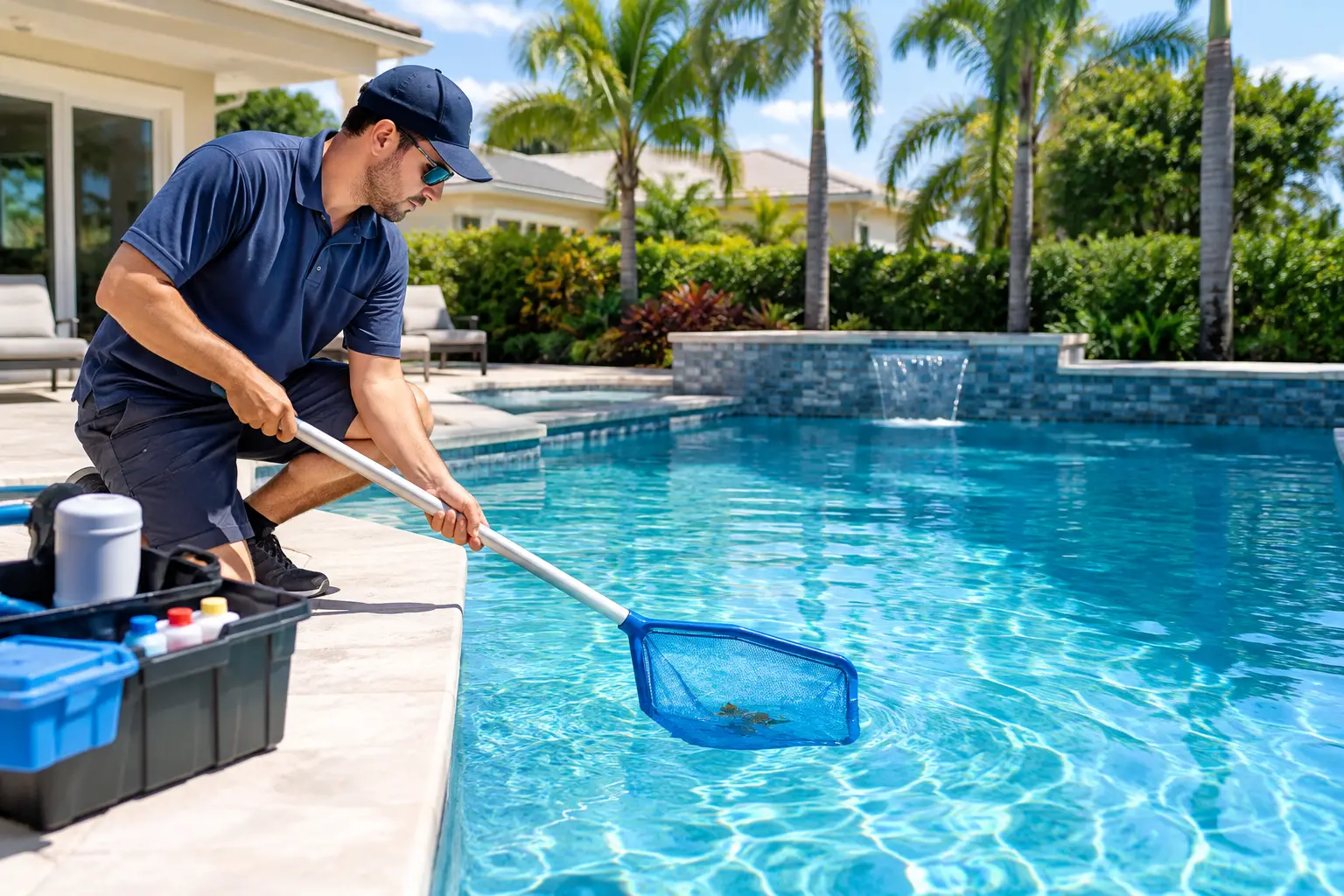
A robotic cleaner can be a helpful addition between service visits. It works independently from the pool's main circulation system, collecting debris in its own filter basket and reducing the demand on the pump and filter.
For pools surrounded by trees, a robot can be particularly useful after a storm or before guests arrive. It can pick up leaves and fine debris efficiently, and many newer models climb walls or clean the waterline.
But a robot does not replace brushing. Algae can establish itself on steps, behind ladders, in corners and along tile lines before it is obvious from the deck. It also cannot test water, clean the skimmer, inspect the pump basket or identify a developing leak. Think of it as an extra pair of hands, not a full maintenance program.
Monitoring can catch issues earlier
Smart sensors and connected equipment can report water temperature, pump status, flow warnings and, in some cases, chemical readings. These tools can be useful for spotting a pump that has stopped, an unexpected temperature change or a system running outside its normal pattern.
Their limitation is accuracy over time. Sensors need calibration, cleaning and context. A digital reading may flag an issue, but it cannot always explain why it happened. For example, low chlorine could relate to a depleted salt cell, heavy bather use, rain dilution, poor circulation or an incorrect stabiliser level.
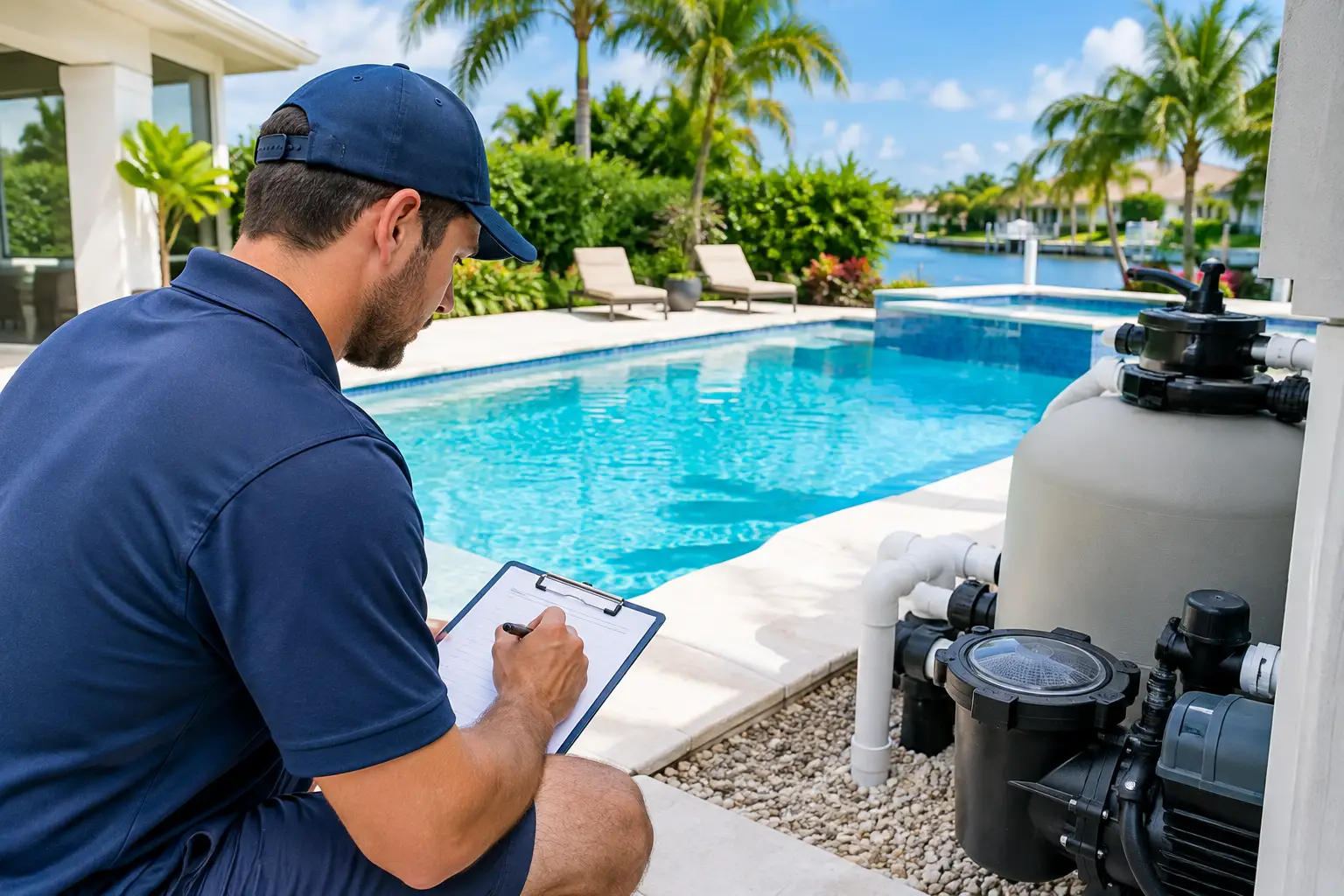
The best approach combines technology with trained eyes. Turtle Pool Care uses detailed service reporting and photographic proof of work so homeowners can see that their pool has been checked, cleaned and treated with care. That sort of transparency is often more useful than a stream of notifications with no clear next step.
Make upgrades fit the pool you have
The best time to review equipment is before it fails completely, not after a hot day reveals that the pump has stopped or the heater will not start. If your power bills have climbed, circulation seems weak, water quality has become harder to maintain or old controls are unreliable, an equipment assessment can identify the most sensible priority.
For many homes, a variable-speed pump and simple automation provide the strongest everyday value. For others, a salt system, LED lighting or a robotic cleaner is the better next step. New pools and resurfaced pools need an even more careful approach, because correct chemistry during the early curing period protects the finish before any convenience upgrade becomes the focus.
Good pool technology should make your pool easier to enjoy, not give you another screen to manage. Choose equipment that suits how your family swims, let it be installed and programmed properly, and keep the essentials - circulation, cleaning and balanced water - at the centre of the plan. That is how a pool stays turtly clean and ready when you are.