A pool that is crystal clear on Friday but cloudy by Monday often has an equipment schedule problem, not a cleaning problem. A timely pool timer replacement can restore the dependable circulation your pool needs to stay safe, balanced and turtly clean, without asking you to remember to switch the pump on and off every day.
For Palm Beach County homeowners, that schedule matters year-round. Warm water, heavy rain, falling debris and regular swimming all increase the demand on your filtration and sanitizer. When a timer stops doing its job, water chemistry can drift quickly and a small equipment issue can turn into a green-pool recovery.
What a pool timer actually controls
The timer tells the pool pump when to run. During those programmed hours, water moves through the skimmer, pump, filter and return lines. That circulation distributes chemicals, captures debris and gives the filtration system time to do its work.
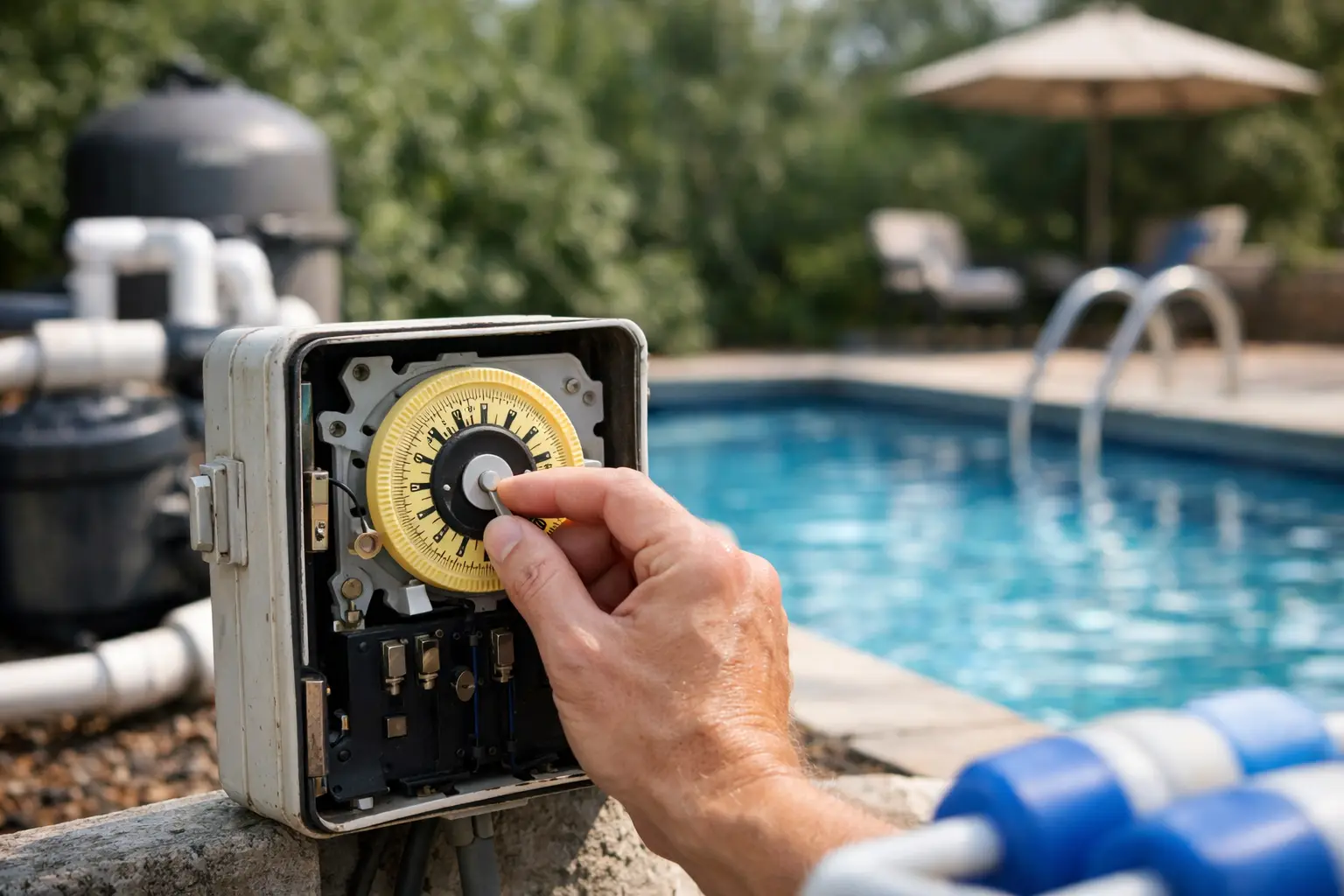
Many homes still have a mechanical timer with a rotating dial and small on/off trippers. These are straightforward, durable units, but their motors and contacts do eventually wear out. Other pools use digital timers, variable-speed pump controls or an automation panel that schedules the pump alongside lights, heaters and water features.
A timer is not just a convenience. If the pump starts late, stops early or does not operate at all, chlorine may not circulate evenly and debris sits longer in the water. Running the pump excessively is not ideal either, particularly with an older single-speed pump, because it can add unnecessary electricity costs and wear.
Signs a pool timer replacement may be needed
The clearest warning sign is a pump that no longer follows its program. You may find it running overnight when it should be off, or arriving home to still water during its normal circulation period. Before assuming the timer has failed, check that a recent power cut or daylight-saving clock change has not shifted the schedule.
A mechanical dial that has stopped moving is another strong sign. If the timer clock is receiving power but the dial remains in the same position, the timer motor may have failed. In some cases, replacing that small motor is practical. In others, especially where the enclosure is aged or corroded, a full replacement is the safer long-term choice.
Look out for inconsistent switching too. The pump may start only when you manually move the lever, or the trippers may pass their set point without properly engaging the switch. Worn trippers are inexpensive, but a loose mechanism, burnt contacts or a noisy timer enclosure calls for a proper inspection.
Other warning signs deserve prompt attention:
- The timer enclosure feels unusually hot, smells burnt or shows scorch marks.
- Water has entered the box after heavy rain or irrigation.
- The timer trips the breaker or the pump loses power intermittently.
- Rust, insect damage or cracked wiring insulation is visible inside the enclosure.
Do not keep resetting a breaker or forcing a stiff timer lever. Pool equipment combines water, high-voltage electricity and outdoor exposure. A qualified pool professional or licensed electrician should assess faults involving wiring, breakers, heat damage or moisture.
Do not replace the whole timer too soon
Not every scheduling fault requires a complete pool timer replacement. A careful diagnosis can avoid replacing parts that are still serviceable.
For mechanical models, the issue may be a missing or poorly positioned tripper, an incorrect clock setting, or a failed timer motor. For digital systems, the culprit can be a depleted back-up battery, an incorrect program, a tripped GFCI outlet or a communication issue between the control panel and pump.
The pump itself can also create confusion. A failing capacitor, worn relay, damaged pump motor or variable-speed drive fault may prevent the pump from starting even when the timer is sending the correct command. This is why it helps to test the equipment in both automatic and manual modes before deciding which component needs attention.
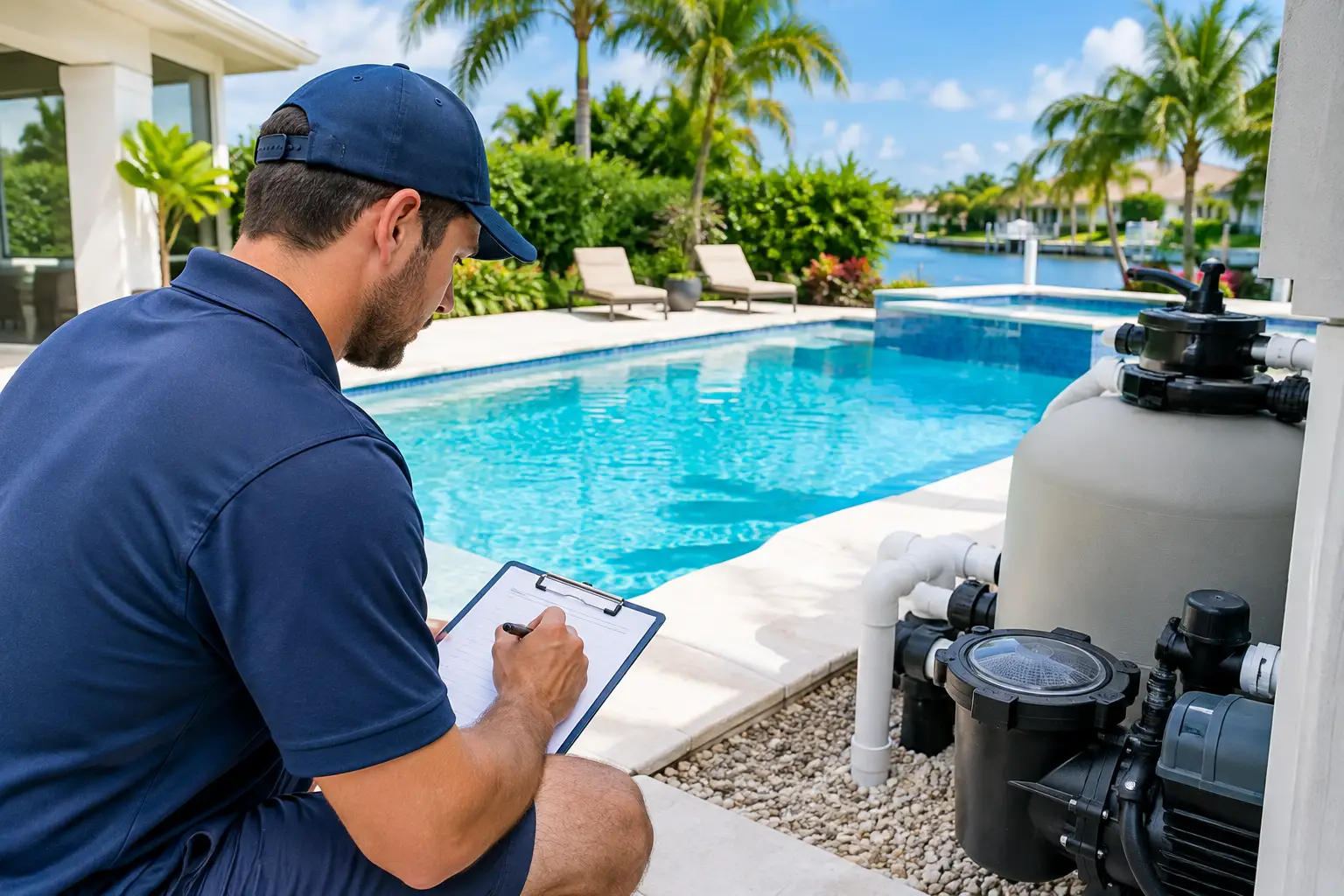
An experienced technician will check the power supply, timer operation, connections and pump response as a complete system. That approach protects you from paying for a new timer only to discover that the underlying issue was elsewhere.
Choosing the right replacement option
The best replacement depends on your existing equipment, how you use the pool and whether an upgrade would make daily ownership easier. A like-for-like mechanical timer remains a sensible option for many straightforward pools. It is familiar, reliable and easy to adjust when your circulation needs change.
A digital timer offers more precise programming and can make it easier to set separate schedules for weekdays, weekends or seasonal use. It can be a worthwhile step when the equipment pad is otherwise in good condition and you simply want more control than a dial provides.
If you have a variable-speed pump, the pump's built-in controller may already be the best place to manage run times and speeds. Variable-speed systems are designed to operate at lower speeds for longer periods, which can provide effective circulation with lower energy use. The correct schedule is not one-size-fits-all - it depends on pool volume, bather load, water temperature, filtration condition and features such as heaters or salt systems.
For homeowners planning new lights, a heater, a salt chlorinator or water features, a broader automation upgrade may be more practical than fitting another basic timer. Automation can bring several functions into one system, but it comes with a higher upfront cost and should be selected for genuine needs rather than gadget appeal.
Getting the pump schedule right after replacement
A new timer only helps when it is programmed thoughtfully. In South Florida, many residential pools need substantial daily circulation because water stays warm for much of the year. Yet more run time is not automatically better. An oversized schedule can waste energy, while too little circulation leaves chemicals unevenly distributed and gives algae an easier foothold.
The right setting starts with the pump type. A single-speed pump is usually scheduled in one or two defined blocks. A variable-speed pump may run longer at a lower speed, with a higher-speed period for skimming, heating or water features. After storms, large gatherings or heavy leaf drop, temporary adjustments may be needed.
Chemistry should guide the decision as well. If test results repeatedly show poor chlorine distribution, rising algae pressure or fine debris that is not clearing, the answer may involve run time, but it could also be filtration, circulation dead spots, pump performance or chemical demand. A timer adjustment should support balanced water, not substitute for regular testing and maintenance.
Protecting your equipment after the repair
Once the timer is working correctly, take a quick look at the equipment area every few weeks. Keep the enclosure closed, clear leaves and mulch away from the pad, and make sure sprinklers are not regularly soaking electrical components. After a major storm, check that the timer is keeping accurate time and that the pump has returned to its normal schedule.
It is also worth confirming that the equipment label reflects the current program. If one family member changes the timer for a party or a cold spell, another person should not have to guess what is normal later. Clear settings prevent accidental under-circulation and make service visits more efficient.
For a family pool, reliable circulation is one of those quiet details that makes everything else easier: the water looks inviting, chemicals stay more predictable and the pump is not running when nobody needs it. If your schedule has become unreliable, dealing with it early is a simple way to keep your pool ready for the next swim, not the next repair.