A pool can look clear from the patio and still be carrying the grit, leaf matter and fine debris that make water harder to manage. A dependable pool vacuuming service does more than improve appearance: it removes the material that feeds algae, strains circulation and leaves swimmers with a less inviting pool. For Florida homeowners, where wind, rain and year-round use keep debris moving, that regular attention makes a real difference.
The right service should leave your pool thoroughly clean, safely balanced and ready for the next family swim, not merely give it a quick once-over. Here is what homeowners should expect from professional vacuuming as part of a proper weekly pool-care routine.
Pool Vacuuming Service: More Than a Clean Floor
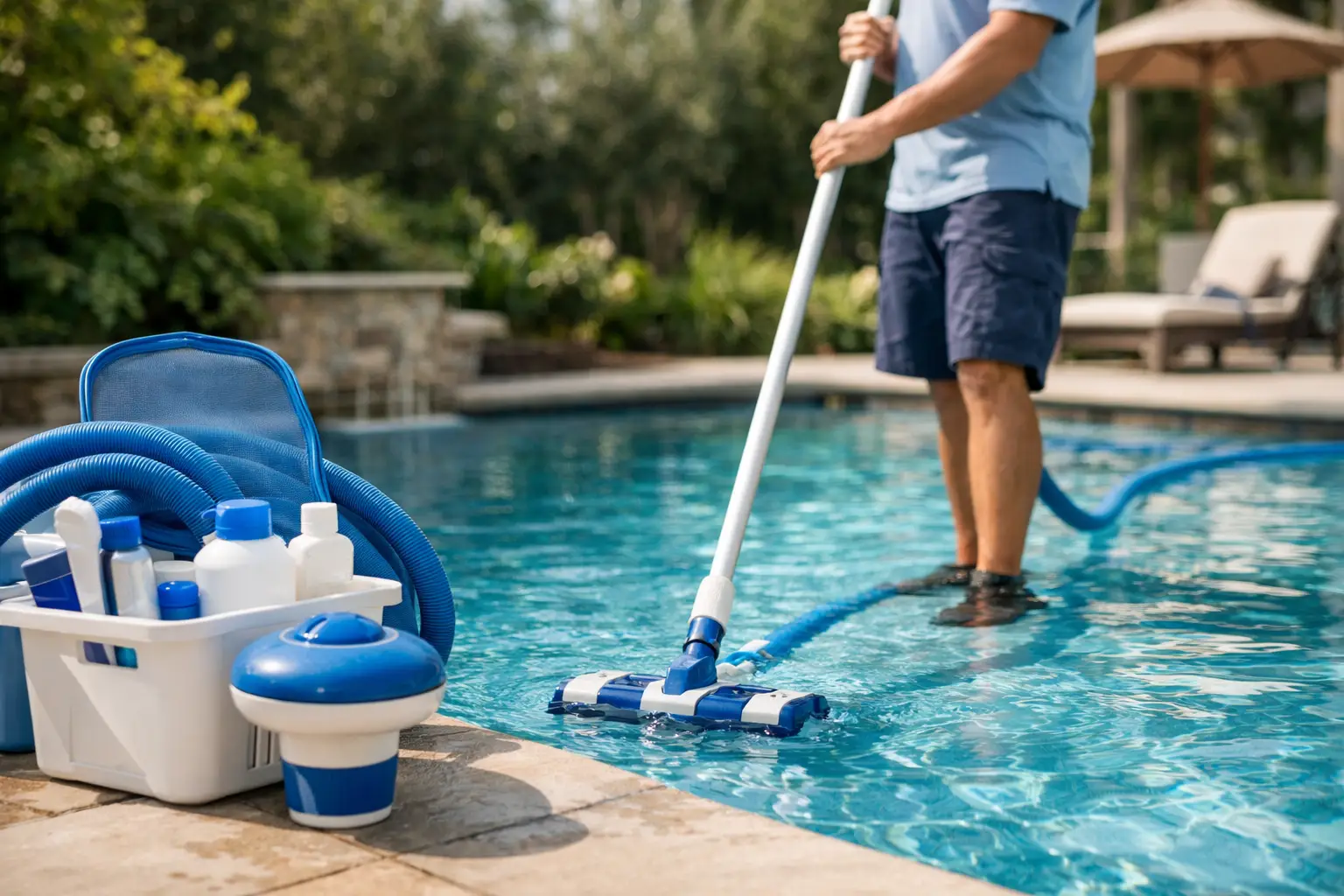
Vacuuming removes settled debris from the pool floor and steps before it breaks down. That can include sand, soil, pollen, leaves, small twigs, insects and organic material washed in during a storm. Left in place, this debris does not simply disappear. It decomposes, increases the chlorine demand and can contribute to staining or algae growth in the areas where it settles.
A technician should adjust the approach to the pool’s condition. A lightly used, screened pool may only need routine manual or automated vacuuming, while an open pool beneath trees may require more concentrated attention after a windy week. Pools with heavy debris may also need waste removal rather than sending everything through the filter, depending on the equipment and the volume involved.
Vacuuming should be carried out carefully around steps, benches, ladders, drains and corners. These are the places debris collects and where rushed service tends to show. A clean floor is valuable, but thorough coverage is what helps maintain a consistently clean pool between visits.
Cleaning the Waterline and Surface Matters Too
A vacuum alone cannot keep a pool clean. Debris first lands on the surface, and oils, sunscreen and airborne contaminants collect at the waterline. That is why effective weekly service combines vacuuming with skimming and brushing.
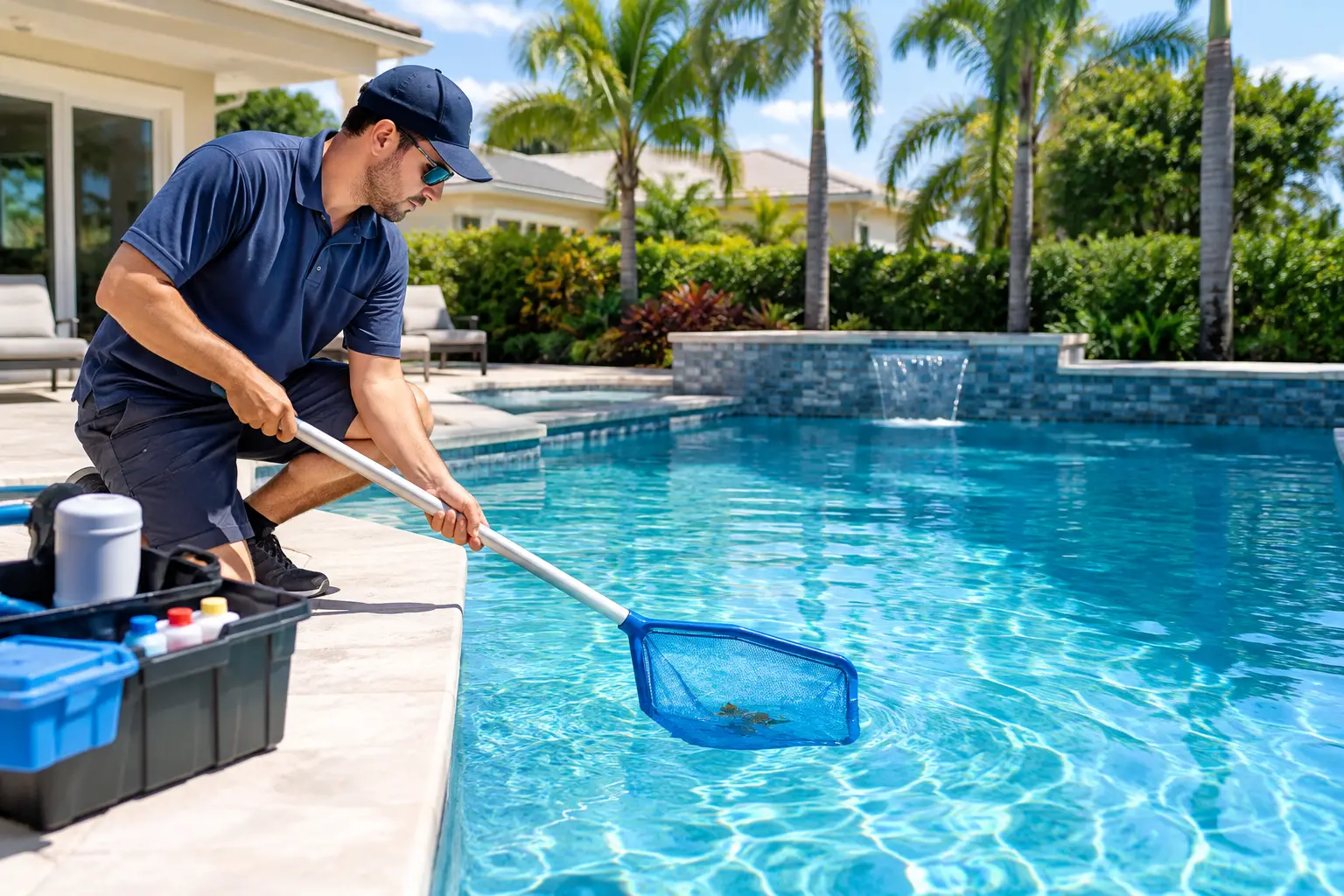
Skimming removes floating leaves, seed pods and insects before they sink. Brushing helps prevent dirt and algae from settling into plaster, tile lines, steps and hard-to-reach wall areas. The waterline should also be checked for build-up, particularly after busy weekends or periods of heavy pollen.
The exact tasks will vary from one property to another. A pool in The Acreage or Loxahatchee may receive more leaf and dust debris than a more sheltered pool in Wellington or Royal Palm Beach. The important point is that service is responsive to the pool in front of the technician, rather than treated as a fixed checklist completed at speed.
Vacuuming Supports Better Water Chemistry
There is a practical chemistry reason to keep debris out of a pool. Leaves, grass and other organic matter consume sanitizer as they break down. When chlorine is constantly busy dealing with contamination, there is less available to protect the water from algae and bacteria.
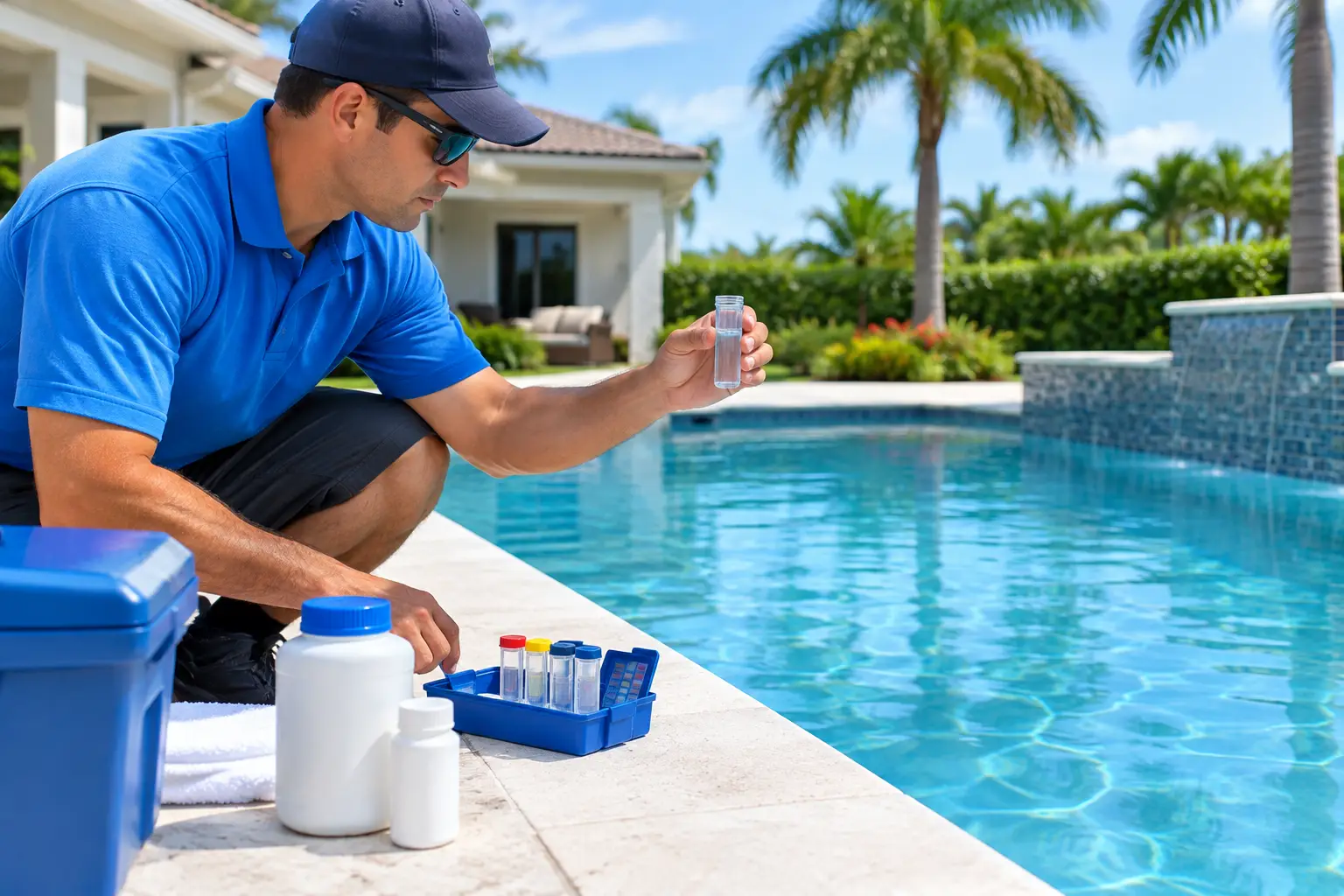
During a weekly visit, a professional should test the water and make precise chemical adjustments alongside cleaning. Chlorine or other sanitizer levels, pH, total alkalinity and stabiliser all affect how well the water performs. Calcium hardness also matters, particularly for protecting surfaces and equipment over time.
Adding chemicals without testing is guesswork. Equally, vacuuming without considering the water balance can leave the underlying problem untouched. A pool that repeatedly develops debris, cloudy water or early algae may need more than a standard chemical dose. It may have circulation limitations, an overloaded filter, an issue with bather load or a developing equipment fault.
Your Equipment Should Be Checked During Each Visit
A clean pool depends on water moving correctly. The pump pulls water through the skimmer and main drain, the filter captures fine particles, and the returns send treated water back into the pool. If any part of that cycle is underperforming, vacuuming will have a shorter-lived result.
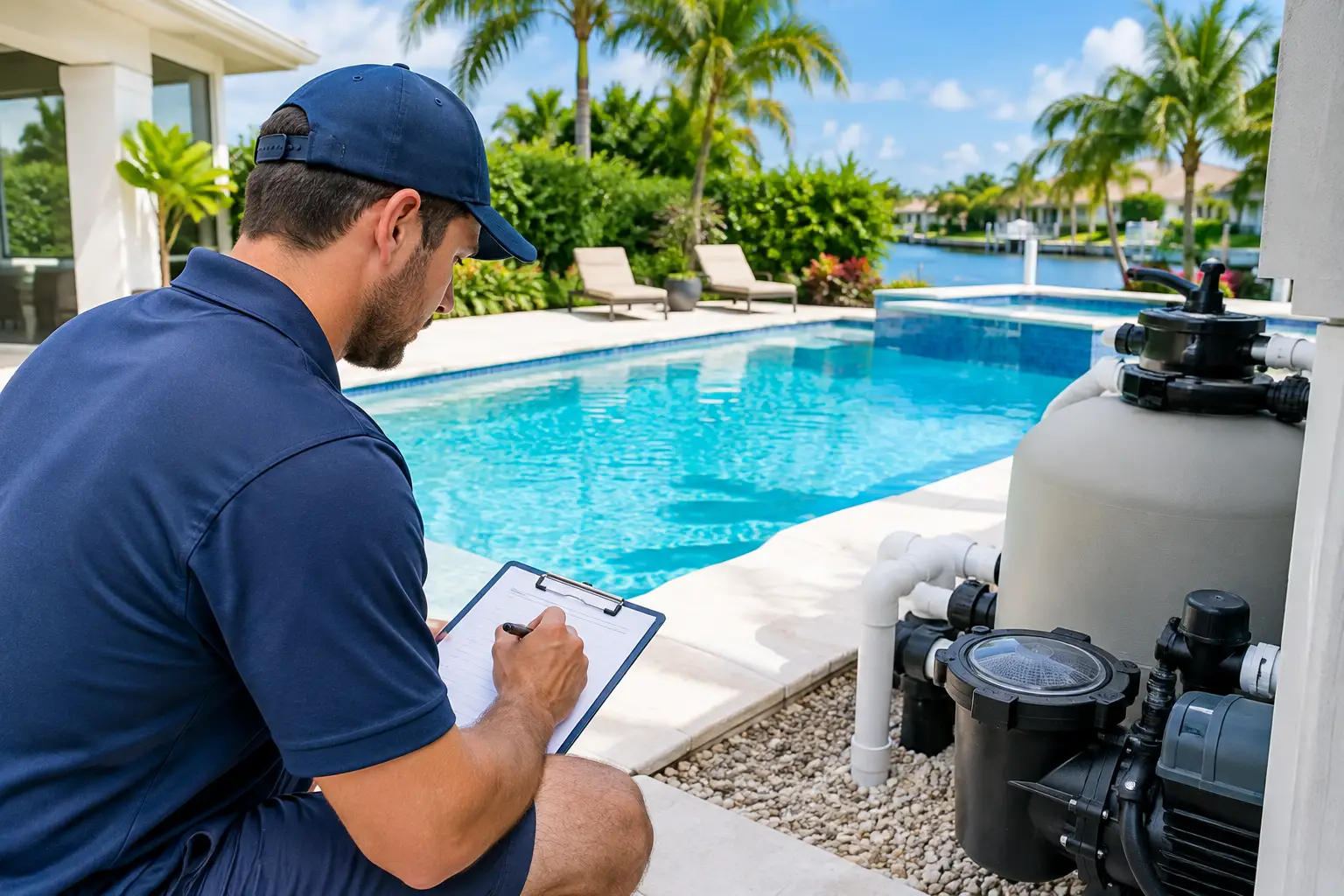
A proper service visit includes a visual check of the pump, filter pressure, timer or automation settings, valves and obvious leaks. Skimmer and pump baskets should be emptied where needed, allowing water to flow freely. If the filter pressure is unusually high or low, it is worth investigating rather than simply carrying on with routine cleaning.
There are trade-offs here. Cleaning a filter too often can be counterproductive for certain filter types, while waiting too long can restrict circulation and reduce water clarity. A knowledgeable technician will work from the equipment’s readings, the pool’s condition and the manufacturer’s requirements, rather than use a one-size-fits-all schedule.
Signs Your Pool Needs More Than Routine Vacuuming
Some problems cannot be solved by a normal weekly vacuum. If you notice green walls, cloudy water, persistent fine dust returning to the floor, weak return flow or a pump making unusual noise, it is time for a closer assessment.
Green or neglected pools often need a structured green-to-clean treatment, with algae removal, filtration support and closely managed chemistry. A recurring film of fine debris can point to a filter issue, damaged internal parts or nearby environmental conditions. In these cases, repeatedly vacuuming may improve the appearance for a day or two, but it will not address the cause.
Newly built or resurfaced pools also require a different level of care. Fresh plaster needs a controlled 28-day start-up program to support curing and avoid surface damage. Brushing, water balancing and regular monitoring are especially important during this period, and the cleaning approach should protect the new finish.
What Reliable Service Looks Like at Your Home
Trust matters when someone is caring for the water your family swims in and the equipment that protects your investment. Reliable pool service is not just about arriving on the right day. It is about clear communication, consistent standards and accountability when the pool needs extra attention.
Look for a provider that tells you when a visit has been completed and records what was done. Detailed post-service reports and photographs are useful because they make the condition of your pool visible, even when you are at work, travelling or simply not at home during the appointment. They also create a helpful record if an equipment issue develops over time.
A technician should flag concerns plainly. That might mean reporting a weakening pump, a light that needs repair, an automation setting that is not running as intended or water chemistry that requires follow-up. Early action is usually less disruptive and less expensive than waiting for a small issue to become a pool that cannot be used.
How Often Should a Pool Be Vacuumed?
For most residential pools in Palm Beach County, weekly vacuuming as part of weekly pool service is the sensible baseline. Florida’s heat, rainfall, landscaping and frequent swimming create conditions where debris and chemistry can change quickly. Weekly care gives a professional the chance to remove contaminants before they build up and to spot changes in water or equipment performance.
Some pools may need an additional visit after a severe storm, landscaping work or a period of unusually heavy use. Others may remain very clean between regular appointments, especially if they are screened and have effective circulation. Frequency should reflect the pool, its surroundings and how it is used, not an arbitrary promise of the fewest possible visits.
Turtle Pool Care approaches weekly service as ongoing protection for your pool, not a transaction. Cleaning, vacuuming, testing and equipment observation work best when they happen together, week after week, with a clear record of the care provided.
A pool should feel like the easiest part of your Florida home to enjoy. When debris is removed, chemistry is kept safe and perfectly balanced, and equipment is watched closely, stepping outside for a swim becomes simple again.