A sparkling pool can still be out of balance. Water may look clear while carrying conditions that irritate skin, encourage algae, damage expensive equipment or reduce the effectiveness of sanitizer. A dependable pool water testing service catches those issues early, so your pool stays safe, comfortable and truly clean for family swims, weekend guests and the long Florida season.
For homeowners, the value is not simply receiving a set of readings. It is having someone who understands what those readings mean together, makes precise adjustments and watches for the small changes that can become a green pool or repair bill.
Clear water is not always balanced water
Pool chemistry is a working system, not a one-time calculation. Chlorine or another sanitizer needs the right conditions to do its job. pH affects swimmer comfort and the performance of sanitising products. Alkalinity helps prevent sudden pH swings. Calcium hardness matters for plaster, tile, heaters and other surfaces. Stabiliser protects chlorine from strong sunlight, but too much can make it less effective.
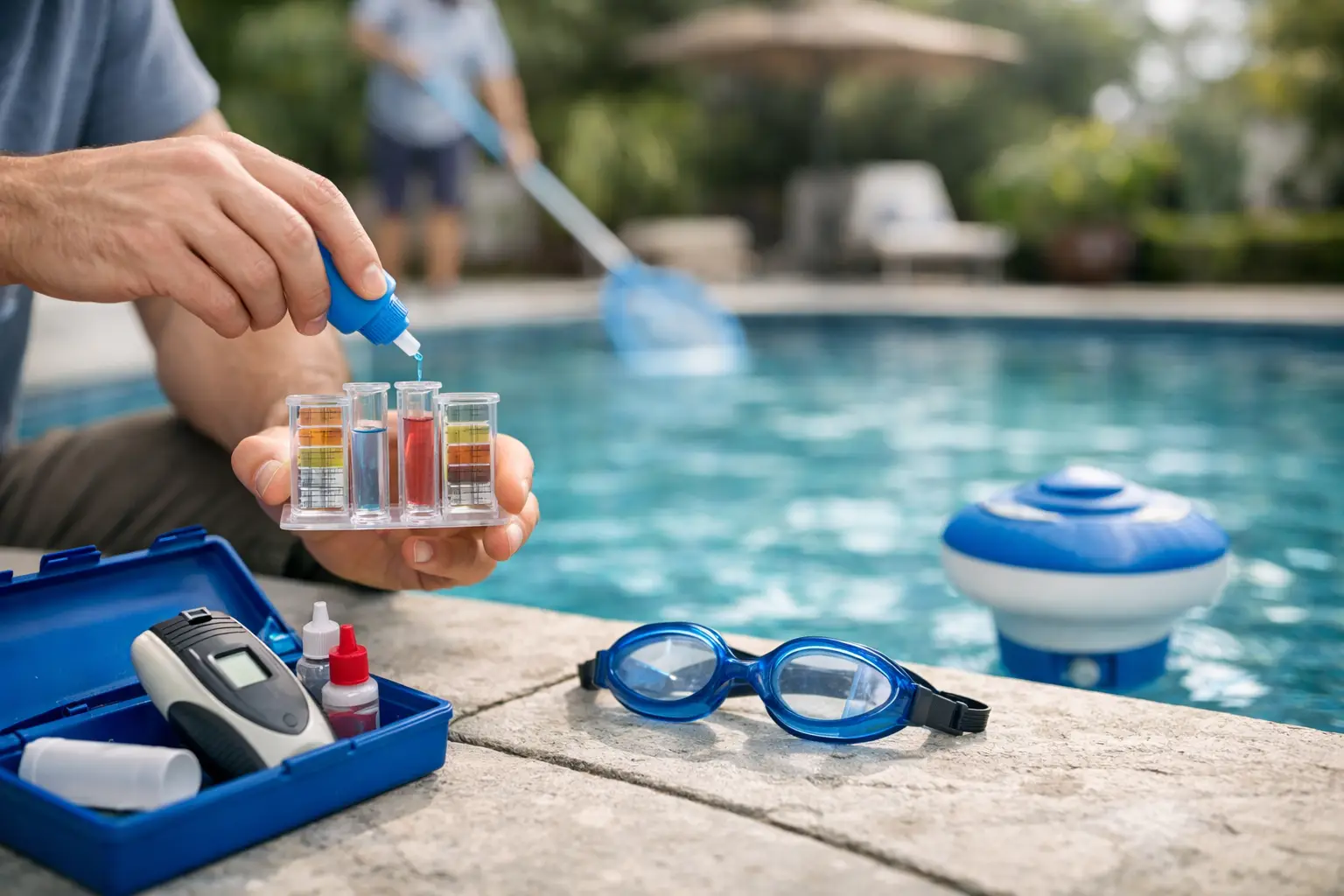
A test strip can be useful for a quick homeowner check, but it is not a complete picture and can be difficult to read accurately. More importantly, a number on its own does not tell you why it has moved or which adjustment should come first. Adding chemicals without considering the whole balance can create a cycle of corrections that costs more and takes longer to settle.
That is why professional testing should lead to measured treatment, not guesswork. The aim is safe, perfectly balanced water that feels good to swim in while protecting the pool itself.
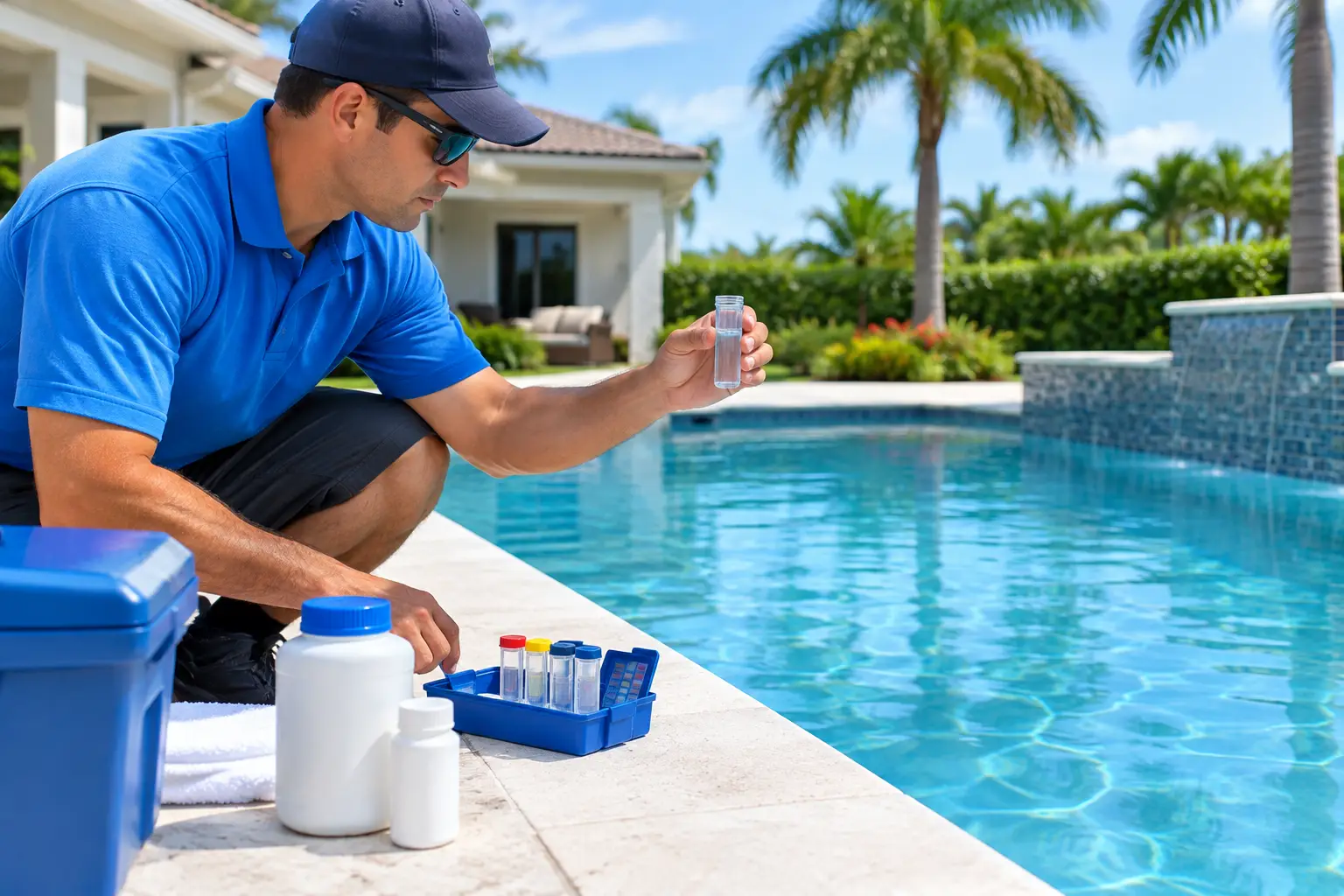
What a professional pool water testing service checks
The exact tests depend on the pool, its finish, sanitation method and recent weather. However, weekly service normally focuses on the chemistry that most directly affects water quality, swimmer comfort and equipment protection.
Sanitizer and chlorine demand
A pool needs enough active sanitizer to control bacteria and prevent algae. In Palm Beach County, high temperatures, bright sun, rainfall and frequent use can all increase chlorine demand. A pool may need a different adjustment after a busy birthday weekend than it did during a quiet week.
A professional checks whether the sanitizer level is appropriate and whether it is working effectively. If the water repeatedly loses chlorine too quickly, the answer may be an algae issue, excessive stabiliser, a dosing problem or poor circulation rather than simply adding more product.
pH and total alkalinity
When pH is too high, water can become cloudy and sanitizer may not work as efficiently. When it is too low, swimmers can experience eye or skin discomfort, and corrosive water can affect metal components and finishes. Total alkalinity acts as a buffer, helping to keep pH from rising and falling too quickly.
These values should be adjusted thoughtfully. Correcting pH without considering alkalinity may offer only a short-lived result. Steady chemistry is better for the pool and far less frustrating for the homeowner.
Calcium hardness and stabiliser
Calcium hardness is especially relevant for plaster pools and pools with certain surface finishes. Water with too little calcium may draw minerals from plaster, while excessively high calcium can contribute to scaling on tile, heaters and equipment. Stabiliser, also called cyanuric acid, is equally worth watching in sunny Florida. It prevents sunlight from burning through chlorine too quickly, but an overloaded level can limit chlorine’s sanitising power.
These are not always the readings that change dramatically from one day to the next. Still, monitoring them consistently helps prevent long-term damage and avoids surprise chemistry problems later in the season.
Salt, metals and other pool-specific factors
Saltwater pools still require regular water testing. The salt system produces chlorine, but it does not replace chemistry management. Salt level, cell performance, pH and stabiliser all affect how well the system operates.
Some pools also need checks for metals, phosphates or other conditions when staining, algae, cloudy water or unusual chemical demand appears. Good service is never about applying the same treatment to every pool. It is about responding to what that particular pool needs.
Why weekly testing makes a real difference
Florida weather can alter pool water quickly. A heavy downpour dilutes chemicals and washes debris into the pool. Intense sunshine burns through sanitizer. Wind and landscaping can add leaves, pollen and organic material. When water is warm, algae has favourable growing conditions.
Weekly testing gives a pool technician a reliable baseline. Small shifts can be corrected before they become visible, which is usually easier and less costly than recovering a fully green pool. It also allows the technician to notice patterns, such as recurring high pH, declining chlorine production or chemistry changes after a pump schedule adjustment.
Testing works best as part of a complete weekly visit. Skimming, vacuuming, brushing, emptying baskets and inspecting equipment remove the debris and circulation problems that can undermine even well-balanced chemistry. Clean water is the result of each task working together.
Water chemistry can reveal equipment trouble
A pool test is also an early warning tool. If a pool will not hold sanitizer, the issue could be chemical, but it may also point to insufficient circulation, a failing salt cell, a dirty filter or an underperforming pump. Persistent cloudiness may be caused by a filtration issue rather than a need for more clarifier.
This distinction matters. Repeatedly adding chemicals to compensate for a mechanical problem does not solve the cause. It can mask it temporarily while placing extra strain on the pool and your budget.
During routine service, a knowledgeable technician looks beyond the test result. They consider water movement, pump operation, filter condition, pool cleaner performance and visible signs around the equipment pad. When something needs attention, prompt communication helps homeowners decide on a repair before a minor fault affects the whole pool.
New and resurfaced pools need closer attention
Fresh plaster requires a more structured approach than an established pool. During the first 28 days, the surface cures while water chemistry is carefully managed. Calcium, pH, alkalinity and brushing routines all matter during this period, and rushed or inconsistent care can affect the final appearance and durability of the finish.
A proper start-up program is not an ordinary weekly visit with a different label. It requires frequent checks, deliberate chemical adjustments and close attention to the curing process. Homeowners who have invested in a new build or resurfacing work should treat this stage as protection for that investment.
What transparent testing service should look like
You should not have to wonder whether your pool was visited or what was done. A professional provider should communicate clearly, arrive on a consistent schedule and keep records of the service performed. Detailed post-service reports and photographs provide useful reassurance, particularly when you are away, managing a busy household or preparing for visitors.
At Turtle Pool Care, weekly service combines water testing and precise chemical balancing with cleaning and routine equipment checks. Visit notifications and digital reports make the work visible, while a family-owned approach keeps accountability close to home.
For homeowners in Wellington, Westlake, Royal Palm Beach, The Acreage and nearby communities, local conditions are part of the job. A pool exposed to open acreage wind, heavy afternoon rain or constant family use may need a different level of attention than a sheltered pool used occasionally. The best care plan reflects how your pool actually lives.
A simple way to protect more than the water
Between visits, keep an eye out for changes worth reporting: cloudy water, a sudden algae tint, strong chemical smells, persistent foam, low water level, unusual pump noise or a heater that is not performing as expected. You do not need to diagnose the issue. Sharing what you notice gives your technician valuable context.
The goal is simple: your pool should be ready when you are. Regular testing, careful balancing and proactive equipment awareness turn pool ownership from another weekly chore into the easy outdoor time it is meant to be.