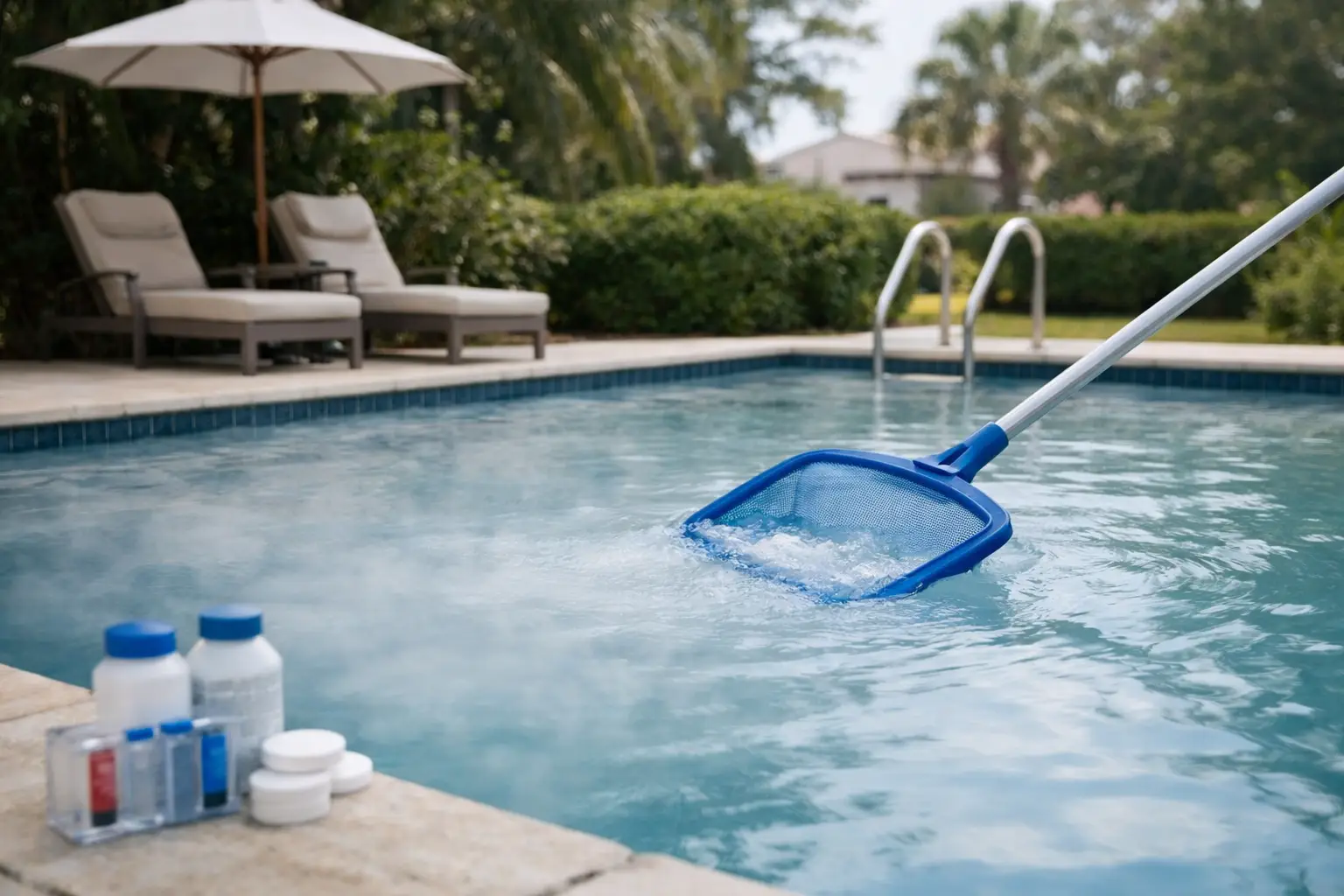
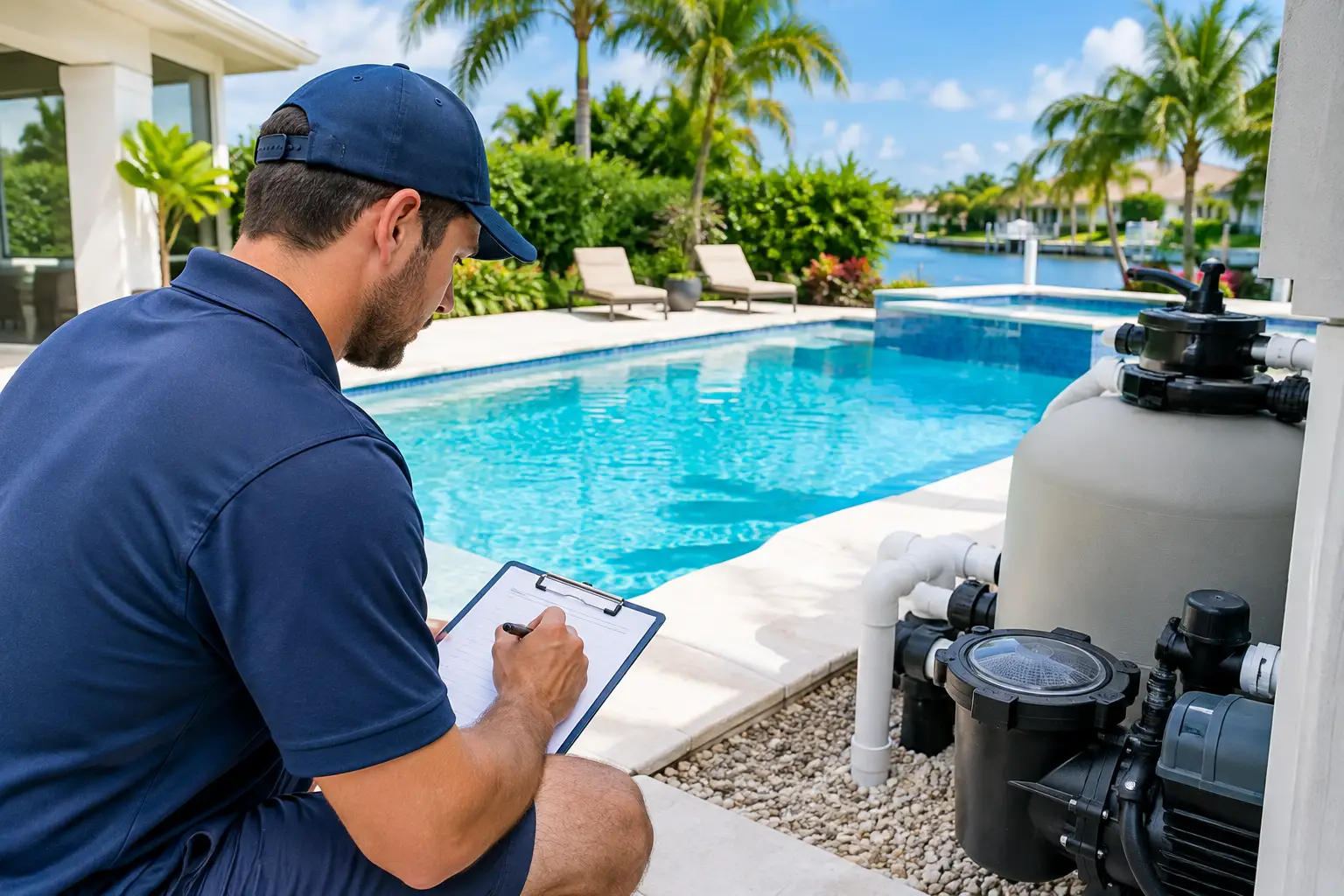
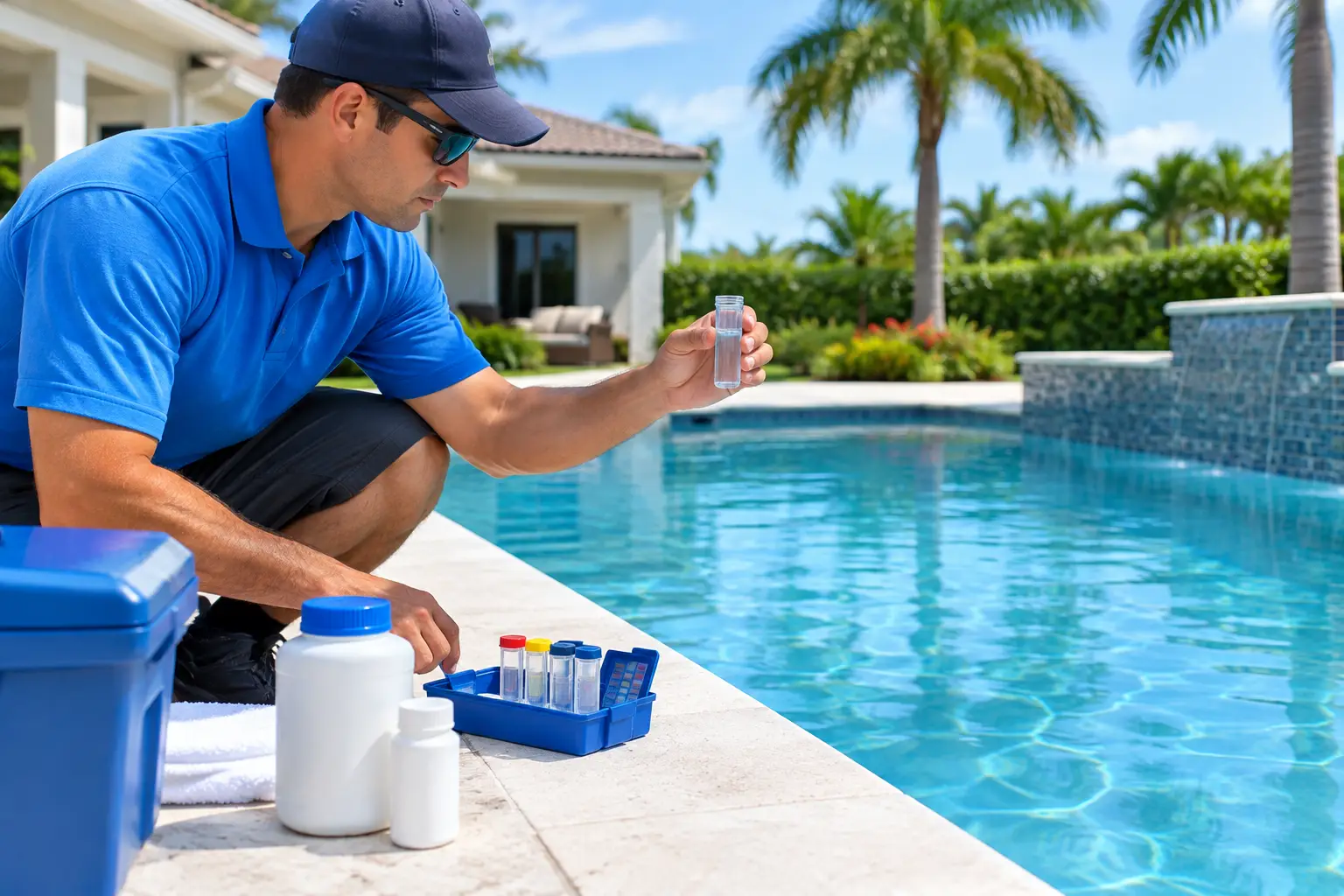
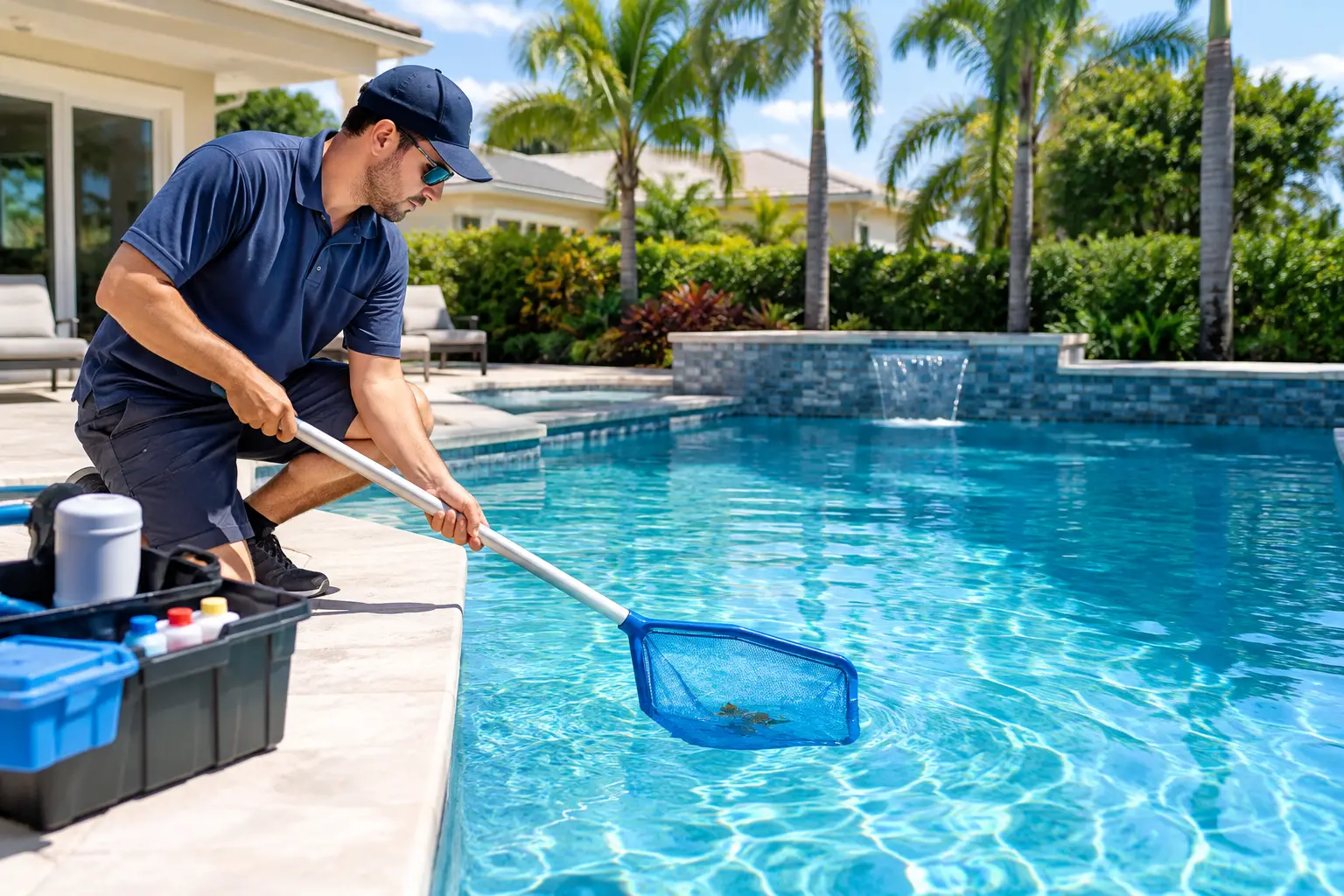
A pool can look clean at breakfast and turn dull, milky or hazy by the afternoon. In Palm Beach County’s heat, a small change in water chemistry, circulation or bather load can show up quickly. Understanding the main reasons pools become cloudy helps you respond before a minor issue becomes an algae treatment, equipment repair or lost weekend in the garden.
Cloudiness is not just an appearance problem. When you cannot clearly see the main drain, steps or floor, it is harder to judge whether the water is safe for swimming. The cause also matters: white haze, green-tinged water and particles that settle overnight each point to different problems. The right fix begins with identifying what is actually suspended in the water.
Reasons pools become cloudy: start with filtration
Your filter’s job is to trap the fine debris that makes water look dull. If it is clogged, undersized, damaged or simply not running long enough, those particles stay in circulation instead of being removed. This is one of the most common causes of a pool that looks cloudy even after it has been skimmed and vacuumed.
A dirty cartridge, a sand filter that needs backwashing, or a DE filter with worn grids can all reduce filtration. So can a pump basket packed with leaves, a blocked skimmer basket or a valve left in the wrong position after maintenance. The pump may sound normal while water flow is noticeably weaker.
Run time matters too. In warm Florida weather, water generally needs enough daily circulation to move the full pool volume through the filter. The exact schedule depends on pool size, pump speed, plumbing and how heavily the pool is used. A variable-speed pump may run longer at a lower speed, while a single-speed system may need a different schedule. More hours are not always the answer if the filter is overdue for service or flow is restricted.
What to check first
Look at the pressure gauge, water level and return jets. A higher-than-normal filter pressure often signals a dirty filter, while weak returns can indicate a blockage, low water level, air entering the system or a pump issue. Never rely on a pressure reading alone - every pool has its own normal operating range.
Unbalanced water chemistry leaves particles suspended
Clear water depends on chemicals working together, not on adding extra chlorine whenever the pool looks off. pH, total alkalinity, calcium hardness, cyanuric acid and sanitizer levels all affect how well particles filter out and how effectively chlorine can control contaminants.
High pH is a frequent culprit. It can reduce chlorine efficiency and encourage tiny mineral particles to form, creating a cloudy, grey-white look. Very high calcium hardness can do the same, particularly when pH and alkalinity are also elevated. On the other hand, water with low alkalinity can be difficult to keep stable, so pH swings after rain, heavy use or chemical additions.
Adding several products at once can make the issue worse. Some treatments temporarily cloud water as they bind fine particles together, while others can react poorly when applied too closely together. Precise testing and measured dosing are safer than guessing. If the water has become hazy after a chemical top-up, give the system time to circulate and filter, then retest before adding more.
Early algae growth can look more dull than green
Many homeowners expect algae to make a pool bright green. In reality, the first signs are often a slight haze, reduced sparkle, slippery walls or a faint green tint near steps and shaded corners. Algae begins when sanitizer is too low for conditions, circulation is poor, or a storm has added organic debris and diluted the water.
A pool can still show an acceptable chlorine reading while algae is beginning to grow if the chlorine is not active enough at the current pH or stabiliser level. This is why a full water test is more useful than checking one number. Brushing is also part of the solution because algae clings to surfaces where circulation is weaker.
If cloudiness progresses quickly, the floor becomes hard to see or algae is visible, avoid treating it as a routine weekly touch-up. It may require a structured green-to-clean process with sustained filtration, brushing, debris removal and chemistry corrections. Swimming should wait until the water is clear, balanced and safe.
Heavy use, rain and debris overwhelm the system
A busy weekend of children, guests, sunscreen, lotions and garden debris can put far more organic material into the pool than normal. Chlorine is then used up fighting those contaminants rather than maintaining a clean residual. Fine dust, pollen and grass clippings are small enough to pass through a tired or poorly maintained filter.
Summer rain creates its own set of challenges. It can dilute water chemistry, wash dirt and fertiliser residue into the pool, and overload skimmer baskets with leaves. After a heavy downpour, it is sensible to empty baskets, check the water level, run circulation as needed and test the chemistry rather than assuming the previous readings still apply.
This does not mean every pool party needs a major treatment. It means your pool needs attention that matches what it has just handled. A properly maintained system recovers much more easily than one already struggling with low flow or neglected filter cleaning.
Not all cloudiness comes from dirt or algae. In hard water, calcium can precipitate out as very fine particles when the balance is off. The result may be a pale, chalky appearance, sometimes alongside rough scale on tiles, fittings or the heater.
Metals can also affect color and clarity. Iron, copper and manganese may enter through source water, corroding equipment or certain chemical products. Their symptoms vary: water may look tea-colored, yellowish, greenish or simply dull after an oxidising treatment. The correct response depends on the metal and test result, so random chemical additions are risky.
Very fine dead algae, dust or plaster dust can remain suspended even after the original cause has been corrected. In these cases, filtration, brushing and carefully selected clarifying treatment may help. A flocculant can be effective in some pools, but it usually requires vacuuming waste to remove settled material. It is not a shortcut for a filter or chemistry problem.
New plaster and resurfaced pools need special attention
A newly built or resurfaced pool is not maintained like an established pool. During the first weeks, plaster is curing and can release fine dust into the water. pH often rises quickly, calcium balance needs close management, and frequent brushing helps prevent dust and surface issues.
Cloudiness during this stage can be normal, but it should never be ignored. A structured 28-day start-up program protects the finish while establishing stable water chemistry and dependable circulation. Skipping the start-up process or treating a new surface like a mature pool can create problems that are far more expensive than a temporary haze.
Equipment faults can quietly reduce water clarity
Sometimes the water is cloudy because a piece of equipment is no longer doing its job. A worn pump impeller, leaking suction line, failed pressure gauge, damaged filter element, broken multiport valve or poor return fitting can all affect circulation and filtration. Air bubbles in the pump lid or coming from the return jets are worth investigating, especially if they appear alongside weak flow.
Pool equipment does not always fail dramatically. It may simply become less efficient over time. Routine service catches these changes before they leave you with cloudy water and an avoidable repair. Modern variable-speed pumps and automation can also make consistent circulation easier, but they still need the correct settings and regular checks.
How to respond without making the water worse
When a pool turns cloudy, resist the temptation to pour in every product on the shelf. Start by checking circulation, emptying baskets and inspecting the filter condition. Test the full water balance, including sanitizer, pH, alkalinity, calcium hardness and stabiliser. Then address the cause in the right order.
If the pool is only mildly hazy and the chemistry is close to target, cleaning the filter, brushing walls and floor, correcting the reading that is out of range and allowing adequate run time may be enough. If the water is green, intensely cloudy, has visible algae or you cannot see the bottom, keep swimmers out and arrange professional help.
For homeowners who would rather spend their time enjoying the pool, Turtle Pool Care provides documented weekly service that covers cleaning, testing, balancing and an eye on the equipment behind the scenes. The goal is simple: water that stays safe, balanced and turtly clean, with fewer surprises after a hot week or heavy rain.
A clear pool is usually the result of small, consistent actions rather than one dramatic chemical fix. Catch the first hint of haze, give the filter and chemistry the attention they need, and your next swim should feel like the easy part of pool ownership.