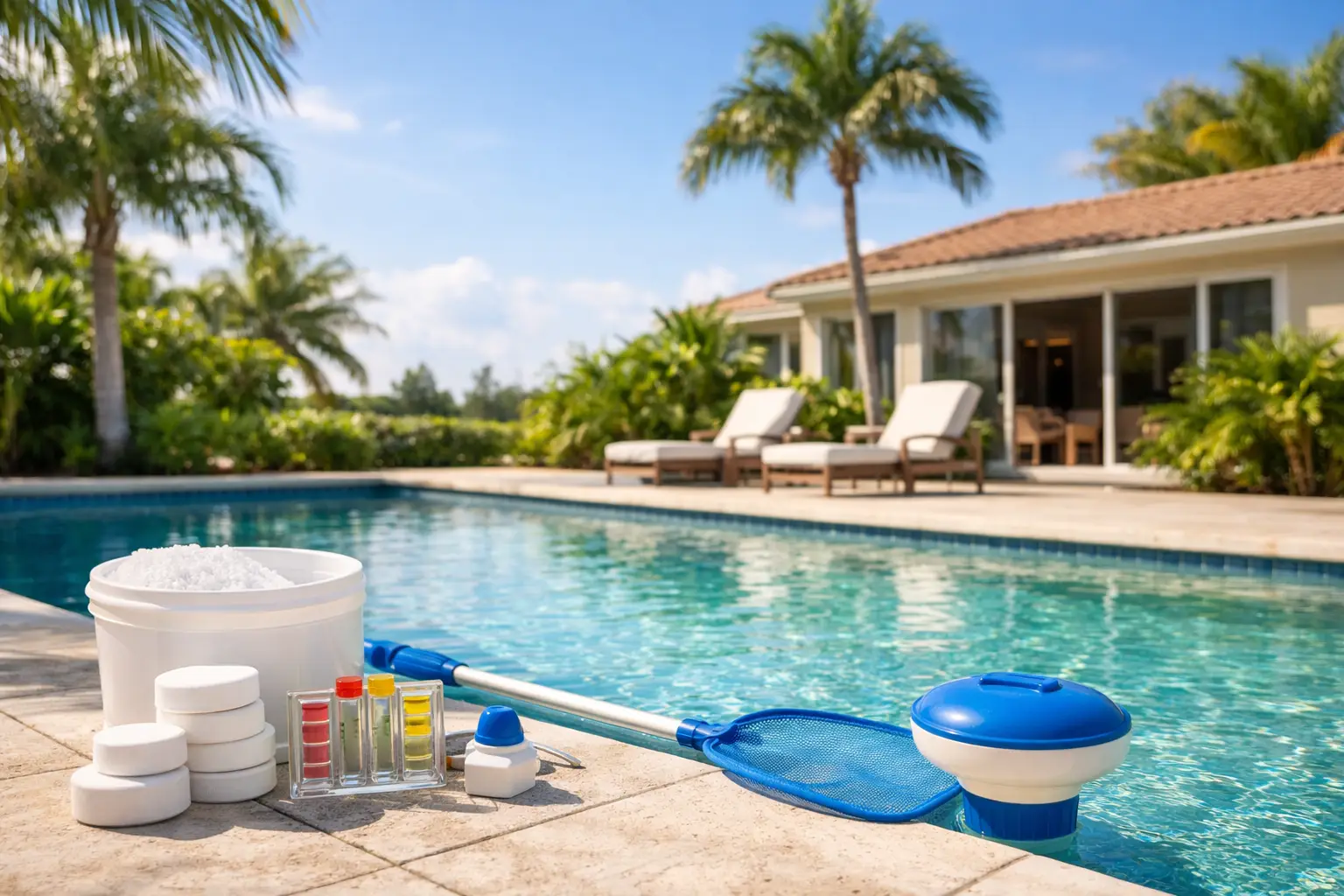
A saltwater pool should feel like the easy option: softer-feeling water, fewer chlorine products to handle and a pool that is ready when the family wants to use it. But saltwater pool maintenance is not maintenance-free. In Palm Beach County’s heat, rain and long swim season, the difference between clear water and a costly algae recovery often comes down to a few routine checks performed consistently.
A saltwater system makes its own chlorine from dissolved salt. It does not remove the need for chlorine, testing or cleaning. Instead, it changes how chlorine is produced and adds a piece of equipment - the salt cell - that needs proper care. Once homeowners understand that distinction, caring for a salt pool becomes far more straightforward.
How a saltwater pool system actually works
Your pool contains a low concentration of dissolved salt. As water passes through the salt chlorine generator, an electrical charge inside the cell converts that salt into chlorine. The chlorine sanitises the water, then eventually returns to salt, continuing the cycle.
That cycle is useful, but it is not self-correcting. The system cannot automatically compensate for heavy rainfall, a busy weekend of swimmers, windblown debris, high water temperatures or an underperforming pump. It also cannot produce chlorine effectively if the water chemistry is outside its preferred range.
In Florida, chlorine demand can change quickly. A bright, hot week can consume sanitizer faster than expected, while an afternoon storm may dilute the water and shift its balance. The generator output should therefore be checked against actual water-test results, not set once and forgotten.
The weekly rhythm of saltwater pool maintenance
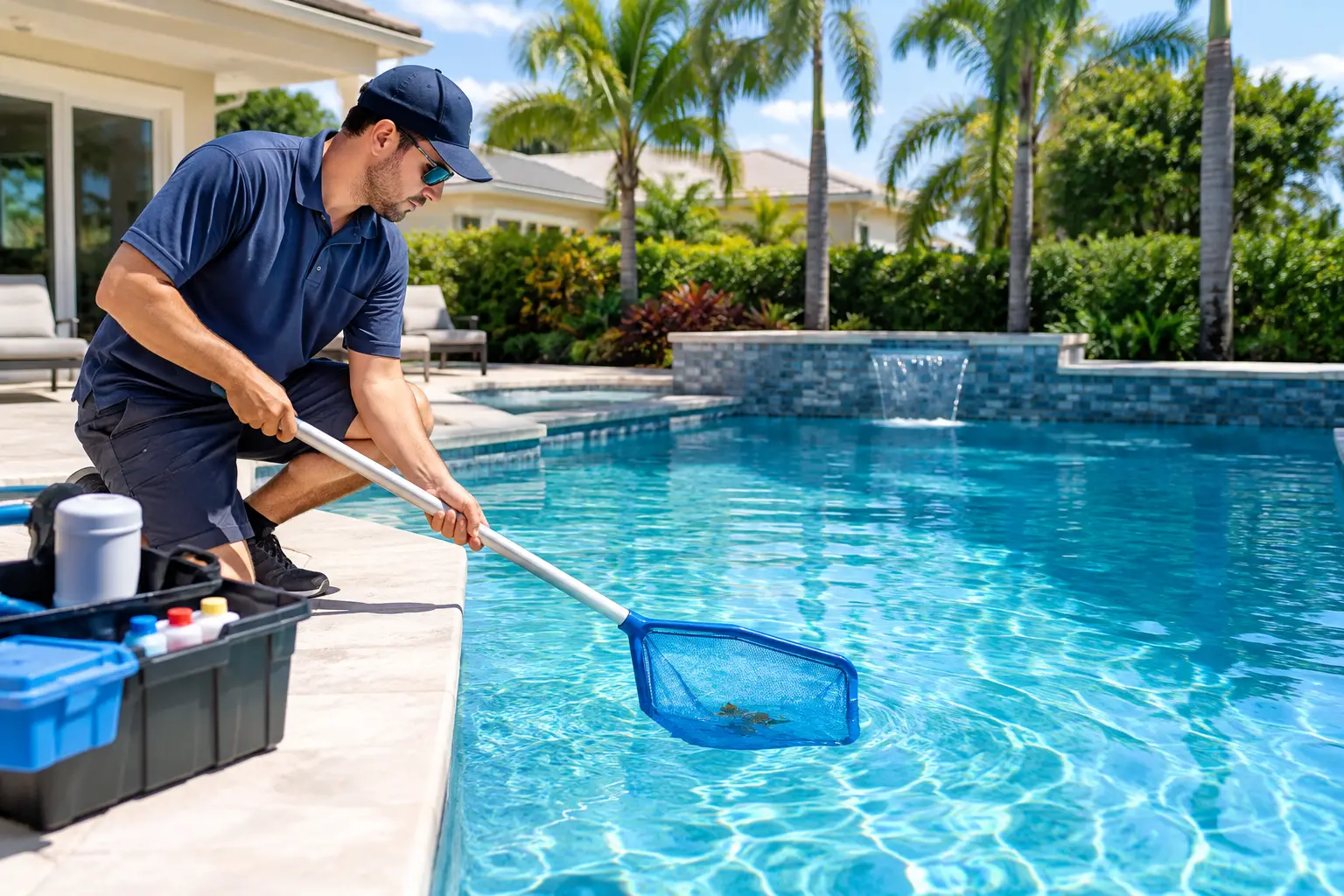
A well-kept saltwater pool needs both physical cleaning and chemical oversight every week. Skimming leaves and insects before they sink reduces staining and keeps the skimmer working efficiently. Brushing the walls, steps and waterline disrupts early algae growth, especially in shaded corners and around fittings. Vacuuming removes the fine debris that a skimmer cannot catch.
Circulation matters just as much. The pump should run long enough to move water through the filter and salt cell reliably. Exact run time depends on pump type, pool size, bather load and weather, but weak circulation commonly shows up as dull water, dead spots or algae beginning in corners. Variable-speed pumps can make efficient schedules easier, though they still need the correct daily runtime.
The filter also deserves attention. A cartridge filter needs cleaning when pressure rises or flow drops, while sand and DE filters have their own servicing requirements. Waiting until water turns cloudy is too late. Clean filtration helps the generator distribute sanitizer and gives every other chemical adjustment a better chance of holding.
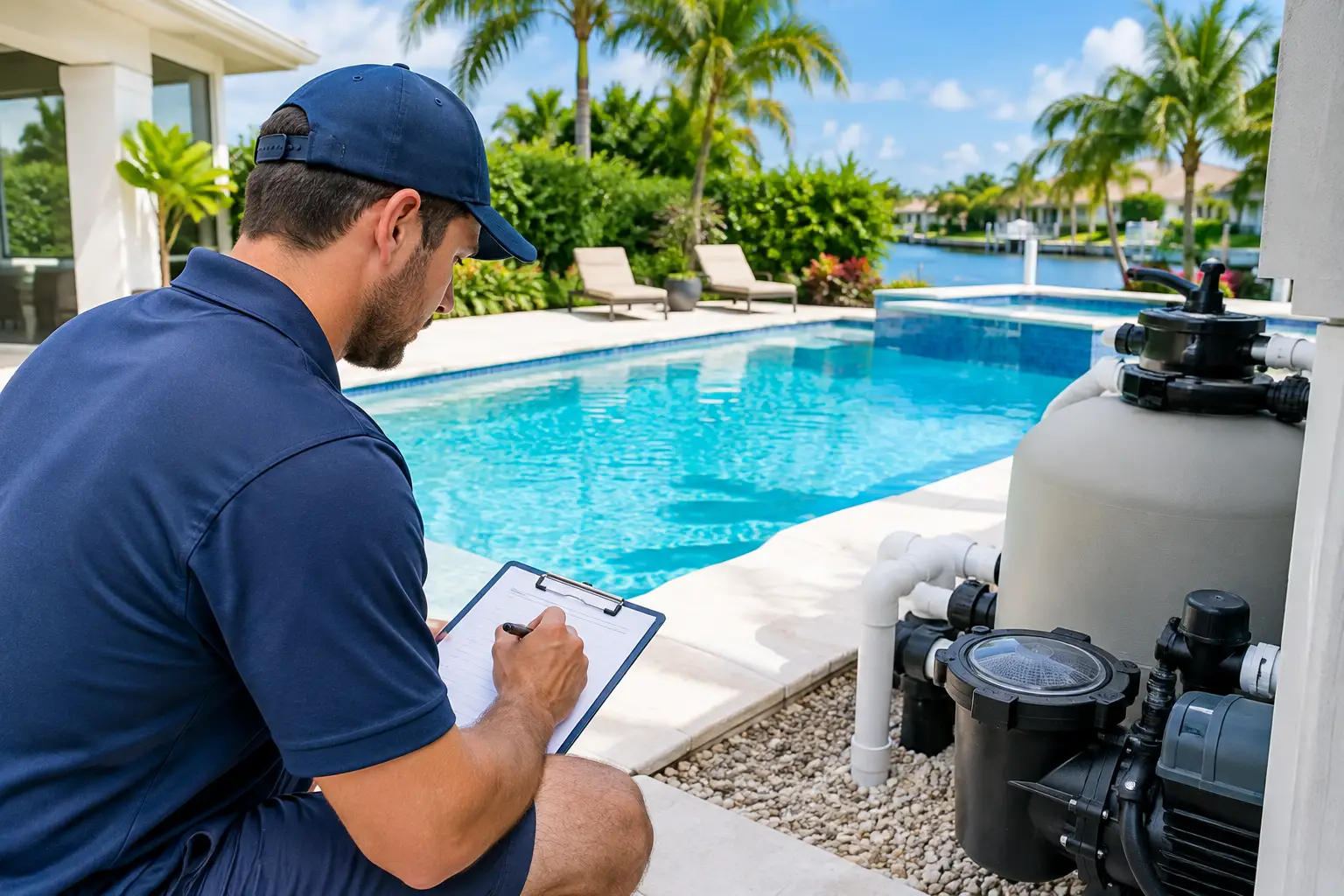
For most residential pools, weekly professional service provides a sensible baseline: clean the pool, inspect equipment, test the water and make measured adjustments before small changes turn into bigger problems. During extreme heat, storms or unusually heavy use, an extra check may be warranted.
Water chemistry: the balance behind clear water
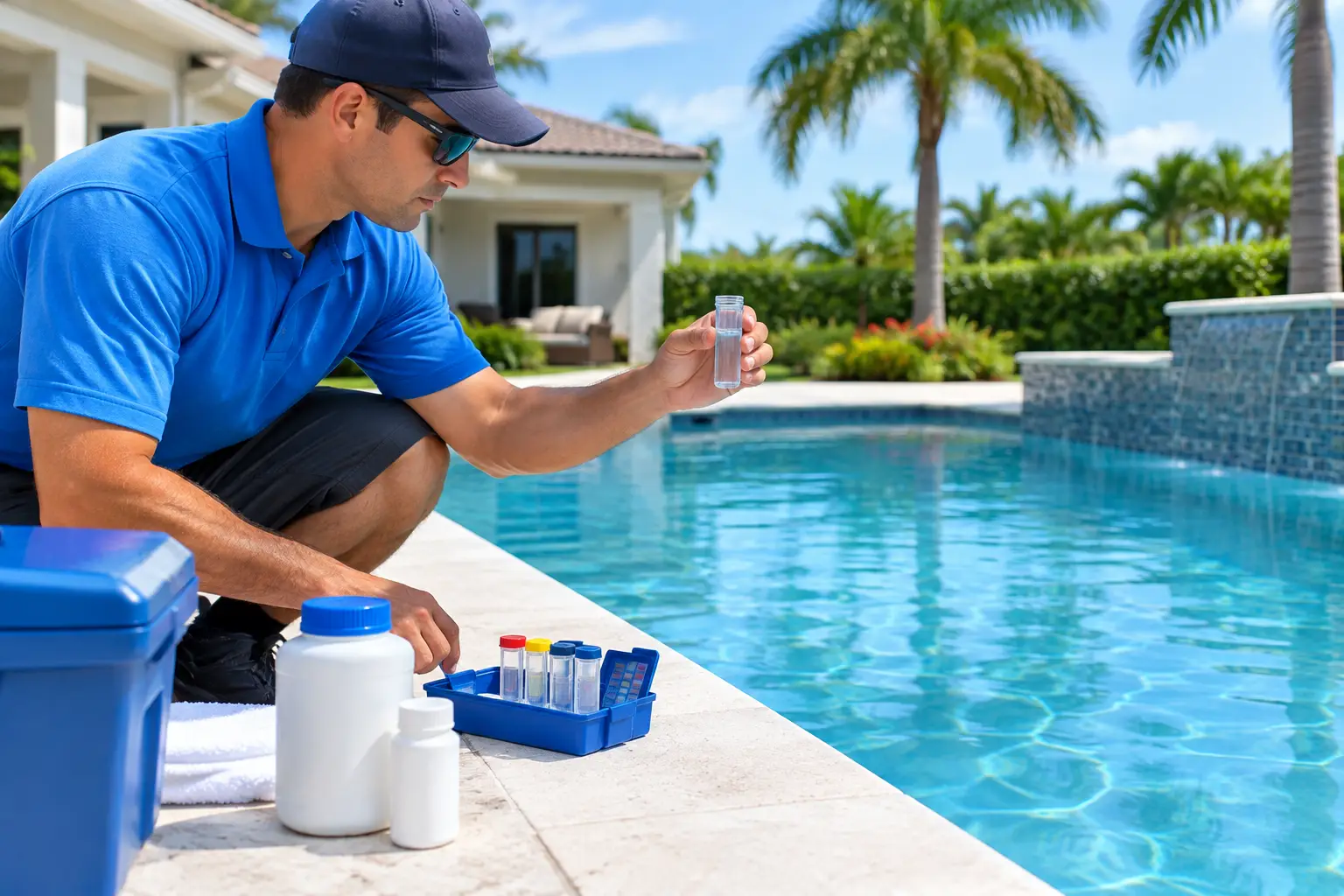
The most common saltwater misconception is that salt level is the only number that matters. Salt is only one part of the picture. Safe, comfortable water depends on several readings working together.
Free chlorine is the active sanitizer. If it falls too low, algae and bacteria get an opening. If it is persistently too high, swimmers may notice irritation and pool surfaces or equipment can be put under unnecessary stress. The right target varies with stabiliser level, sunlight and pool use, so chlorine should be interpreted alongside the rest of the test results.
pH is particularly influential in saltwater pools. Salt cells tend to make pH drift upwards over time. High pH can make water look cloudy, reduce chlorine effectiveness and encourage scale on the cell and tile line. Low pH, on the other hand, can be corrosive to plaster, metal components and finishes. Regular, careful adjustment is better than large chemical corrections after weeks of neglect.
Total alkalinity helps prevent pH from swinging too sharply. Calcium hardness affects whether the water is likely to pull minerals from a plaster surface or leave scale behind. Cyanuric acid, often called stabiliser, protects chlorine from the Florida sun, but too much can make chlorine less effective. These measurements are connected, which is why adding chemicals based on a single strip reading can create more trouble than it solves.
Salt concentration must stay within the generator manufacturer’s recommended range. Low salt may trigger a warning and reduce chlorine production. Excess salt can contribute to corrosion risks and may require partial draining and refilling to correct. Salt should be added only after testing, and it needs time to dissolve and circulate fully before the system is assessed again.
Give the salt cell the attention it needs
The salt cell is the working heart of the system. It should be inspected regularly for white, crusty calcium scale between the plates. Scaling is more likely when pH and calcium hardness run high, and it can reduce chlorine production even when the control panel appears to be operating normally.
Do not clean a cell just because it is on the calendar. Over-cleaning with acid can shorten its life. Inspect it first, then use the manufacturer-approved cleaning method only when visible scale is present or the system calls for it. In many cases, correcting the underlying water balance prevents the scale from returning so quickly.
Cells also have a limited lifespan. If a generator is reporting low output despite correct salt, balanced water, clean plates and good flow, the cell may be nearing replacement. A proper equipment assessment can distinguish a worn cell from a flow issue, sensor problem or simple chemistry imbalance.
When clear water starts to change
A pool rarely becomes green without warning. A slight loss of sparkle, slippery steps, debris collecting in corners or a chlorine reading that will not hold are all signals to act early. Rainwater, lawn runoff, fertiliser, pollen and increased swimming can add contaminants faster than the generator can manage.
When that happens, turning the salt system to maximum is not always the answer. Generators are designed for steady chlorine production, not necessarily rapid recovery from an algae bloom. The pool may need a targeted chlorine treatment, extended filtration, brushing and follow-up testing. If algae has taken hold, a structured green-to-clean treatment is usually safer and more effective than repeatedly adding products without a plan.
Cloudy water can have several causes: poor filtration, high pH, early algae, fine debris or an imbalance in calcium and alkalinity. Treating cloudiness as only a chlorine problem can waste time and chemicals. Look at water balance, circulation and filtration together.
Seasonal habits for South Florida pools
Florida does not have a traditional pool-closing season, but the maintenance pattern still changes through the year. Summer brings intense sun, warmer water, storms and more swimmers. Chlorine demand rises, and frequent rain can affect balance quickly. In this period, checking baskets, water level and chemistry between weekly visits is especially helpful.
During cooler spells, the generator may produce less chlorine because many units reduce output in lower water temperatures. That does not mean the pool needs no attention. Leaves, organic debris and inconsistent circulation can still cause water-quality problems, while cooler conditions can make homeowners less likely to notice issues until they are well established.
After a major storm, check for excess debris, water level changes and any obvious equipment concerns. Avoid assuming rain has “refreshed” the pool. Rain introduces contaminants and dilution, so a test is the only reliable way to know what the water needs.
A practical approach that protects your investment
Saltwater pools reward consistency, not guesswork. Keep the surface clean, maintain dependable circulation, test the complete water balance and inspect the generator rather than relying on its display alone. If you are adding chemicals yourself, make one adjustment at a time and allow the water to circulate before retesting. That approach protects the pool finish, equipment and the people using the water.
For homeowners who would rather spend Saturday in the pool than managing readings and filter pressure, a documented weekly service routine brings real peace of mind. Turtle Pool Care combines cleaning, precise chemistry checks and equipment attention so your pool stays turtly clean, safe and ready for the next sunny afternoon.