A pool can look perfectly clear on Tuesday and be heading toward an algae problem by Friday. That is the appeal of smart pool monitoring: it gives homeowners a clearer view of changes in water conditions and equipment performance between regular service visits. Used well, it can add useful awareness. It does not, however, replace the careful work of cleaning, testing, balancing, and inspecting a pool in person.
For busy households, the goal is not more pool-related notifications. It is fewer surprises, better decisions, and more confidence that the water is safe and perfectly balanced for the next swim.
What smart pool monitoring actually does
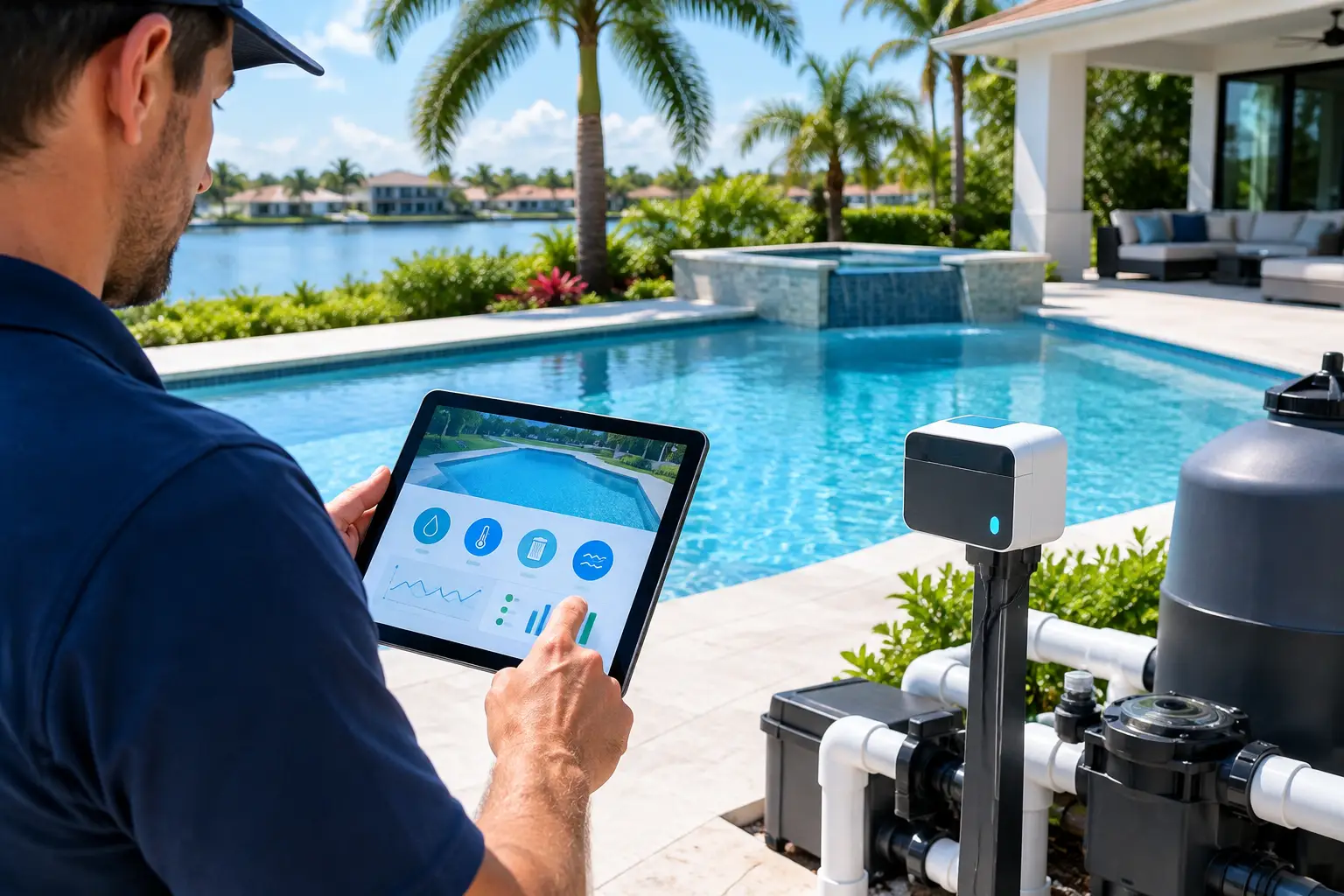
Smart pool monitoring generally uses a floating sensor, an in-line device, or a connected automation system to collect pool data and send it to an app. Depending on the equipment, it may track water temperature, pH, sanitizer activity, total dissolved solids, or other measurements. Some systems also show pump run times, heater status, water level, or energy use.
The biggest benefit is trend visibility. A single water test tells you what is happening at that moment. Connected monitoring may reveal that pH has been gradually climbing for several days, that water temperature is unusually high, or that a pump is running at times it should not be. Those patterns can help catch a small concern before it becomes a green pool, an uncomfortable swim, or a more involved equipment repair.
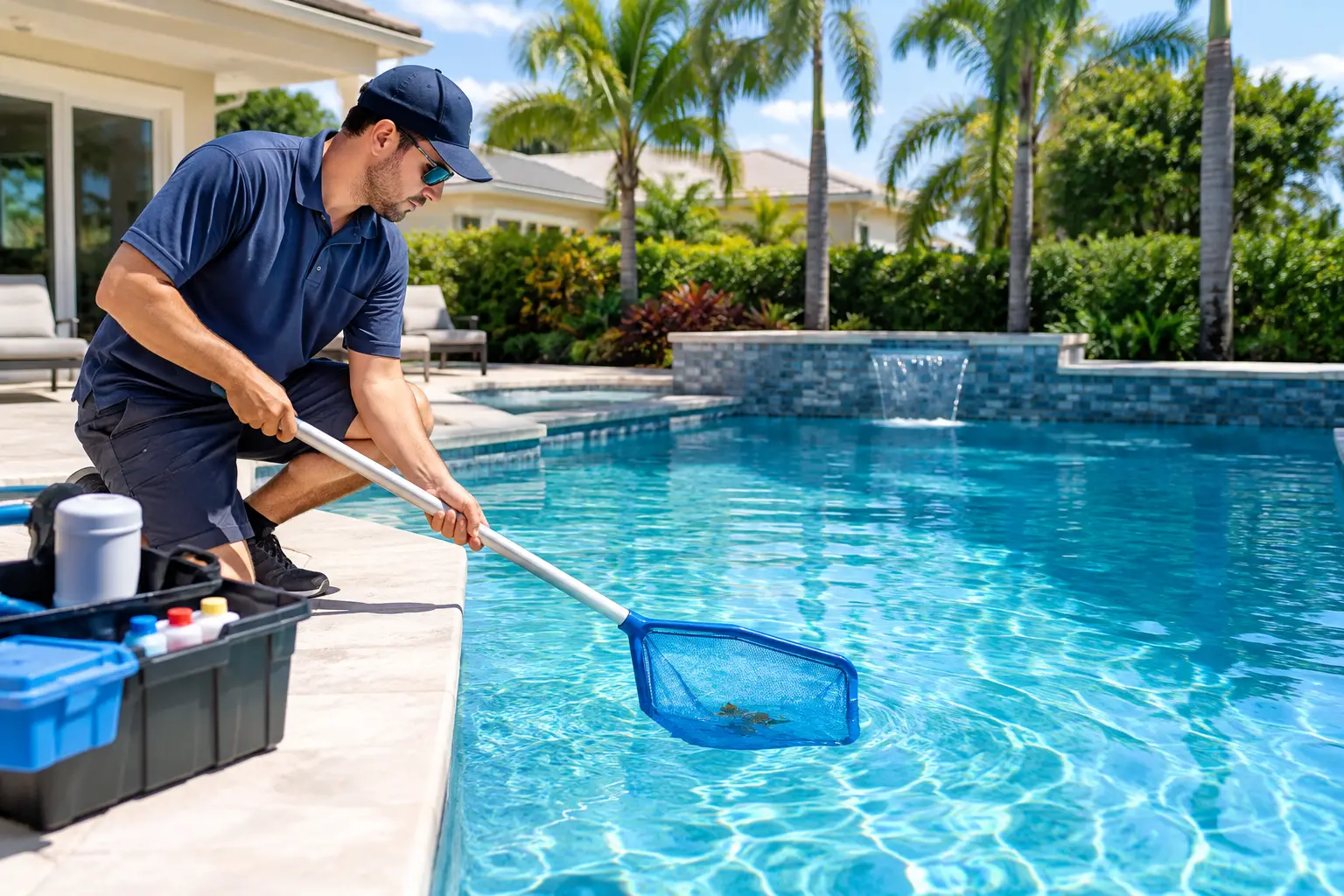
The value depends on the system and on how its information is used. A sensor can report a number, but it cannot skim leaves from the surface, brush algae from a shaded wall, vacuum debris from the floor, or determine whether a noisy pump needs a closer inspection.
The water readings that deserve attention
Not every alert calls for immediate action. Pools naturally shift with rain, heat, swimmer load, evaporation, landscaping debris, and added water. In western Palm Beach County, a summer storm can dilute chemicals and introduce contaminants quickly. A hot, sunny stretch can also increase sanitizer demand.
pH and sanitizer trends
pH affects swimmer comfort, sanitizer effectiveness, and the condition of pool surfaces and equipment. When pH drifts too high or too low, the water may become less comfortable and chlorine may not work as effectively as intended. Smart monitors can be helpful when they show a steady drift rather than one unusual reading.
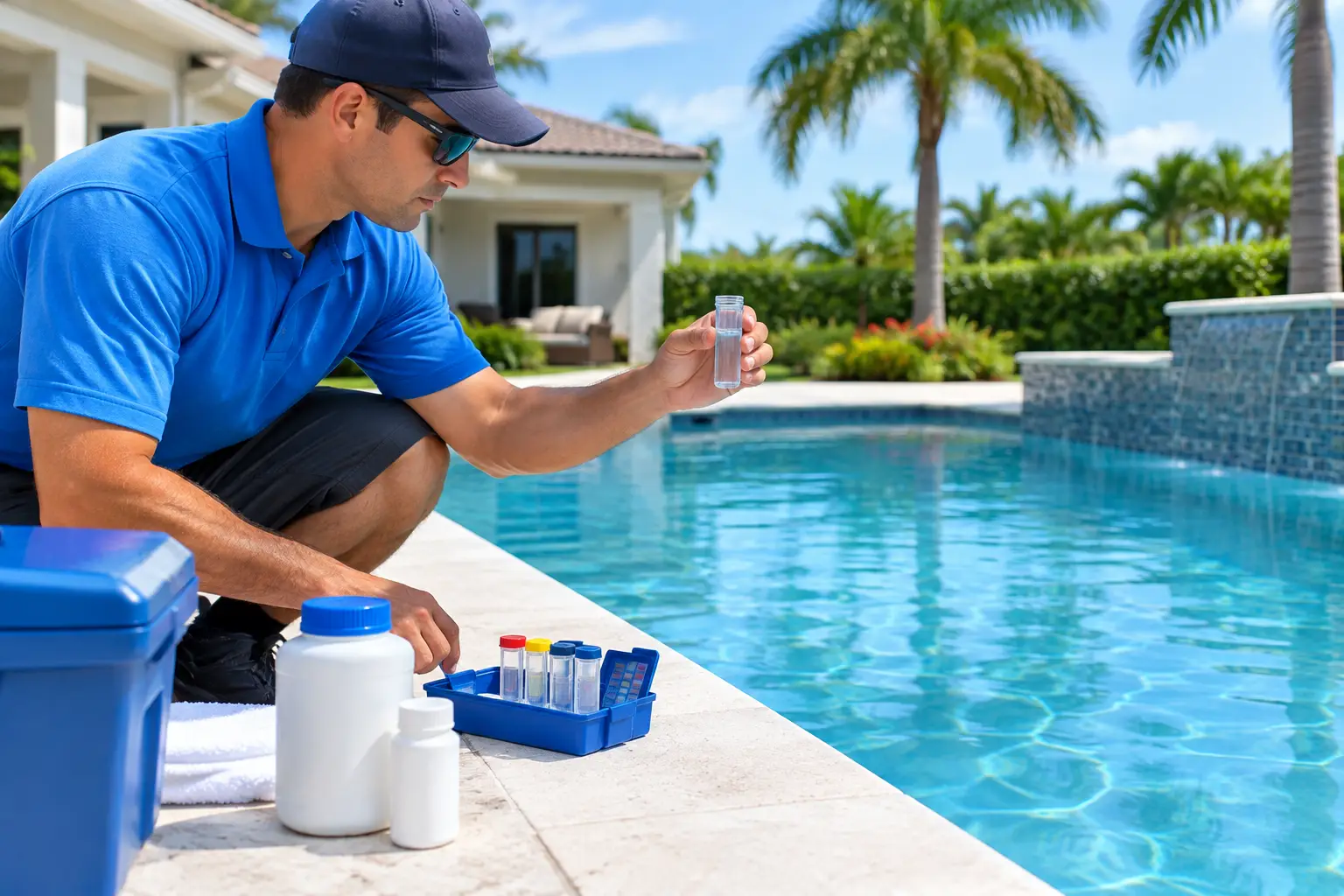
Sanitizer readings also need context. Chlorine demand may rise after a pool party, heavy rain, or a period of intense sun. A low reading could be a real chemistry issue, but it can also reflect limitations in how a particular device estimates sanitizer levels. This is why a professional water test remains the best basis for chemical adjustments.
Temperature and weather-related changes
Temperature is more than a comfort setting. Warm water can encourage algae growth and increase chemical demand, while a sudden temperature change may be worth checking if a heater or heat pump is involved. A connected temperature reading can make it easier to see whether the pool is reaching the desired setting and holding it.
After severe weather, smart monitoring can provide an early signal that the pool needs attention. It should not be treated as proof that the water is ready for swimming. A visual check and proper testing are still the sensible next steps.
Smart pool monitoring for equipment awareness
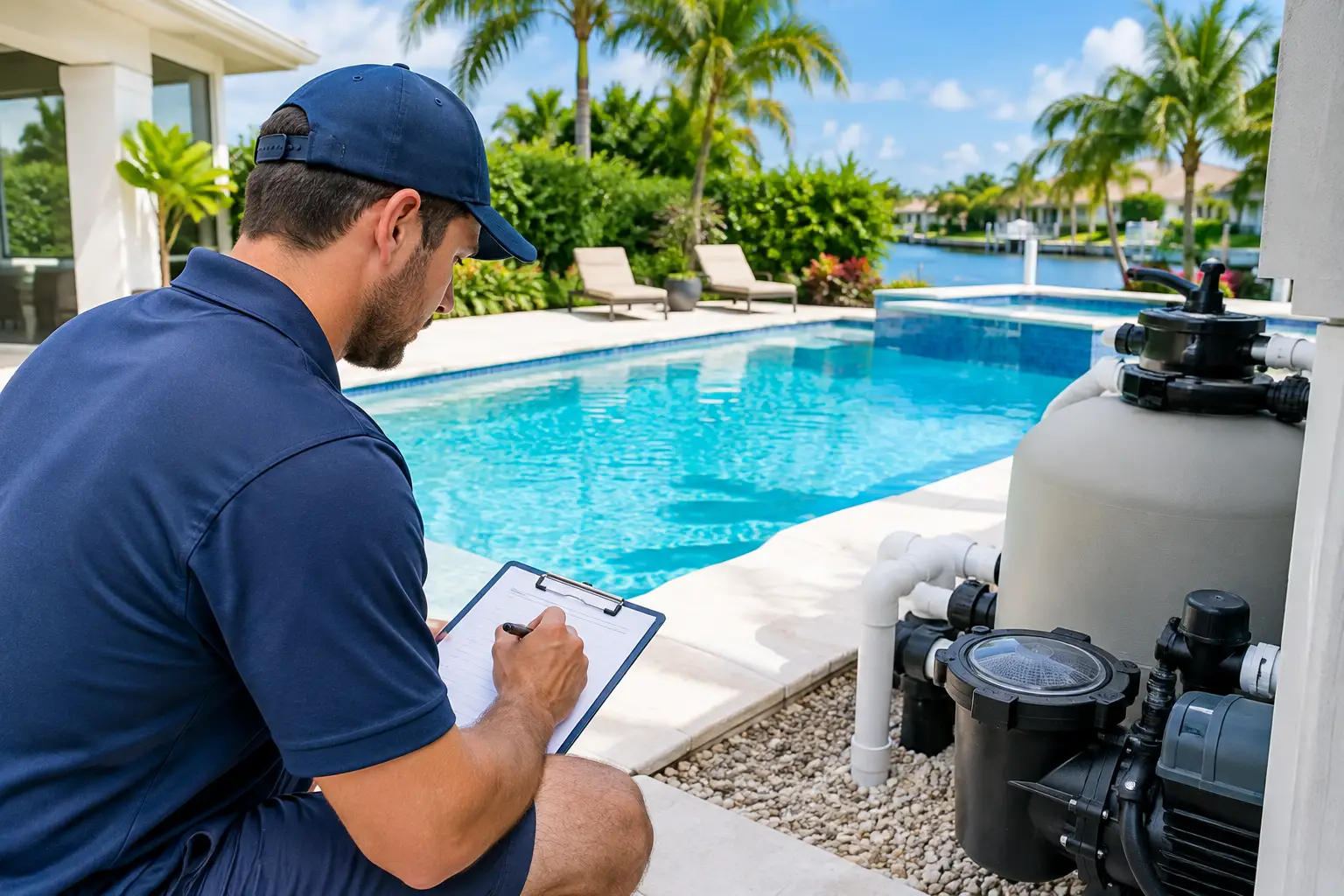
Some of the most practical benefits are on the equipment side. Pool equipment often gives warning signs before it stops working altogether. A pump that runs longer than expected, a heater that does not raise the water temperature, or an automation schedule that is not operating correctly can all affect water quality and comfort.
Connected automation can allow homeowners to check schedules and equipment status without walking to the pad. That is convenient when travelling or when a pool is used on different schedules throughout the year. It may also help identify an issue quickly enough to prevent a minor concern from becoming a larger interruption.
Still, an app cannot diagnose every cause. Low flow could relate to a dirty filter, a clogged basket, a suction-side air leak, a valve position, or a pump issue. An alert is useful information, not a repair plan. Electrical work, pump repairs, and equipment troubleshooting should be handled by a qualified pool professional.
Where sensors have limits
Smart monitoring devices are helpful tools, but they are not laboratory instruments. Readings can be affected by placement, calibration, battery condition, water movement, scale buildup, and the condition of the device itself. A floating monitor may not reflect the same water conditions seen at the equipment pad or in a less-circulated area of the pool.
They also do not measure every part of balanced water chemistry. Calcium hardness, alkalinity, stabiliser, phosphates, metals, and salt level may all matter depending on the pool and its equipment. Surface condition, filter pressure, circulation strength, leaks, and early algae growth require a trained eye as well as appropriate testing.
For that reason, smart monitoring works best as one layer of pool care. It can tell you when to look closer or when to share an observation with your service professional. It should not encourage homeowners to add chemicals based solely on a notification, especially when several parts of water chemistry affect one another.
Weekly service still makes the difference
A clean, well-balanced pool is the result of consistent hands-on care. During a proper weekly visit, a technician can skim the surface, brush walls and steps, vacuum as needed, empty baskets, test the water, make considered chemical adjustments, and visually inspect key equipment. That combination catches details an automated device cannot.
For example, a monitor may indicate normal chemistry while leaves are collecting in a skimmer, a return fitting is weak, or early staining is appearing on a finish. It may show acceptable temperature while a heat pump is cycling oddly. The pool can look good in an app while needing physical attention in the backyard.
This is also where clear communication matters. Detailed digital reports and photos from completed service give homeowners a record of what was done and a clearer understanding of any concern found during the visit. Technology is most useful when it supports accountability rather than trying to replace it.
Is smart monitoring worth adding to your pool?
It can be a good fit for homeowners who travel regularly, manage a holiday property, enjoy checking equipment status, or have automation already in place. It may be especially useful for pools with heaters, variable-speed pumps, saltwater systems, or more complex schedules. Homeowners who want earlier awareness of changes may appreciate the extra visibility.
It may be less valuable for someone who does not want another app or another device to maintain. A basic pool with dependable weekly service may not need constant data to stay turtly clean. In that case, a consistent service routine, good circulation, appropriate run times, and responsive equipment care can provide the peace of mind that matters most.
Before choosing a system, think about what problem you want it to solve. Is the concern chemistry changes between visits, equipment scheduling, heater control, travel monitoring, or energy use? The answer will help determine whether a simple water sensor, a broader automation upgrade, or no additional technology at all makes sense.
A pool should feel like the easy part of home life, not another dashboard to manage. Smart monitoring can provide a useful early warning, while attentive weekly service provides the hands-on judgment that keeps water clear, equipment watched, and swim time ready when your family is.