A pool can look perfect on Friday afternoon and turn cloudy after one wet, hot weekend. That is the reality behind this Wellington pool ownership guide: Florida pools are used often, exposed to intense sun and rain, and need consistent care rather than occasional attention. With the right routine, your pool stays safe, inviting and turtly clean for family swims, quiet evenings and last-minute guests.
What Pool Ownership Looks Like in Wellington
Pool ownership is not difficult because any single task is complicated. It becomes demanding because cleaning, circulation and water chemistry all affect one another. A missed basket clean-out can reduce water flow. Poor circulation can leave sanitizer unevenly distributed. Heavy rain can dilute chemicals, shift pH and give algae a chance to take hold.
In Wellington, the most challenging months are often the warm, wet months, when high water temperatures, afternoon storms and increased bather use create ideal conditions for algae. Yet winter should not be treated as a break from care. Cooler water may slow algae growth, but leaves, pollen, fine debris and equipment wear still require attention.
A dependable weekly routine prevents most surprises. It also makes it far easier to spot a small equipment issue before it becomes a costly repair or a green-to-clean recovery.
The Three Parts of Reliable Pool Care
A healthy pool relies on three connected basics: clean surfaces, balanced water and effective circulation. Focusing on only one can leave the pool looking good temporarily while a bigger issue develops underneath.
Keep debris from becoming a water problem
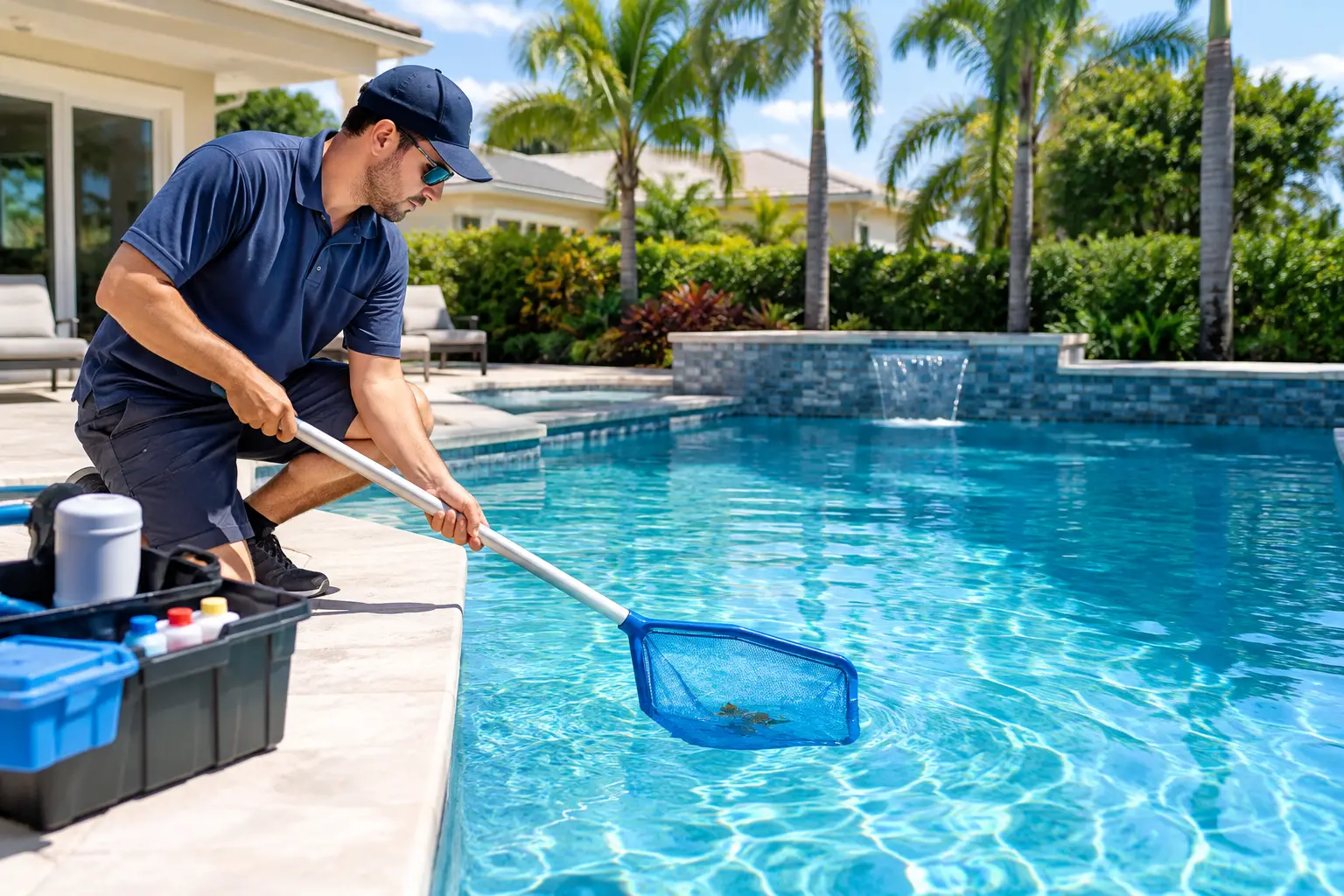
Skimming leaves and insects is about more than appearance. Organic debris consumes sanitizer as it breaks down and can stain surfaces if it sits too long. Empty skimmer and pump baskets regularly, particularly after storms or windy days. A full basket restricts flow and places unnecessary strain on the pump.
Brushing walls, steps, tile lines and corners helps prevent algae from attaching to surfaces. Vacuuming removes the debris that settles beyond the reach of the skimmer. How often this is needed depends on surrounding landscaping, pool use and whether the pool has a screen enclosure, but visible debris should not wait until the next planned swim.
Treat water chemistry as a moving target
Clear water is not always balanced water. A pool can appear clean while pH, alkalinity or sanitizer levels are outside their proper range. These readings affect swimmer comfort, equipment life and the ability of chlorine or another sanitizer to do its job.
Sanitizer controls bacteria and algae. pH affects how efficiently that sanitizer works, while total alkalinity helps keep pH from swinging too quickly. Calcium hardness needs attention too, particularly in plaster pools, because water that is too aggressive or too scale-forming can damage finishes and equipment over time. Stabiliser, also called cyanuric acid, is another key reading in sunny South Florida because it helps protect chlorine from ultraviolet light, but excessive stabiliser can reduce chlorine effectiveness.
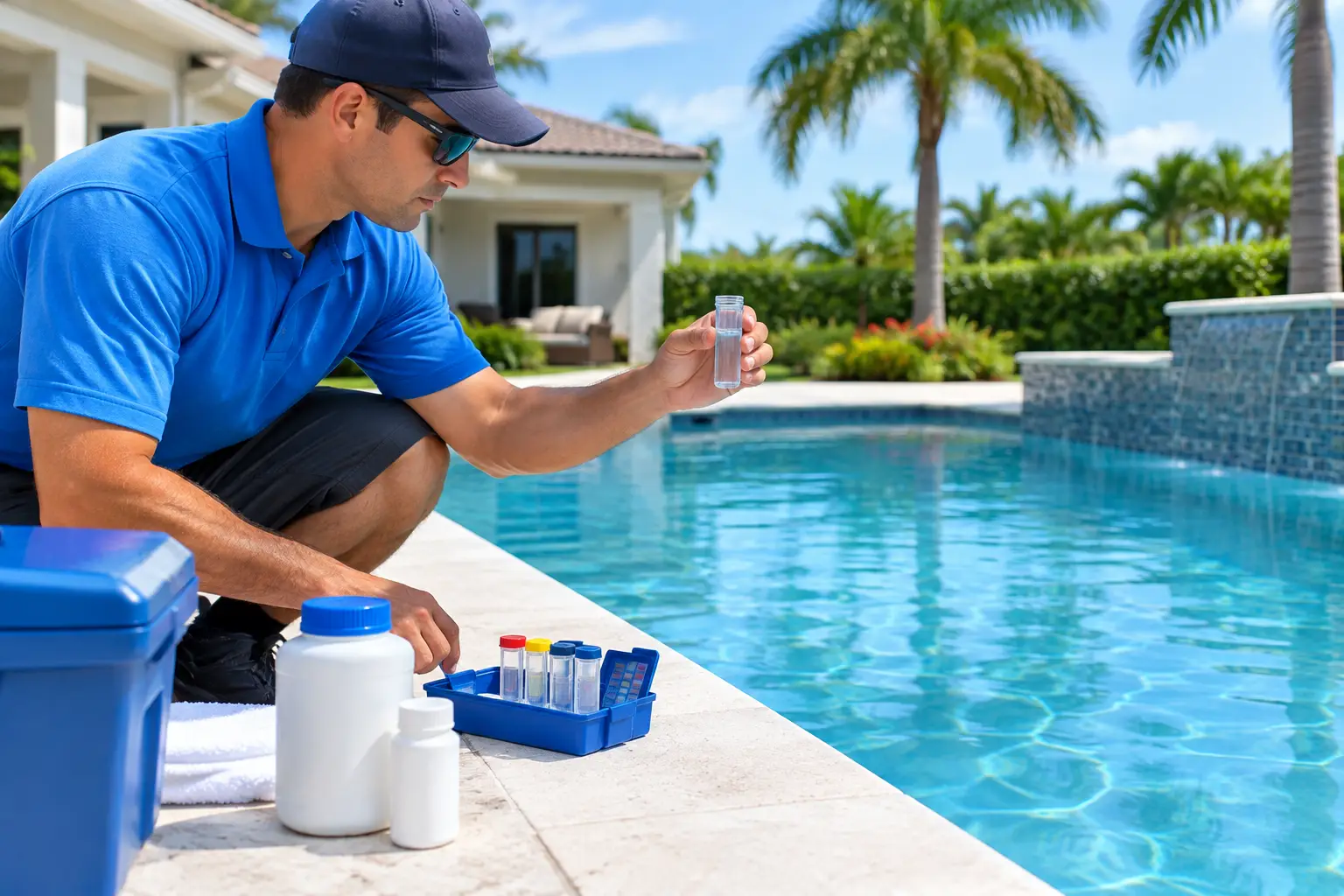
Testing should be more frequent after heavy rain, a party, a heatwave or an algae concern. Adding chemicals without current test results is a gamble. The goal is not simply to add chlorine each week. It is to make precise adjustments based on the pool’s actual water condition.
Give circulation the attention it deserves
Your pump and filter are the pool’s working heart and lungs. The pump moves water through the filtration system, while the filter captures fine debris that skimming cannot remove. If circulation is weak, chemicals do not distribute properly and dead spots become more likely.
Check that return jets are creating visible movement across the surface and that the water level sits around the middle of the skimmer opening. Running the pump long enough each day matters, though the ideal schedule depends on pool size, pump type, bather load and weather. A variable-speed pump can often deliver efficient circulation at lower speeds for longer periods, reducing energy use without compromising water quality.
Watch for low pressure or unusually high pressure at the filter, air bubbles in the pump basket, a noisy motor, leaks and reduced return flow. These are not details to ignore. They are early warnings that can point to a clogged filter, suction leak, failing seal or pump issue.
A Wellington Pool Ownership Guide to Weekly Habits
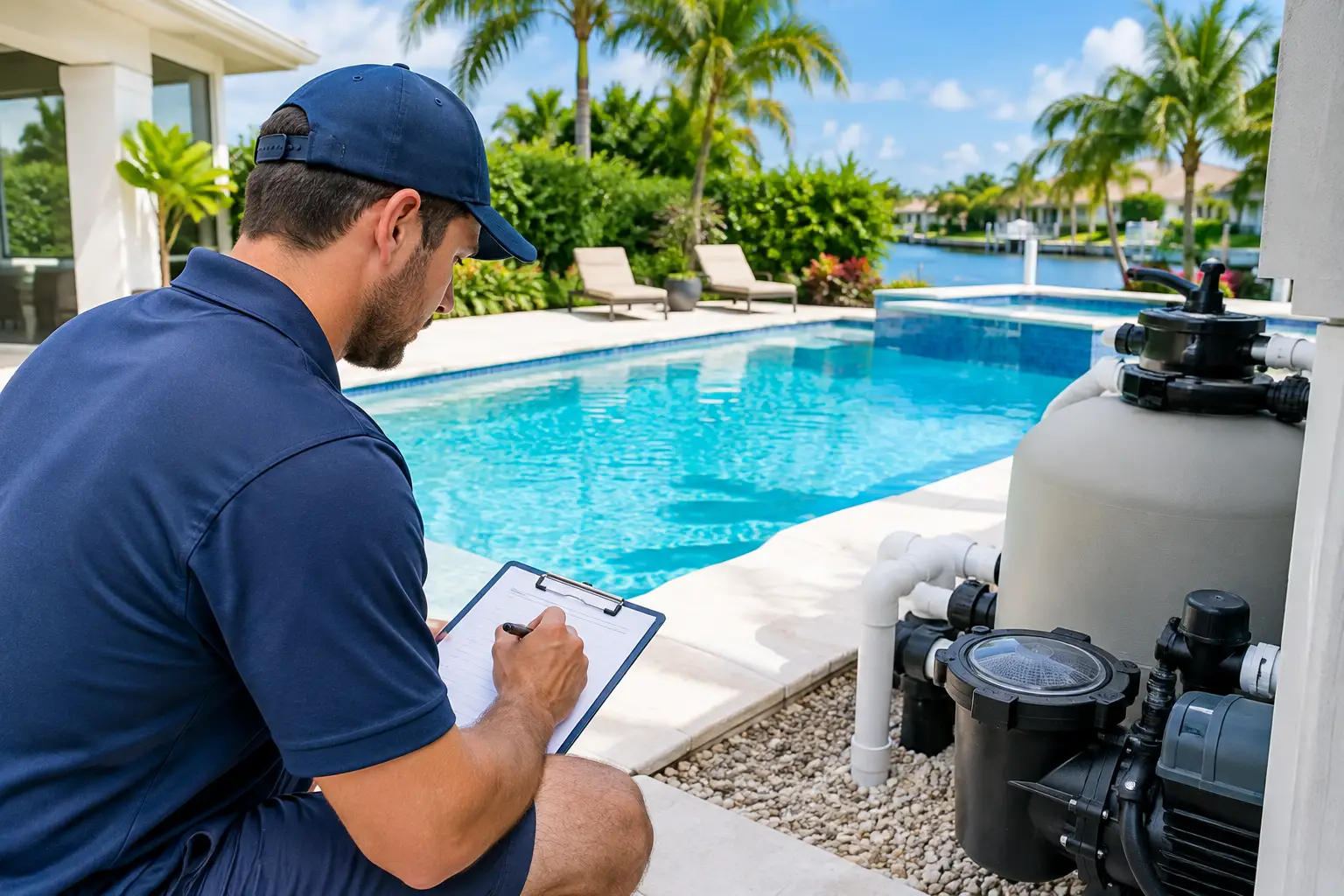
Weekly care is the practical rhythm that keeps minor changes from turning into major problems. A thorough visit should include skimming, vacuuming, brushing and emptying baskets, followed by water testing and measured chemical balancing. Equipment should also receive a visual check for leaks, unusual sounds, damaged lids and proper operation.
Homeowners who enjoy doing some of the work themselves can keep the pool in better shape between service visits by removing large debris after storms, keeping the water level stable and reporting unusual equipment behaviour promptly. Avoid overcorrecting water chemistry after every small visual change. Cloudiness, for example, may come from filtration, circulation, rainfall or an early algae issue, not just low chlorine.
Documentation adds another layer of peace of mind. A clear post-service report showing what was cleaned, what was tested and what was adjusted means you are not left guessing about the pool’s condition. Photographs can be particularly helpful when you are away from home or managing a property from a distance.
Equipment Choices That Make Ownership Easier
Older equipment can keep a pool running, but it may cost more to operate and require more frequent attention. Upgrades should be based on the condition of your system and how you use the pool, not on a one-size-fits-all checklist.
Variable-speed pumps are often worth considering when an older single-speed pump needs replacement. They can be quieter and more efficient, especially where the pool needs long daily circulation. Modern LED lighting improves evening use while using less energy than older fixtures. Automation can be useful for homeowners who want easier control of schedules, lighting and selected features, although it does not replace regular inspection or chemistry testing.
Saltwater pools deserve a brief clarification. They still use chlorine, generated by a salt cell, and they still need balancing, cleaning and equipment checks. A salt system can make routine sanitising more convenient, but a scaled or failing cell, incorrect salt level or imbalanced water can quickly affect performance.
New Plaster Needs a Different Level of Care
A newly built or resurfaced pool is not ready for a standard maintenance routine on day one. Fresh plaster is curing, and the first 28 days are critical for protecting the finish and establishing stable water chemistry.
During this period, the pool needs frequent testing, careful chemical adjustments and regular brushing to support an even cure and reduce the chance of surface problems. Calcium, pH and alkalinity need particularly close management. Skipping this process may save time in the short term, but it can affect the appearance and durability of a finish that should last for years.
If you have just completed a build or resurfacing project, ask for a structured start-up plan rather than relying on general weekly service alone. This is specialist work, and the first month sets the tone for the pool’s future.
When a Pool Needs More Than Routine Service
A green pool is not always a sign of neglect. A failed pump, storm debris, a power interruption, prolonged travel or a sudden chemistry shift can all trigger algae growth. The right response is to identify the cause, restore circulation, remove debris, address algae at the correct stage and rebalance the water. Simply adding a large amount of chlorine without solving the underlying issue may not produce a lasting result.
The same principle applies to repairs. A pump that trips a breaker, a light that no longer works or an unexplained water loss deserves timely attention. Waiting can turn a manageable repair into damage to related equipment, higher energy bills or days when the pool cannot be used.
For homeowners who want hands-on local support with documented visits and careful chemistry management, Turtle Pool Care brings weekly maintenance, repairs, upgrades, recoveries and new-pool start-up care under one accountable service approach.
Your pool should feel like part of the home, not another weekend job waiting by the patio. A consistent plan, accurate testing and early attention to equipment give you the best chance of stepping outside to water that is clear, safe and ready when you are.