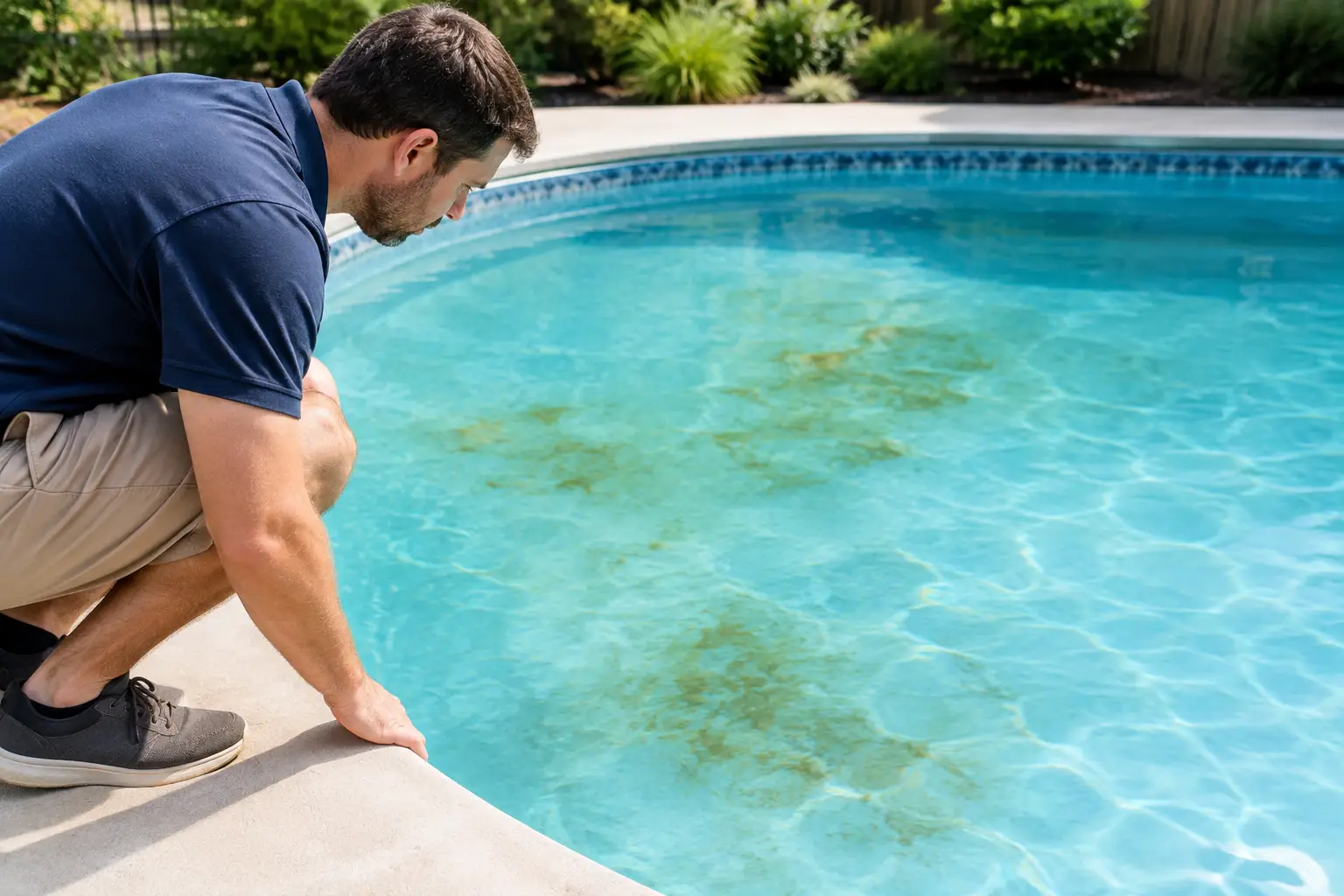
A stain can appear almost overnight: a rust-colored ring beneath a ladder, a blue-green mark near a return jet, or a dark patch that brushing will not shift. So, what causes pool staining? Usually, it is not one simple problem. Stains form when minerals, organic debris, algae, or imbalanced water react with the pool surface. In Palm Beach County, warm temperatures, frequent rain and year-round pool use can make those conditions develop quickly.
The good news is that most stains can be identified and treated without panic. The key is to avoid guessing with harsh chemicals, which can make a surface problem worse. A careful look at the stain’s color, location and timing often tells you where to start.
What Causes Pool Staining Most Often?
Pool stains generally fall into two groups: organic stains and metal or mineral stains. Surface wear and chemical damage can also look like staining, particularly in older plaster pools. Each requires a different response, so the right diagnosis matters more than simply adding more chlorine.
Organic stains from leaves, algae and debris
Organic stains are caused by natural material sitting on the pool surface long enough to leave behind color. Leaves, berries, palm debris, acorns, insects and algae are common culprits. They often create brown, green, blue-green or nearly black marks.
A pile of wet leaves in one corner can stain plaster surprisingly fast, especially after a storm. Algae can do the same. Even when the water looks clear, early algae growth may cling to walls, steps, light niches or shaded areas and leave a stubborn discolouration behind.
Organic stains are more likely when circulation is poor, chlorine has been allowed to fall too low, or the pool has not been brushed and vacuumed consistently. They may respond to an appropriate chlorine treatment, but the water chemistry needs to be checked first. Adding chlorine to already unbalanced water is not a reliable fix.
Metal stains from iron, copper and manganese
Metal staining is especially common in Florida pools because metals can enter the water from fill water, well water, corroding equipment, old heater components, some algaecides and certain chemical products. Iron commonly creates orange, red-brown or yellow staining. Copper can leave turquoise, blue-green, grey or black marks. Manganese often appears as dark brown or purple-black staining.
The stain may show up after topping up the pool, following heavy rain, or after a chemistry adjustment changes the water’s pH or chlorine level. Those changes can cause dissolved metals to come out of the water and settle onto the plaster, tile or other pool finishes.
A rust-colored spot directly below a ladder, handrail or fitting may also indicate a metal component that is corroding. In that case, treating the visible stain without addressing the source means it may return.
Poor water balance and scale deposits
Water that is out of balance does not always create a colored stain. Sometimes it leaves dull, chalky white, grey or rough patches that homeowners understandably mistake for staining. High calcium hardness, high pH and high alkalinity can cause calcium scale to form, particularly along the waterline, around spillways and near returns.
Scale gives minerals a rough surface to cling to, which can make later metal or organic staining more noticeable. On the other end of the scale, water that is too acidic can etch plaster. Etching may look mottled, blotchy or permanently discoloured, but it is actually surface damage rather than a removable stain.
This is why precise, regular testing is so valuable. A pool can look blue and inviting while its chemistry is quietly creating conditions that shorten the life of the finish.
How Stain Color and Location Help Identify the Cause
Color is a useful clue, but it is not a final diagnosis. A brown mark may be a leaf stain, iron staining or rust from a nearby fixture. A greenish patch may be algae or copper. The location adds important context.
Stains beneath metal fittings, around drains, near return lines or below a heater discharge point often point towards a metal source. Marks in corners, beneath overhanging landscaping or along the floor after a storm are more likely organic. White crust at the tile line is usually scale, while widespread roughness or patchiness can indicate a water-balance issue or an ageing surface.
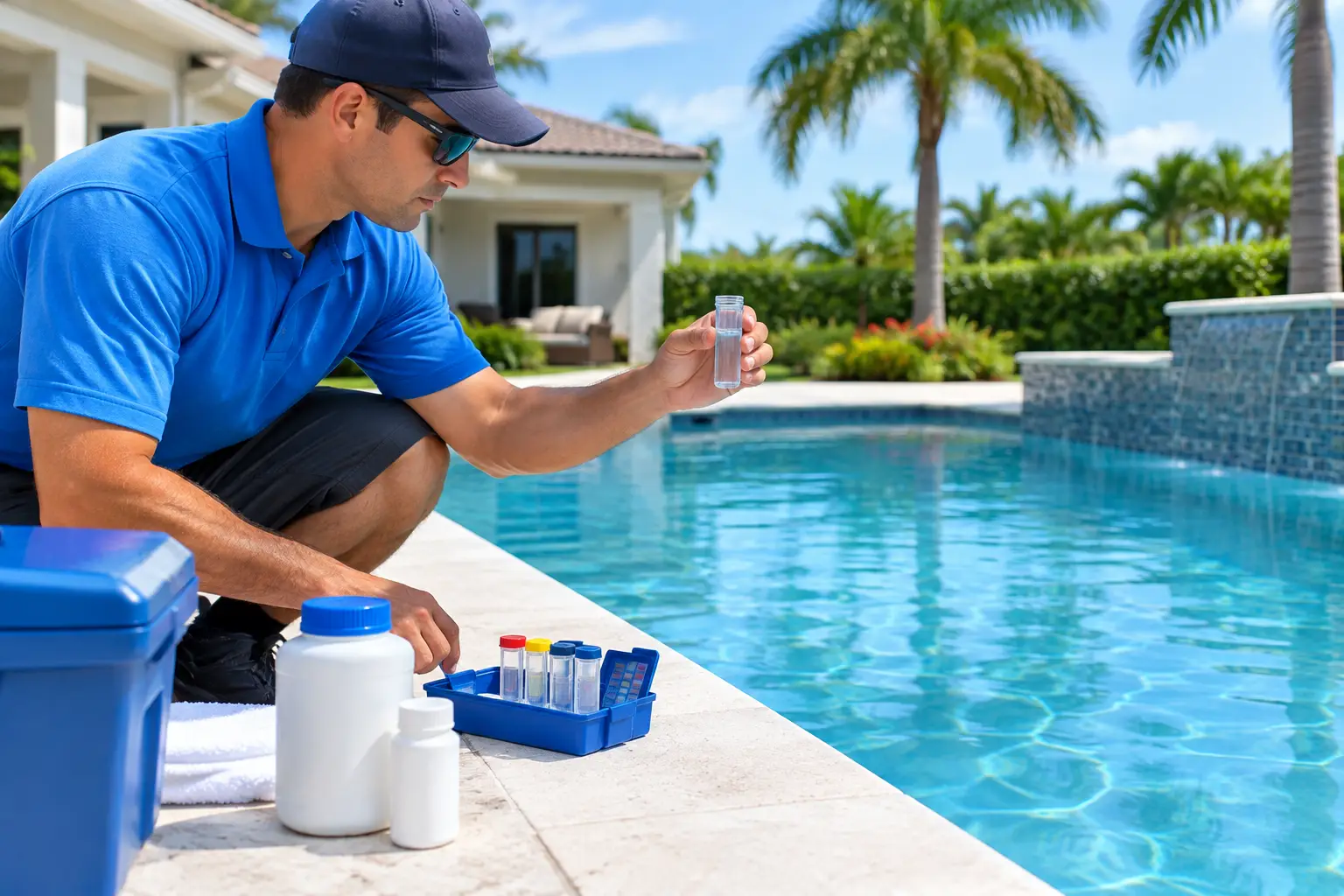
A professional water test can confirm whether metals are present and whether pH, alkalinity, calcium hardness and sanitizer levels are supporting or harming the finish. For a newer or recently resurfaced pool, this is even more important. Fresh plaster needs a controlled 28-day start-up program so it cures evenly and does not develop avoidable mottling, scaling or etching.
Why Brushing Alone Does Not Always Work
Brushing is essential pool care, but it cannot remove every type of stain. It lifts loose debris, disrupts algae growth and helps prevent material from settling in one place. It will not, however, dissolve an iron deposit embedded in plaster or repair etched areas caused by aggressive water.
Likewise, an acid treatment may remove some stains, but it is not a universal answer. Acid can damage plaster when used incorrectly or too often, especially on a surface that is already thin, rough or etched. Spot treatment, sequestrants for metals, controlled chlorine treatment and professional stain removal methods all have their place. The right method depends on the stain and the condition of the pool finish.
Treating the pool without identifying the source can also create a frustrating cycle. If iron is coming in with fill water, for example, the stain may return after the next top-up. If copper is entering from a deteriorating heater component, the equipment needs attention as well as the water.
Preventing Pool Stains Before They Set In
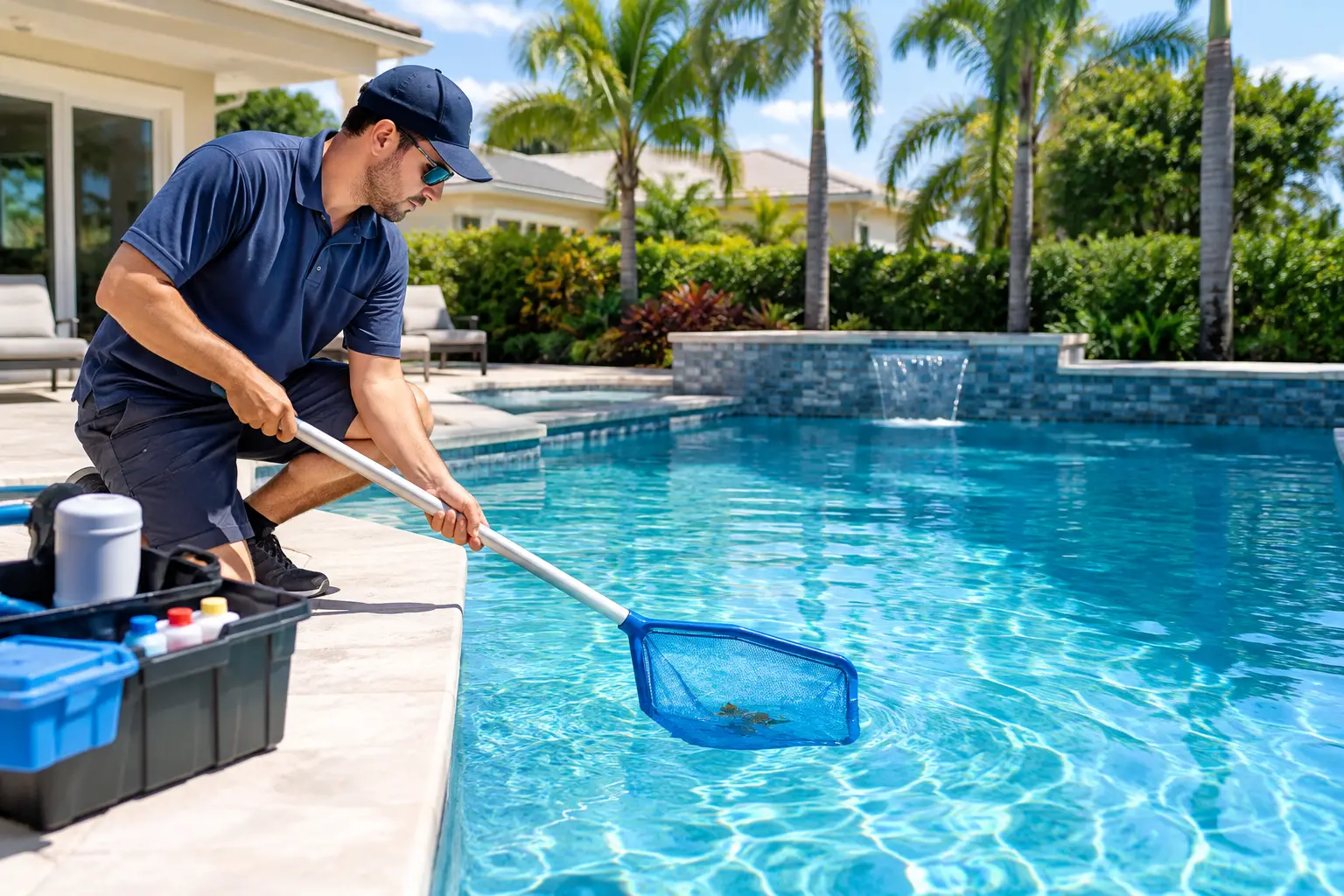
Prevention is less dramatic than stain removal, but it is far kinder to your pool surface and your budget. Regular skimming and vacuuming stop leaves and debris from sitting on plaster. Consistent brushing keeps algae from gaining a foothold in quiet areas. Proper circulation ensures sanitizer reaches the whole pool rather than concentrating in only a few areas.
Water should be tested and balanced on a dependable schedule, with extra attention after major rainfall, large pool parties, equipment issues or significant top-ups. If your property uses well water or you know metals are present in the source water, ask about testing for iron and copper before adding a large volume to the pool.
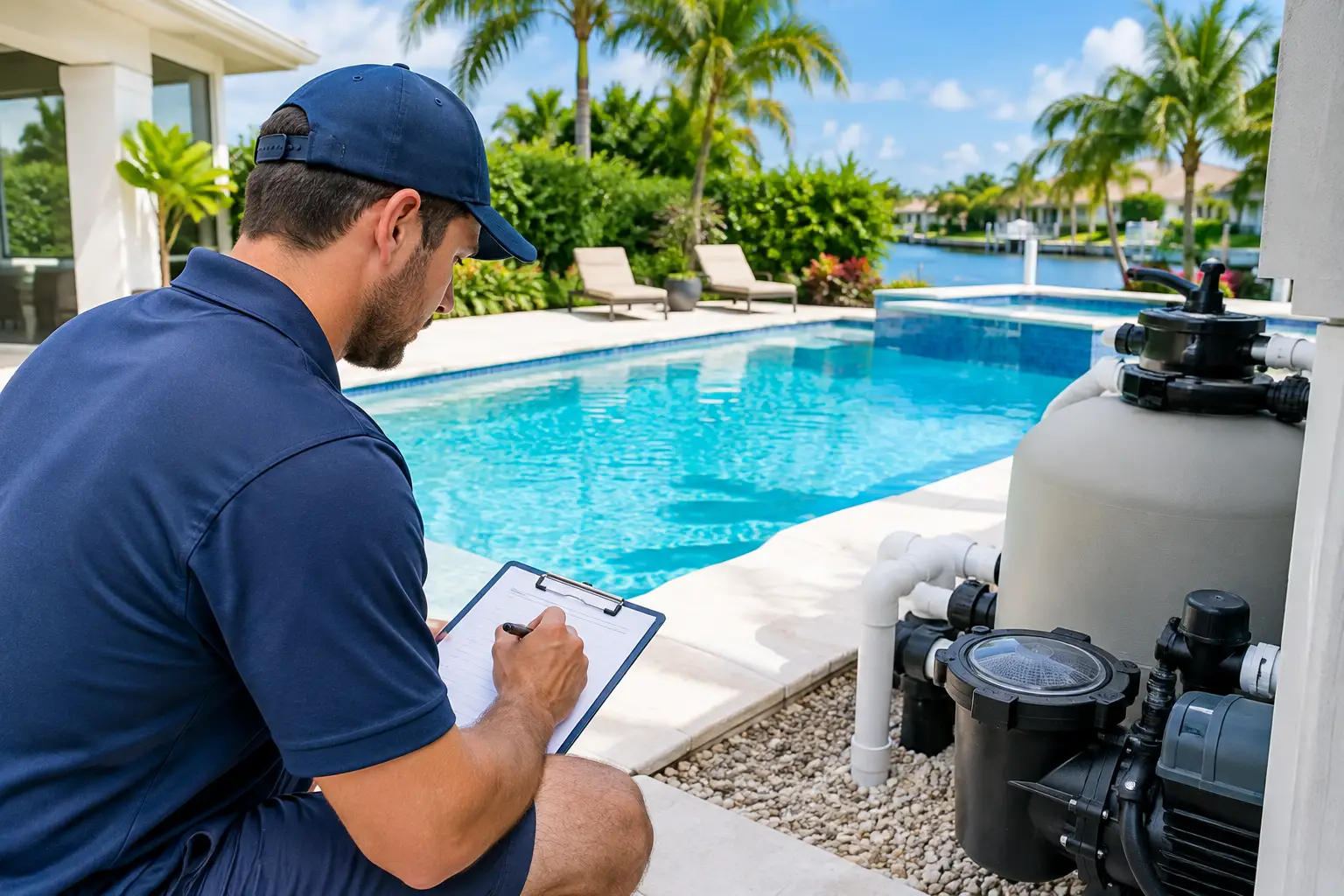
Equipment also deserves a close eye. A failing pump can reduce circulation, a damaged filter can allow fine debris to remain in the water, and corroding heaters or fittings can introduce metals. Small repairs made early often prevent a far more visible problem later.
For homeowners who prefer their pool ready for family time rather than another weekend task list, weekly professional service creates a useful record of changes in chemistry, equipment performance and surface condition. Turtle Pool Care documents each visit, so a new mark or a shift in water balance is easier to catch before it becomes a stubborn stain.
When to Call for Professional Help
Call for support when a stain spreads, returns after treatment, appears alongside cloudy or colored water, or will not respond to normal brushing. It is also wise to get help before attempting an acid wash or using a strong stain-removal product. Those solutions can be effective, but only when matched to the correct stain and surface type.
Take a clear photograph when you first notice the mark, then note whether it appeared after rain, a refill, a chemical addition or equipment repair. That small amount of information can speed up diagnosis and help protect your pool’s finish.
A pool should feel like the easy part of Florida living. Keeping debris moving, chemistry safe and perfectly balanced, and equipment in good working order gives stains far fewer chances to settle in - leaving your water turtly clean and ready when you are.