A pool can look crystal clear and still be uncomfortable to swim in. When homeowners ask, what is ideal pool pH, the practical answer is usually a reading that keeps chlorine working effectively, protects pool surfaces and feels gentle on swimmers’ eyes and skin. For most residential pools, that sweet spot is between 7.2 and 7.8, with 7.4 to 7.6 being the preferred working range.
That small numerical range has a big effect. pH shifts quickly in Florida pools because of heat, rain, swimmers, sunscreen, evaporation and normal chemical treatment. Keeping it in check is one of the quiet details behind a pool that stays safe, inviting and turtly clean.
What Is Ideal Pool pH, Exactly?
pH measures whether pool water is acidic or alkaline. The scale runs from 0 to 14: 7 is neutral, lower numbers are acidic and higher numbers are alkaline. Pool water should sit slightly on the alkaline side of neutral, close to the pH of the human eye.
A reading of 7.4 to 7.6 is often considered ideal because it balances three competing needs. Swimmers are more comfortable, chlorine can sanitise efficiently and the water is less likely to damage plaster, tile, metal fittings or equipment. It is not a case of chasing one perfect number every day. The goal is stable, balanced water that remains within the safe range.
A result of 7.2 is still acceptable, as is 7.8, provided the rest of the water chemistry is in good order. However, once pH moves beyond those limits, the risk of irritation, poor sanitising performance and costly surface or equipment issues increases.
Why the Right pH Makes Such a Difference
Pool chlorine is most effective when pH is in the recommended range. As pH rises, a smaller proportion of the chlorine in the water is available to do the active sanitising work. This can leave a pool more vulnerable to algae and cloudy water, even when a test shows that chlorine has been added.
Low pH creates a different set of problems. Acidic water can sting eyes, dry skin and gradually corrode metal components such as heater parts, handrails, light fittings and pump equipment. It may also etch plaster or grout, giving a surface a rough or worn appearance.
High pH is more common in many residential pools. It can make the water feel less comfortable, encourage scale formation and leave a dull, cloudy look. White calcium deposits around the waterline, on tile or inside equipment are often a clue that the water has been running too alkaline, though calcium hardness and total alkalinity also need to be checked before deciding on treatment.
Signs Your Pool pH May Be Out of Range
Testing is the only reliable way to know your pH level, but the pool often gives early clues. If swimmers complain of burning eyes or itchy skin, pH may be too low or too high. Chloramines, which are formed when chlorine reacts with contaminants, can also contribute to irritation and a strong pool smell. That familiar “chlorine smell” does not necessarily mean the pool has too much chlorine - it can mean the water needs better balancing and sanitising.
Cloudiness, recurring algae, scale at the waterline, stained surfaces and a rough plaster feel can all point to an imbalance. These symptoms are not caused by pH alone, so adding a product without complete testing can make matters worse. A properly balanced pool takes account of pH alongside free chlorine, total alkalinity, calcium hardness, stabiliser and, where relevant, salt level.
What Changes Pool pH in Palm Beach County?
In Wellington, Royal Palm Beach, Westlake and neighbouring communities, warm weather means pools work hard for much of the year. Several ordinary events can push pH up or down between service visits.
Heavy rain can dilute the pool and alter its chemical balance. It may also carry debris, pollen and organic matter into the water, increasing chlorine demand. A busy weekend of swimming introduces sweat, body oils, sunscreen and other contaminants. Freshly topped-up water can have a different chemistry from the existing pool water, while aeration from water features, spa spillovers and return jets can naturally raise pH over time.
Saltwater pools deserve a special mention. They still use chlorine, generated from salt, and their operation often causes pH to rise gradually. This is normal, but it means routine testing and measured adjustments are particularly valuable. A salt pool is not a maintenance-free pool.
pH Does Not Work Alone
Treating pH without looking at total alkalinity is a common frustration for new pool owners. Total alkalinity acts as a buffer, helping prevent sudden pH swings. If it is too low, pH can bounce around after rain, chemical additions or a heavy swim day. If it is too high, pH may keep drifting upward and become difficult to lower.
Calcium hardness matters too. Water that is too aggressive can draw minerals from plaster and grout; water that is overloaded with calcium can deposit scale. Temperature and stabiliser levels also influence the overall balance. This wider relationship is sometimes assessed through the Langelier Saturation Index, particularly for plaster pools and new surfaces.
That is why “add acid because pH is high” is not always the full answer. Acid may lower pH, but repeated additions without correcting high alkalinity or addressing aeration can create a cycle of short-term fixes. Good pool care identifies why the reading is moving, then makes controlled adjustments.
How Often Should You Test Pool pH?
For a typical home pool, test pH at least two or three times a week during regular use. Test more often after a storm, a pool party, a large water top-up, an algae treatment or any significant chemical adjustment. In hot weather, water conditions can change faster than expected.
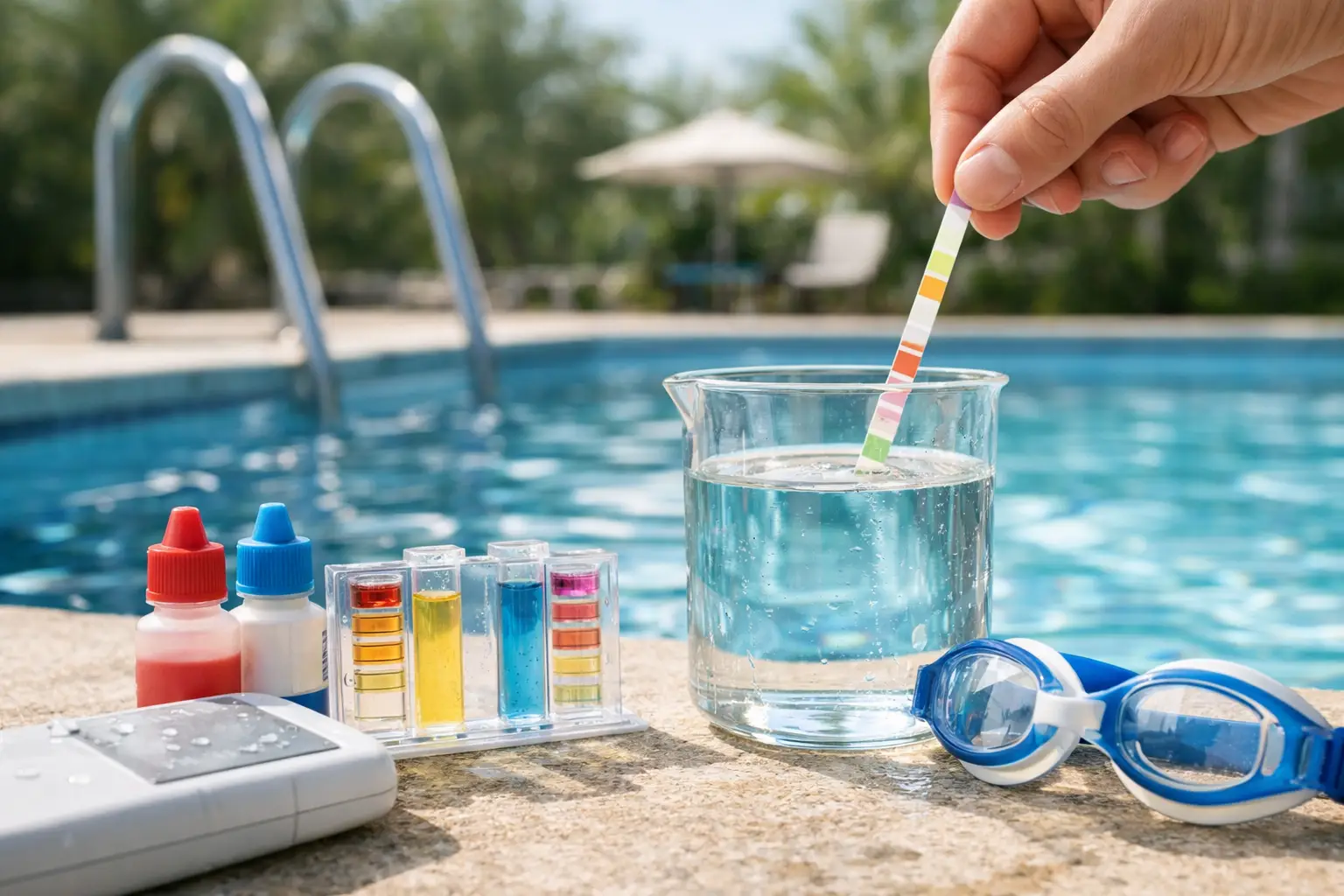
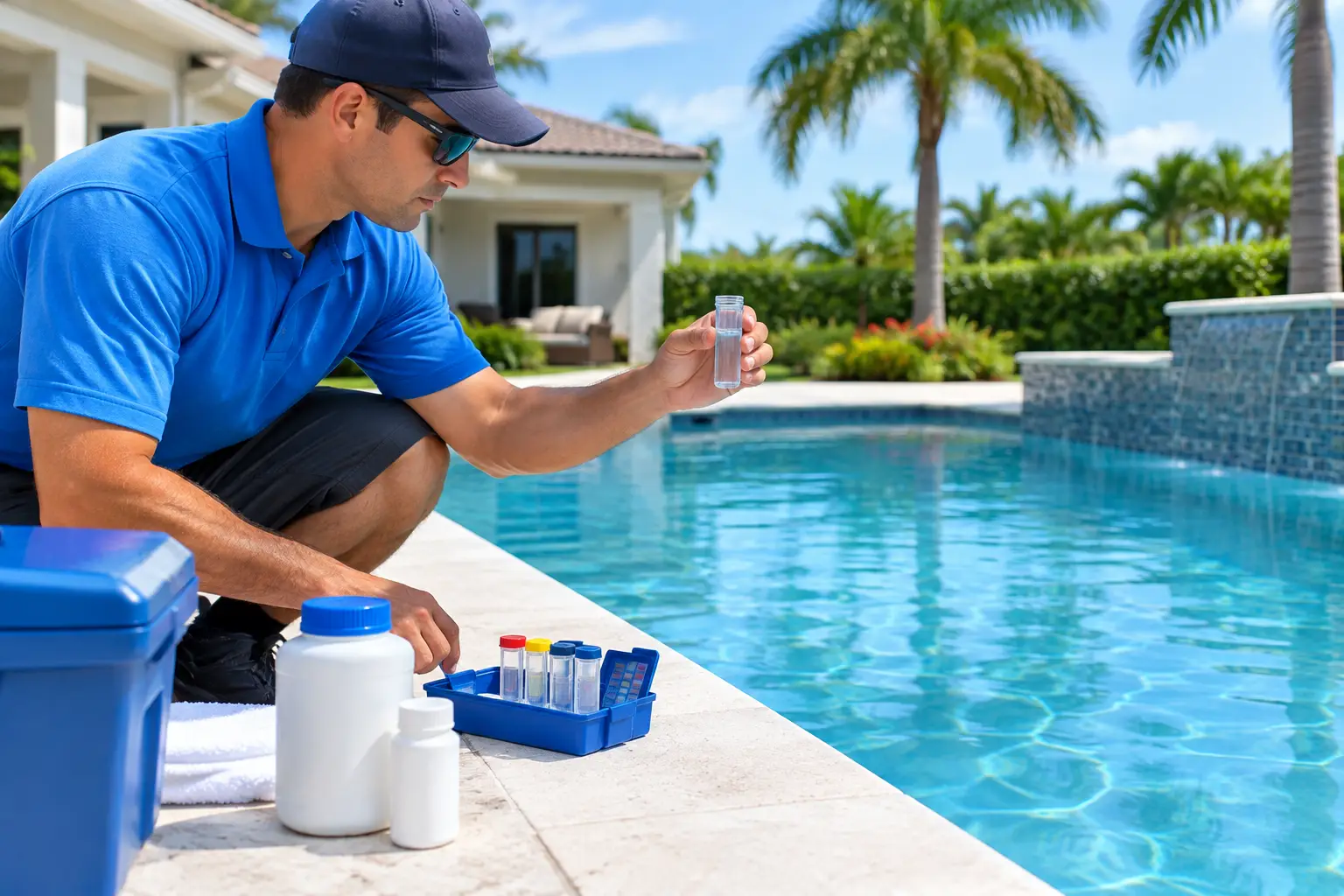
A quality liquid test kit generally gives more dependable detail than basic strips, although strips can be useful for a quick check. Digital testers can be convenient, but they must be calibrated and cared for correctly. Whichever method you use, take the water sample away from skimmers and return jets, and test it promptly rather than leaving it sitting in the sun.
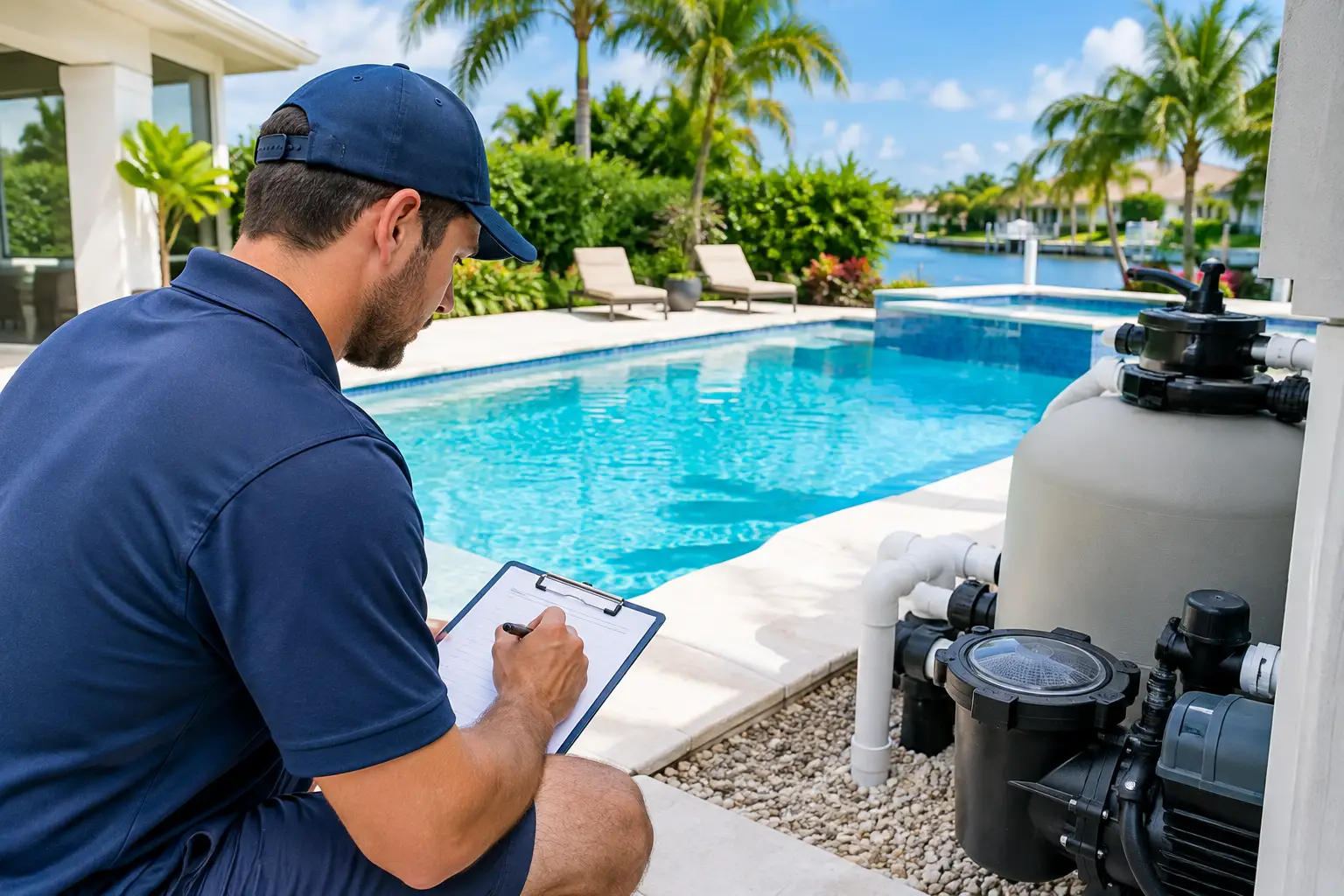
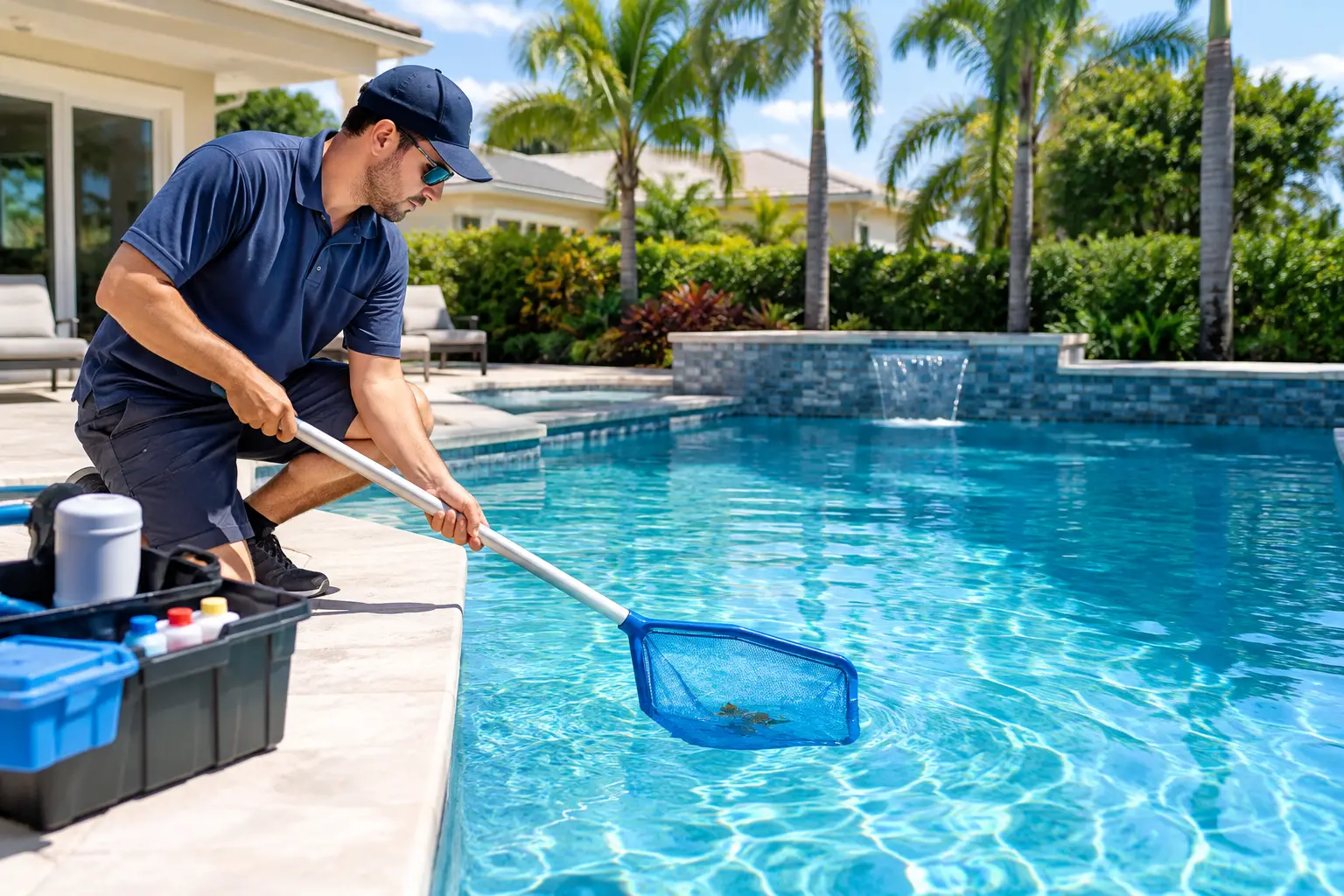
Weekly professional service adds a useful layer of consistency. A technician can test the full chemistry, make precise changes and spot related concerns such as poor circulation, a clogged filter or a failing salt cell before they turn into a green-pool problem.
Adjusting High or Low pH Safely
When pH is high, pool professionals commonly use a measured dose of muriatic acid or dry acid to bring it down. When it is low, sodium carbonate, often called soda ash, is commonly used to raise it. The correct product and dose depend on pool volume, current pH, alkalinity and the product strength.
Small adjustments are safer than large corrections. Add chemicals according to the label directions, keep the circulation system running and allow time for the water to mix before retesting. Never mix pool chemicals together, never add water to acid, and store products cool, dry and out of children’s reach.
For a minor reading just outside the target range, there is rarely a reason to panic. A measured correction followed by retesting is better than overcorrecting and sending the water to the opposite extreme. If the pH repeatedly moves in one direction, or the pool is cloudy, scaled or developing algae, full water testing is the sensible next step.
New Plaster Pools Need Closer Attention
A newly built or resurfaced pool is a special case. Fresh plaster releases compounds during the curing process, and pH often rises rapidly in the first few weeks. The water needs frequent monitoring, careful brushing and controlled balancing to protect the finish while it cures.
This is why a structured 28-day start-up program is more than a checklist. Correct chemistry during that first month helps prevent scale, mottling, staining and surface damage that may be difficult or expensive to correct later. New pool owners should not assume their normal maintenance routine is enough until the plaster has properly stabilised.
A comfortable, clear pool is built on small, consistent checks rather than dramatic chemical fixes. Keep pH close to 7.4 to 7.6, watch how it behaves after weather and use, and address persistent changes with a full balance test. That steady attention gives your family a pool that is ready when Florida living calls for a swim.