A crystal-clear pool can turn cloudy surprisingly quickly when circulation falls behind Florida heat, rain and regular use. So, when should pool filters run? For most residential pools in Palm Beach County, the practical answer is every day, for long enough to circulate the full water volume at least once - and often more than once during the hottest, busiest months.
The best schedule is not a single number that suits every pool. Your pump type, pool size, bather load, water temperature and equipment all matter. The goal is simple: keep water moving through the filter and sanitizer system often enough that it stays safe, balanced and turtly clean without wasting unnecessary energy.
When should pool filters run each day?
Most Florida pools benefit from 8 to 12 hours of filtration per day. During summer, periods of heavy rain, high pollen, or weeks when children and guests are swimming often, aim towards the higher end of that range. If the water is warm, algae can establish itself far faster than many homeowners expect.
In the mildest part of the year, a clean, lightly used pool may be fine on a shorter schedule, commonly around 6 to 8 hours. However, South Florida does not have a long true winter. Even when the air feels cooler, the pool still needs daily circulation, sanitation and chemical monitoring.
There are two exceptions worth treating carefully. A pool recovering from algae, cloudiness or a green-to-clean treatment may need continuous circulation until the water has cleared and chemistry is stable. A newly plastered or resurfaced pool also follows a specific start-up schedule. During the first 28 days, circulation and water balance support proper plaster curing, so follow the start-up professional's instructions rather than a standard timer setting.
The filter does not set the schedule - turnover does
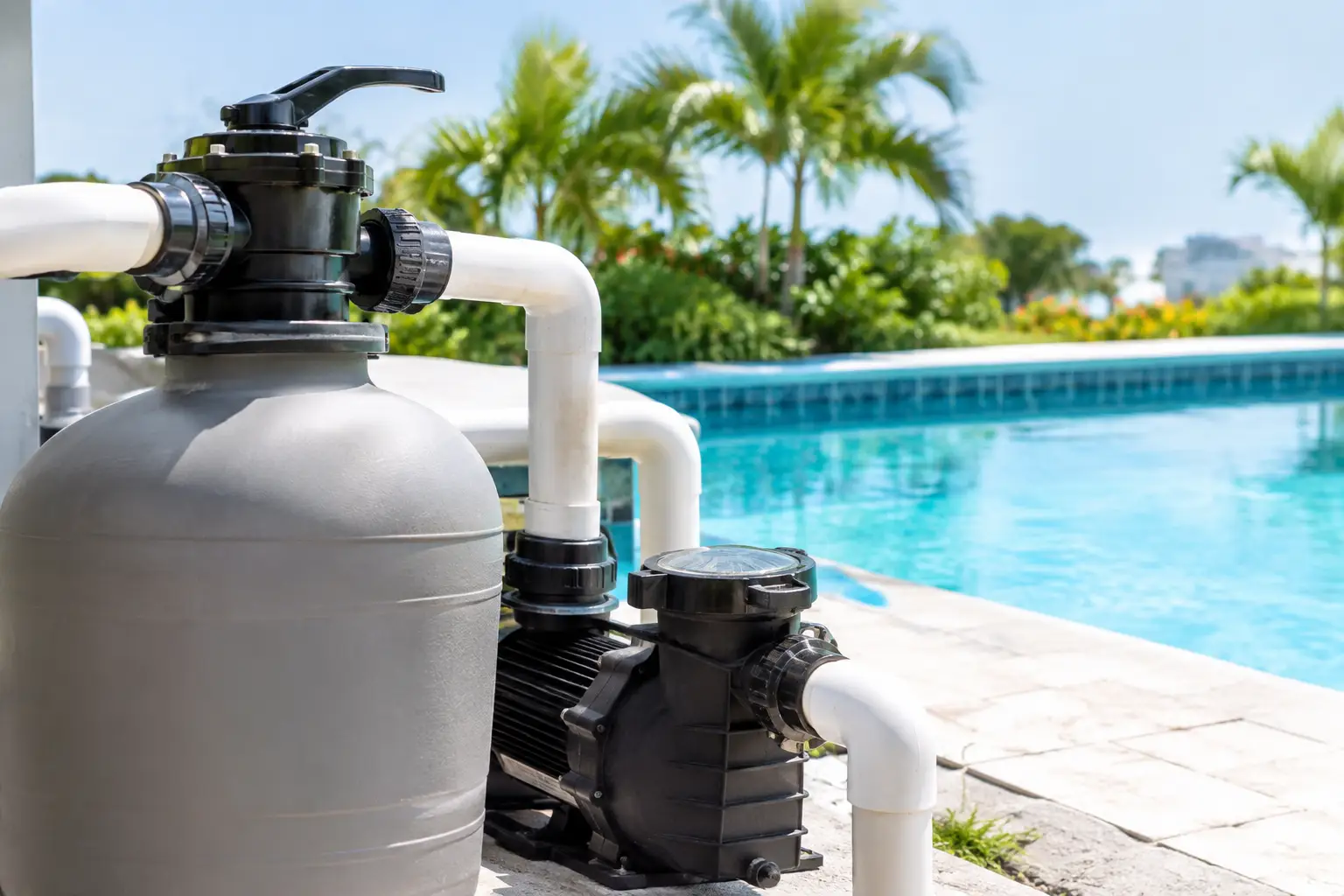
A pool filter only cleans water that reaches it. The pump is what moves that water, which is why daily running time depends on your pool's volume and the pump's actual flow rate.
A useful starting point is the turnover calculation:
Pool volume in gallons ÷ pump flow rate in gallons per minute ÷ 60 = hours for one turnover.
For example, a 15,000-gallon pool with a real flow rate of 50 gallons per minute takes about five hours to turn over once. In Florida, one turnover may be a baseline, but two turnovers can be more appropriate during hot weather or heavy use. That could mean a 10-hour daily schedule.
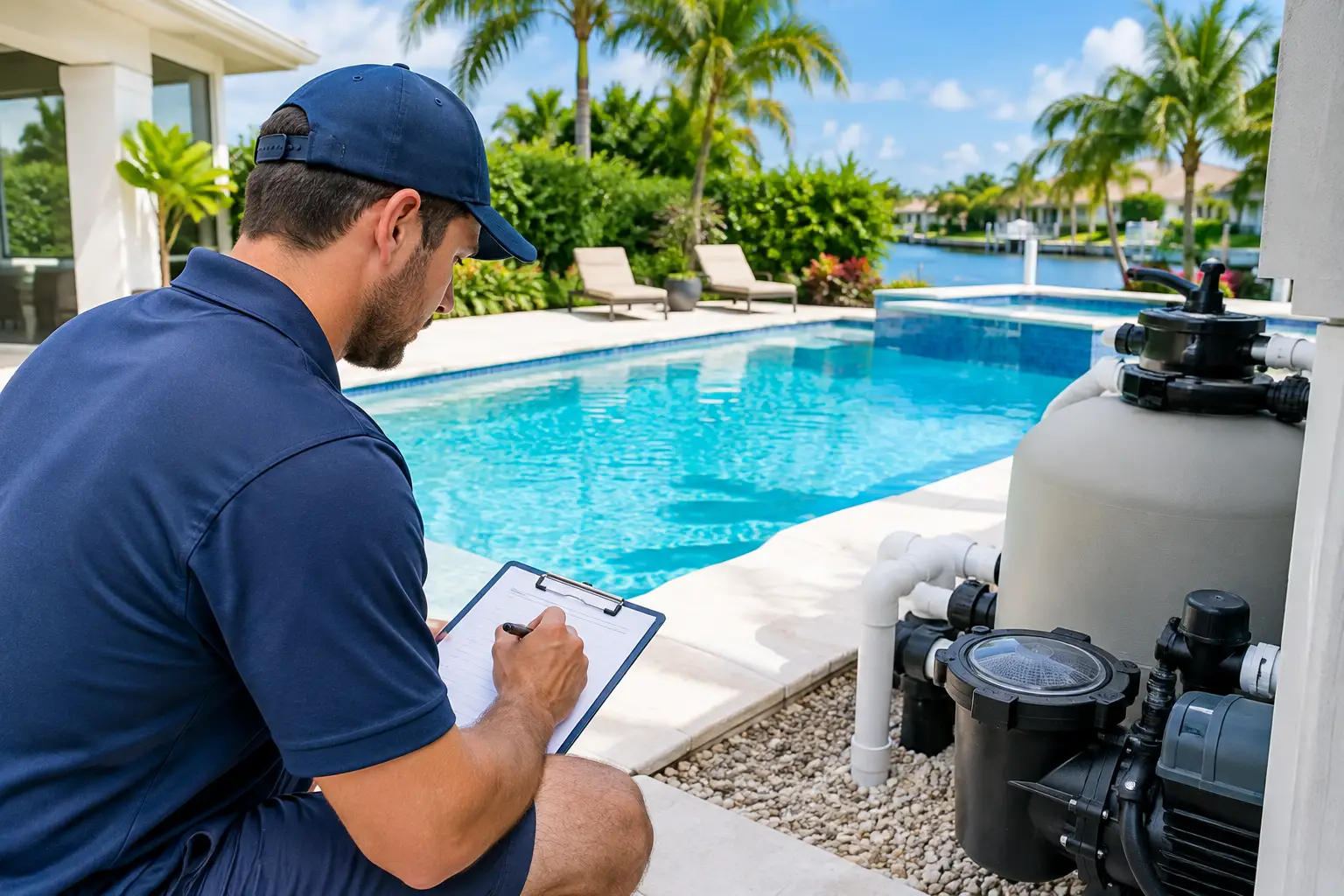
The word “real” matters here. Flow rate can be reduced by a dirty filter, a blocked skimmer basket, restrictive plumbing, a partially closed valve or a failing pump. The number printed on a pump box is not always the flow your pool receives. A professional can assess the equipment, pressure readings and circulation pattern to determine whether the system is working as it should.
Variable-speed pumps can run longer for less
If your pool has a variable-speed pump, longer run times are often the smart choice. These pumps can circulate water at a lower speed for much less energy than a single-speed pump running flat out. Instead of operating for six hours at high speed, you may be able to run for 10 to 14 hours at a low-to-medium speed, with a shorter high-speed period for skimming, vacuuming or water features.
Longer low-speed circulation has real benefits. It gives the filter more opportunities to catch fine debris, helps distribute chlorine evenly, supports salt chlorine generators and can prevent stagnant areas around steps, benches and corners.
That said, slower is not always better. Your system needs enough flow to operate the heater, cleaner, spa spillway, salt cell and other equipment correctly. Some heaters and chlorinators will display a low-flow warning if pump speed is set too low. A good schedule uses the lowest practical speed for everyday filtration, then increases speed when the equipment requires it.
Single-speed pumps are less flexible and more expensive to run for extended periods. If you have one, running it for 8 hours in the daytime is often a sensible starting point, then adjusting based on water clarity, chemistry and seasonal conditions. An upgrade can make a meaningful difference to both operating costs and day-to-day pool care.
Daytime, night-time, or split the schedule?
For most pools, daytime running is preferable. Leaves, pollen, insects and other debris enter the water during the day, so active circulation gives the skimmers a chance to capture them before they sink. If your pool uses a salt chlorine generator, daylight operation also helps match chlorine production with the period when sunlight is actively reducing free chlorine.
A common approach is to run the system from late morning through early evening. This also makes it easier to see an issue such as poor return flow, a leak or an unusual equipment noise before it becomes a larger problem.
There are trade-offs. Some utility plans have different electricity rates, and a quiet overnight period may suit a particular household. A split schedule can work well too, especially with a variable-speed pump: lower-speed filtration for much of the day, a higher-speed block after swimming or when a cleaner operates. The key is to avoid leaving the water motionless for long stretches every day simply to save a few hours of pumping.
Adjust filtration after weather, parties and problems
Your usual timer should not be set-and-forget. Florida weather has a way of changing the plan. After a major rainstorm, run the pump longer, empty baskets and test the water. Rain can dilute chemicals, wash debris into the pool and introduce phosphates and other contaminants that contribute to algae growth.
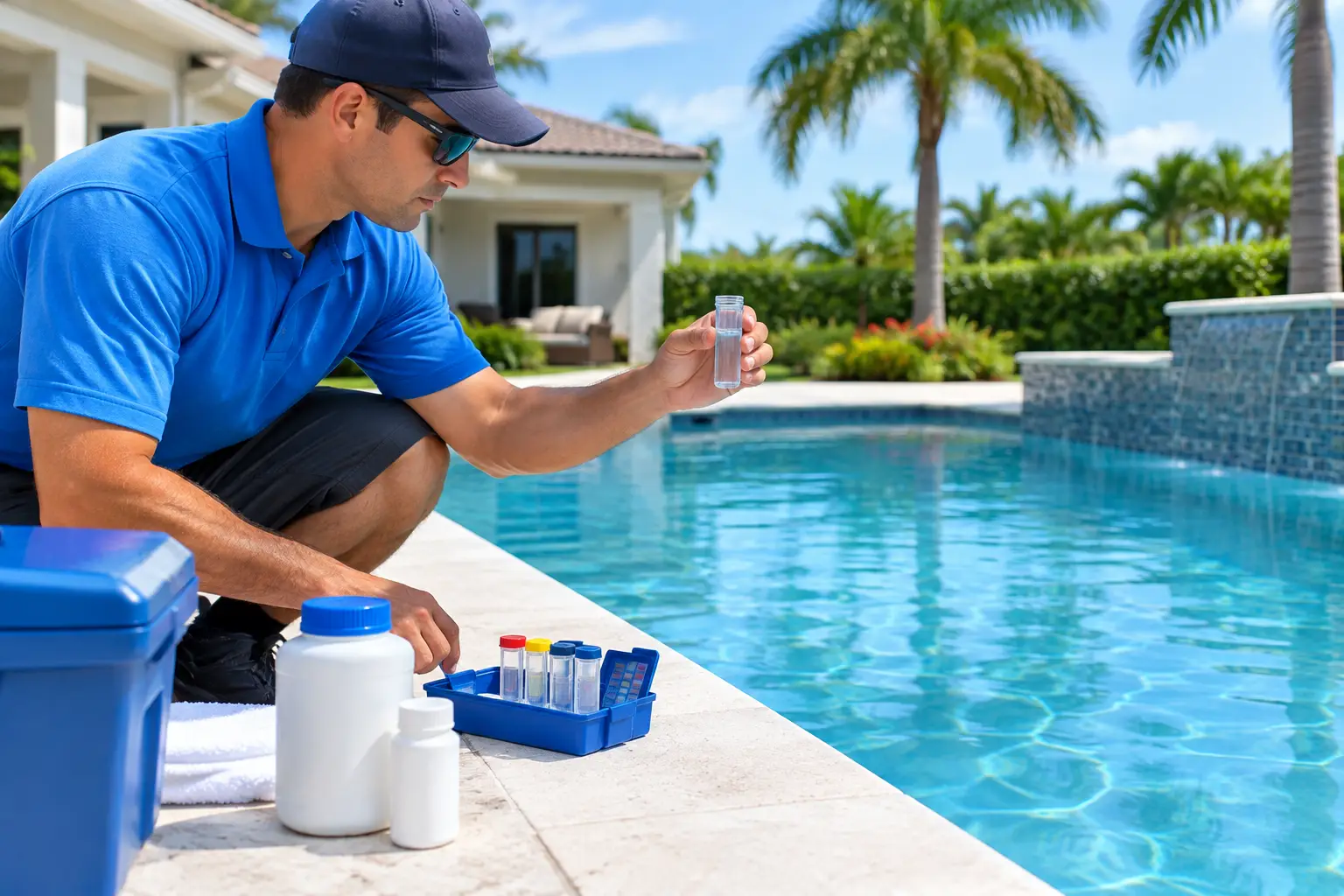
After a busy weekend of swimming, extra run time helps the filter remove sunscreen, body oils and fine debris. It is also wise to test free chlorine and pH, because more swimmers mean a greater sanitizer demand.
If the water looks dull, hazy or green, do not assume the filter alone will correct it. Cloudiness can stem from unbalanced water, early algae growth, a dirty or undersized filter, poor circulation, worn pump components or a clogged salt cell. Running the pump around the clock without correcting the cause can raise the electric bill while doing little to solve the problem.
Keep the filter clean enough to do its job
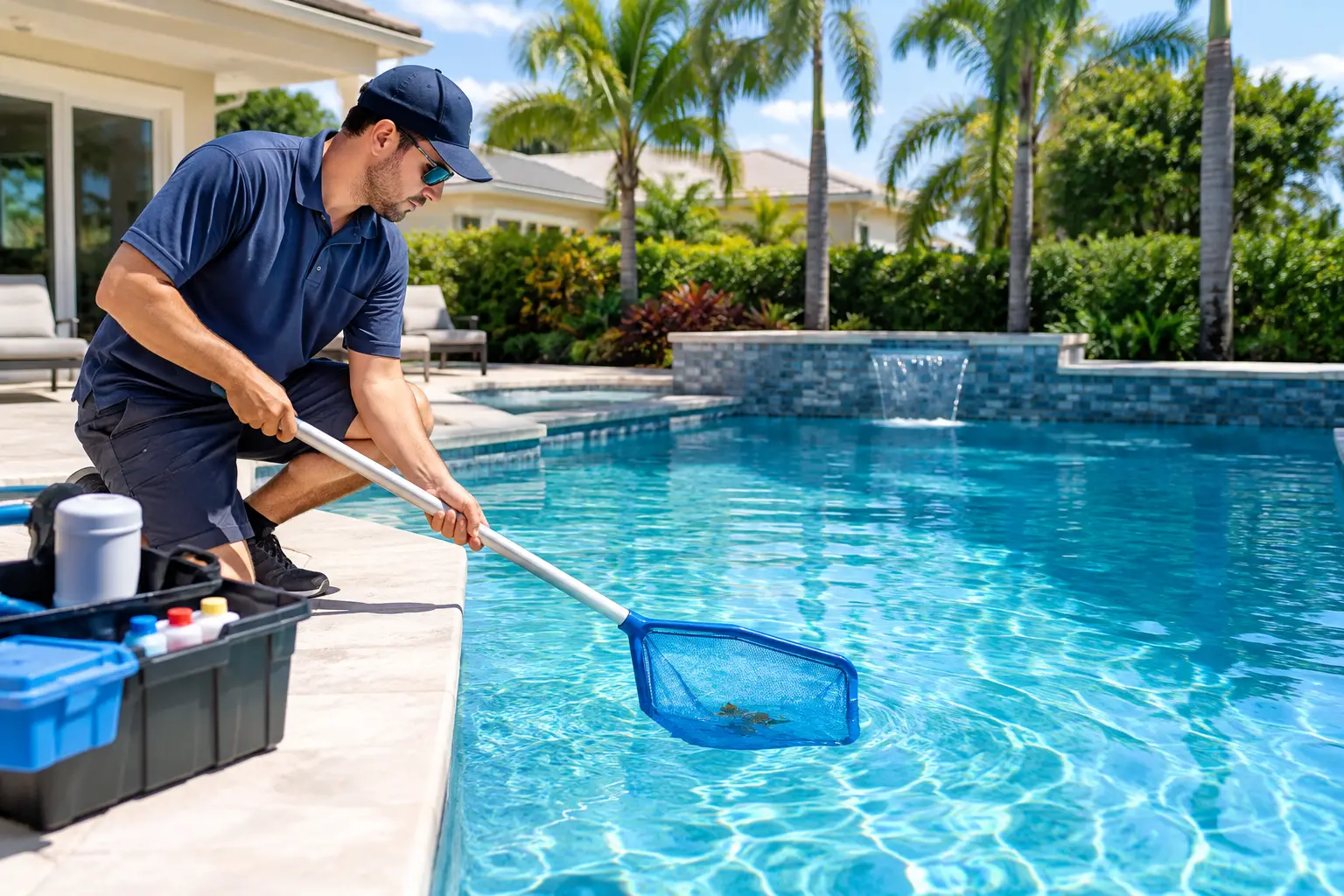
A longer run schedule cannot compensate for neglected equipment. Check skimmer and pump baskets regularly, especially after windy weather. Leaves and palm debris restrict water flow before they ever reach the filter.
Filter maintenance depends on the type of system. Cartridge filters need periodic cleaning, sand filters need backwashing when pressure rises, and DE filters require careful servicing and replacement of DE powder after a backwash. As a general guide, service the filter when the pressure gauge rises around 20 to 25 percent above its clean starting pressure. Do not backwash on a fixed weekly habit if the pressure does not call for it - excessive backwashing wastes water and can reduce filtration efficiency.
Also pay attention to the returns. You should see steady movement across the surface and feel consistent flow from the return fittings. Dead spots can allow debris and algae to settle, even when the pump has technically run for plenty of hours.
A sensible schedule starts with clear water, not guesswork
A timer gives your pool consistency, but inspection gives it reliability. Keep an eye on clarity, test water regularly and adjust the schedule when heat, storms or family use increases the load on the system. If you are constantly extending run times just to keep the water presentable, the issue may be filtration, circulation or chemistry rather than the clock.
Turtle Pool Care can assess pump performance, filter condition and water chemistry as part of dependable weekly service, with clear reports that show what was checked and completed. The right schedule should leave you with a pool that is ready for an afternoon swim, not another item on your weekend list.
Set the timer with your pool's actual needs in mind, then let clean water and steady equipment performance confirm that it is working.