A pool can look clear at breakfast and turn dull, cloudy or slightly green after a busy weekend, a storm or a stretch of intense Florida heat. Knowing when to shock pool water helps stop a small water-quality issue becoming an algae recovery job. The key is to treat the reason for shocking, not simply add chemicals on a calendar.
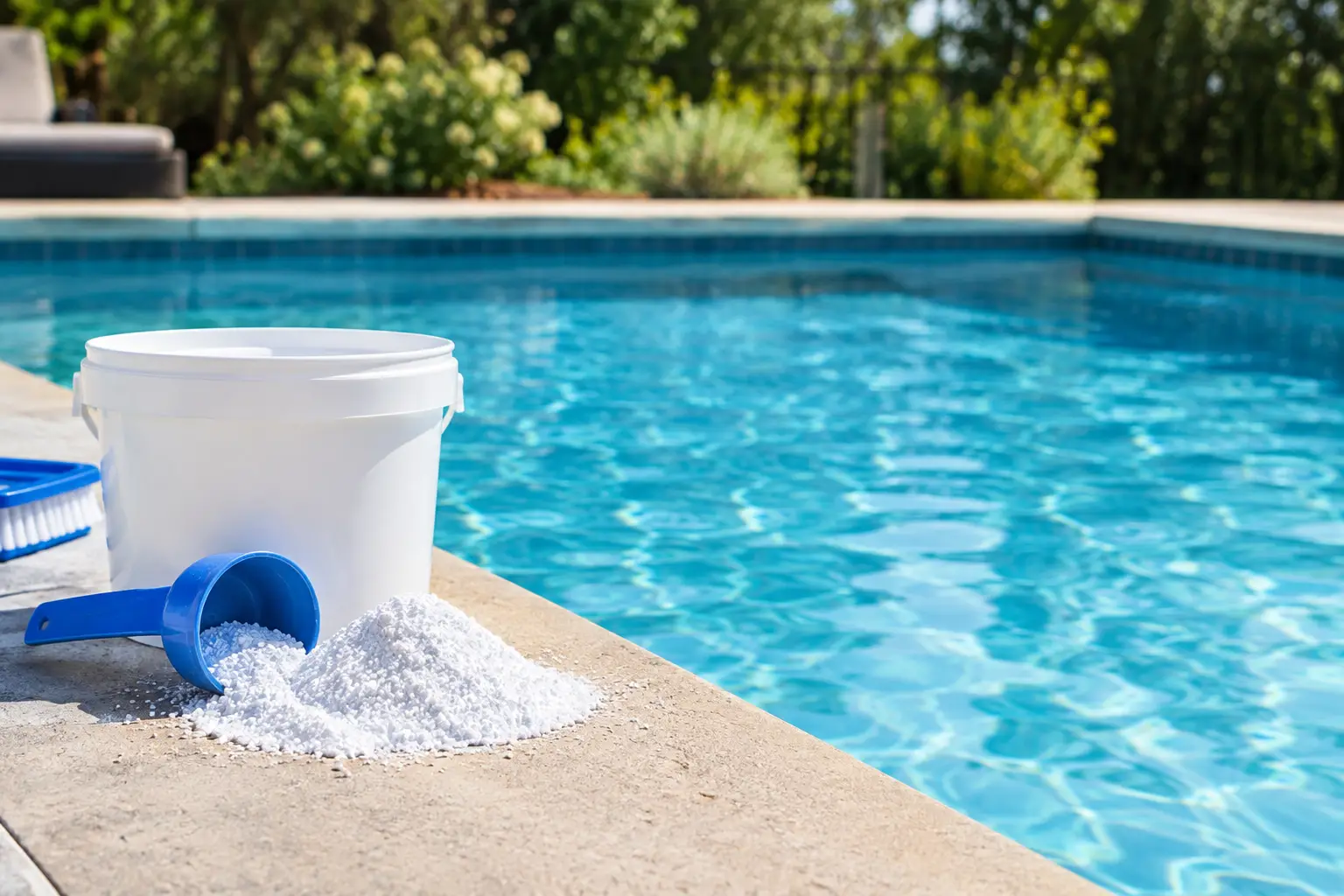
Pool shock is a higher-than-normal dose of oxidiser, usually chlorine, used to break down contaminants and restore sanitising power. Done at the right time, it supports clean, safe and perfectly balanced water. Done unnecessarily or incorrectly, it can waste product, irritate swimmers and create another chemistry problem to solve.
When to shock pool water: the signs that matter
The most reliable reason to shock is a test result or a visible change in the pool. Free chlorine can be present in the water yet unable to do its job because it has combined with sweat, sunscreen, body oils, leaves and other organic contaminants. This is often seen as a strong “chlorine” smell. Oddly, that smell usually indicates that the water needs attention, not that it contains too much effective chlorine.
Shock the pool when free chlorine is low for its cyanuric acid level, when combined chlorine is elevated, or when the water has become cloudy despite correct filtration. A pool that is starting to look green, has algae on the walls or steps, or feels slippery also needs prompt action. In these cases, shock is only one part of the answer: brushing, circulation, filtration and follow-up testing are just as important.
A heavy bather load is another sensible trigger. A children’s party, a long afternoon of entertaining or several people using sunscreen and lotions can rapidly increase the contaminant load. If the water looks and tests normal the following day, a full shock may not be necessary. Test first, then decide.
Events that can justify a shock treatment
South Florida pools are exposed to year-round warmth, frequent rain and airborne debris. Those conditions can change chemistry quickly, especially during summer. After a major rainstorm, test the water rather than automatically shocking it. Rain can dilute chemicals, wash debris into the pool and upset pH, but a well-maintained pool may only need a small adjustment and a longer filtration cycle.
Consider shock treatment after a pool has been unused for an extended period, after significant leaf or animal contamination, or following a faecal incident. The last situation requires more than a routine dose of shock. Keep swimmers out, remove solid material carefully and follow the appropriate sanitation procedure for the type of incident. A professional can help ensure the chlorine level and contact time are safe and effective.
If a pool has gone green, do not expect one bag of shock to make it turtly clean by morning. Algae treatment often requires chlorine maintained at a targeted level over time, thorough brushing, filter cleaning and repeated testing. The right approach depends on the severity of the algae, the stabiliser level and the condition of the equipment.
Do not shock by habit alone
Some pool owners shock weekly because that is what they have always heard. It can be useful in pools with consistently high use or persistent combined chlorine, but it is not a universal rule. A properly sanitised residential pool with good circulation, a clean filter and stable chemistry may not need weekly shocking.
Over-shocking has trade-offs. It can temporarily make water unsuitable for swimming, increase chemical costs and, with certain products, gradually raise calcium hardness or cyanuric acid. Calcium hypochlorite adds calcium. Dichlor and trichlor-based products add cyanuric acid. In Palm Beach County, where warm water makes sanitation demands higher, excess stabiliser can become a hidden reason chlorine stops working as expected.
The better routine is simple: test the water regularly, keep free chlorine appropriate for the cyanuric acid level, maintain balanced pH and alkalinity, and respond to changes early. Weekly professional service helps catch those changes before cloudy water or algae takes hold.
Test before choosing a treatment
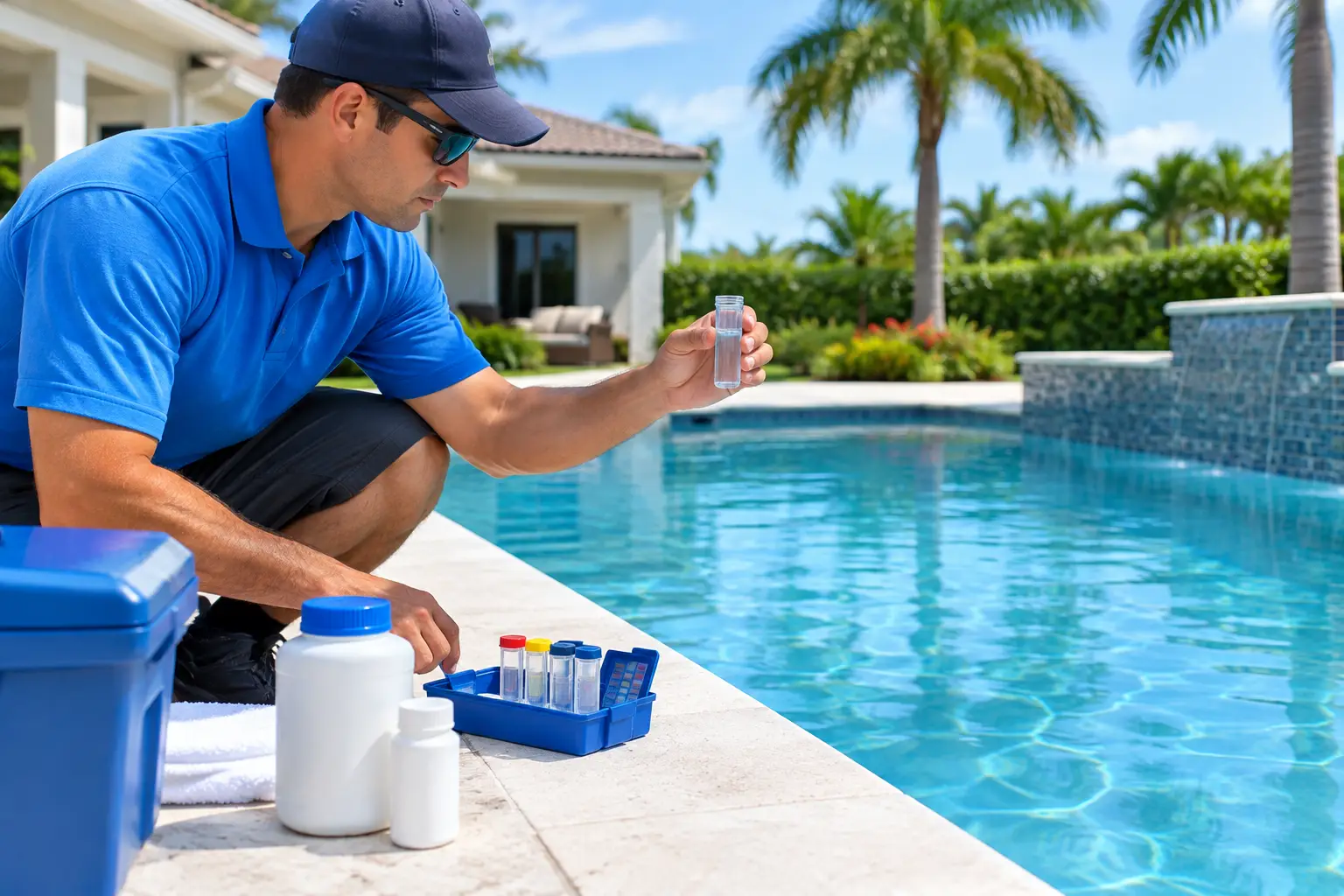
A basic test strip can flag a problem, but a quality drop test or professional water analysis gives a clearer picture. Before shocking, check free chlorine, combined chlorine, pH and cyanuric acid. Calcium hardness and total alkalinity also matter, particularly if the pool has plaster, a salt system or recurring scale issues.
Combined chlorine is a useful clue. It is calculated by subtracting free chlorine from total chlorine. When combined chlorine is above roughly 0.5 ppm, the water often benefits from oxidation. However, the correct chlorine target is not one fixed number for every pool. Cyanuric acid protects chlorine from sunlight, but it also means more free chlorine is needed for effective sanitation.
If cyanuric acid is excessively high, repeatedly adding stabilised shock will not solve the underlying problem. Partial water replacement may be needed instead. That is why test results should guide the treatment, rather than the label on the nearest chemical container.
Chlorine shock versus non-chlorine shock
Chlorine shock sanitises and oxidises. It is generally the right choice when algae is present, chlorine has fallen too low or the pool needs a meaningful sanitation reset. Products vary in strength and side effects, so dosage should always follow the product instructions and the pool’s measured water volume.
Non-chlorine shock is an oxidiser. It can help break down bather waste and may be useful after a busy swim day when chlorine is otherwise in range. It does not replace chlorine and it will not clear an algae bloom. Treat it as a maintenance tool, not a cure for green water.
How to shock safely and effectively
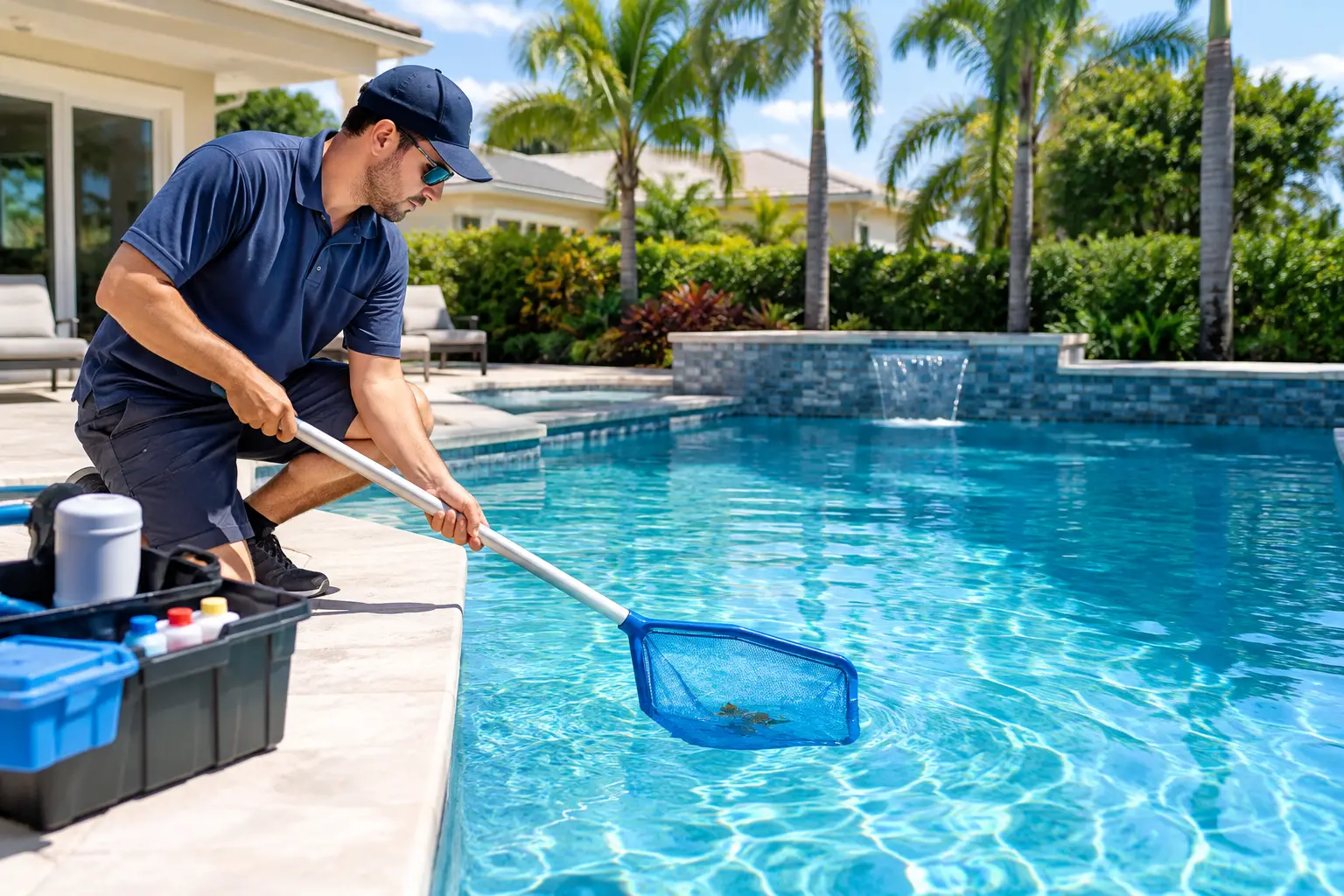
Start by removing leaves and visible debris, then brush the walls, steps and floor. Organic debris consumes chlorine, while brushing exposes algae that may be clinging to surfaces. Ensure the pump and filter are operating correctly before treatment. Poor circulation can leave treated water concentrated in one area and allow problems to persist in another.
Add the chosen product according to its label instructions, preferably at dusk or after sunset. Sunlight burns through unstabilised chlorine quickly, so evening application gives the treatment more time to work. Keep the pump running to circulate the water and avoid broadcasting chemicals directly onto delicate surfaces where the label advises pre-dissolving.
Never mix pool chemicals together, never add water to chemicals, and never combine different shock products in the same bucket or container. Store products dry, sealed and away from heat, children and pets. These are not fussy precautions. Chemical reactions and fumes can be dangerous.
After shocking, keep the pool circulating and retest before swimming. The wait time depends on the product used and the chlorine reading. As a practical rule, swimmers should stay out until the water is clear, balanced and free chlorine has returned to a safe normal range. Follow the product label and local guidance if they specify a longer wait.
If shock does not clear the pool
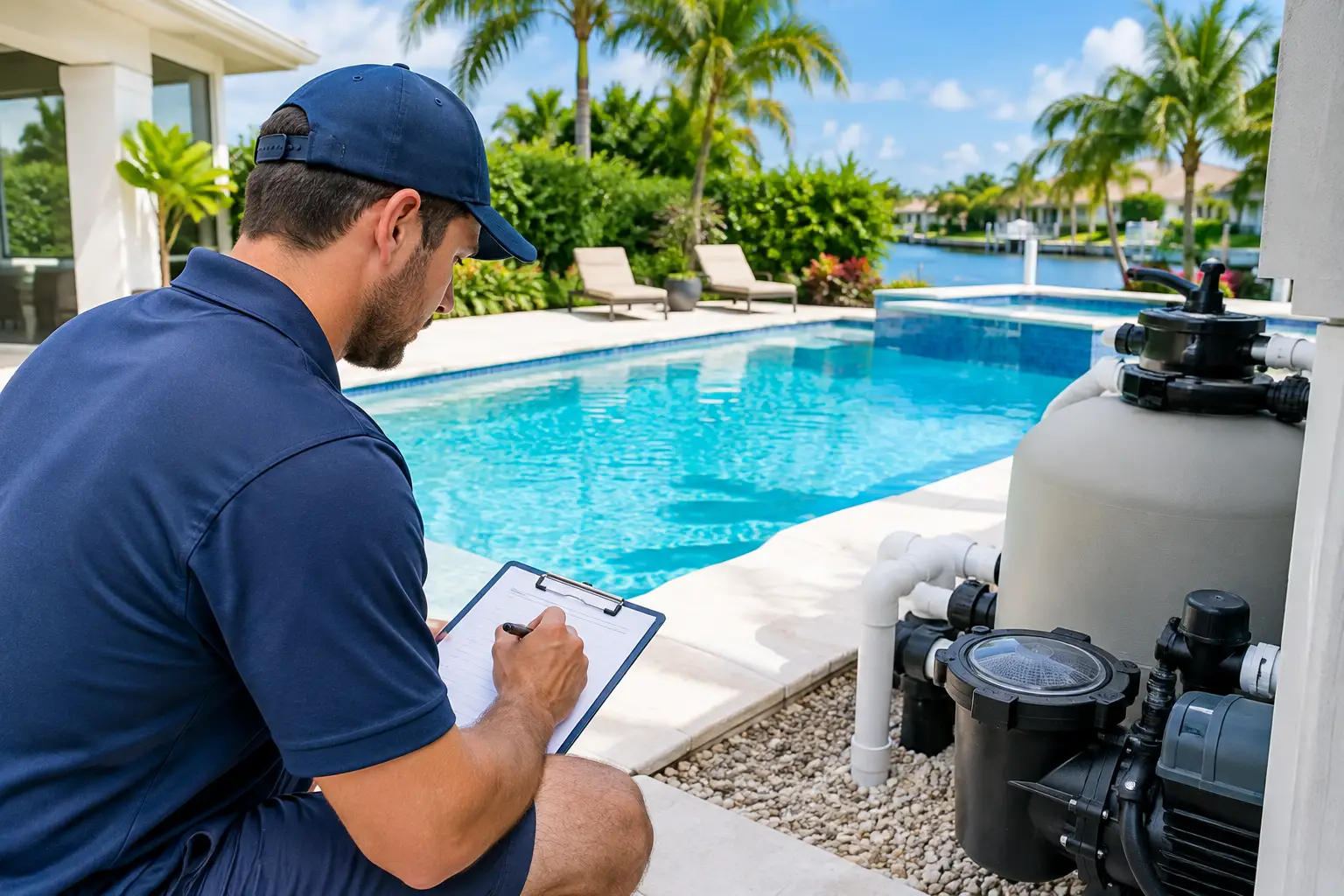
Cloudy water that remains after shock often points to a filtration issue, poor circulation, incorrect pH, high cyanuric acid or algae that needs sustained treatment. Check whether the filter pressure has risen, whether the pump is running long enough and whether return jets are moving water effectively. Clean or backwash the filter only as appropriate for its type and manufacturer guidance.
A recurring green tint can also signal that the pool is being treated after algae appears rather than before it gains ground. Consistent chlorine levels, brushing and dependable weekly testing are usually less costly than repeated emergency treatments. Equipment issues such as a failing pump, clogged filter or poor water flow deserve attention too, because no chemical program can compensate for inadequate circulation.
For homeowners in Wellington, Westlake, Royal Palm Beach and The Acreage, the fastest path back to a swim-ready pool is often a proper diagnosis rather than another round of guesswork. Turtle Pool Care approaches cloudy and green pools by checking the complete picture - water chemistry, circulation, filtration and visible algae - then documenting the work clearly.
A clear pool should feel easy to enjoy, not like a chemistry experiment waiting beside the patio. Test after unusual events, act quickly on genuine warning signs and give the water time to circulate. That steady approach keeps family swim time safe, inviting and turtly clean.