A pool pump has a familiar working hum, but it should not sound like it is grinding stones, screaming across the patio or rattling its way through the day. If you are asking, “why is pool pump loud?”, the noise is often an early warning that air, water flow, moving parts or the pump’s mounting needs attention. Catching it early can prevent a small repair becoming a pump replacement.
For Palm Beach County homeowners, this matters more than it might seem. Your pump is the heart of the circulation system, moving water through the filter and helping chemicals stay evenly distributed. When it is struggling, water quality and equipment life can suffer too.
Why Is Pool Pump Loud? Start With the Type of Noise
The sound itself offers useful clues. A high-pitched whine is different from a low rattle, and both point to different areas of the system. Before touching anything, listen from a safe distance while the pump is running. Do not remove lids, open electrical panels or loosen plumbing while the equipment is on.
A noisy pump may still be circulating water, but that does not mean it is operating correctly. Check whether the pressure gauge has changed, whether return jets have weakened, and whether there are air bubbles in the pump basket or coming from the pool returns. Those observations help narrow down the cause.
A rattling or vibrating sound
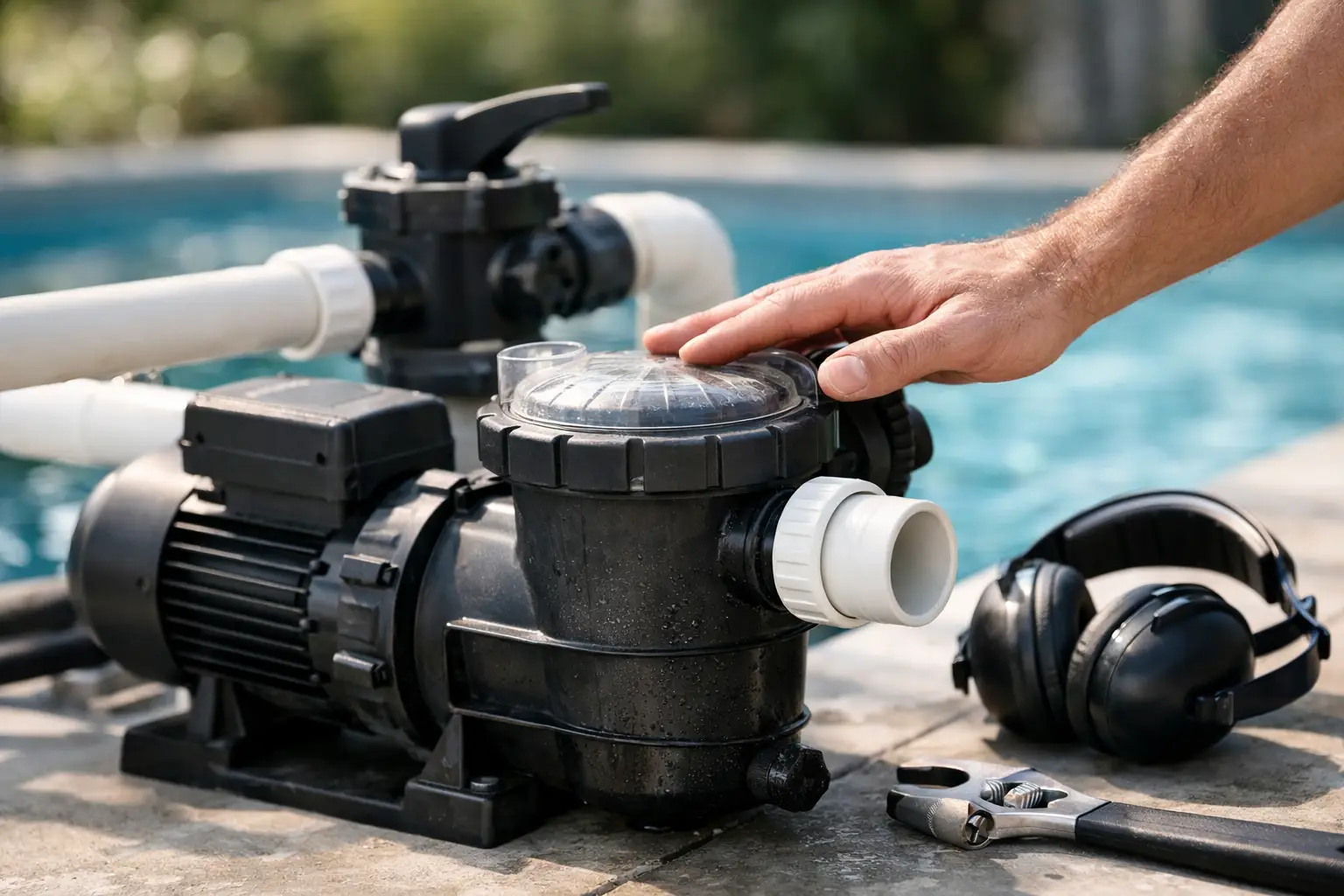
A rattle often comes from something loose rather than something broken. The pump housing may be sitting unevenly on its pad, mounting bolts may have worked loose, or nearby pipework may be vibrating against the equipment base, fence or wall. A loose pump lid, union fitting or valve handle can also create a surprisingly loud buzz.
Florida heat, rainfall and normal equipment vibration can gradually shift fittings and supports. Turn the system off at the breaker before inspecting the area. Look for loose hardware, cracked supports or plumbing that is visibly rubbing against another surface. Do not overtighten plastic fittings - they can crack under pressure and create a leak.
A loud hum with little or no water movement
A steady electrical hum, especially when the pump does not properly start or circulate water, needs prompt attention. It can indicate a failing capacitor, motor issue, seized impeller or electrical fault. Repeatedly switching the pump on and off is not a fix and may put extra strain on the motor.
If the motor is hot, smells burnt, trips the breaker or will not start, leave it off and arrange a professional assessment. Water and electricity are not a DIY combination worth testing by trial and error.
A screeching, squealing or metallic grinding noise
Screeching or grinding commonly points to worn motor bearings. Bearings support the spinning motor shaft; as they wear, the pump becomes louder and the sound may rise and fall with the motor speed. This noise rarely improves on its own.
A bearing repair can sometimes be sensible, particularly on a relatively new, otherwise efficient pump. On an older single-speed motor, however, the better value may be a replacement motor or an upgrade to a variable-speed pump. The right choice depends on the pump’s age, condition, energy use and compatibility with your existing plumbing and controls.
Air Leaks Can Make a Pool Pump Sound Worse
One of the most common causes of a noisy pool pump is air entering the suction side of the system. The suction side is everything between the pool and the pump: skimmer lines, main drain lines, valves, pipe joints and the pump lid.
When the pump draws in air, it can make a gurgling, slurping or gravel-like sound. You may see bubbles beneath the clear pump lid, air returning through the jets or a pump basket that never fills completely with water. The pump may also lose prime after it shuts off.
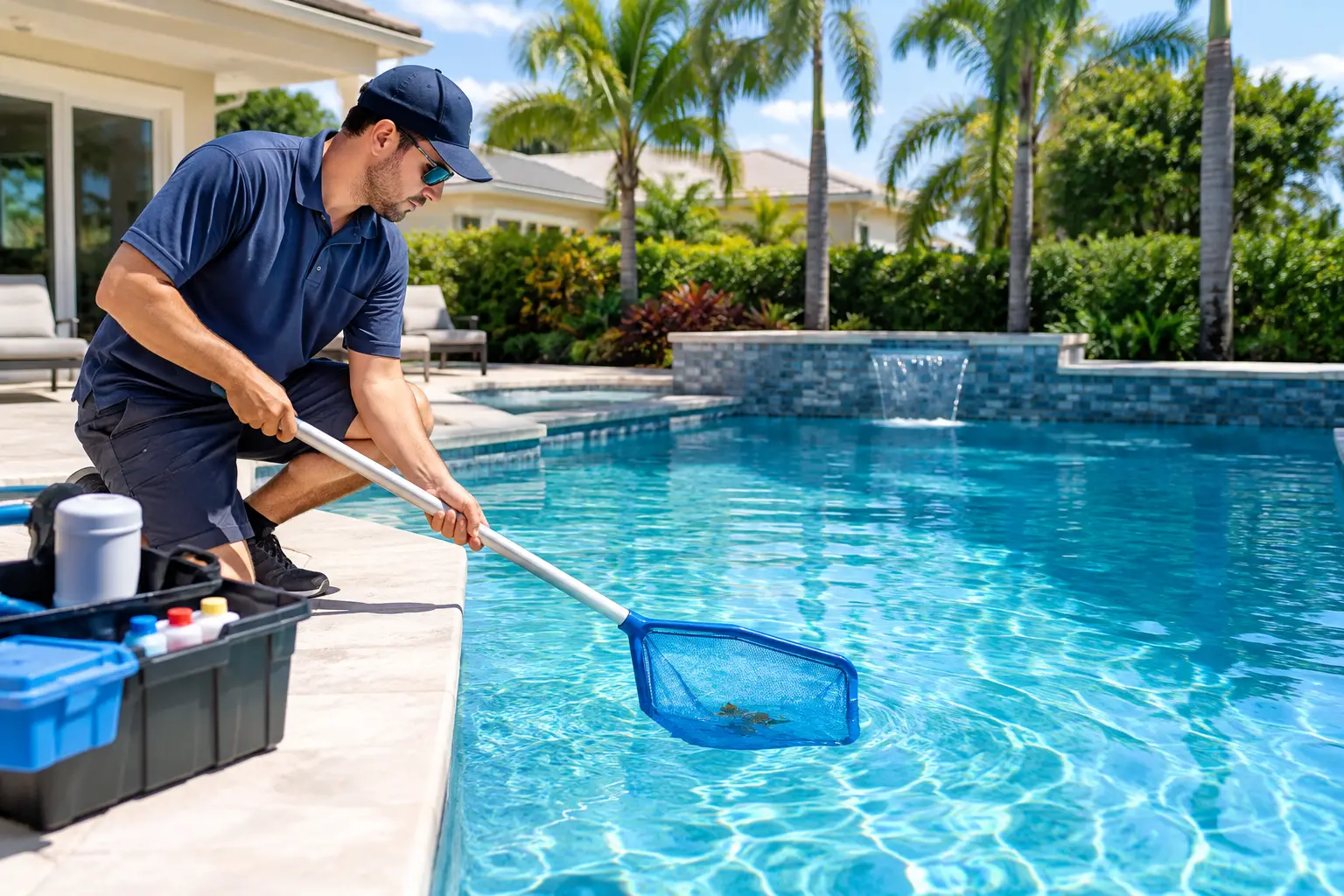
Start with the simple checks. Make sure the pool water level is roughly halfway up the skimmer opening, as low water can pull air through the skimmer. Empty the skimmer and pump baskets, then inspect the pump lid O-ring for dirt, flattening, cracks or dryness. A clean, properly lubricated O-ring helps create an airtight seal. Use a lubricant made for pool O-rings, not petroleum jelly.
If these checks do not resolve the issue, the leak may be at a valve, fitting or underground line. That calls for proper diagnosis, not guesswork. Air leaks can reduce circulation, contribute to poor filtration and, in serious cases, let the pump run without enough cooling water.
Restricted Water Flow Can Create a Gravel-Like Sound
If the pump sounds as though it is pumping marbles or gravel, it may be cavitating. Cavitation happens when the pump cannot receive enough water and tiny vapour bubbles form and collapse inside the system. Besides being noisy, it can damage the impeller and other internal parts over time.
A clogged basket is the easy possibility, but it is not the only one. A dirty filter, a closed or partially closed valve, a blocked skimmer line, a stuck check valve or an undersized suction line can all restrict flow. This is why cleaning only the pump basket may not solve the underlying problem.
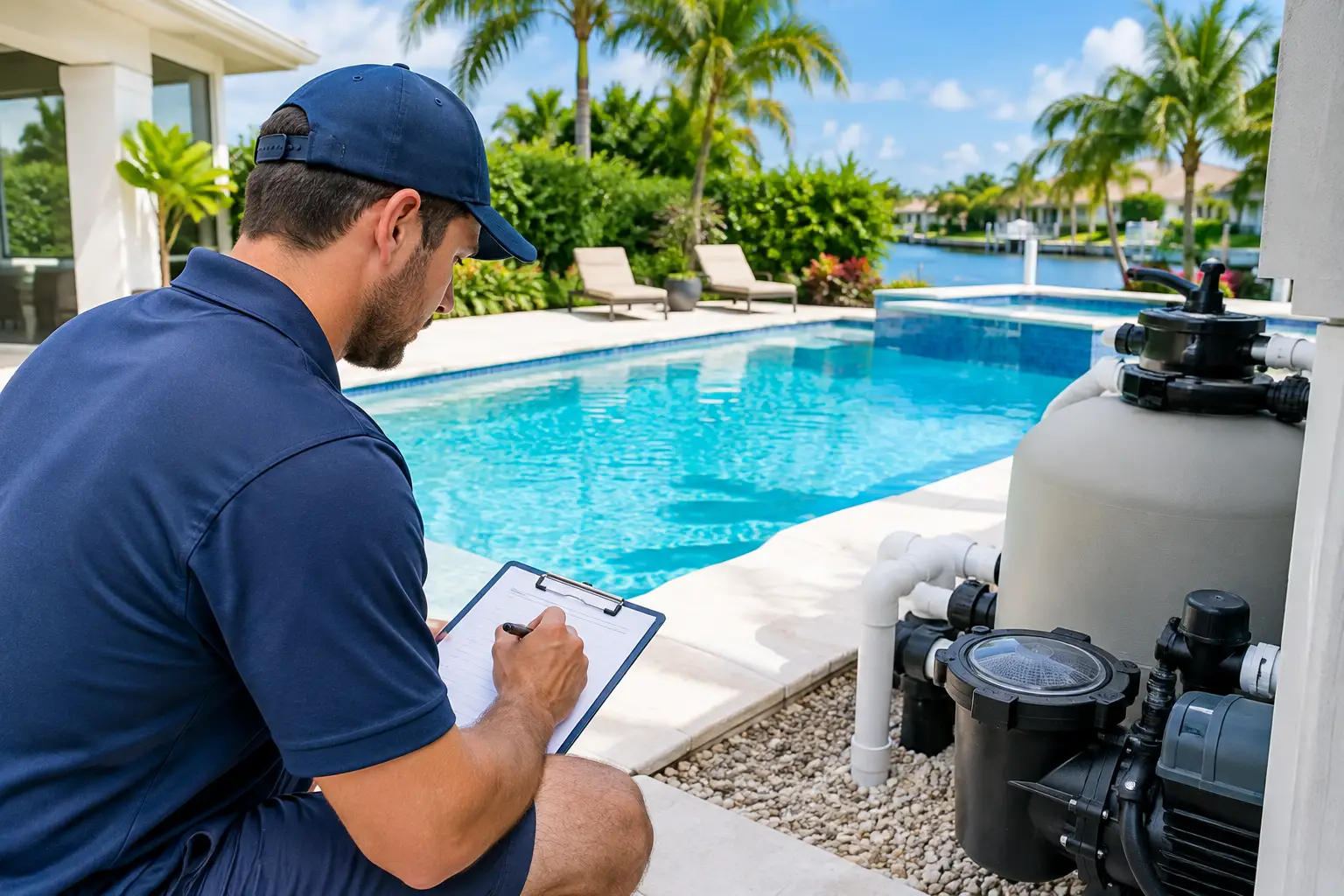
Check the filter pressure against its normal clean reading. A higher-than-usual pressure often suggests the filter needs cleaning or backwashing, depending on its type. A much lower pressure combined with air in the pump can suggest a suction-side restriction or air leak. Record the readings rather than relying on memory - small changes are easier to spot over several service visits.
Debris in the Impeller Can Cause Sudden Noise
Leaves, mulch, broken toys and small pieces of basket debris can occasionally reach the impeller. When that happens, the pump may whine, hum or lose flow even though the basket appears clear. This is more likely after storms or when a damaged pump basket has allowed debris through.
Do not reach into the pump while it is connected to power. After switching off the breaker, a qualified technician can inspect the impeller and clear an obstruction if appropriate. If debris has chipped the impeller or the pump is already showing signs of motor wear, further repair may be needed.
Keeping the pump basket in good condition is a simple prevention step. Replace a cracked or warped basket rather than treating it as a minor inconvenience. It is a low-cost part that protects more expensive equipment.
When the Noise Is Normal - and When It Is Not
Variable-speed pumps can change tone as they run at different programmed speeds. A gentle change in pitch when the schedule moves from low-speed filtration to a higher-speed cleaning cycle is usually normal. A faint hum is also expected from any operating motor.
What is not normal is a new sound, an increasingly loud sound, visible leaking, reduced circulation, frequent loss of prime, overheating or a breaker that trips. Noise that disrupts conversations on the patio is also worth investigating. Pool equipment does not need to be silent, but it should not dominate your outdoor space.
Safe Checks Before Booking a Pool Pump Repair
There are a few homeowner checks that are useful and low-risk when the power is off:
- Confirm the pool water level is adequate and the skimmer door moves freely.
- Empty the skimmer and pump baskets, checking for cracked baskets or heavy debris.
- Inspect the pump lid and O-ring for dirt, damage and a poor seal.
- Look for obvious drips, loose mounting hardware or pipework touching the pump pad.
- Note the sound, filter pressure, visible air bubbles and changes in water flow.
Avoid dismantling the motor, changing capacitors or forcing valves. Those tasks can create safety risks and can turn a targeted repair into a larger problem. Clear notes and a short video of the sound, taken from a safe distance, can help a technician assess the issue faster.
Protecting Quiet, Reliable Circulation
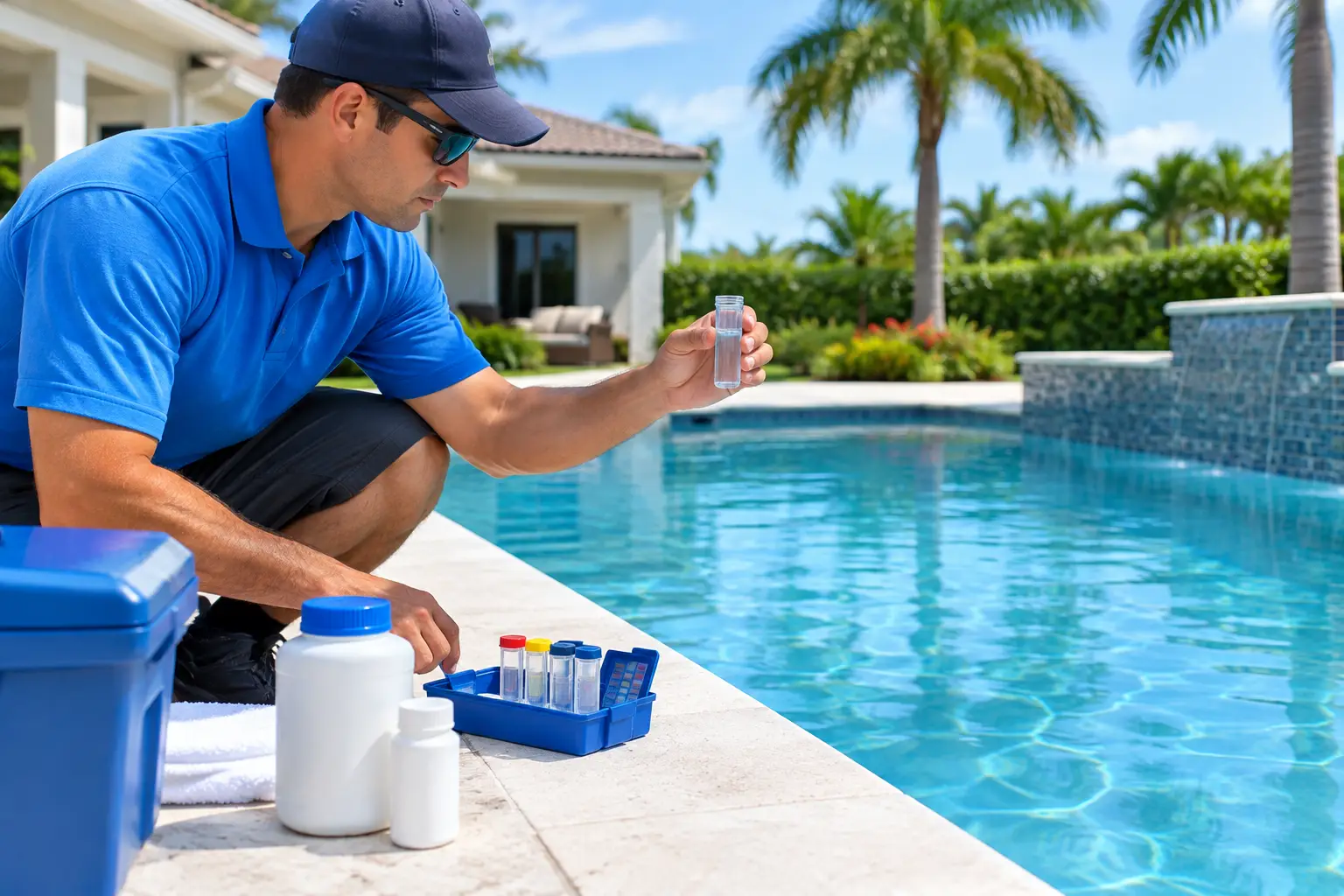
Weekly care makes a real difference to pump noise and longevity. Regular basket emptying, water-level checks, filter maintenance and chemistry testing reduce the strain placed on circulation equipment. Balanced water also helps protect seals, heaters, filters and fittings across the system.
At Turtle Pool Care, equipment checks are part of keeping a pool turtly clean, safe and ready for family time. A loud pump is not always an emergency, but it is always worth listening to. Address the change while the pool is still circulating, and you are far more likely to keep the repair straightforward and your outdoor time peaceful.