A pool can look clear at breakfast and turn cloudy, dusty, or green surprisingly fast when water stops moving as it should. Knowing how to troubleshoot pool circulation starts with recognizing that your pump, filter, skimmers, returns, and valves work as one system. When one part is restricted, leaking air, or failing, water quality and equipment performance both suffer.
For homeowners in Wellington, Royal Palm Beach, and nearby communities, circulation problems are especially worth addressing quickly. Warm Florida weather gives algae every advantage when sanitizer is not being carried evenly through the pool. A few simple observations can help you narrow down the issue before it turns into a larger repair.
Start With the Signs of Poor Circulation
Poor circulation does not always mean the pump has stopped. More often, the system is running but moving less water than normal. You may notice weak water flow from the return jets, debris collecting in corners, a skimmer that barely pulls leaves in, or a pump pressure reading that has changed from its usual range.
Cloudy water can also point to poor circulation, but it is not proof by itself. Water chemistry, heavy swimmer use, rain, and an undersized or dirty filter can all contribute. The useful question is whether the pool looks and behaves differently while the equipment is operating.
Take a moment to look at the water returning to the pool. Strong, consistent streams from the return fittings generally indicate healthy flow. If one return is weak while the others are normal, a directional fitting or line may be obstructed. If every return is weak, the issue is more likely at the pump, filter, or suction side of the system.
How to Troubleshoot Pool Circulation Safely
Before checking baskets or opening equipment lids, turn the pump off at its normal control or automation setting. Do not attempt electrical repairs, remove wiring covers, or work on a pump that will not power on. A pool professional should handle electrical faults, damaged wiring, and internal pump repairs.
Check the pool water level first
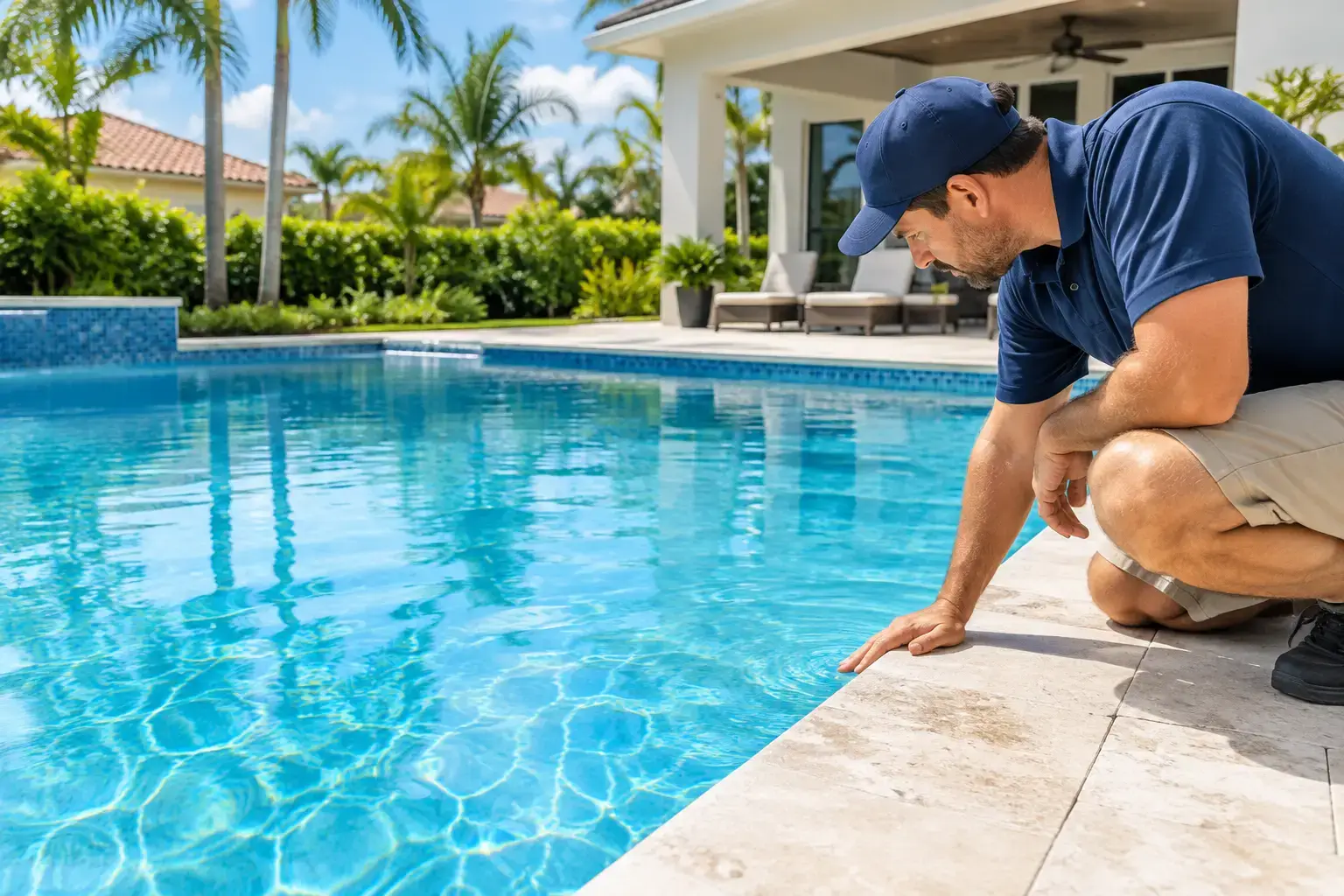
The water level should sit around the middle of the skimmer opening. If it is too low, the skimmer can pull air instead of water. That can reduce circulation, create bubbles at the return jets, and cause the pump to lose prime.
Add water if needed, then allow the level to stabilize. If you are repeatedly adding water, there may be a leak or another issue worth investigating rather than treating it as a routine top-off.
Empty the skimmer and pump baskets
A full skimmer basket restricts water before it reaches the pump. Leaves, palm debris, seed pods, toys, and even small pieces of a damaged skimmer basket can all create a blockage. Empty the skimmer basket, inspect it for cracks, and make sure it is seated correctly.
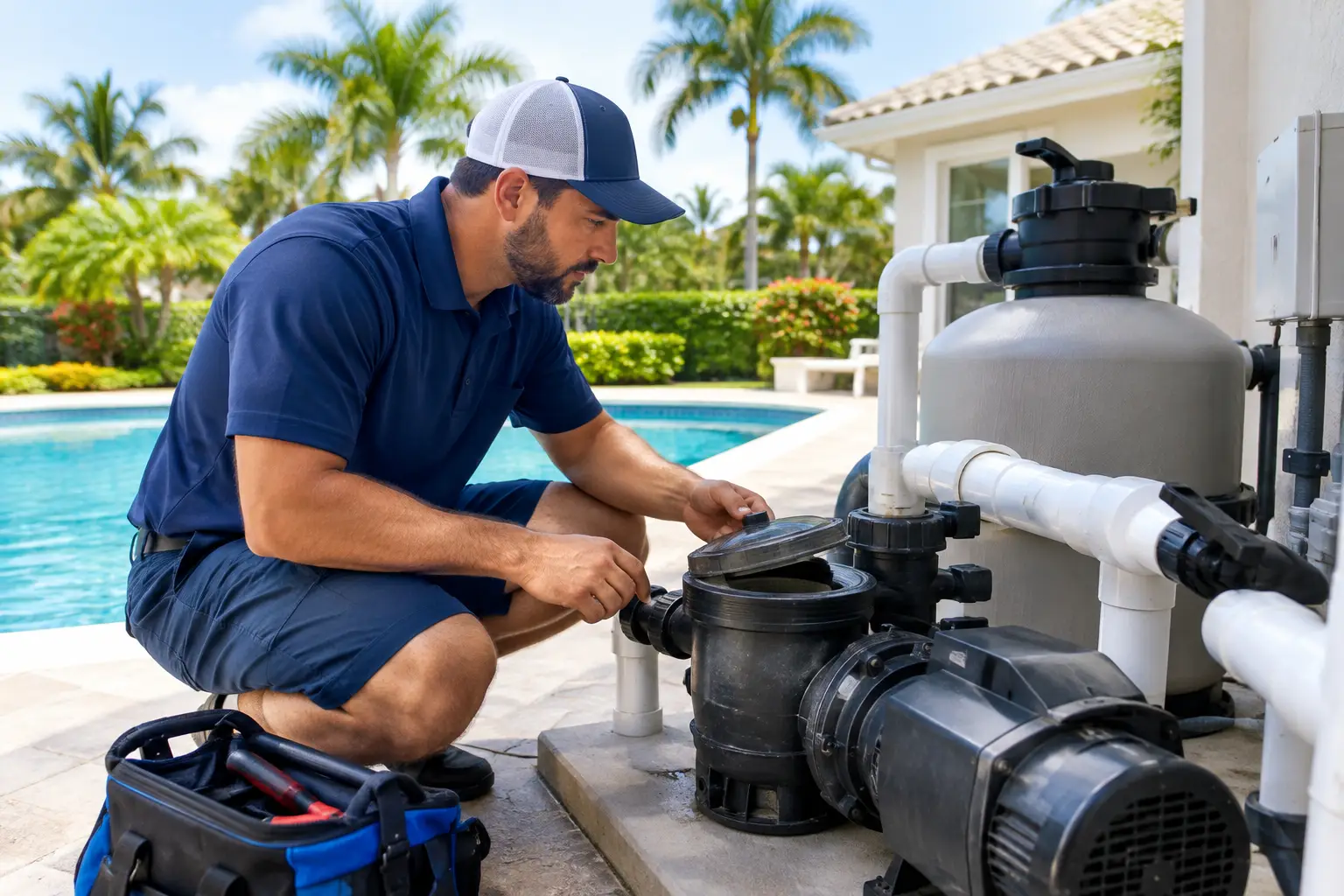
Next, with the pump off, check the pump basket. A packed pump basket can significantly reduce flow and make the pump work harder than it should. Clear the debris, inspect the lid O-ring for dryness, cracks, or dirt, and reinstall the lid carefully so it seals evenly.
If the pump basket fills again shortly after cleaning, the pool may have an unusual amount of debris, a damaged skimmer basket, or a suction-side issue that needs closer attention.
Look for air in the system
Air entering the suction side of a pool system is a common cause of weak circulation. A few small bubbles after the pump starts can be normal, especially after emptying the basket. Continuous bubbles in the pump lid or a steady stream of bubbles from the return jets are not.
Start with the easy visual checks: confirm the pool water level is adequate, make sure the pump lid is clean and properly secured, and look for obvious cracks around the lid or fittings. Never force a lid or overtighten plumbing connections. A worn O-ring, failing valve, or small plumbing leak may need professional service to stop air from entering the line.
Compare filter pressure to its normal reading
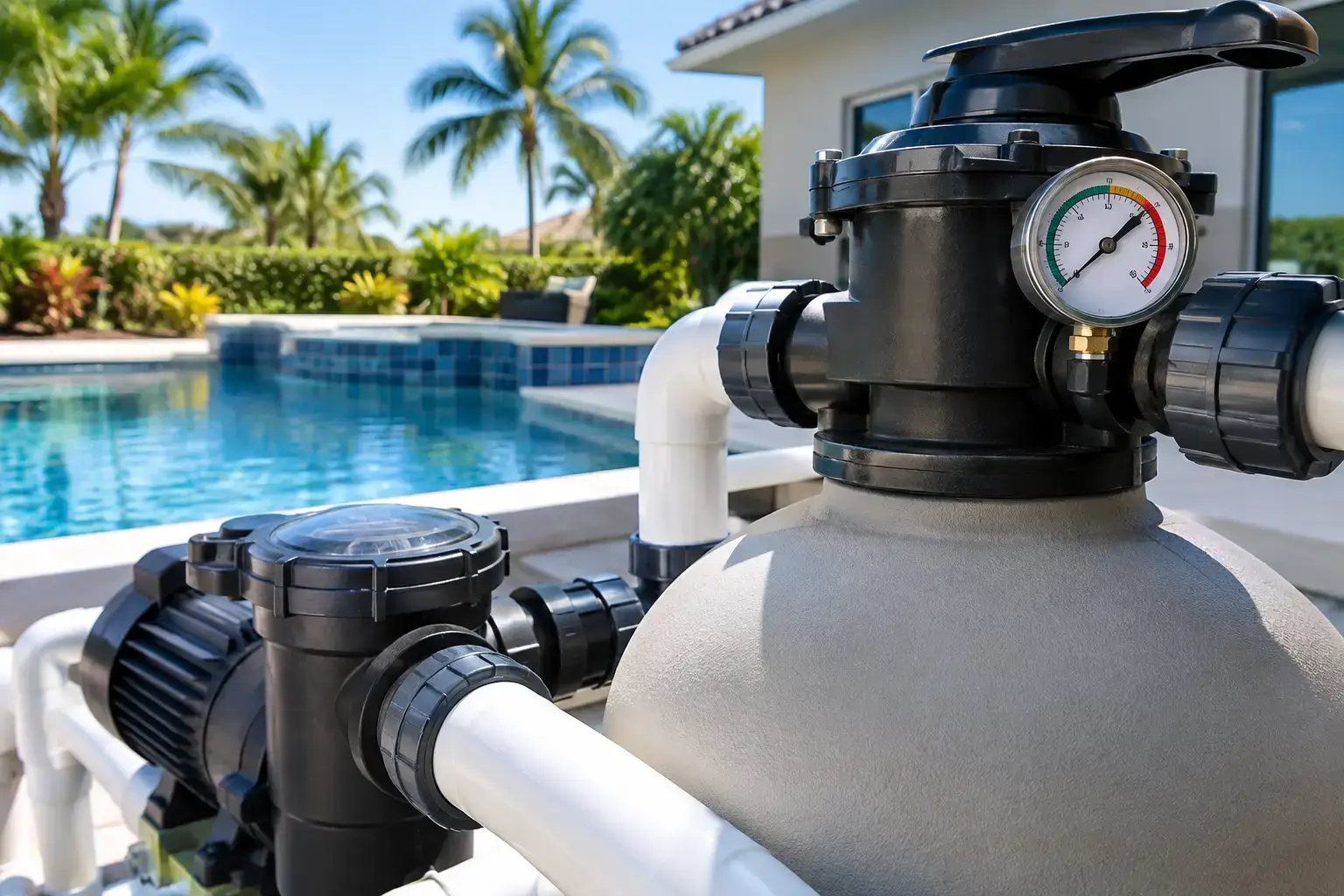
Your filter pressure gauge is most useful when you know what is normal for your own pool after the filter has been cleaned or serviced. A higher-than-usual reading often means the filter is restricting water flow. A lower-than-usual reading, paired with weak returns, can indicate a suction blockage, air leak, or pump problem.
The right response depends on your filter type and condition. Cartridge filters need periodic cleaning, while sand and DE filters have their own maintenance requirements. Avoid guessing based on a single pressure number. The change from your pool's typical operating pressure is what tells the story.
If the gauge is stuck at zero, visibly damaged, or gives readings that do not match the system's behavior, it may not be reliable. Replacing or diagnosing the gauge is usually a straightforward service task, but it is not a reason to ignore a suspected flow problem.
Confirm the valves are set for normal operation
Valves control where water is pulled from and where it returns. If a valve was moved after vacuuming, draining, using a spa, or servicing equipment, it may be restricting a line without anyone realizing it.
Look for a valve that is partially or fully closed when it should be open. In pools with multiple skimmers, a main drain, water features, heaters, or spas, valve positions can be more complicated. Make a note or take a photo of normal valve settings once the system is working properly. That gives you a helpful reference later and prevents accidental changes from becoming a mystery.
Do not force stiff valves. A damaged valve handle or internal diverter can create a leak or restriction that needs repair.
When the Filter Is the Likely Problem
A dirty filter is one of the most common reasons a pool loses circulation gradually. The pump may sound normal, but the returns become weaker and the pressure rises as the filter traps more debris. After a storm, heavy pollen, a green-pool recovery, or construction dust nearby, a filter can load up faster than expected.
There is a trade-off here. A filter should collect fine debris, so a modest pressure increase over time is normal. Cleaning it too frequently can be unnecessary, while waiting too long can strain the pump and leave water under-filtered. Follow the maintenance approach appropriate for your filter and the condition of the pool, rather than cleaning on a fixed schedule alone.
A filter that has been cleaned but still shows poor flow may have damaged cartridges, an issue with the multiport valve, old filter media, or an internal assembly problem. Those are good reasons to schedule an equipment inspection.
Know When It Is More Than a Simple Blockage
Some circulation issues call for prompt professional attention because continued operation can damage equipment or make water recovery harder. Turn the system off and arrange service if you notice any of the following:
- The pump is running dry, repeatedly losing prime, or making loud grinding sounds.
- Water is leaking around the pump, filter, plumbing, or equipment pad.
- The pump will not start, trips power, or has a burning smell.
- Filter pressure is unusually high and does not improve after appropriate maintenance.
- The water is turning green or cloudy despite normal sanitizer readings and run time.
A failing pump motor, worn impeller, suction leak, cracked plumbing fitting, or blocked underground line can all affect circulation. These issues are not always visible from the pool deck, which is why a proper inspection looks at flow, pressure, equipment condition, valve positions, and water chemistry together.
Protect Circulation With Consistent Pool Care
The best circulation troubleshooting is the kind you rarely need to do. Keeping baskets clear, maintaining the correct water level, checking equipment visually, and giving the filter the service it needs will prevent many common interruptions. Proper chemistry matters too, because balanced water helps equipment operate in a cleaner environment and makes filtration more effective.
Weekly professional service adds another layer of peace of mind. During a regular visit, a technician can spot a changing pressure reading, weak returns, air under the pump lid, or early signs of algae before the issue becomes a weekend-consuming problem. Turtle Pool Care pairs that hands-on attention with detailed digital reports and photos, so homeowners can see what was checked and what needs attention.
If your pool is not circulating the way it used to, do not wait for the water to tell you twice. A quick check today can keep your pool safe, balanced, and turtly clean for the next swim.