
A pool can lose some water naturally in Florida’s heat, especially when the pump is running, swimmers are splashing and afternoon storms are rolling through. The top signs of pool leaks show up when that water loss becomes consistent, unusual or paired with changes around the pool and equipment. Catching a leak early can protect your water bill, preserve your chemistry balance and prevent a manageable repair from becoming a larger problem.
A leak is not always a visible crack or a puddle. It may be a small plumbing issue, a fitting that has started to fail, a problem at the skimmer, or water escaping through a structural opening. The clues matter because they help narrow down where the water may be going.
Top Signs of Pool Leaks Homeowners Should Watch For
Your water level drops faster than usual
This is the sign most homeowners notice first. Evaporation happens, but a pool that needs frequent topping up may have more going on. In warm, sunny weather, a pool can lose water naturally, yet the loss should not suddenly become dramatic or continue at the same pace through cooler or rainy periods.
Pay attention to patterns rather than one isolated day. If you are adding water every few days, or the level is falling below the skimmer opening regularly, it is worth investigating. Repeatedly adding fresh water also changes the balance of the pool. That can mean more time spent adjusting chemicals to keep the water safe and perfectly balanced.
One useful observation is whether the water stops dropping at a particular level. If it consistently settles around the bottom of the skimmer, a light niche or a return fitting, that location may offer a clue. It is not a diagnosis by itself, but it gives a pool professional a helpful starting point.
You see wet or soggy areas near the pool
A wet patch in the grass, soft soil near equipment or a section of decking that stays damp deserves attention, especially when there has been no rain or sprinkler activity. Water escaping from underground plumbing can travel before it reaches the surface, so the damp area is not always directly above the leak.
Do not assume every wet spot means a pool leak. Irrigation lines, roof drainage and natural ground moisture can create similar symptoms. Still, an area that remains unusually green, muddy or soft around the pool should be checked before it affects the surrounding landscape, deck or equipment pad.
The pump is pulling air or losing prime
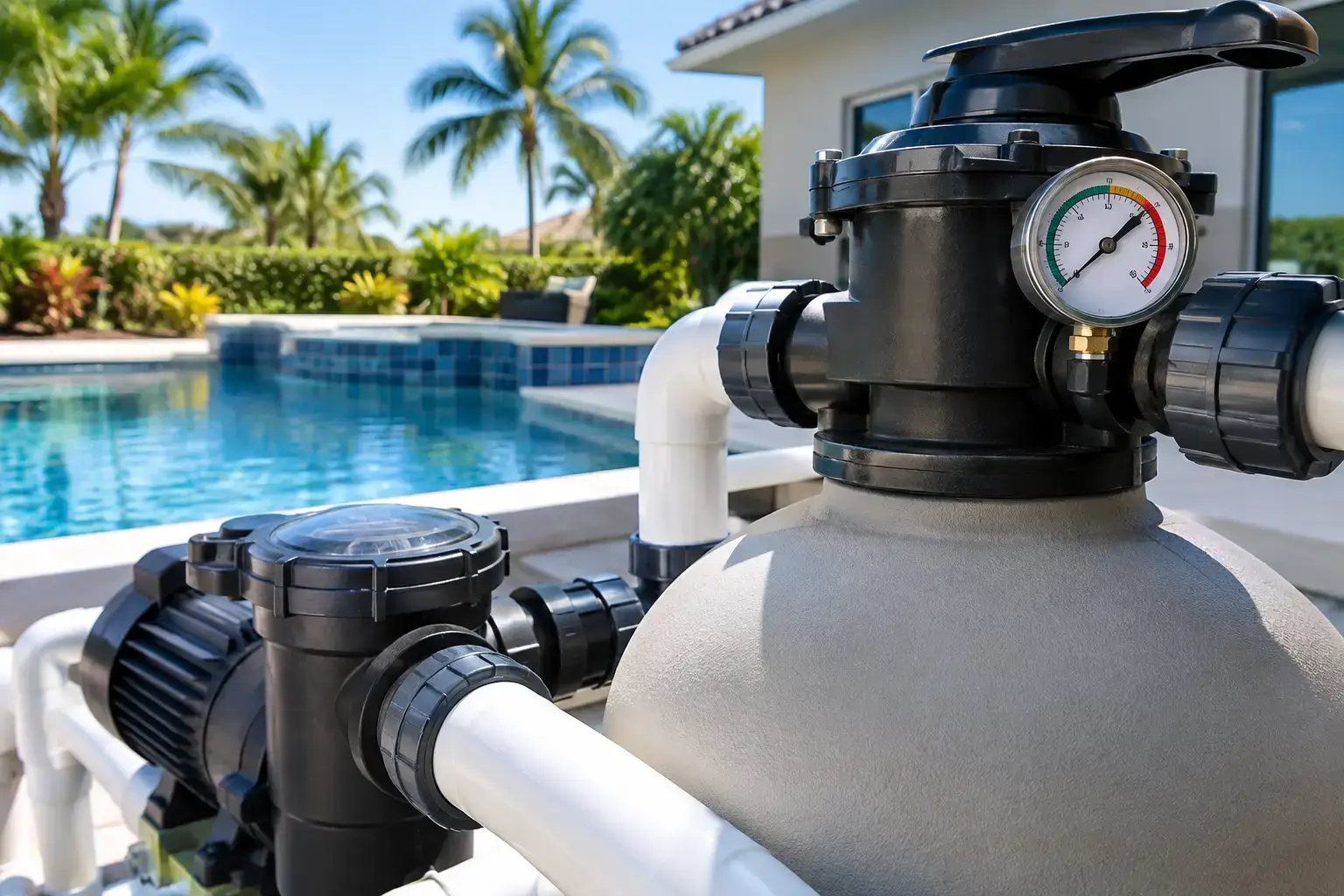
Your circulation system should move water consistently. If you see air bubbles returning to the pool, hear the pump making an unusual gurgling sound or notice that the pump basket does not stay full of water, there may be a suction-side air leak.
This type of issue can occur at a pump lid, O-ring, valve, fitting or plumbing connection before water reaches the pump. It may not cause water to appear on the ground because air is being drawn into the line while the pump is running. A pump that repeatedly loses prime should not be ignored. Reduced circulation can affect filtration, heating, water quality and the equipment’s day-to-day performance.
Water is visible around the equipment pad
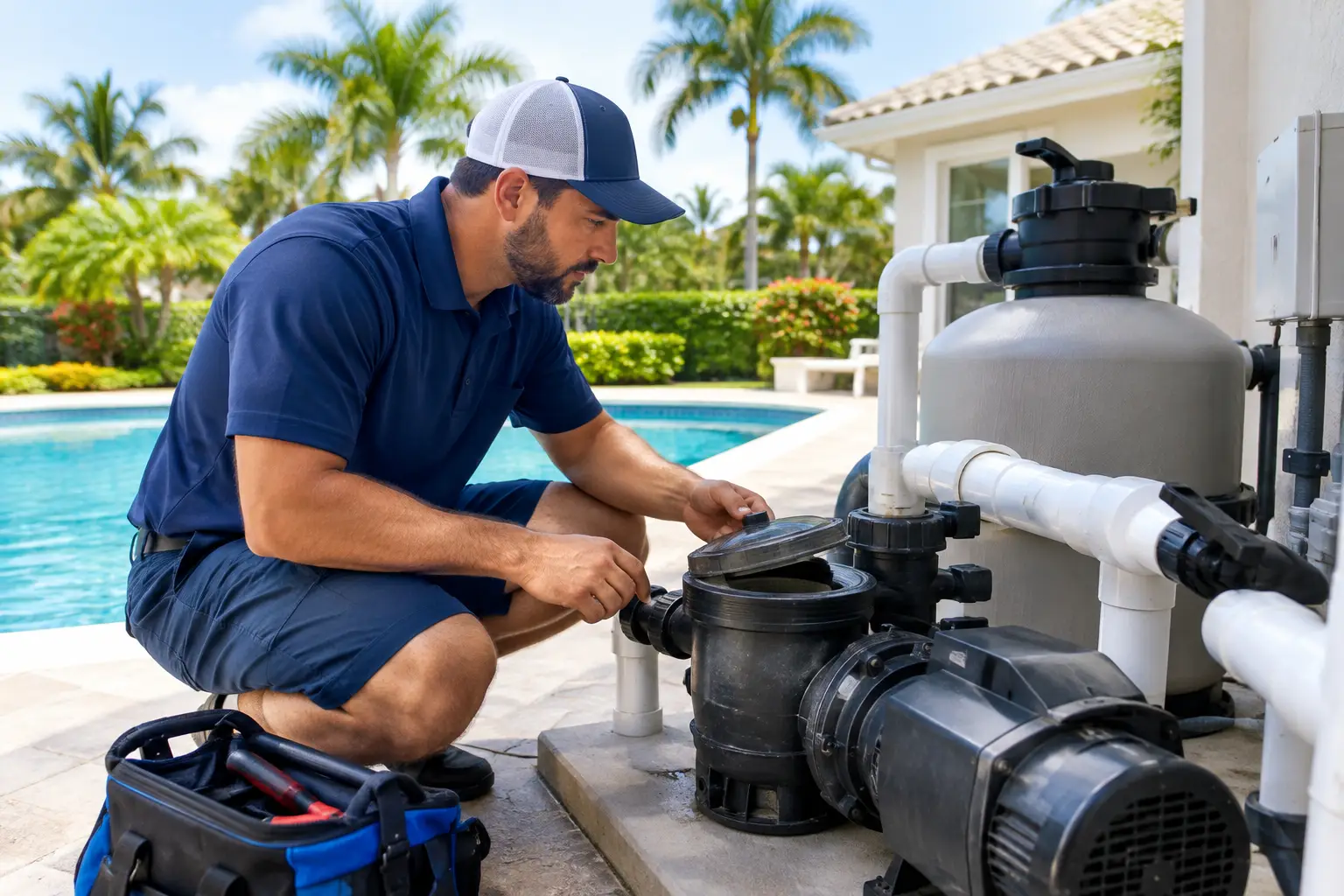
A small drip can be easy to overlook, particularly after a storm or when condensation is present. But water under or around a pump, filter, heater, pipe connection or valve is never something to dismiss as normal without a closer look.
Some leaks only appear when the equipment is running and pressure rises in the plumbing. Others occur when the pump is off. Taking note of when you see the water can help identify whether the issue may be pressure-side plumbing, a fitting, a seal or another component. Avoid taking apart pressurised plumbing or attempting electrical repairs yourself. Equipment areas combine water, pressure and electricity, so a careful professional inspection is the safer route.
Cracks, loose tiles or changes at the waterline
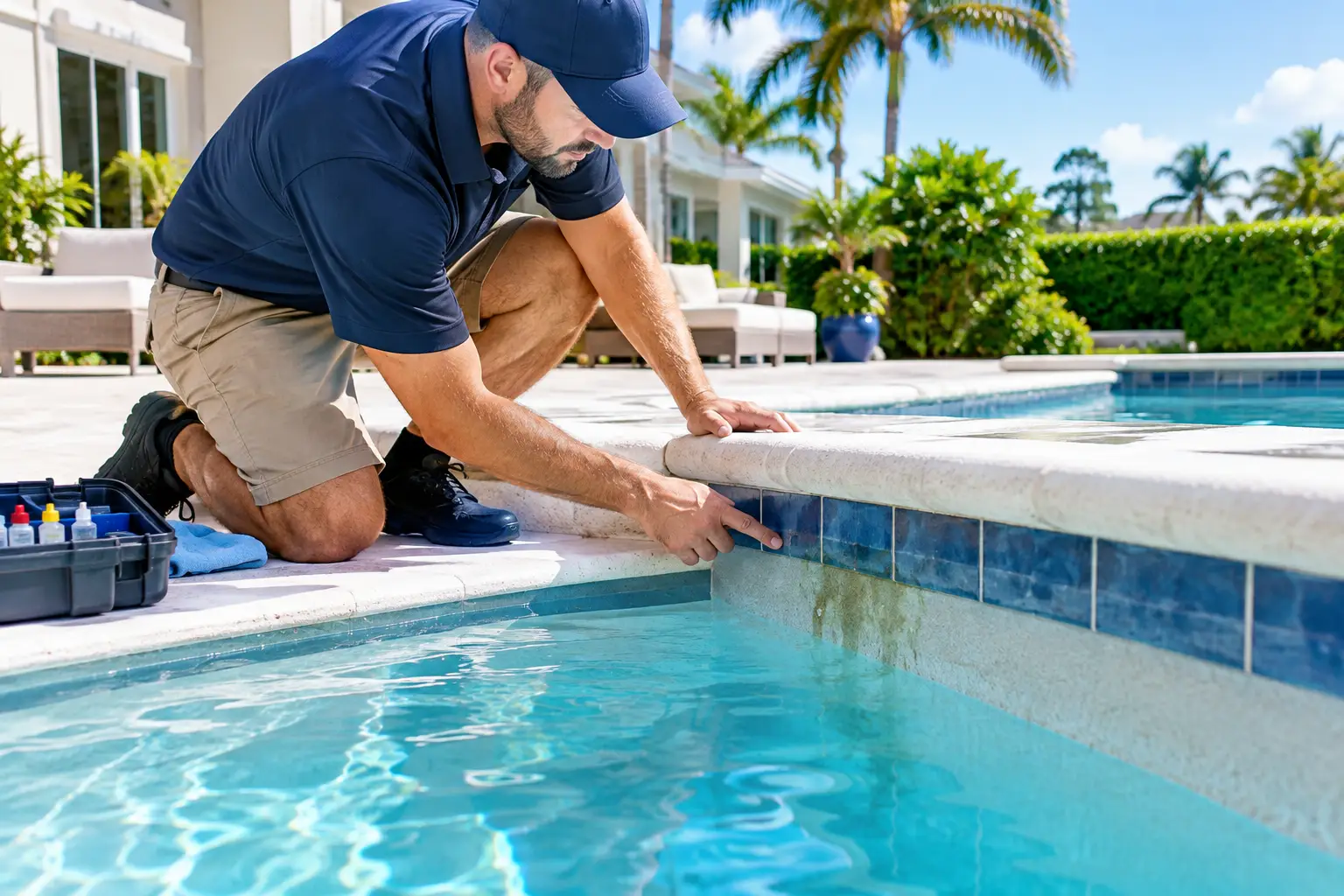
Not every surface crack leaks, and not every leak comes from the pool shell. Hairline cosmetic cracks may be limited to plaster or finish material, while larger or changing cracks can require closer evaluation. Watch for cracks that widen, run through tile lines, appear near fittings or are accompanied by a falling water level.
Loose tiles, deteriorating grout and gaps around skimmers, lights or return fittings can also allow water to escape. These areas move and expand over time, particularly in a pool exposed to heat, settling and regular use. Early attention can often prevent water from working farther behind the finish or into areas where repairs become more involved.
Your pool chemistry will not hold steady
When a pool is losing water and receiving frequent top-offs, chemistry can become harder to manage. Fresh fill water brings its own mineral content and balance. That can make chlorine, pH, alkalinity and other readings seem less predictable than usual.
Chemistry issues do not automatically mean there is a leak. Heavy rain, high bather load, debris and an equipment problem can all affect water balance. But if your pool has been professionally maintained and still needs more frequent chemical correction alongside unexplained water loss, a leak should be part of the conversation.
Higher water use or unexplained operating changes
A higher water bill may be the first sign for homeowners who use automatic fill systems. The pool stays at the same level, so the loss is less obvious, but the fill line keeps replacing water in the background. If your bill rises without a clear household reason, consider whether the pool is using more water than normal.
You may also notice secondary changes: the heater does not seem to perform as expected, circulation is weaker, the cleaner behaves differently or the pool needs more frequent attention. These symptoms can have several causes, which is why diagnosis matters. Treating the obvious symptom without finding the source can lead to repeat issues.
How to Tell Evaporation From a Possible Leak
A simple bucket test can give you a useful comparison. Fill a bucket with pool water and place it on a pool step so the water inside the bucket is close to the pool’s water level. Mark the level inside the bucket and the level outside it on the pool wall. Leave the pool running normally for about 24 hours, keeping the bucket undisturbed.
If the pool water drops noticeably more than the water in the bucket, the difference may point to a leak rather than evaporation alone. For a clearer picture, some homeowners repeat the test with the pump off, but do not leave equipment off longer than appropriate for your pool’s circulation needs.
The bucket test is a screening tool, not a final answer. Rain, splash-out, automatic fill systems and changing weather can affect the result. It is still a practical way to document what you are seeing before scheduling an inspection.
Why Small Pool Leaks Should Not Wait
A slow leak can waste more than water. It can dilute carefully managed chemistry, put added strain on equipment and contribute to soil movement around plumbing or the pool structure. If water is escaping beneath a deck, near a foundation or around the equipment pad, the potential consequences can grow over time.
There is also the practical issue of keeping the pool enjoyable. A leak that pulls the water level below the skimmer can reduce circulation and allow the pump to draw air. That is when a small water-loss concern can become an equipment concern as well.
The right response depends on the symptoms. A visible drip at a pump connection calls for a different approach than a pool that loses water only while running, or one with no equipment symptoms but persistent loss near a specific water level. Good diagnosis saves guesswork and helps focus the repair where it belongs.
For homeowners in Wellington, Westlake, Royal Palm Beach, Loxahatchee and nearby communities, a consistent weekly visual inspection can catch many of these changes before they become disruptive. Turtle Pool Care documents service visits and watches equipment operation alongside water condition, helping homeowners stay informed instead of discovering an issue after it has had time to worsen.
If your pool is asking for more water than usual, leaving damp ground behind or showing air in the system, trust what you are noticing. A timely inspection can bring the answer into focus and help get your backyard back to feeling turtly clean, calm and ready to enjoy.