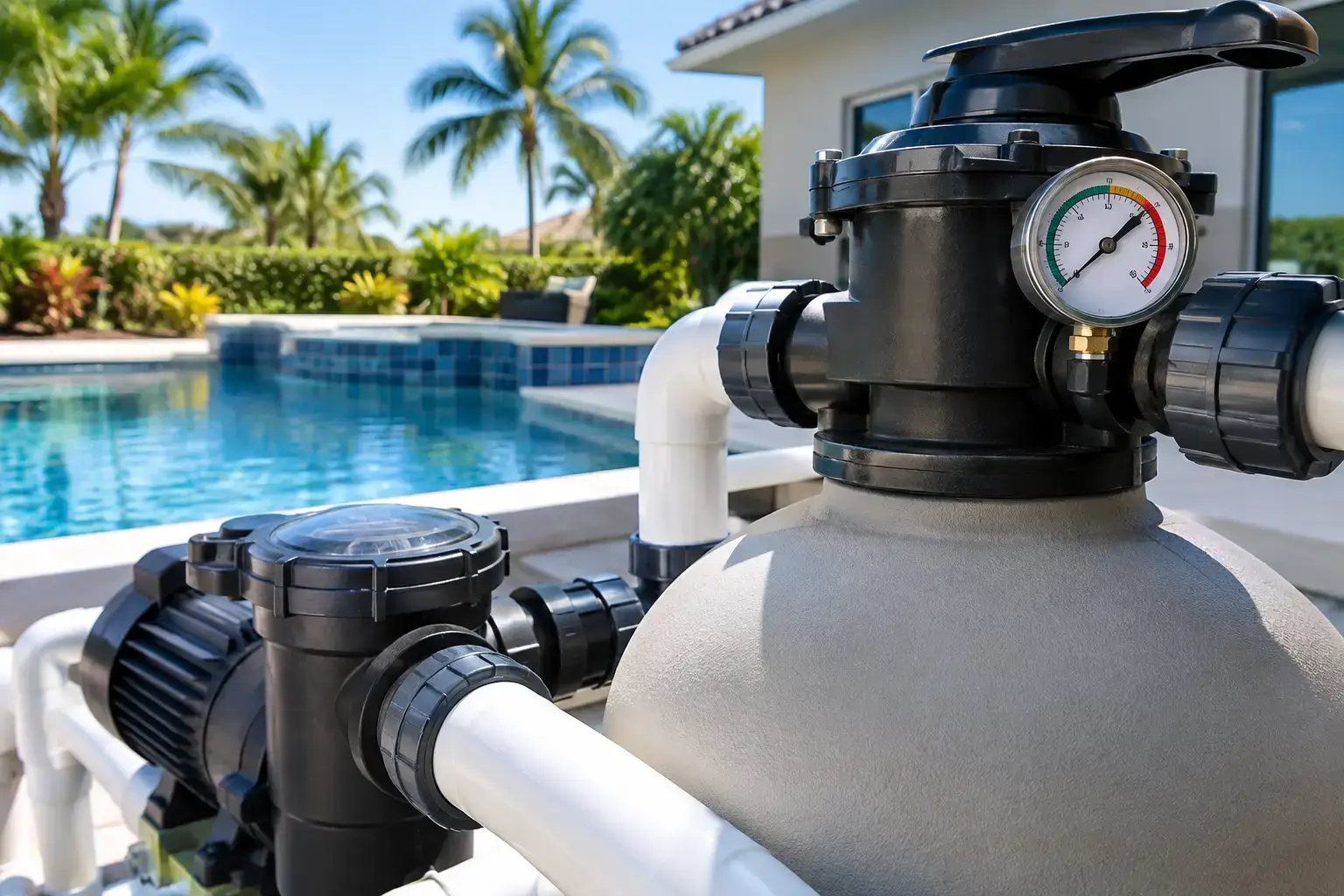
A pressure gauge that slowly climbs after a pool cleaning is usually doing its job. Understanding why pool filter pressure rises helps you tell the difference between a filter that needs routine attention and an equipment issue that should not wait. The number on the gauge matters less than how far it has moved from your pool’s normal clean reading.
For most residential pools, a rising reading means water is meeting more resistance as it passes through the filtration system. That resistance often comes from debris collected inside the filter. In Florida, fine windblown dust, pollen, leaves, grass clippings, sunscreen residue and early algae growth can add up quickly, even when the pool surface looks clear.
Start With Your Clean Filter Pressure
Every pool has its own normal operating pressure. A clean cartridge filter may run at a different pressure than a clean sand or DE filter, and pump size, plumbing layout, water features and heater equipment can change the reading too. There is no single “correct” PSI that fits every backyard pool.
The useful number is the clean baseline. After the filter has been properly cleaned, reassembled and the pump is running normally, note the gauge reading in your service records. Many pool professionals recommend cleaning or backwashing when pressure rises roughly 20 to 25 percent above that baseline. For example, a system that normally runs at 16 PSI may need attention around 19 or 20 PSI.
A gauge that has barely moved may not mean the filter is clean, however. Pressure gauges can fail, stick or fill with moisture. If the reading seems inconsistent with water flow, skimmer suction or the condition of the pool, the gauge itself may be part of the problem.
Why Pool Filter Pressure Rises During Normal Use
The filter is catching what it should
The most common cause is also the least alarming: a filter full of trapped debris. As the filter captures dirt and organic material, the water has fewer open pathways through the media. The pump must push against greater resistance, and the pressure rises.
With a cartridge filter, that buildup sits in the cartridge pleats. With a sand filter, debris becomes trapped among the sand grains. A DE filter uses a fine coating on its grids to capture very small particles, so it can produce exceptionally clear water but also responds quickly when loaded with debris.
This is why a high-pressure reading is not automatically bad news. It often means the filter is protecting water quality. The goal is to clean it at the appropriate point, not to clean it so often that you waste water, disturb the filter bed or add unnecessary wear to components.
Heavy debris or storm conditions
A single windy afternoon, a landscaping visit or a rainstorm can accelerate filter loading. Pools near mature trees or open lots around Wellington, Loxahatchee or The Acreage may collect more leaves, pollen and airborne debris than a more sheltered pool.
After a storm, the pool may need more than surface skimming. Fine debris sinks, breaks apart and eventually reaches the filter. If the pressure rises soon after adverse weather, the filter may simply be handling an unusually heavy load.
Algae or cloudy-water cleanup
When water turns cloudy or green, the filter has much more work to do. Dead algae, fine suspended particles and treatment byproducts can clog filter media faster than ordinary debris. In a green-to-clean recovery, a rapidly rising gauge can be expected because the system is removing a large volume of contaminants.
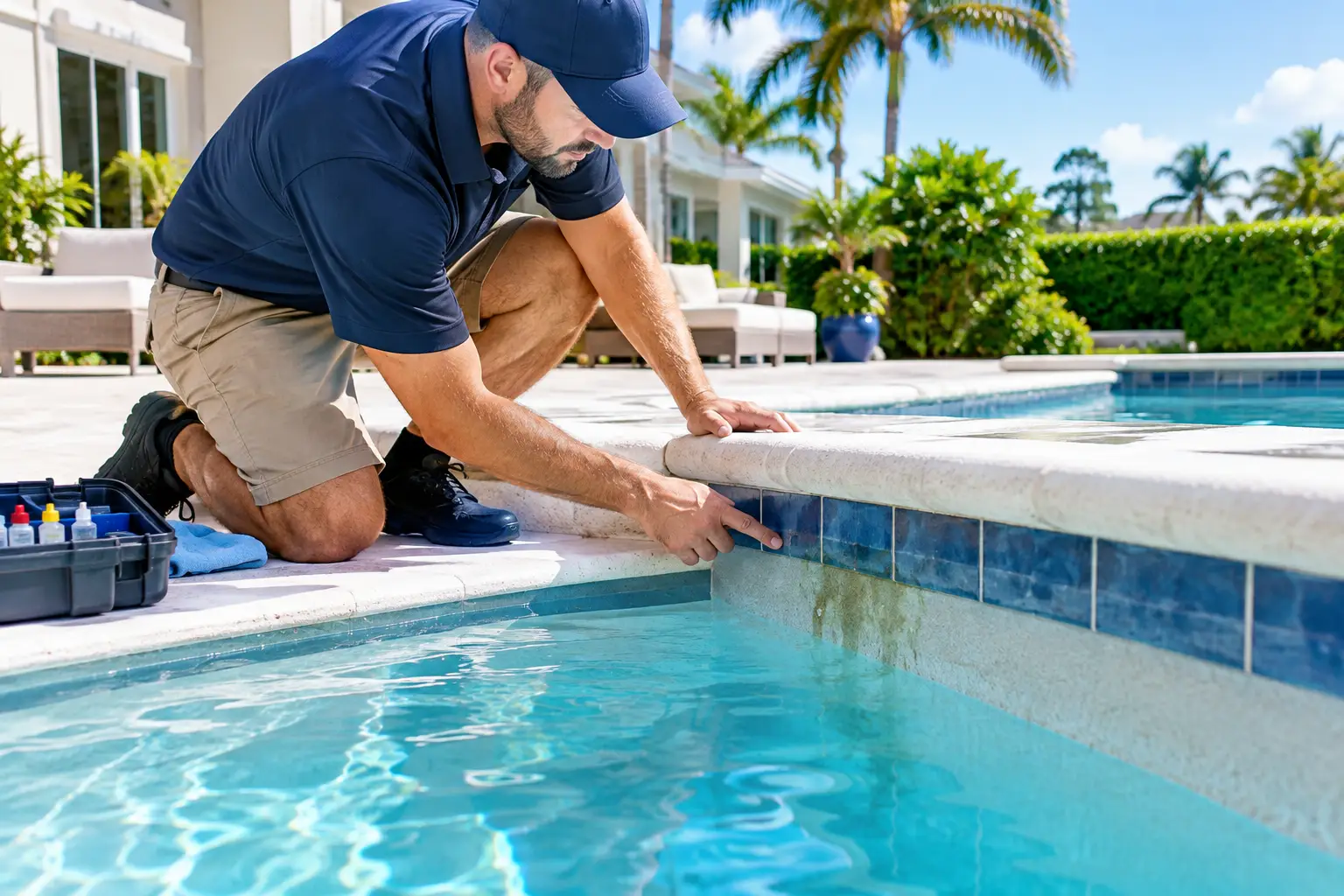
That does not mean the pool should be left to run unchecked. Water chemistry, circulation and filter condition all need to work together. Cleaning the filter without correcting the underlying chemistry can leave the pool stuck in a frustrating cycle of cloudiness and rising pressure.
Filter-Specific Causes to Consider
Cartridge filters need thorough cleaning
Cartridge filters are common in residential pools because they filter fine particles and do not require routine backwashing. Over time, however, oils, mineral scale and tightly packed debris can remain in the pleats even after a quick rinse.
A cartridge that looks mostly clean may still restrict water flow. Damaged bands, collapsed pleats or a cartridge that has reached the end of its service life can also contribute to persistent high pressure. Cleaning methods and replacement timing depend on the cartridge and filter housing, so it is best to follow the equipment manufacturer’s guidance or have the system inspected.
Sand filters can become compacted or contaminated
Sand filters are durable and straightforward, but the sand inside can gradually collect oils, scale and fine debris. Channeling can also develop, allowing water to find uneven paths through the media. Depending on the issue, a sand filter may show high pressure, reduced water clarity or both.
Backwashing is the standard response when a sand filter reaches its pressure threshold. But backwashing too frequently can waste water and prevent the filter from achieving its best filtration performance. The right schedule is based on the pressure increase, not simply a date on the calendar.
DE filters may need inspection beyond backwashing
DE filters provide excellent filtration, but their internal grids, manifolds and DE coating need proper care. A pressure rise can indicate a normal need for backwashing or cleaning. It can also point to an uneven coating, a clogged grid or an internal component issue.
DE should be handled carefully and according to the equipment instructions. If you are unsure of the proper procedure, professional service is the safer choice. An incorrect reassembly or charge can affect filtration and create a mess around the equipment pad.
When High Pressure Signals Something More Than a Dirty Filter
A pressure reading that stays high immediately after a proper cleaning deserves attention. The restriction may be elsewhere in the circulation system, such as a partially closed return valve, a blocked heater pathway, a clogged salt cell, debris in a return fitting or an issue with an automatic cleaner line.
Equipment additions can also affect operating pressure. A heater, heat pump, saltwater system, water feature or automation-controlled valve changes the route water takes through the system. A valve left in the wrong position after service or repair can noticeably change the gauge reading.
Watch for related symptoms: weak return flow, a pump that sounds strained, water leaking from the filter tank, air entering the system, unusual heater behaviour or a pressure gauge climbing much faster than usual. Turn the pump off if you see a leak, hear severe strain or notice a damaged filter tank or lid. Do not attempt electrical or pressurised equipment repairs yourself.
A Sensible Response to Rising Filter Pressure
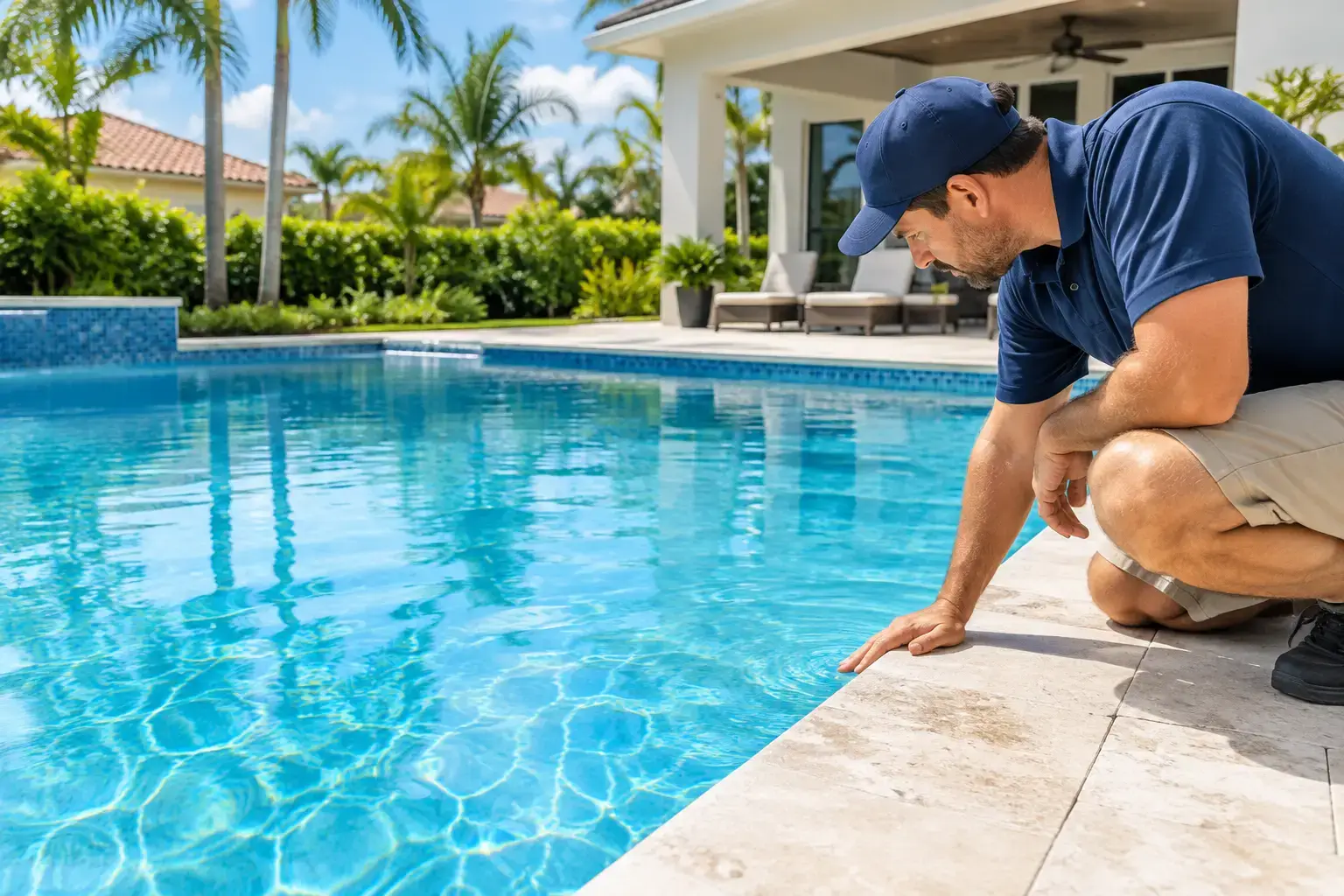
First, compare the current reading with the known clean baseline. Then look at the whole pool rather than relying on the gauge alone. Is the water clear? Are the returns moving water normally? Has there been a storm, a big increase in swimmers or recent algae treatment?
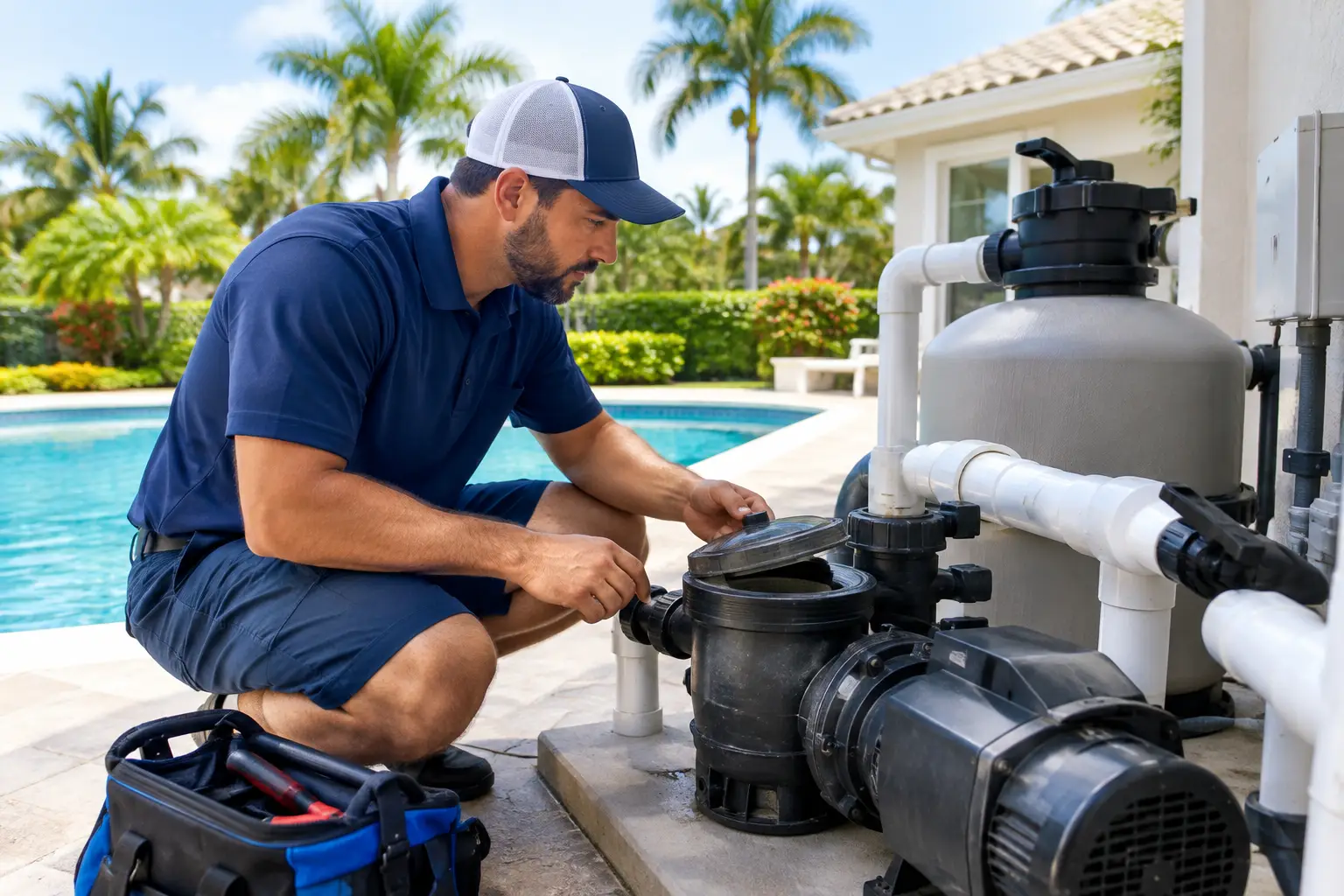
If the pressure has reached the filter’s cleaning threshold and the equipment is otherwise operating normally, schedule the appropriate filter service. For a sand or DE filter, that may involve the manufacturer-approved backwash process. For a cartridge filter, it means cleaning and inspecting the elements. Always shut off the pump before opening any filter housing, release pressure according to the manufacturer’s procedure and avoid forcing clamps, lids or fittings.
After service, confirm that the pressure returns close to its normal baseline. If it does not, or if it rises again within days, the system needs a closer look. Repeated cleaning without identifying the cause can waste time and may overlook a circulation, chemistry or equipment issue.
Keep the Pressure Gauge Useful
A quick look at the gauge during regular pool care can prevent a small problem from becoming an inconvenient one. Record the clean pressure after filter maintenance, note major changes in pool conditions and pay attention to how quickly the number climbs. Detailed service reporting makes this pattern easier to spot over time.
At Turtle Pool Care, routine visual equipment checks are part of keeping a pool turtly clean, safe and ready to enjoy. A filter pressure change is often simple maintenance, but a reliable baseline and prompt attention give your equipment the best chance to keep water clear without unnecessary stress. When the gauge tells a different story than your pool normally does, that is a good time to ask for a professional assessment.