Skip to content

Cloudy Pool Causes and What Hazy Water Means

Cloudy pool causes range from poor filtration to unbalanced chemistry. Learn what hazy water means and when your pool needs professional help quickly.

Cloudy Pool Causes and What Hazy Water Means

A pool can look blue from across the patio and still be cloudy when you stand at the water’s edge. That milky, dull, or hazy appearance is more than a cosmetic issue. Cloudy pool causes often point to a filtration problem, water chemistry that has shifted out of balance, early algae growth, or a combination of all three.

In Florida, warm water, frequent rain, heavy pool use, and windblown debris can change water conditions quickly. The good news is that cloudy water is usually fixable. The key is identifying what the cloudiness is telling you instead of repeatedly adding products without a clear diagnosis.

Cloudy Pool Causes: Start With What You Can See

Not all cloudy water looks the same. Fine white haze is often related to particles that are not being filtered out or minerals that have fallen out of solution. A greenish haze can suggest early algae activity, even if the pool has not turned fully green. Cloudiness after a party, a storm, or a stretch of intense heat may be caused by a sudden increase in contaminants and sanitizer demand.

Visibility matters. If you cannot clearly see the main drain or the deepest part of the pool, treat the water as a safety concern and keep swimmers out until it is clear. Clear water supports safer swimming because you can see the pool floor, steps, and anyone in the water.

Filtration is not catching fine particles

Your filter is responsible for capturing the small debris that makes pool water look dull. When circulation is weak, the filter is dirty, the filter media is overdue for service, or the pump is not moving enough water, those particles remain suspended instead of being removed.

A pool pump can be running without circulating effectively. A clogged skimmer basket, blocked pump basket, dirty filter, air entering the suction side, a worn pump component, or a valve in the wrong position can all affect flow. Variable-speed pumps also need a schedule that provides enough circulation for the pool’s size, bather load, and weather conditions.

If the return jets feel noticeably weaker than usual, the water level is low, or the pressure reading is outside its normal range, equipment performance deserves attention. Cleaning the pool without restoring proper filtration may improve the appearance briefly, but the haze will return.

Water chemistry is out of balance

Pool water works best when its chemistry is kept within the appropriate ranges for that specific pool. Sanitizer, pH, total alkalinity, calcium hardness, stabilizer, and other factors work together. When one moves too far, water can become cloudy, uncomfortable, difficult to sanitize, or prone to scale.

For example, a high pH can make water look dull and reduce the effectiveness of chlorine. High calcium hardness or high alkalinity can contribute to cloudy water when minerals precipitate into tiny visible particles. Low sanitizer can allow contaminants and algae to gain ground. On the other hand, simply adding more chlorine is not always the answer if the underlying issue is poor filtration, excess stabilizer, or mineral imbalance.

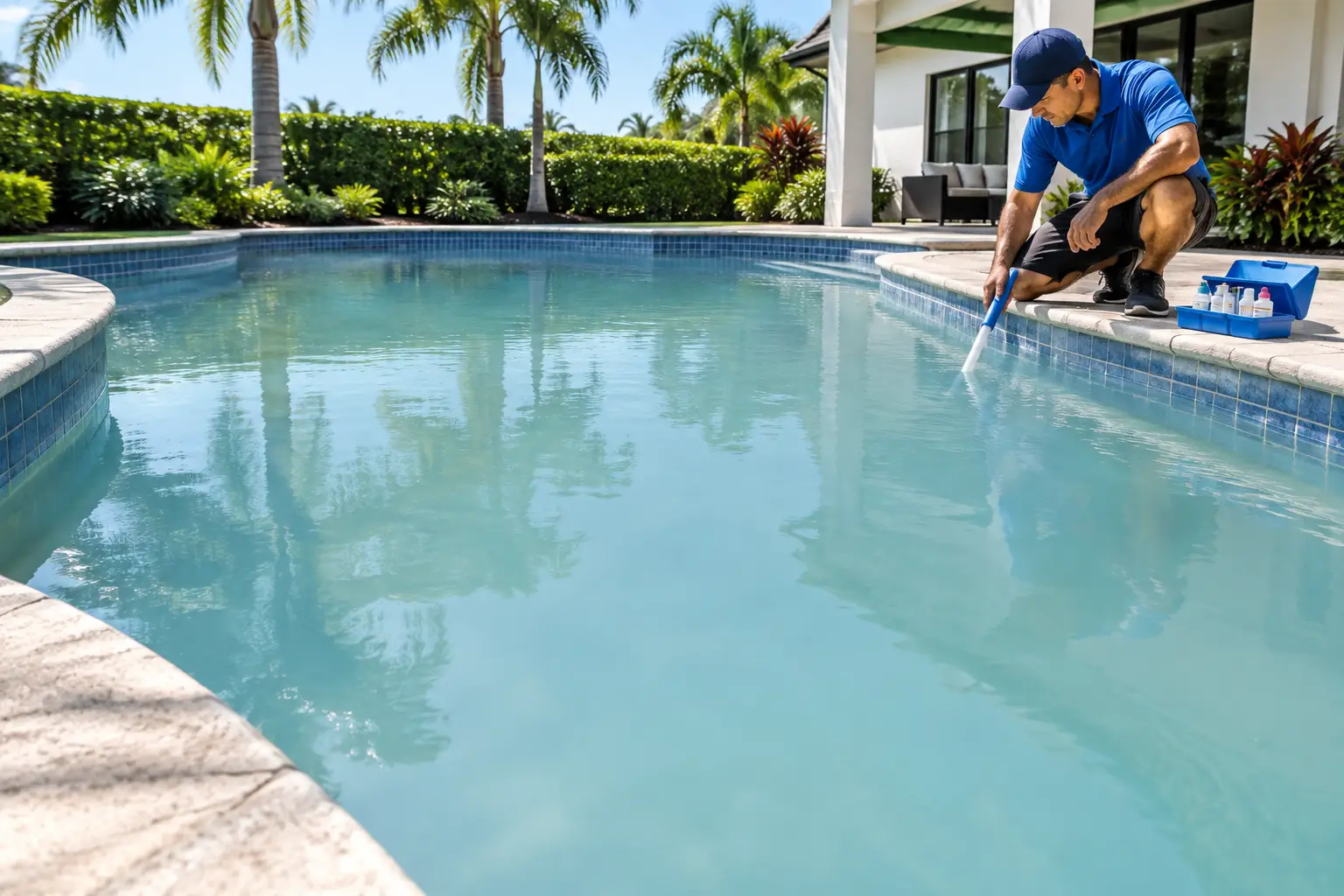
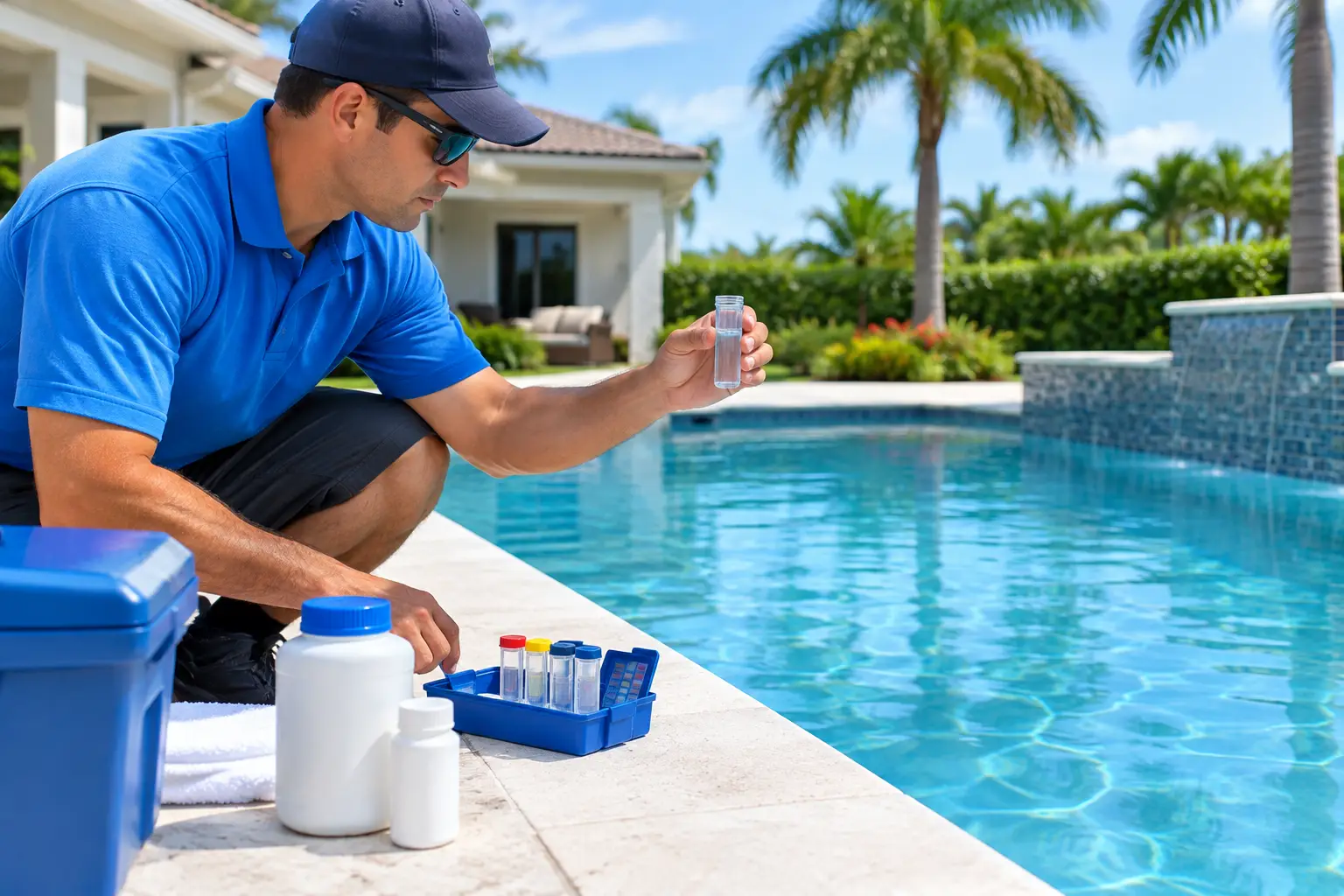
This is why accurate testing matters. Test strips can be useful for a quick check, but persistent cloudiness calls for more complete water testing and an adjustment plan based on actual readings. Randomly stacking chemicals can create a bigger balance problem and waste time.

Early algae is beginning to grow

Algae does not always arrive as bright green walls or slippery patches. It can begin as a slight haze that gives the water a muted green, yellow, or gray cast. Warm temperatures, insufficient sanitizer, low circulation, shaded areas, and missed brushing can give algae an opportunity to establish itself.

Brushing matters because algae can cling to walls, steps, corners, and behind ladders before it is obvious in open water. Once algae is present, the pool needs a targeted recovery process that addresses both the organism and the debris left behind. The filter may need extra attention as it captures dead algae and fine particles.

A pool that turns cloudy again shortly after treatment often has an unresolved cause, such as poor circulation, inadequate sanitizer retention, or contaminated filter media. Looking for that root cause protects the pool from becoming a recurring green-to-clean project.
Rain, Swimmers, and Debris Can Overload a Pool

A busy weekend can change a pool’s water faster than many homeowners expect. Sunscreen, body oils, lotions, leaves, grass clippings, and airborne dust all increase the work required of the sanitizer and filter. A summer storm adds rainwater, organic debris, and sometimes runoff that changes water balance.

In Wellington, Royal Palm Beach, Loxahatchee, and nearby communities, windy afternoons and heavy rainfall can make this especially noticeable. After a storm, it helps to remove debris promptly, check that the water level is appropriate, and make sure circulation is running properly. If the water remains hazy after normal cleaning, testing and equipment inspection are the next sensible steps.

Cloudiness after high swimmer use may resolve with proper circulation and balanced water, but it depends on how much contamination entered the pool and how well the system is performing. A pool that was already borderline on chemistry or filtration can tip cloudy very quickly.

Why a Clean Filter Can Still Leave Water Cloudy

A filter may have been rinsed or cleaned recently and still fail to clear the water. The reason depends on the type of filter and the condition of its internal components. Cartridge filters can become worn, damaged, or coated with oils and fine debris. Sand filters may need maintenance or media evaluation. A filter that is undersized for the pool or paired with an improperly configured pump can also struggle during periods of heavy demand.

There is a trade-off with filter cleaning, too. Waiting too long restricts flow, but cleaning certain filter types too frequently can reduce their ability to trap very fine particles. The right approach is based on pressure, flow, water clarity, filter type, and the pool’s normal operating pattern rather than a one-size-fits-all calendar rule.

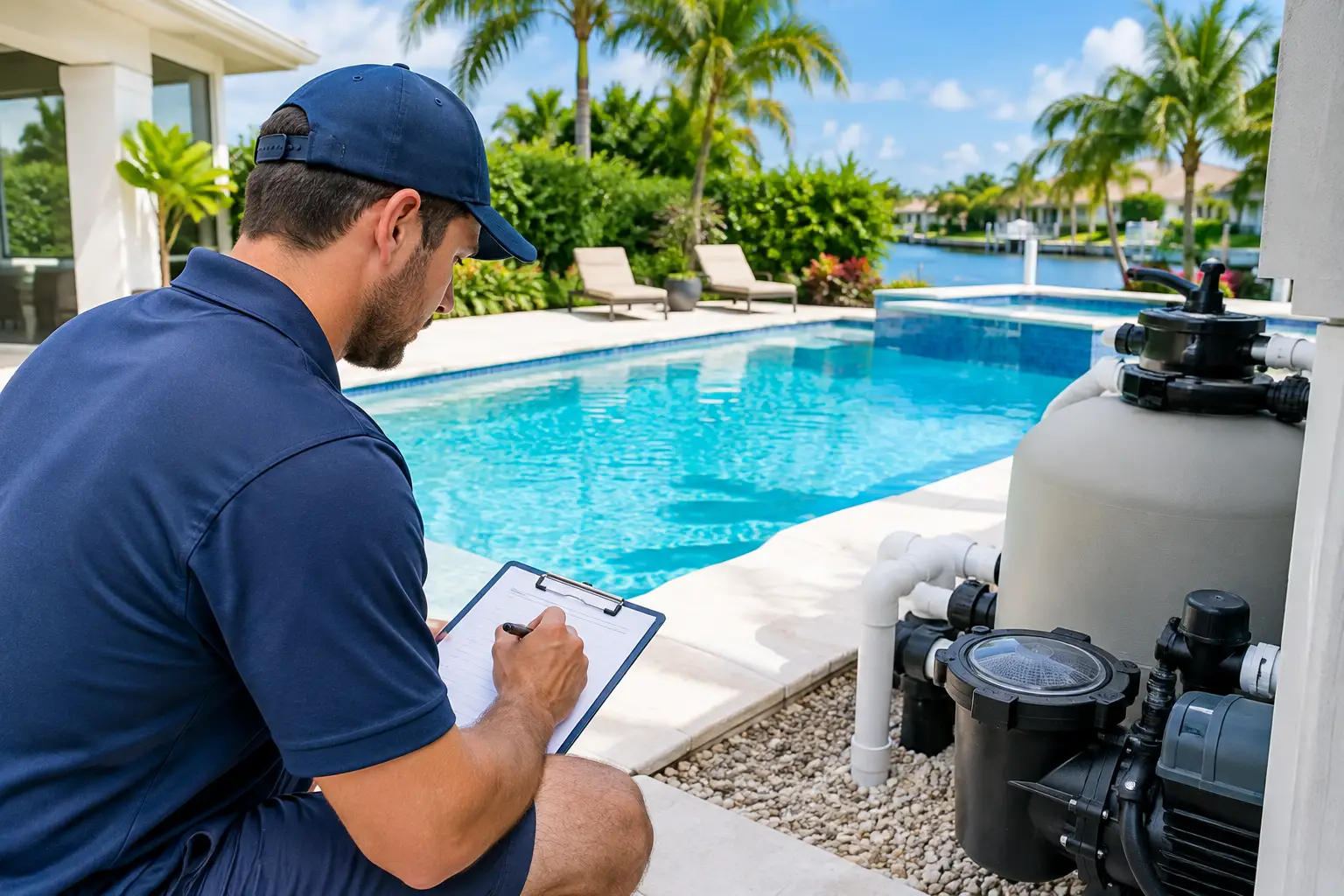
A professional equipment inspection can also identify issues that are easy to miss, including a failing pressure gauge, leaking valve, damaged o-ring, restricted plumbing, or a pump that is no longer operating as it should. These are not problems that water chemicals can solve.

When Cloudy Water Needs More Than Routine Service

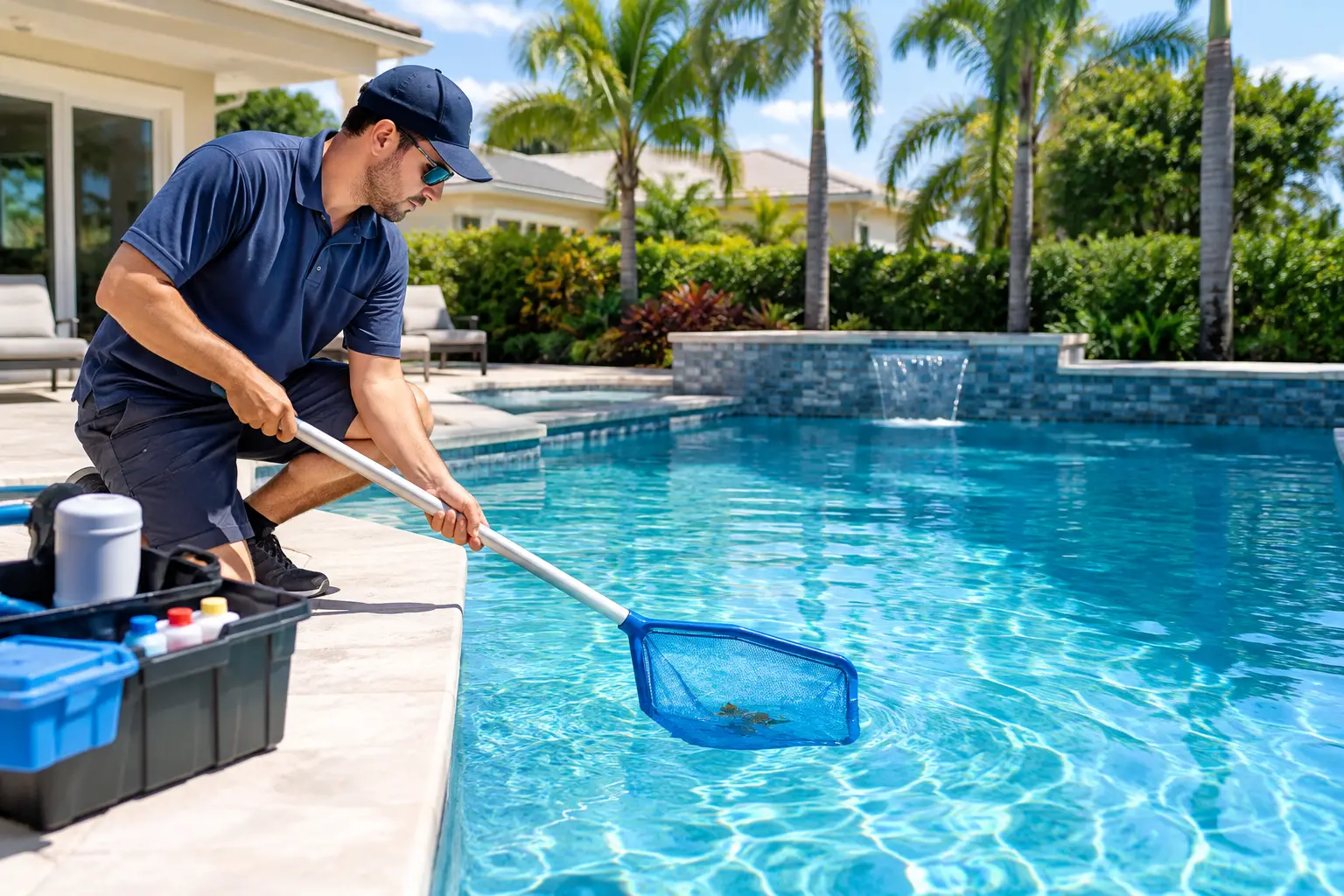
Routine weekly care is designed to prevent most cloudy-water problems through skimming, brushing, water testing, chemical balancing, and a visual equipment check. But some situations need a more focused response.

Seek help if the pool stays cloudy for more than a day or two after normal circulation and cleaning, if you cannot see the bottom, if the water is green, if pressure or flow has changed suddenly, or if the pool has recently been resurfaced or filled. New and resurfaced pools have specific startup needs, and treating them like an established pool can lead to avoidable problems.

Avoid mixing chemicals, applying multiple treatments at once, or opening electrical equipment to chase a circulation issue. Pool chemistry and equipment repairs are closely connected, and a measured approach is safer and usually faster.

How to Keep Pool Water Truly Clean

The best defense against cloudy water is consistency. Keep baskets clear, maintain the appropriate water level, run the circulation system as needed for conditions, and do not skip brushing just because the pool looks clean. After storms or heavy use, give the pool a closer look rather than waiting for the next visible problem.

Most importantly, pay attention to changes. A new haze, weaker return flow, unusually high filter pressure, or water that loses clarity overnight is useful information. Detailed service records and visit reports make it easier to spot patterns before a small issue becomes an interruption to family swim time.

Clear water is not just about a better-looking backyard. It is the quiet reassurance that the pool is being cared for thoughtfully, the equipment is doing its job, and your next swim can feel truly clean and stress-free.

Related pool care guides

Ready for dependable pool care?

Contact Turtle Pool Care today for a free estimate on weekly pool service, repairs, or water testing.